
Becoming a U.S. Citizen: Complete Naturalization Guide
Master the naturalization process with our comprehensive step-by-step guide to U.S. citizenship.
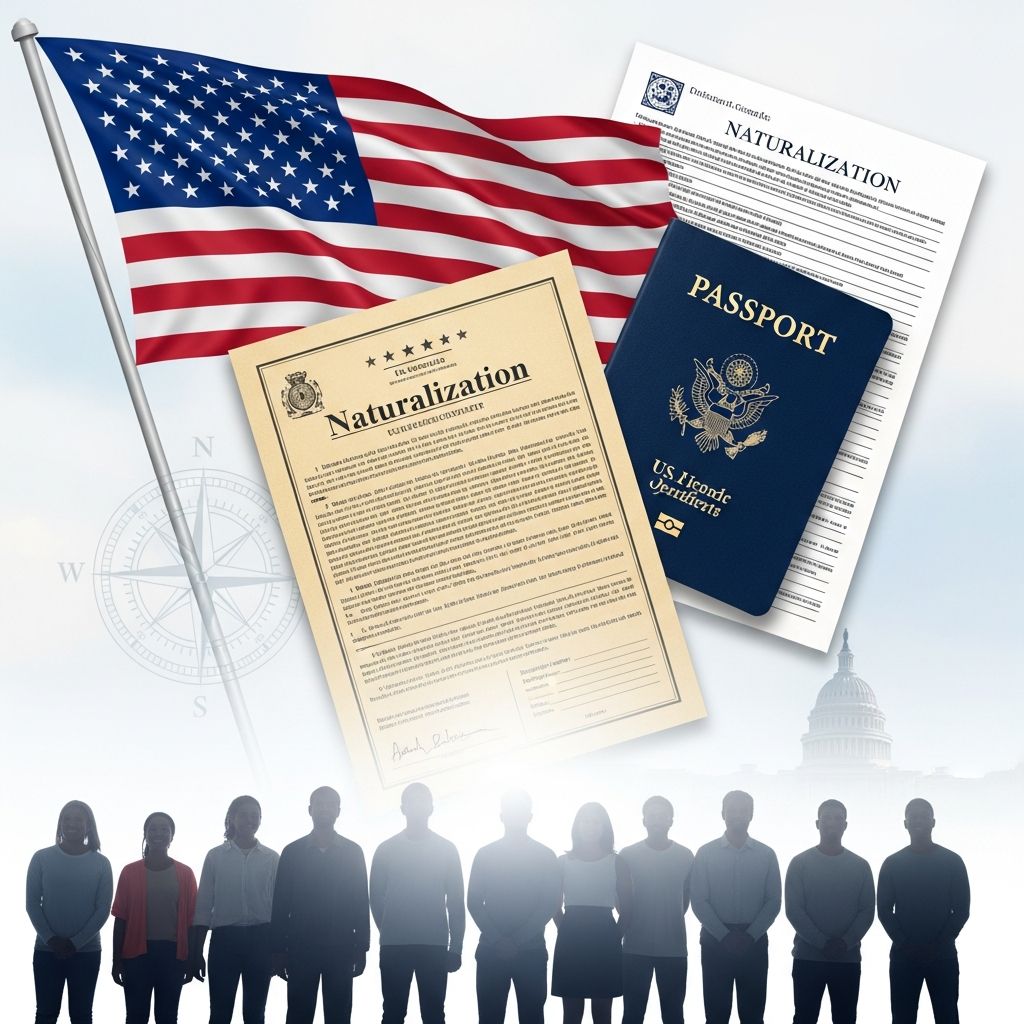
Understanding Your Path to U.S. Citizenship
Becoming a United States citizen through naturalization is a significant milestone that opens doors to full rights and responsibilities within the country. The naturalization process is structured and methodical, designed to ensure that individuals seeking citizenship have a genuine commitment to the United States and understand its values and government. This comprehensive guide walks you through each phase of becoming a naturalized U.S. citizen, from initial eligibility assessment through the final oath ceremony.
The journey to citizenship requires careful preparation, attention to detail, and understanding of what immigration officials expect at each stage. Whether you are a longtime permanent resident or recently obtained your green card, this guide provides the information necessary to navigate the naturalization system successfully.
Establishing Your Eligibility Foundation
Before investing time and resources into the naturalization application, you must confirm that you meet the foundational requirements established by U.S. Citizenship and Immigration Services (USCIS). These baseline criteria ensure that only qualified individuals proceed with their applications.
The core eligibility requirements for most applicants include:
- Attaining the age of 18 years or older
- Maintaining lawful permanent resident (green card) status for a minimum of 5 years
- Demonstrating continuous physical presence within the United States throughout the required residency period
- Establishing good moral character with no disqualifying criminal history or pattern of dishonesty
- Demonstrating proficiency in reading, writing, and speaking English at a basic conversational level
- Successfully completing a civics examination covering U.S. history and governmental structures
Certain categories of applicants may qualify for modifications to these standard requirements. Individuals married to U.S. citizens can reduce their residency requirement from five years to three years. Active duty military members often have access to streamlined pathways and may apply from overseas locations. Applicants age 65 or older who have maintained permanent resident status for at least 20 years qualify for a simplified civics test format with fewer questions and a reduced question bank focusing on fundamental civic knowledge.
Additionally, individuals with documented disabilities may receive reasonable accommodations during testing, and language assistance services remain available regardless of other modifications.
Assembling Required Documentation
Successful naturalization applications depend heavily on comprehensive and accurate documentation. USCIS officers review submitted materials to verify your identity, confirm your residency timeline, validate your eligibility status, and assess your character. Gathering documents before beginning your application prevents delays and demonstrates organizational competence.
Essential identity and status verification documents include:
- Your green card (Permanent Resident Card) showing your current status
- Government-issued state identification such as a driver’s license or state ID card
- Passport or other original travel documents establishing your immigration history
Documentation proving continuous U.S. residency over your required period includes:
- Federal and state tax returns for the complete 5-year period (or 3-year period if applicable)
- IRS transcripts confirming your filing history
- Lease agreements or mortgage documentation showing your residential addresses
- Utility bills, insurance documents, or similar proof of address at multiple locations
- Employment records demonstrating your work history during the residency period
If your personal circumstances have involved family changes, gather:
- Marriage certificates if you are applying as a spouse of a U.S. citizen
- Divorce decrees or annulment documents if previously married
- Birth certificates for any U.S. citizen children
Male applicants who entered the United States between ages 18 and 26 must document their Selective Service registration or demonstrate why registration did not apply to them. Any applicant with a history of legal proceedings requires court documents, arrest records, police reports, or conviction documents to support your good moral character claim.
Beyond these standard requirements, contemporary USCIS evaluation emphasizes demonstrating positive contributions to American society. Consider gathering additional documentation including educational certificates, employment achievement records, community service documentation, volunteer activity records, tax compliance evidence, character references from community leaders, and evidence of family caregiving responsibilities. This comprehensive approach strengthens your application by showing affirmative positive attributes rather than merely the absence of negative factors.
Completing Your Naturalization Application
Form N-400, Application for Naturalization, represents your official petition to become a U.S. citizen. USCIS accepts submissions both through their online portal and by traditional mail, offering flexibility in how you submit your application.
The application process involves several critical steps:
Accurate Form Completion: Every section of the N-400 must be completed with precision. The form requests detailed information about your background, residence history, employment, family members, and any legal encounters. Errors or omissions can trigger requests for evidence, extend processing timelines, or result in application denials. Before submission, review every answer multiple times to confirm accuracy.
Document Attachment: Upload or attach all supporting documentation according to USCIS specifications. If submitting by mail, include certified copies of original documents when possible, as USCIS does not return submitted materials.
Filing Fee Payment: The current application filing fee is $760, which includes biometric processing services. Payment methods vary depending on whether you submit online or by mail. Certain applicants may qualify for fee reductions or exemptions based on income, which you can request using Form I-912.
Submission Method: Online submission typically processes faster than mail submission and provides tracking information. However, mail submission remains an option for applicants without reliable internet access or who prefer traditional methods.
The Biometrics Collection Process
After USCIS receives and accepts your application, you will receive a biometrics appointment notice specifying the date, time, and location for your biometric collection appointment. This appointment typically occurs at an Application Support Center (ASC) within a reasonable distance from your residence.
During this approximately 30-minute appointment, you will provide:
- Fingerprints for all ten digits to enable FBI and background security checks
- A photograph meeting USCIS specifications
- Your signature for identity verification purposes
The biometric data collected enables USCIS to conduct comprehensive background investigations, including criminal record checks and security clearance verification. Attend this appointment at the scheduled time, as failure to appear can result in application denial. Bring your biometrics appointment notice and a valid government-issued identification document.
Preparing for Your Naturalization Interview
The naturalization interview represents a pivotal moment in your citizenship journey. A USCIS immigration officer will conduct a comprehensive review of your application, verify the accuracy of submitted information, assess your English proficiency, and administer the civics examination.
The interview addresses multiple evaluation areas:
Application Verification: The officer will ask questions about information you provided in your N-400 application. Be prepared to discuss your residence history, employment timeline, family structure, and any information that might require clarification.
English Language Assessment: The officer will evaluate your ability to speak, understand, read, and write English. This occurs naturally throughout the interview as you respond to questions, though the officer may specifically ask you to read and write sentences demonstrating basic proficiency.
Civics Knowledge Examination: The civics test evaluates your understanding of U.S. history and governmental systems. As of October 2025, USCIS implemented a revised civics test requiring applicants to answer up to 20 questions from a bank of 128 questions, with 12 correct answers required to pass. The expanded question bank includes topics on federalism, constitutional amendments, and contemporary civic developments. However, applicants age 65 or older with 20 years of permanent residence may take a simplified version with 10 questions from a specialized 20-question bank.
Preparation for the civics test should include studying fundamental American history from pre-colonial times through modern era, the structure and functions of federal, state, and local government, the Constitution and Bill of Rights, the role of Congress, the presidency, and the judiciary, and major historical events and figures in American history.
Understanding Good Moral Character Evaluation
Good moral character assessment has evolved to include a more comprehensive evaluation approach. Rather than simply confirming the absence of negative factors, USCIS now considers positive attributes demonstrating your worthiness for citizenship.
Factors that support a positive moral character determination include:
- Active and sustained community involvement and voluntary service
- Stable and lawful employment history with achievements and advancement
- Educational attainment and intellectual contributions
- Family caregiving responsibilities and family ties within the United States
- Extended period of lawful permanent residence
- Demonstrated tax compliance and financial responsibility
- Character references from reputable community members
Conversely, disqualifying conduct includes felony convictions, crimes of moral turpitude, drug trafficking, immigration fraud, persecution of others, terrorist activities, or patterns of dishonesty. However, the agency now evaluates the totality of circumstances, considering rehabilitation efforts and the time elapsed since any misconduct.
The Oath of Allegiance Ceremony
Upon approval of your naturalization application, USCIS will notify you of a scheduled Oath of Allegiance ceremony date. This ceremonial event marks your official transition from permanent resident to United States citizen.
At the ceremony you will:
- Return your green card to USCIS officials
- Take the Oath of Allegiance, pledging allegiance to the United States and renouncing previous allegiances
- Receive your Certificate of Naturalization, the official document confirming your U.S. citizenship
- Celebrate this achievement with other newly naturalized citizens
From the moment you take the oath, you possess all rights and responsibilities of U.S. citizenship, including the right to vote, hold elected office, obtain a U.S. passport, and petition for family members. You also assume responsibilities including jury duty service, tax obligations, and allegiance to the United States.
Important Considerations for Your Application
Processing timelines vary depending on your location, application volume in your USCIS district, and whether your application requires additional investigation or clarification. Expect the entire process from application submission through oath ceremony to span several months to over a year.
Documentation of your continuous residence is critical. Ensure your documentation creates an unbroken chain of presence throughout your required residency period. Gaps or inconsistencies in your residency documentation may delay processing or require explanatory letters.
If circumstances change after you submit your application—such as criminal charges, relocation, or family changes—inform USCIS immediately. Failure to report significant changes can jeopardize your application.
Consider consulting with an immigration attorney if your case involves complications such as past legal issues, extended time outside the United States, or questions about your eligibility. Professional guidance ensures compliance with all requirements and maximizes your approval prospects.
Frequently Asked Questions About Naturalization
Q: Can I apply for naturalization before my 5-year permanent residency requirement is complete?
A: Generally, no. You must complete the full required residency period before applying. However, if you are married to a U.S. citizen, you may apply after 3 years, and military members may have expedited pathways. Check with USCIS about your specific circumstances.
Q: What happens if I fail the civics test?
A: USCIS will schedule a retake of the test, typically within 60-90 days. You have additional opportunities to pass, allowing time for further study and preparation.
Q: Do I need an attorney to apply for naturalization?
A: While not required, an immigration attorney can be invaluable, particularly if your case involves complications like criminal history, gaps in residency, or complex family circumstances. Many attorneys specialize in naturalization cases.
Q: What documents prove my continuous residence in the U.S.?
A: Tax returns, utility bills, lease agreements, employment records, and insurance documents demonstrating your address during the required period all serve as residency proof.
Q: Can I become a U.S. citizen while maintaining citizenship of my birth country?
A: The United States does not prevent dual citizenship, but your birth country’s laws determine whether they allow it. Take the oath of allegiance honestly according to your circumstances.
Q: How long does the naturalization process take?
A: Processing times vary by location and case complexity, typically ranging from 8 to 12 months from application submission through oath ceremony. USCIS processing times are available on their website for your specific location.
References
- Is 2026 Your Year? The Naturalization Application Checklist — Sherris Legal. 2026-01. https://www.sherrislegal.com/blog/2026/january/is-2026-your-year-the-naturalization-application/
- U.S. Naturalization Process 2026 – A Brief Overview — Kar Law. 2026. https://www.karlaw.com/blog/a-brief-overview-of-the-naturalization-process/
- USCIS Rolls Out Tougher Naturalization Civics Test for All New Citizenship Applicants — VisaHQ. 2026-01-05. https://www.visahq.com/news/2026-01-05/us/uscis-rolls-out-tougher-naturalization-civics-test-for-all-new-citizenship-applicants/
- Is Now the Right Time to Apply for U.S. Citizenship? USCIS Implements New Policies Good Moral Character — Duane Morris LLP. 2025-10. https://www.duanemorris.com/alerts/is_now_right_time_apply_us_citizenship_uscis_implements_new_policies_good_moral_1025.html
Similar Articles








Read full bio of medha deb


