Urban sports can look like harmless fun from a distance, but some of them collide with criminal law, property rules, and public safety ordinances. The legal risk usually depends less on the activity itself and more on where it happens, who owns the space, and whether local rules forbid it.
That is why the same move that looks like a daring athletic challenge in one place may become trespass, reckless conduct, or a civil nuisance claim in another. In many cities, participants also face fines, impoundment, or arrest if the activity endangers others or damages property.
Why city-based sports attract legal scrutiny
Urban sports often take place in public areas, on private property, or in transit spaces not designed for recreation. That creates three common legal problems: access, safety, and disruption.
- Access: Climbing, jumping, or racing on property without permission may violate trespass laws.
- Safety: Activities that create a serious risk to participants or bystanders can be treated as reckless or dangerous conduct.
- Disruption: Loud, fast, or obstructive behavior may support citations or civil claims for nuisance or property damage.
Local ordinances matter as much as state law. One city may ban an activity outright, while another may allow it only in designated areas or with equipment requirements such as helmets or restricted hours.
Five urban activities that can trigger consequences
Not every unconventional sport is illegal, but several street-based activities routinely create legal exposure. The following examples show how quickly recreation can turn into enforcement.
1. BASE jumping from urban structures
BASE jumping involves leaping from buildings, antennas, spans, or other fixed structures, usually with a parachute or wingsuit. The danger is obvious: a jump from a city structure can endanger the jumper, people below, traffic, and nearby property.
In many places, the problem is not only the stunt itself but also the lack of authorization. Jumping from a roof, bridge, or tower without permission can lead to trespass charges, park violations, or other penalties. In restricted areas such as national parks, the activity is generally prohibited.
2. Buildering and urban climbing
Buildering refers to climbing buildings, walls, or other man-made structures rather than natural rock formations. The sport can be visually dramatic, but the legal risk usually comes from entering areas where the climber has no right to be.
When a climber scales a fire escape, rooftop, fence, or façade without consent, authorities may treat the conduct as trespassing or breaking and entering depending on the facts and local law. Damage to windows, security systems, or exterior fixtures can create additional civil liability.
3. Illegal street racing and drag racing
Street racing remains one of the clearest examples of a sport-like activity that can trigger criminal and civil consequences. High-speed racing on public roads endangers drivers, passengers, pedestrians, and other motorists.
Unlike sanctioned motorsport events, unlawful racing typically happens without barriers, emergency personnel, or closed-road safety planning. That makes reckless driving, speeding, and endangerment likely charges. FindLaw also notes that drag racing may qualify as a public nuisance, which can create separate civil exposure beyond any traffic offense.
Potential consequences can include:
- Traffic citations and criminal charges
- Vehicle impoundment or license consequences
- Civil claims if property or people are harmed
- Nuisance actions brought by local authorities or affected residents
4. Train surfing
Train surfing means riding on the outside of a moving train, subway, or rail car. It is widely viewed as extremely dangerous because of falls, electrocution, collisions, and the possibility of causing delays or damage.
In the United States, the conduct is generally treated as criminal trespass or another offense involving unlawful entry or interference with transportation property. In practical terms, the legal danger is compounded by the physical danger: a person can be charged even if no one is injured, and the risk of catastrophic harm is severe.
5. Skateboarding in prohibited areas
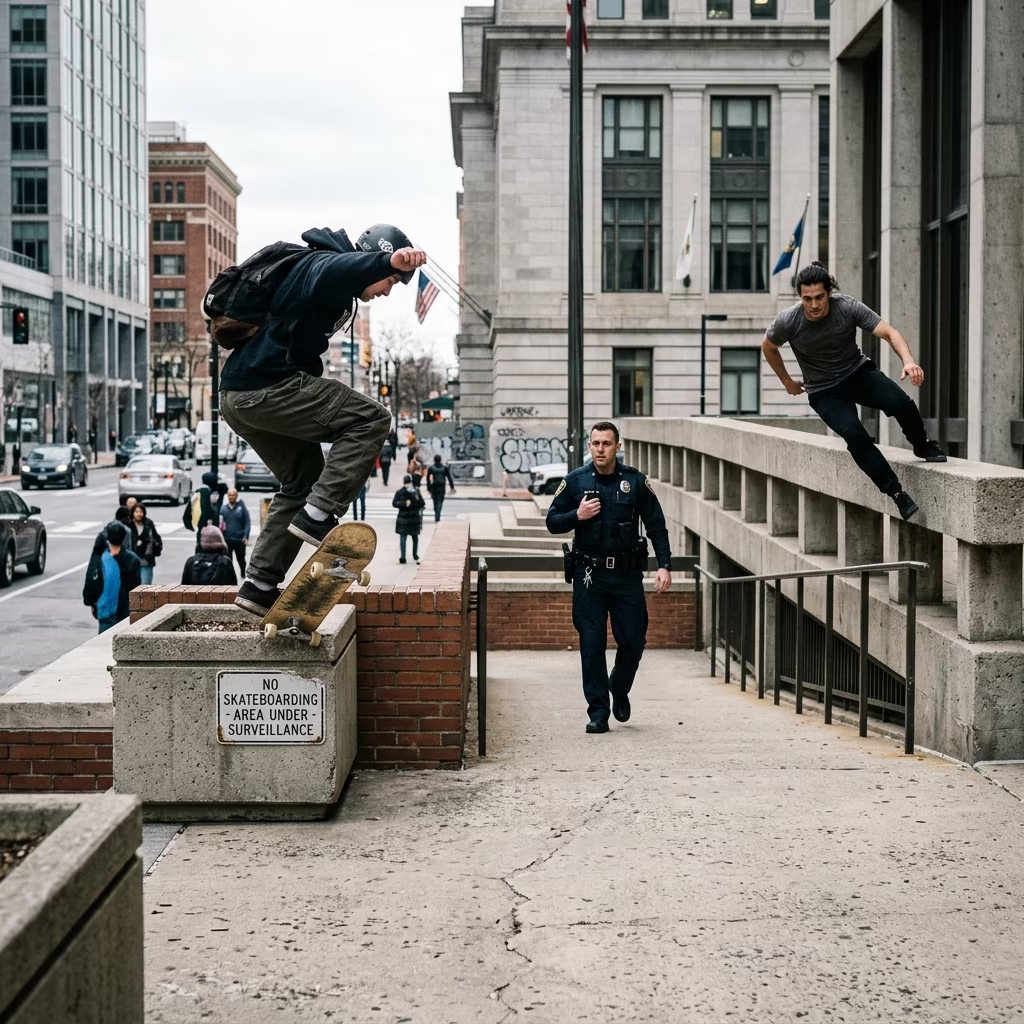
Skateboarding is not illegal in general, but it can become illegal when riders ignore local restrictions. Some cities limit where boards may be used, and property owners may post signs barring skating on private premises.
Rules may also mirror bicycle-style regulations, which can affect where a skateboarder may ride, whether a helmet is required, and how traffic laws apply. FindLaw notes that in some cities, skateboarding in streets or in restricted public spaces can carry fines, including penalties up to $500 in certain localities.
Common skateboarding violations include:
- Using sidewalks or streets where local law forbids it
- Ignoring posted no-skate zones on private property
- Failing to follow traffic controls
- Riding in areas reserved for pedestrians or transit access
How the law classifies these activities
The legal label attached to an urban sport depends on the behavior surrounding it. A single activity may involve several different legal theories at once.
| Activity | Typical legal issue | Possible consequence |
|---|---|---|
| BASE jumping | Unauthorized use of restricted space | Fines, trespass, park violations |
| Buildering | Entry without permission | Trespass, property damage claims |
| Street racing | Reckless operation on public roads | Criminal charges, nuisance claims |
| Train surfing | Unauthorized access to rail property | Criminal trespass, severe penalties |
| Skateboarding | Violation of local ordinance or posted rules | Fines, removal, citations |
Why safety rules and property rights matter together
Urban sports legal disputes usually blend two concerns: who controls the space and whether the activity endangers others. A city may tolerate a low-risk activity in a designated park but ban the same behavior on a crowded sidewalk, in a station, or on a rooftop.
Property rights are especially important. When a participant enters a building, transit system, bridge, or privately owned plaza without consent, the issue is not merely that the activity is unconventional. The issue is that the participant may be violating the owner’s right to exclude others.
Safety rules matter for the same reason. Activities that place spectators, workers, or motorists in danger can trigger criminal enforcement even when the participant claims it is only a sport. That is why officials often focus on reckless conduct, interference with transit, or endangerment in addition to trespass.
How participants can reduce risk
People who enjoy urban athletics can lower their legal exposure by treating the law as part of the gear list. Knowing the rules before starting an activity is usually far cheaper than paying for a citation, legal defense, or property damage.
- Check city ordinances before using streets, plazas, roofs, or transit areas.
- Get written permission before climbing or filming on private property.
- Use designated skate parks, racing venues, and climbing facilities when available.
- Follow posted signs, barriers, and closure notices.
- Avoid any activity that could interfere with traffic, transit, or emergency access.
When an activity has a safer legal alternative, that option is usually the best one. A sanctioned venue not only reduces liability but also protects bystanders and participants from foreseeable harm.
What happens if someone gets hurt?
Injury is a separate issue from criminal liability, but the two often overlap. A person harmed during an unlawful or reckless urban sport may still seek compensation in some situations, while the participant may also face criminal charges or fines. Civil disputes can involve trespass, negligence, property damage, or nuisance theories depending on the facts.
The injured person’s legal options may depend on whether the risk was obvious, whether the property was unsafe, and whether the injury resulted from conduct that went beyond the ordinary risks of the activity. Those issues are fact-specific, which is why the same incident can produce both a police response and a civil lawsuit.
Frequently asked questions
Is every urban sport illegal?
No. The activity itself is not always illegal. The problem usually arises when the sport is played on prohibited property, violates a city ordinance, or creates a danger to the public.
Can someone be arrested even if nobody is injured?
Yes. Trespass, unauthorized entry, and certain traffic offenses can lead to arrest or citation even without an injury. The absence of harm does not necessarily eliminate the offense.
Why is skateboarding treated differently in different places?
Because local governments can set different rules for public streets, sidewalks, and private property. A city may allow skating in one zone and ban it in another, so the same behavior can be legal in one neighborhood and punishable in the next.
Is street racing only a traffic issue?
No. Street racing can be both a traffic crime and a civil problem. FindLaw notes that drag racing can be treated as a public nuisance, which means lawsuits may follow in addition to criminal penalties.
What is the safest way to participate in an urban sport?
The safest approach is to use a permitted venue, confirm the local rules, and avoid any space where you lack permission. Activities that occur in designated facilities are much less likely to create criminal, civil, or safety problems.
Why the legal landscape keeps changing
Urban sports continue to evolve as cities redesign public space, transit systems add security measures, and property owners become more aggressive about controlling access. That means the legal risk can change quickly from one city to another or even from one block to the next.
For anyone involved in a high-risk urban activity, the key lesson is simple: athletic creativity does not override property rights, traffic laws, or public safety rules. The more a sport depends on uncontrolled spaces, the more likely it is to intersect with law enforcement and civil liability.
References
- 5 Urban Sports That Might Get You Arrested — FindLaw. 2024-01-01. https://www.findlaw.com/legalblogs/tarnished-twenty/5-urban-sports-that-might-get-you-arrested/
- Urban Sports: Legal Risks and Regulations — Scribd. 2017-01-01. https://www.scribd.com/document/370714324/Lesson-9-Free-Time-Activities-Urban-Sport
- Sports Injuries & Potential Legal Claims — Justia. 2024-01-01. https://www.justia.com/sports-law/sports-injury-claims/