
Wills After Divorce: Complete Post-Divorce Estate Checklist Now
How divorce affects your will and estate plan, and the key legal steps to protect your assets and your loved ones.
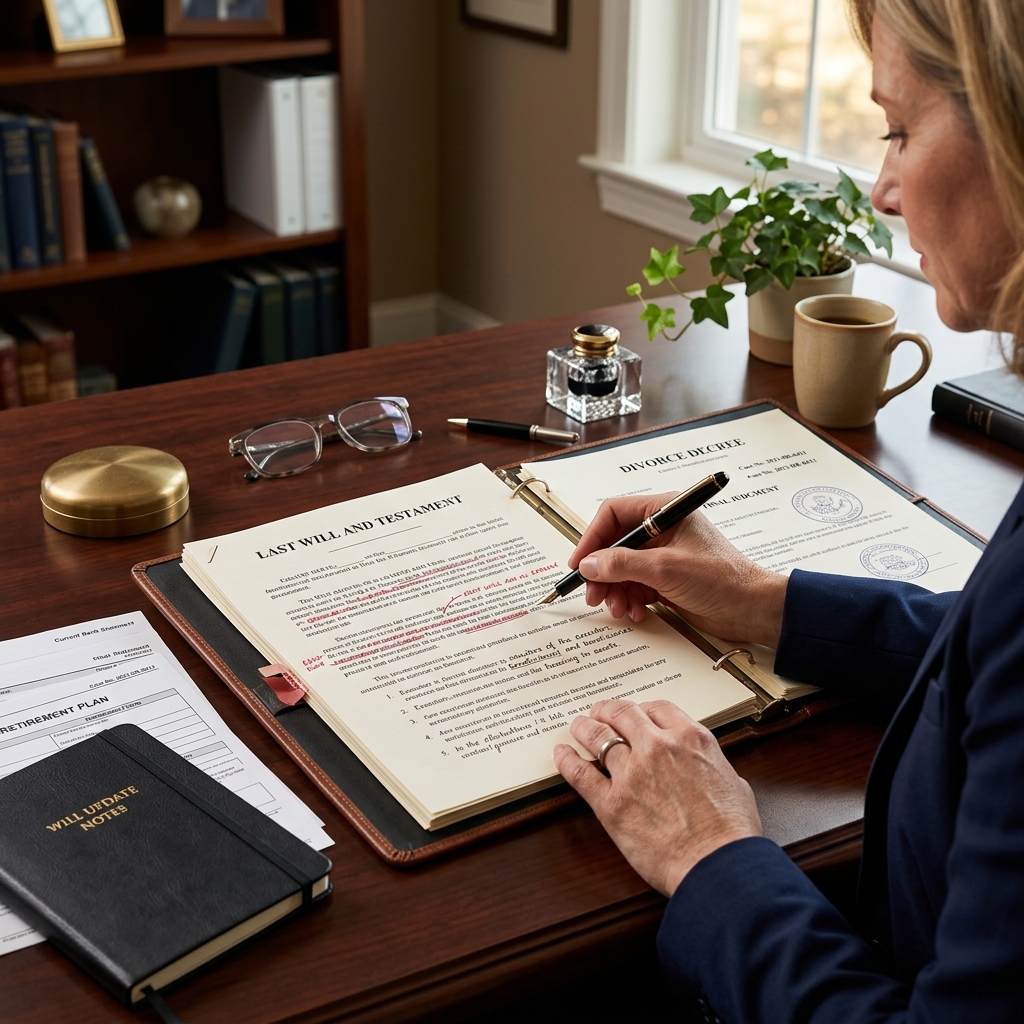
Ending a marriage is not just an emotional and practical transition; it is also a legal turning point for your will and broader estate plan. In many cases, your former spouse still appears in documents that control who inherits your property, who manages your affairs if you become incapacitated, and who cares for your children if you die. Unless you review and update these instruments, your estate may be distributed in ways you no longer intend.
This guide explains how divorce interacts with wills, what usually changes automatically under law, what does not change unless you act, and practical steps to take before, during, and after divorce to keep your estate plan aligned with your current life.
Why Divorce and Wills Are So Closely Linked
Most married people name their spouse as a primary beneficiary, executor, trustee, or agent in key legal documents. When the marriage ends, those choices may no longer make sense. Yet in many jurisdictions, a divorce does not completely revoke your will or all of the roles given to your ex-spouse.
Estate planning and family law intersect in several important ways:
- Your will determines who receives your probate assets and who manages your estate.
- Beneficiary designations on life insurance and retirement plans determine who receives those non-probate assets.
- Powers of attorney and health care directives decide who can act for you if you are incapacitated.
- Trusts may hold major assets, particularly family homes or investment accounts.
Because divorce can dramatically change relationships and financial obligations, revisiting all of these instruments is a critical part of the post-divorce process.
What Divorce Usually Changes Automatically — And What It Does Not
Many states have statutes that partially adjust estate plans after a divorce. These laws are designed to prevent ex-spouses from inheriting by accident when someone forgets to update their will.
| Aspect of Estate Plan | Common Legal Effect of Divorce | Still Requires Your Action? |
|---|---|---|
| Gifts to ex-spouse in a will | Often automatically revoked; ex-spouse treated as predeceased. | Yes – you still should create a new will to clarify your wishes. |
| Ex-spouse named as executor or trustee | Frequently revoked by statute; substitute may be appointed under law. | Yes – choose new fiduciaries and confirm successors. |
| Beneficiary titled on life insurance or retirement accounts | Often not changed automatically; original designation may control. | Yes – you must update each account with the provider. |
| Joint revocable living trust | Remains in force until revoked or amended; divorce may affect rights. | Yes – you typically must revoke or restate the trust. |
| Powers of attorney naming ex-spouse | Some jurisdictions automatically terminate these upon divorce. | Yes – create new powers and notify institutions. |
These automatic rules vary significantly by jurisdiction. Some states, for example, treat the ex-spouse as having died before you for purposes of your will, thereby skipping them and moving to contingent beneficiaries. Others leave more to the original document. Because the differences are substantial, it is essential to understand the law that applies where you live and where your estate will be probated.
Reviewing Your Will and Estate Plan During the Divorce Process
Ideally, you begin reviewing your estate plan when you first decide to divorce, not months or years afterward. However, automatic restraining orders or local rules may limit changes you are allowed to make while the case is pending.
Common restrictions include:
- Prohibitions on transferring assets outside the ordinary course of living expenses.
- Limits on changing beneficiaries of life insurance, retirement accounts, and some investment accounts without court permission.
- Requirements to maintain certain coverage or beneficiary designations until the court issues a final judgment.
Despite these limits, you may still be able to take important steps during the divorce:
- Inventory your estate planning documents – locate copies of your will, trusts, powers of attorney, and health directives.
- Identify every role your spouse currently holds – beneficiary, executor, trustee, guardian, agent under powers of attorney.
- Consult a family law and estate planning attorney to confirm which changes are permitted during the case.
- Plan specific post-judgment changes so you can act quickly once the divorce is final.
In some jurisdictions, you are expressly allowed to change your will even while the divorce is pending, so long as you do not violate financial restraining orders. Nonetheless, professional advice is important to avoid unintentionally breaching court rules.
Key Will Changes to Consider After Divorce
Once the divorce is finalized and any restraining orders expire, you typically have broad flexibility to revise your will and related documents. The following areas deserve close attention.
1. Beneficiaries of Your Estate
In a pre-divorce will, your spouse may have been the primary beneficiary of most or all of your estate. After divorce, you may want to redirect your assets to:
- Children or stepchildren.
- Parents, siblings, or other relatives.
- Charitable organizations or causes important to you.
- Friends or other individuals who have become significant in your life.
Even in states that automatically revoke gifts to an ex-spouse, creating a new will eliminates uncertainty and clarifies shares among the remaining beneficiaries.
2. Executors and Other Fiduciaries
Executors, personal representatives, trustees, and guardians play crucial roles in carrying out your estate plan. After divorce, you may prefer someone other than your ex-spouse in these positions.
Consider appointing:
- A trusted family member with good financial judgment.
- A professional fiduciary, such as a trust company, if your estate is complex.
- Alternate successors to avoid court appointment if your first choice cannot serve.
Review every document where your ex-spouse appears in any fiduciary role and revise accordingly.
3. Guardianship Provisions for Minor Children
Divorce does not change the fact that the surviving parent is usually the natural guardian if one parent dies. But your will can address what happens if both parents die or are unable to care for the children.
Post-divorce guardianship planning should address:
- Preferred guardians if both you and your ex-spouse pass away.
- Backup guardians if your first choice cannot serve.
- Financial arrangements, such as a testamentary trust or separate trustee, to manage assets for the children’s benefit.
- Any special needs or educational goals that should be supported.
Although the court retains final authority over guardianship, clear wishes in your will carry significant weight in judicial decisions.
Beyond the Will: Other Essential Post-Divorce Updates
Changing your will is only one part of the picture. Many valuable assets pass outside probate, and several critical powers are granted by separate documents.
Updating Beneficiary Designations
Life insurance policies, retirement accounts such as 401(k)s and pensions, and some brokerage accounts rely on beneficiary forms rather than your will. In many jurisdictions, divorce does not automatically change those designations.
Post-divorce, you should:
- Request beneficiary forms for each retirement plan and insurance policy.
- Confirm whether your ex-spouse is still listed as primary or contingent beneficiary.
- Update designations in line with your new estate plan, subject to any court orders or settlement terms.
- Keep copies of the new forms and confirmation from the provider.
Failure to update these accounts can result in substantial sums passing to an ex-spouse despite your divorce.
Revising Trusts Created During the Marriage
Many couples establish joint revocable living trusts to hold their home and investments. Once the marriage ends, that shared structure may no longer be appropriate.
Typical steps include:
- Formally revoking a joint trust in writing, in accordance with its terms.
- Retitling real estate and financial accounts out of the joint trust into your name or a new individual trust.
- Creating a new revocable trust that reflects your post-divorce beneficiaries and trustees.
For assets already in a separate individual trust, amendments may remove the ex-spouse as beneficiary or trustee, subject to any negotiated obligations in the divorce judgment.
Powers of Attorney and Health Care Directives
If your ex-spouse was named as your agent under a financial power of attorney or health care directive, you may wish to appoint someone else.
After divorce:
- Check whether your jurisdiction automatically terminates powers of attorney on divorce.
- Even if terminated, execute new documents naming trusted agents (for finances and medical decisions).
- Deliver updated copies to banks, physicians, and any relevant institutions.
Without current documents, your loved ones may face delays or court processes to manage your affairs if you become incapacitated.
Coordinating Estate Planning With Your Divorce Settlement
Your divorce judgment or settlement agreement may impose specific requirements on your estate plan. For example, you may agree to maintain life insurance for child support or college costs, or to leave certain assets to children from the marriage.
When revising your will and related documents, ensure that they:
- Comply with all court orders regarding insurance, beneficiary designations, and asset transfers.
- Reflect any obligations to support children or an ex-spouse after death.
- Coordinate with property division terms to avoid conflicts or misunderstandings.
Estate planning and family law counsel can work together to align your documents with the legal framework set by the divorce.
Practical Checklist: Steps to Take After Your Divorce Is Final
To make the process manageable, you can approach post-divorce estate planning as a checklist.
- Review your existing will and note any references to your ex-spouse.
- Consult an attorney to understand how local law treats gifts and appointments to ex-spouses.
- Draft and sign a new will that reflects your current wishes.
- Update beneficiary designations on life insurance, retirement plans, and applicable accounts.
- Address joint or individual trusts: revoke, amend, or create new trusts as needed.
- Replace powers of attorney and health care directives naming your ex-spouse.
- Clarify guardianship preferences for minor children in your new documents.
- Store your documents securely and inform key people (executor, agent, trustee) of their roles.
Frequently Asked Questions About Wills and Divorce
Does a divorce automatically cancel my will?
In most jurisdictions, divorce does not fully cancel your will. Instead, statutes often revoke gifts and roles given to your former spouse, while leaving the rest of the will intact. Because this can produce unpredictable results, it is usually wise to create a new will tailored to your post-divorce situation.
Can I change my will while my divorce case is still pending?
In many places, you may change your will during a divorce, but you might be limited in transferring assets or changing certain beneficiary designations due to automatic restraining orders or court rules. You should consult your attorney before making changes to ensure compliance with local law and any temporary orders.
What happens if I forget to update my life insurance or retirement beneficiaries?
If you do nothing, the person listed on the beneficiary form—often your ex-spouse—may still receive the benefit, even after divorce, unless local law or the divorce judgment says otherwise. These accounts generally follow the designation on file with the provider, so it is critical to update them explicitly.
Do I have to name my ex-spouse as guardian of our children in my will?
Courts typically consider the surviving biological or legal parent as the first choice for guardianship. Your will usually matters most if both parents die or are unable to care for the children. In that scenario, your expressed preferences for guardians can significantly influence the court’s decision.
Is professional legal advice necessary, or can I use online forms?
While online forms exist, divorce introduces complex interactions between property division, support obligations, and estate planning. Official court self-help resources emphasize reviewing legal and financial records and often recommend seeking legal advice for significant changes. Given the long-term impact of estate planning documents, consulting an experienced attorney is generally advisable.
References
- Steps to take after your divorce is final — California Courts Self-Help. 2023-06-01. https://selfhelp.courts.ca.gov/divorce/after-divorce-is-final
- Estate Planning After Divorce in California — Clark Allison LLP. 2022-09-15. https://www.clarkallison.com/blog/estate-planning-after-divorce-in-california
- Remember to Adjust Your Estate Plan During or After a Divorce — Bowditch & Dewey. 2024-08-23. https://www.bowditch.com/allinthefamily/2024/08/23/remember-to-adjust-your-estate-plan-during-or-after-a-divorce/
- Adjusting Your Will During a Divorce — Laubacher & Co. 2023-11-01. https://www.laubacherlaw.com/blog/2023/november/adjusting-your-will-during-a-divorce/
- Does a divorce revoke a will? — The Private Office. 2021-05-20. https://www.theprivateoffice.com/insights/does-a-divorce-revoke-a-will
Similar Articles








Read full bio of medha deb


