
Unveiling Car Crash Probes: The Full Process
Demystifying the step-by-step journey of car accident investigations, from initial response to legal resolutions and insurance outcomes.
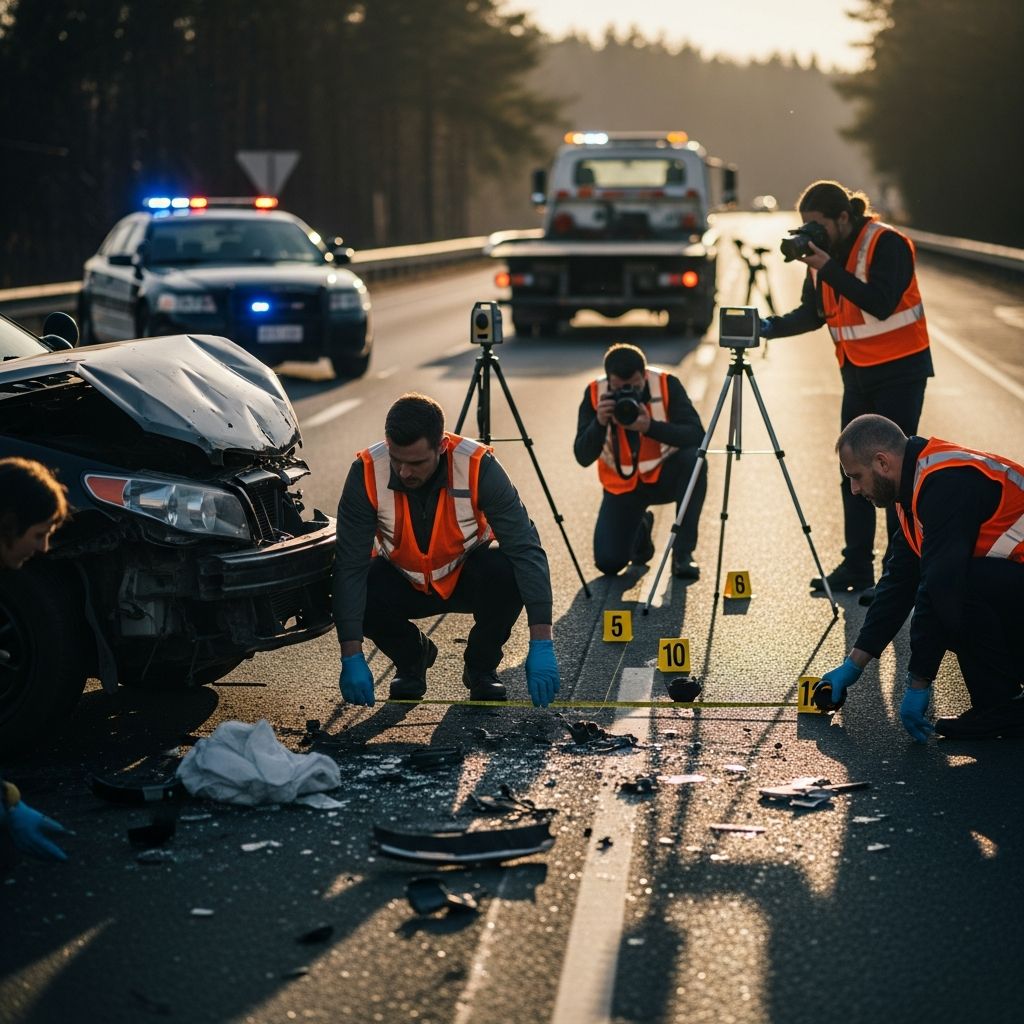
Car accidents disrupt lives in an instant, leaving a trail of questions about what went wrong. Investigations into these crashes serve as the cornerstone for establishing fault, supporting insurance claims, and pursuing justice in court. This detailed guide breaks down every phase of the process, drawing from established protocols used by law enforcement, experts, and insurers to reconstruct events and deliver accountability.
Immediate Response: Securing the Chaos
The clock starts ticking the moment a crash occurs. First responders—typically police officers—arrive to transform pandemonium into an ordered investigation site. Their priority is twofold: ensure public safety and preserve the scene’s integrity. Officers cordon off the area with flares, cones, or barriers to prevent further incidents while allowing systematic evidence collection.
- Life-Saving Actions: Check for injuries among drivers, passengers, and bystanders; administer first aid or summon ambulances and fire services if vehicles pose fire risks.
- Traffic Management: Direct oncoming vehicles to maintain flow and safety around the wreckage.
- Initial Documentation: Note time, location, weather, road conditions, and visibility—factors that can influence crash dynamics.
This phase sets the foundation. Rushed or incomplete actions here can compromise later findings, which is why trained professionals follow strict guidelines from bodies like the National Transportation Safety Board (NTSB) for high-profile cases.
Evidence Gathering: Building the Puzzle
With safety addressed, investigators shift to meticulous data collection. Every detail—from skid marks to shattered glass—holds clues to speed, braking, and impact angles.
Photographs capture the scene from multiple angles: vehicle positions, debris patterns, tire tracks, and environmental hazards like potholes or faded signs. Measurements using lasers or tape quantify distances, aiding digital reconstructions. Officers interview drivers, passengers, and witnesses promptly, recording statements before memories fade.
| Evidence Type | Purpose | Collection Method |
|---|---|---|
| Physical Debris | Reveals impact force and direction | Photographs, sketches, bagging samples |
| Vehicle Damage | Indicates collision points and speeds | Inspections, damage pattern analysis |
| Witness Accounts | Provides sequence of events | Audio/video recordings, written statements |
| Digital Data | Extracts speed, braking from black boxes | Event Data Recorder (EDR) downloads |
In fatal crashes, this extends to securing the site for prolonged analysis, often involving specialized units.
Police Crash Reports: The Official Narrative
Central to every investigation is the police crash report—a comprehensive document synthesizing on-scene findings. Filed within 10 days in most jurisdictions, it includes diagrams, narratives, citations issued, and preliminary fault assignments.
These reports influence insurance payouts and lawsuits profoundly. However, they aren’t infallible; incomplete details or officer biases can necessitate supplemental probes. Key elements typically cover:
- Driver information, licenses, and insurance.
- Diagram of vehicle paths and impact zones.
- Citations for violations like speeding or DUI.
- Contributing factors such as weather or mechanical failure.
Victims should obtain copies immediately via department requests or online portals to bolster their claims.
Advanced Reconstruction: Science Meets Detective Work
For complex or fatal incidents, basic reports fall short. Enter accident reconstructionists—engineers and forensic experts who apply physics, math, and technology to rewind the crash.
Using software like PC-Crash, they model trajectories based on skid lengths, crush depths, and EDR data from vehicle “black boxes,” which log pre-crash metrics. Formulas estimate speeds: for instance, skid speed approximation is ( v = sqrt{30 times d times f} ), where ( d ) is skid distance and ( f ) is friction coefficient.
This phase can last weeks, overlapping with lab analysis of fluids for drugs/alcohol or mechanical parts for defects. NTSB protocols emphasize non-linear phases, where new data prompts re-analysis.
Role of Medical and Forensic Experts
Fatalities trigger deeper scrutiny. Coroners or medical examiners perform autopsies to pinpoint death causes—blunt trauma, internal bleeding—via toxicology for impairments and injury timelines.
These findings link crash mechanics to outcomes, countering insurer denials. Families gain closure, while lawyers leverage reports for wrongful death suits.
Insurance Company Scrutiny: Claims Under the Microscope
Insurers launch parallel probes, dispatching adjusters to review police reports, photos, and statements within 60 days. They hunt for fraud, undervalued damages, or shared fault to minimize payouts.
Policyholders must cooperate but avoid admissions. Disputed claims often hire independent investigators, extending timelines. Strong evidence tilts negotiations favorably.
Legal Dimensions: From Claims to Courtroom
Investigations fuel civil suits for compensation—medical bills, lost wages, pain. Lawyers commission private probes if police reports lack depth, consulting experts for depositions.
Criminal angles emerge in reckless cases: DUI, hit-and-run. Prosecutors rely on reconstructions for charges. Timelines vary: simple crashes resolve in days; fatalities stretch months.
Timelines and Expectations: What to Anticipate
Durations hinge on severity:
- Minor Crashes: Scene-complete in hours; report in days.
- Injury Cases: 2-4 weeks with medical input.
- Fatal/Complex: 1-6 months, per NTSB-like processes.
Delays arise from lab results, witness availability, or disputes. Patience is key, but proactive evidence preservation speeds resolutions.
Victim Tips: Empowering Your Position
Don’t navigate alone. Post-crash:
- Seek medical care immediately—document injuries.
- Collect your evidence: photos, contacts.
- Retain a lawyer early for independent investigation.
- Avoid insurer traps; communicate via counsel.
These steps fortify your case amid multi-party probes.
Frequently Asked Questions About Car Crash Investigations
Who leads a car crash investigation?
Local police or highway patrol initiate on-scene work, escalating to specialists for fatalities or complexities.
How long until I get the police report?
Typically 7-10 days for standard crashes; longer for detailed ones.
Can I conduct my own investigation?
Yes, victims or lawyers often hire private experts to supplement official efforts.
What if the crash involves a commercial truck?
Federal rules (FMCSA) mandate company logs and black box data, involving DOT investigators.
Do investigations affect my insurance rates?
Fault findings do; no-fault states protect minor incidents.
Preventing Future Crashes: Lessons from Investigations
Beyond liability, probes drive safety. Aggregated data informs road designs, enforcement, and campaigns—reducing recurrence through evidence-based reforms.
References
- What Is the Fatal Car Accident Investigation Procedure? — LV Accident. 2023. https://lvaccident.com/blog/what-is-the-fatal-car-accident-investigation-procedure/
- Steps of a Cincinnati Car Accident Investigation — Dickman Law Office. 2023. https://www.dickmanlawoffice.com/car-accidents/steps-cincinnati-car-accident-investigation/
- The Comprehensive Guide to Car Accident Investigations — Ward Law Group. 2023. https://www.855dolor55.com/blog/the-comprehensive-guide-to-car-accident-investigations-how-the-ward-law-group-handles-your-case/
- The Investigative Process — National Transportation Safety Board (NTSB). 2024-04-03. https://www.ntsb.gov/investigations/process/Pages/default.aspx
- What Is the Fatal Car Accident Investigation Procedure? — Haque Law PLLC. 2023. https://www.haquelawpllc.com/faqs/what-is-the-fatal-car-accident-investigation-procedure/
- How Does a Traffic Accident Investigation Work in Las Vegas? — The 702 Firm. 2023. https://the702firm.com/blog/how-does-a-traffic-accident-investigation-work/
Similar Articles








Read full bio of medha deb




