
Unpaid Wages and the DOL: How Workers Get Their Money Back
A practical guide to how the Wage and Hour Division recovers unpaid wages, what workers can do, and how employers can stay compliant.
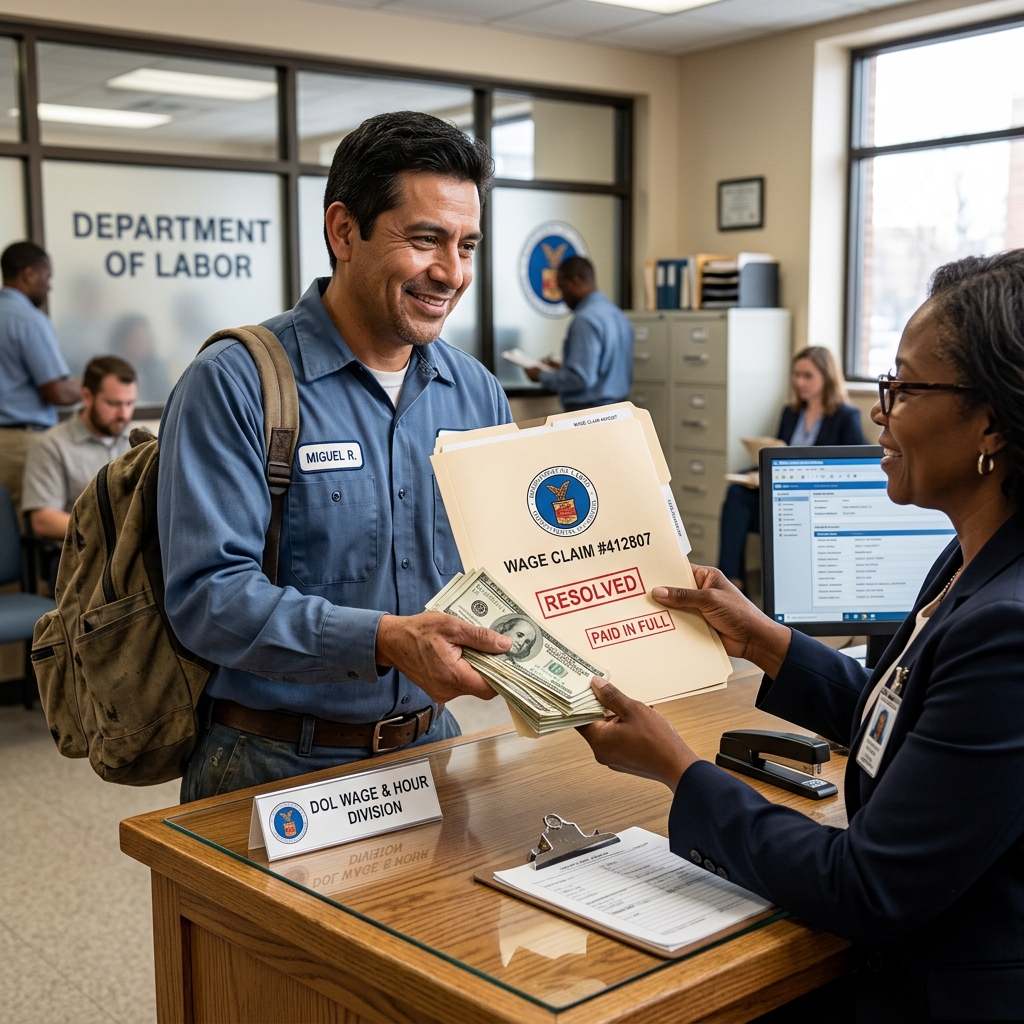
The U.S. Department of Labor’s Wage and Hour Division (WHD) has quietly become one of the most important enforcement agencies for workers who are missing paychecks, overtime, or legally required benefits. Each year it recovers hundreds of millions of dollars in back wages for employees across the country, often reaching record totals through investigations and settlements. As enforcement strategies evolve, both workers and employers need to understand how unpaid wages are identified, collected, and ultimately delivered to the employees who earned them.
This article explains how unpaid wages arise, how the WHD investigates and recovers those wages, what workers can do to claim money that is owed, and what employers should know to stay compliant. It draws on federal guidance and practical steps that apply nationwide, with a focus on the Fair Labor Standards Act (FLSA) and related laws.
1. Why Unpaid Wages Are a Major National Issue
Unpaid wages appear in many forms: missing overtime, off-the-clock work, sub-minimum wages, misclassification, and unauthorized deductions. Under the FLSA, WHD enforces standards on minimum wage, overtime pay, recordkeeping, and child labor, among other requirements. When employers fail to meet these standards, workers can lose significant income over time.
Common Sources of Unpaid Wages
- Unpaid overtime for hours worked above 40 in a workweek for non-exempt employees.
- Off-the-clock work, such as prep time, closing tasks, or mandatory meetings not recorded on time sheets.
- Improper deductions for uniforms, equipment, or cash shortages that drop pay below minimum wage.
- Misclassification of employees as independent contractors or as exempt from overtime when they do not meet legal criteria.
- Failure to pay final wages after termination or resignation, where state law often sets strict deadlines.
Because many workers are reluctant to complain directly to their employers or lack detailed knowledge of wage laws, federal enforcement by WHD plays a critical role in recovering money that workers did not realize they could claim.
2. How the Wage and Hour Division Enforces Wage Laws
The WHD is the federal agency charged with enforcing the FLSA as well as other pay-related laws like the Family and Medical Leave Act and certain prevailing wage statutes. Enforcement often happens through investigations triggered by complaints, strategic enforcement initiatives, or targeted audits in high-risk industries such as food service, construction, and hospitality.
Complaint-Driven Investigations
Many investigations begin when a worker or third party files a complaint alleging unpaid wages. The Department of Labor outlines a straightforward complaint process:
- Workers can call the WHD at its national helpline or contact the nearest office for assistance.
- Complaints can be filed by workers themselves or by third parties such as advocates or family members.
- WHD then evaluates the complaint to determine whether an investigation is appropriate.
If an investigation is opened and violations are found, WHD typically seeks to recover back wages for all affected employees, not just the person who complained.
What Investigators Review
During an investigation, WHD investigators often request a wide range of records to verify compliance with wage and hour laws. Employers must maintain specific records under the FLSA, including information on hours worked and wages paid.
Typical records reviewed include:
- Daily and weekly time records showing hours worked for each employee.
- Payroll records documenting straight-time earnings, overtime premiums, and total compensation.
- Pay dates, pay periods covered, and any additions to or deductions from wages.
- Documents that show the regular rate of pay, especially when bonuses or incentives are involved.
Investigators may also interview employees, review workplace practices, and compare written policies with actual behavior in the workplace.
3. From Violation to Back Pay: How Money Is Recovered
When WHD finds violations and determines that workers are owed money, the agency negotiates with the employer to secure back wages. In some cases, employers pay voluntarily; in others, WHD may seek legal enforcement through court actions or settlements.
What Back Wages Include
Back wages can cover several types of underpayments, such as:
- Unpaid regular wages for hours worked but never compensated.
- Unpaid overtime calculated at one-and-a-half times the regular rate for hours over 40 in a workweek.
- Minimum wage shortfalls when employees are paid less than the federal or applicable state minimum wage.
- Improper deductions that unlawfully reduced wages, which must be repaid to workers.
For an hourly worker, unpaid wages can be estimated by multiplying uncompensated hours by the correct wage rate, and then applying the overtime premium where required.
How Workers Receive Their Money
If WHD recovers back wages, it distributes the funds directly to affected employees whenever possible. Workers may receive checks from the Department of Labor after the investigation is complete and the employer has submitted payment.
In situations where workers cannot be located immediately, the Department of Labor maintains databases where individuals can search for unclaimed wages recovered on their behalf. If the money remains unclaimed for a certain period, federal law requires that it ultimately be transferred to the U.S. Treasury.
| Stage | What Happens | Outcome for Workers |
|---|---|---|
| Complaint or audit | WHD receives a complaint or targets an industry or employer for review. | Workers may be interviewed or asked for documentation. |
| Investigation | Investigators review records, practices, and pay calculations. | Violations, if any, are identified and quantified. |
| Back wage calculation | WHD calculates unpaid regular wages, overtime, and other shortfalls. | Workers are assigned specific back wage amounts. |
| Collection from employer | Employer pays the amount due, sometimes with penalties. | Funds become available for distribution. |
| Distribution and claims | WHD sends checks or posts workers in an online database for unclaimed wages. | Workers cash checks or submit claims to obtain the money. |
4. What Workers Should Do If They Suspect Unpaid Wages
Although WHD has broad authority to investigate, individual workers play a key role in initiating complaints and proving the amount of unpaid wages owed. Accurate records and timely action significantly improve a worker’s ability to recover what they are owed.
Step 1: Track and Preserve Your Own Records
Government agencies advise workers to keep their own logs of hours worked and to retain pay stubs and other documents. Even if an employer’s official records are incomplete or inaccurate, worker-kept records can help establish the true number of hours worked.
- Maintain a personal timesheet with start and end times, breaks, and total daily hours.
- Keep all pay stubs or wage statements showing hours worked and pay received.
- Save bank statements, direct deposit confirmations, or screenshots of mobile pay apps.
- Preserve texts, emails, or written notes where a supervisor assigns work or approves overtime.
In many states, workers only have a limited number of years to file claims for unpaid wages, so keeping records for several years is advisable.
Step 2: Calculate a Rough Estimate of What You Are Owed
While a formal investigation will conduct its own calculations, workers can estimate unpaid wages by:
- Multiplying unpaid regular hours by the correct wage rate.
- Multiplying overtime hours (over 40 in a workweek) by 1.5 times the regular rate.
- Adding differences between actual pay and the applicable minimum wage, including state minimums where higher.
- Including unlawful deductions that should be reimbursed.
An estimate does not need to be perfect, but it provides a useful starting point for discussions with a lawyer, a state agency, or WHD.
Step 3: Decide Where to File a Complaint
Workers have options when seeking recovery:
- Internal complaint to the employer, often guided by the company’s handbook.
- Complaint to WHD, which can be submitted online or by phone and will be routed to a local field office.
- State wage claim with a state labor agency or labor commissioner’s office, especially for violations of state wage laws.
- Civil lawsuit with the assistance of an attorney, where available and appropriate.
The federal government provides step-by-step guidance for filing a WHD complaint, including what information workers should gather before contacting the agency.
5. The Worker’s Experience Filing a WHD Complaint
Filing a complaint with WHD is designed to be accessible and does not require a lawyer. The process generally follows several key steps.
Information You Need to File
Before filing, workers should gather basic details about their job and pay, such as:
- Name, address, and contact information for the worker.
- Employer’s legal name, address, and telephone number.
- Name of the owner, manager, or person in charge.
- Description of job duties and type of work performed.
- Dates when the underpayment occurred and how the worker was paid (cash, check, app).
How the Complaint Is Processed
Once a worker contacts WHD:
- The complaint is routed to the nearest WHD field office.
- The office contacts the worker, often within a short timeframe, to obtain more information and determine whether to open an investigation.
- If an investigation proceeds and violations are confirmed, WHD will request payment of back wages from the employer.
- Workers may eventually receive checks for their unpaid wages if collection is successful.
WHD also works with workers throughout the process, answering questions and explaining potential outcomes.
6. What Employers Should Know About WHD Enforcement
For employers, the growing focus on wage enforcement and record-breaking back wage recoveries signal the need for robust compliance systems. A failure to maintain proper records or to pay correctly can lead not only to back wage liability, but also to penalties, reputational harm, and future monitoring.
Recordkeeping Obligations and Best Practices
Under the FLSA and WHD regulations, employers must maintain accurate records for each non-exempt employee. These records must be made available to investigators upon request and typically include:
- Total daily and weekly hours worked for each employee.
- Total straight-time earnings and overtime premiums for each pay period.
- Regular rate of pay in workweeks where overtime is paid.
- Pay dates and pay periods covered by each payment.
- All additions to or deductions from wages, including the nature and amount of each.
Employers should ensure that timekeeping systems accurately capture work performed before or after scheduled shifts, as off-the-clock work can generate significant liability if not recorded and paid.
Handling WHD Investigations Carefully
When WHD initiates an investigation, cooperating with reasonable requests is important, but employers should also be strategic in how they respond. Legal guidance often recommends:
- Producing only the records specifically requested, not entire personnel files or unrelated documents.
- Protecting self-audit reports and internal legal analyses, which may be interpreted as admissions of violations if shared.
- Identifying and marking any trade secrets or confidential business information before production.
- Maintaining a document control log that lists all records provided to investigators.
Proactive self-audits and consultation with employment counsel can help identify wage issues before they draw the attention of enforcement agencies or private lawsuits.
7. Frequently Asked Questions About Unpaid Wages and WHD
Do I need a lawyer to file a complaint with the Department of Labor?
No. Workers can file complaints directly with WHD by phone or online without legal representation. That said, speaking with an attorney can help you understand your rights, evaluate state law remedies, and decide whether to pursue a separate lawsuit.
Can I be fired for contacting the Wage and Hour Division?
Federal law generally prohibits retaliation against workers who assert their rights under the FLSA or cooperate with WHD investigations. While retaliation does occur in practice, it can expose employers to additional legal claims and penalties.
How far back can unpaid wage claims go?
The FLSA typically allows workers to recover unpaid wages for a limited number of years, and many states have their own deadlines for filing wage claims. For example, some state labor agencies set specific periods for claiming unpaid minimum wage, overtime, and other wage violations. Because deadlines vary, workers should act promptly and consult reliable guidance or an attorney.
What if I am paid by salary—can I still get overtime?
Being paid a salary does not automatically make an employee exempt from overtime. The FLSA uses both salary thresholds and job duty tests to determine whether employees are exempt from overtime requirements. Many salaried workers are still non-exempt and entitled to overtime pay when they work more than 40 hours in a week.
How can I see if the DOL already has money waiting for me?
The Department of Labor operates online tools where workers can search for unclaimed back wages collected by WHD. If your name appears in the database, you can submit a claim to receive the money. Unclaimed funds eventually must be transferred to the U.S. Treasury if they are not claimed within a specified period.
Can I both file with WHD and sue my employer?
In some situations, workers may have the option to pursue both administrative and judicial remedies, but the interaction between these options can be complex. Workers should seek legal advice to understand whether a WHD investigation, private lawsuit, or both best serves their interests, and how settlements or releases might affect future claims.
8. Key Takeaways for Workers and Employers
The surge in recovered back wages in recent years reflects heightened attention to wage theft and stronger enforcement efforts at the federal and state levels. As WHD continues to bring in record amounts of unpaid wages, the stakes are high for both sides of the employment relationship.
- Workers should track hours, keep pay records, and promptly seek help when wages appear incorrect.
- Filing a WHD complaint is free, accessible, and can trigger investigations that recover wages for many employees at once.
- Employers must maintain meticulous records, audit their practices, and respond thoughtfully to agency inquiries to avoid costly violations.
- Both workers and employers benefit from clear, lawful pay practices that reduce disputes and ensure everyone is compensated fairly for their labor.
References
- Workers Owed Wages (WOW) — U.S. Department of Labor, Wage and Hour Division. 2023-09-18. https://webapps.dol.gov/wow/
- How to File a Complaint — U.S. Department of Labor, Wage and Hour Division. 2024-02-01. https://www.dol.gov/agencies/whd/contact/complaints
- Filing a Complaint with the U.S. Department of Labor’s Wage and Hour Division — worker.gov (U.S. Department of Labor). 2023-08-10. https://www.worker.gov/actions-whd-claim/
- Labor Commissioner’s Office – How to File a Wage Claim — California Department of Industrial Relations. 2023-06-30. https://www.dir.ca.gov/dlse/howtofilewageclaim.htm
- How to Calculate Unpaid Wages and File a Claim — Barrett & Farahany. 2023-05-05. https://www.justiceatwork.com/how-to-calculate-unpaid-wages-and-file-a-claim/
- Wage & Hour FAQ #3: What Records Must Be Provided to the Department of Labor? — Epstein Becker & Green, P.C. 2019-04-22. https://www.wagehourblog.com/wage-hour-faq-3-what-records-must-be-provided-to-the-department-of-labor
- Wage Claims — FloridaLawHelp.org. 2023-11-15. https://www.floridalawhelp.org/income-finances/debt-consumer-issues/wage-claims
Similar Articles








Read full bio of medha deb




