
Unmarried Parents In California: 5 Ways To Secure Parentage Now
How California law treats custody, support, and parentage for unmarried parents.
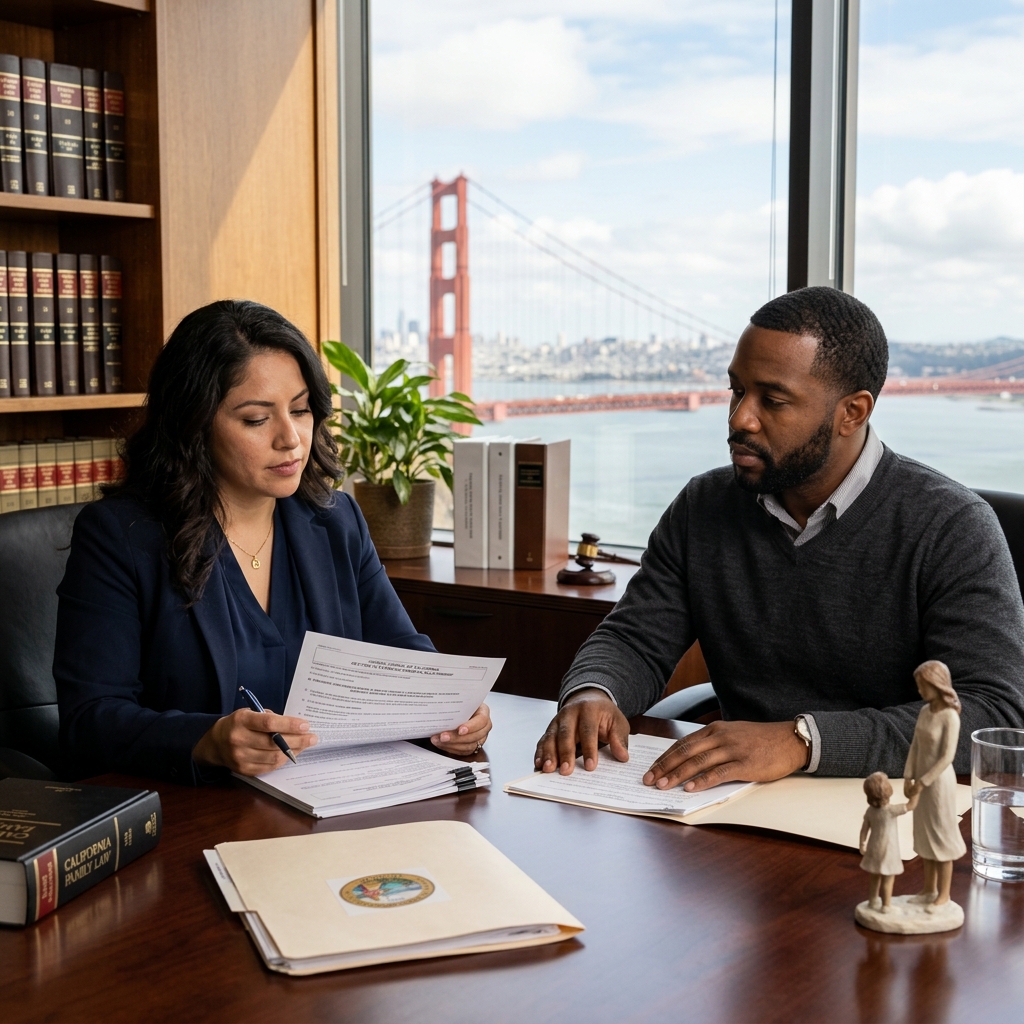
California law gives unmarried parents important legal protections, but those rights do not always arise automatically in the same way they do for married parents. The most important threshold issue is parentage: until the law recognizes a person as a legal parent, custody, visitation, and support orders may be unavailable or limited. Once parentage is established, courts can address parenting time, decision-making authority, and financial support under the same broad family-law principles that apply to other parents.
Why parentage matters before anything else
In disputes involving unmarried parents, the first question is usually not who “feels” like a parent, but who is a legal parent. California’s family-law system uses parentage to determine who can ask for custody, who can seek visitation, and who may be ordered to pay support. Without that legal status, a parent may have little ability to participate in court decisions about a child’s life.
This is especially important for fathers who are not married to the child’s mother at the time of birth. The mother is generally recognized as the legal parent by virtue of giving birth, but the other parent often must take legal steps to confirm parentage. That process can happen voluntarily or through the courts, depending on whether the parents agree.
How California establishes legal parenthood
There are two common paths to establishing parentage in California: a voluntary acknowledgment signed by the parents, or a court case under the state’s parentage laws. The right path depends on whether the parents agree about the child’s parentage.
- Voluntary acknowledgment: When both parents agree, they may sign a declaration or acknowledgment of parentage.
- Court determination: If parentage is disputed, a court action can be filed and genetic testing may be ordered.
A voluntary acknowledgment can be a practical solution because it creates legal recognition without full litigation. However, it is still a serious legal document. Once signed, it may have the same effect as a court judgment unless it is timely challenged or rescinded under the rules that apply to the form.
What mothers need to know
Unmarried mothers usually begin with immediate legal recognition as the child’s parent. That means they are often able to make initial decisions about the child’s care, residence, and day-to-day needs before any court order is entered. In practice, this gives the mother a default legal position until parentage or custody is addressed in a formal proceeding.
That said, default recognition does not mean permanent control over every issue. Once the other parent establishes legal parentage, the court can consider custody and visitation requests from either side. The child’s best interests remain the guiding standard for any orders involving parenting time or decision-making.
What fathers need to do to protect their rights
For unmarried fathers, the practical priority is usually to establish legal parentage as soon as possible. Without that step, it can be difficult to request visitation, participate in major decisions, or seek a custody order. In other words, fatherhood in the emotional or biological sense is not always the same as fatherhood in the legal sense.
Once paternity or parentage is recognized, a father may ask the court for custody or visitation and may also become responsible for child support. Legal parentage cuts both ways: it creates rights, but it also creates duties.
Custody and visitation after parentage is established
After parentage is established, California courts evaluate custody using the child’s best interests. That approach can include both legal custody and physical custody. Legal custody concerns who makes major decisions about health care, schooling, and welfare. Physical custody concerns where the child lives and how parenting time is divided.
Courts may award joint custody, sole custody, or a combination of arrangements depending on the facts. Unmarried parents are not treated as second-class parents once parentage is proven; instead, the court focuses on the child’s needs, each parent’s involvement, and whether a proposed arrangement promotes stability.
| Issue | What it means | Why it matters |
|---|---|---|
| Legal custody | Authority to make major decisions for the child | Affects schooling, medical care, and similar choices |
| Physical custody | Where the child lives and spends time | Shapes the parenting schedule and routine |
| Visitation | Scheduled parenting time for the noncustodial parent | Preserves the parent-child relationship |
| Parentage | Legal recognition as a parent | Usually the gateway to custody and support orders |
Child support responsibilities
Once a child has two legally recognized parents, California courts may order child support based on the child’s needs and each parent’s financial circumstances. Support is designed to help cover daily necessities such as housing, food, clothing, education-related expenses, and health-related costs.
Support obligations can arise whether the parents were ever married or not. The key point is that legal parentage connects the child to both parents for support purposes. If one parent has primary physical custody, the other parent may be ordered to contribute financially. If custody is shared, support may still be required depending on income and time-sharing.
Pregnancy and birth-related expenses
Legal disputes between unmarried parents may also include reimbursement for pregnancy and birth-related costs. These can involve medical bills, health insurance premiums, and other expenses associated with bringing the child into the world. In some cases, the court may assign responsibility for those costs as part of the overall parentage or support case.
This issue is often overlooked, but it can matter significantly when one parent has paid substantial out-of-pocket costs before the child was born. California courts have authority to address those expenses when parentage is established.
Government assistance and reimbursement issues
If a mother receives public assistance, the state may seek reimbursement from the other parent once paternity is established. That process exists because government benefits are intended to support the child, while the legal parents remain responsible for the child’s financial care. As a result, parentage cases can have consequences beyond the immediate family dispute.
This does not mean public assistance is unavailable to unmarried mothers. It means that once the state provides support, it may later pursue the legally responsible parent for repayment or ongoing contributions. The parentage determination is what gives the state a basis to do that.
Can a parent change their mind after signing?
In California, a signed acknowledgment of parentage is not always irreversible, but it is not casual either. The law provides limited opportunities to rescind or challenge the document within a specific time frame and under specific conditions. After that window closes, the acknowledgment may be treated as final unless a court allows relief for a legally valid reason.
Because of those consequences, parents should not sign parentage paperwork lightly. If there is any uncertainty about biological parentage, legal obligations, or the meaning of the document, the issue should be reviewed carefully before signing.
What the court considers in a parentage case
When parents do not agree, the court may use testimony, documents, and genetic evidence to determine whether a legal parent-child relationship exists. Once that relationship is established, the court can move to custody, visitation, and support questions.
- Whether the child has an existing parent-child bond with either party
- Whether one parent has already been acting as the child’s caregiver
- Whether the parents can cooperate on a schedule or decision-making plan
- Whether genetic testing supports or disproves parentage
The court’s focus is not just biological connection, but also legal responsibility and the child’s welfare. That distinction matters because family law often seeks stability, not simply genetic certainty.
Practical steps unmarried parents can take
Parents who are not married can reduce conflict by addressing parentage early and documenting agreements clearly. Doing so can prevent confusion later about who has the right to make decisions or request support.
- Confirm legal parentage as early as possible
- Keep copies of any signed parentage documents
- Document custody and visitation agreements in writing
- Seek court orders if voluntary cooperation breaks down
- Address support, health insurance, and expense-sharing in a formal way
Even when parents are communicating well, written legal agreements can protect everyone involved. Informal understandings may work temporarily, but they can become difficult to enforce if a disagreement later arises.
Frequently asked questions
Do unmarried mothers automatically have custody in California?
Yes, an unmarried mother generally has immediate legal recognition as the child’s parent, which gives her the ability to exercise custody rights unless and until a court order says otherwise.
Does an unmarried father have rights without paternity being established?
Usually no. An unmarried father typically must establish legal parentage before seeking custody, visitation, or other parental rights.
Can both parents share custody once parentage is established?
Yes. Once legal parentage is recognized, a California court may award joint custody, sole custody, or a custom arrangement based on the child’s best interests.
Can child support be ordered even if the parents were never married?
Yes. Marriage is not required for a child support order. Once both parents are legally recognized, the court may require support according to the law and the parties’ circumstances.
What if the parents disagree about who the father is?
If parentage is disputed, the issue can be decided in court, and genetic testing may be used to help resolve the question.
Why early legal action can help
Parentage disputes can become more complicated over time. Delays may affect support, access to records, school decisions, and the ability to establish a stable parenting schedule. Early action can help preserve evidence, avoid confusion, and give the child clearer legal support from both parents.
For unmarried parents, the most important lesson is that rights are often available, but they must be properly established. California law does not leave children without protection; instead, it requires the legal relationship to be clarified before courts can fully assign parental authority and responsibility.
References
- The Rights of Unmarried Parents – California — Child Welfare Information Gateway. 2024-07-01. https://www.childwelfare.gov/resources/rights-unmarried-parents-california/
- Unmarried Parents (UPA) — Superior Court of California, Contra Costa County. 2026-01-01. https://contracosta.courts.ca.gov/divisions/family-and-children/unmarried-parents-upa
- Understanding the Legal Rights of Unmarried Parents in California: Custody and Support Cases — Land Legal Group. 2025-01-01. https://landlegalgroup.com/blogs/child-custody/understanding-the-legal-rights-of-unmarried-parents-in-california-custody-and-support-cases/
Similar Articles








Read full bio of Sneha Tete


