
Unlicensed Lawyers in Court: Valid Defense?
Can out-of-state or unlicensed attorneys provide effective counsel under the Sixth Amendment? Explore key rulings and implications.
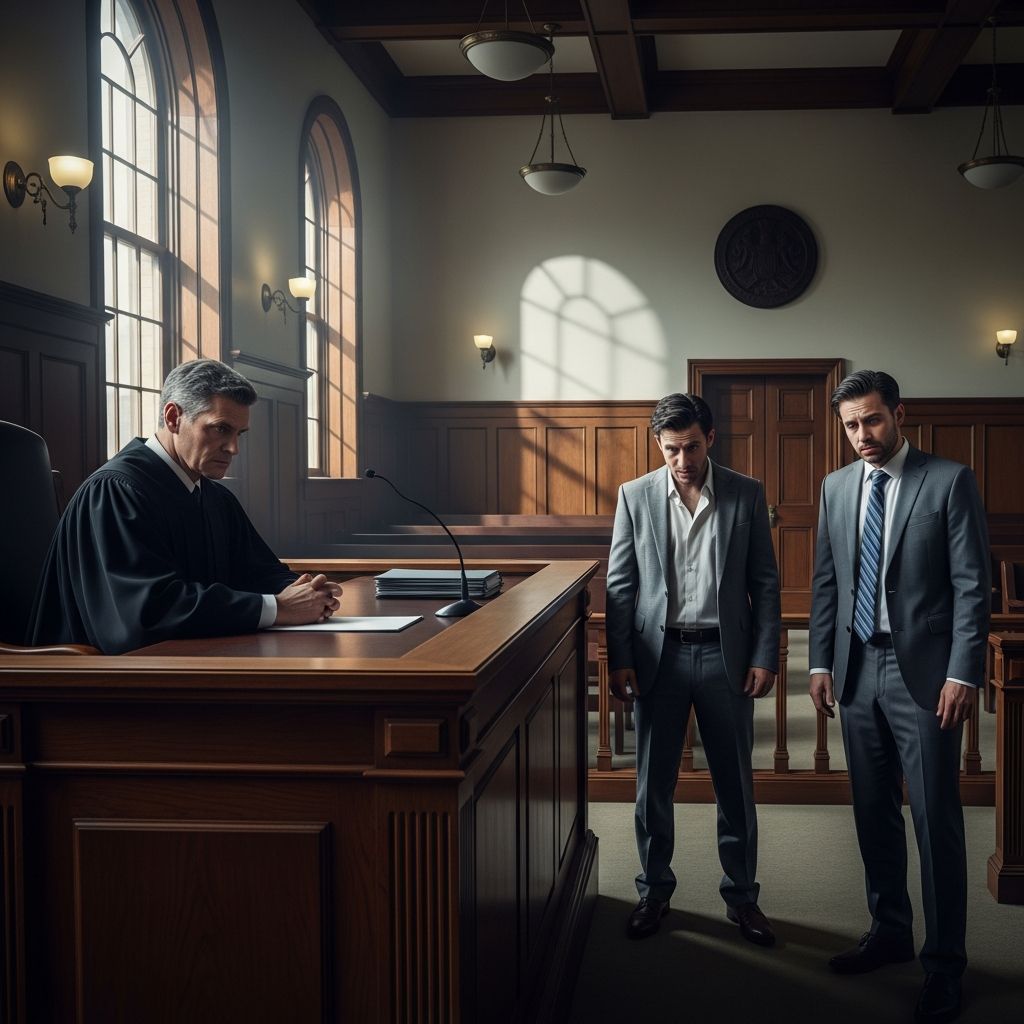
Every criminal defendant in the United States is entitled to legal representation under the
Sixth Amendment
, which promises the “assistance of counsel” for their defense. But what happens when that counsel lacks a license to practice in the relevant state? Recent high court decisions have grappled with this question, balancing strict licensing rules against fundamental constitutional protections. This exploration uncovers pivotal cases, state variations, and broader implications for the justice system.The Core of the Right to Counsel
The
Sixth Amendment
forms the bedrock of criminal procedure, ensuring defendants are not left to navigate complex legal battles alone. Courts have long interpreted this to mean competent, licensed attorneys—but definitions of “competent” vary. In most challenges, focus falls on ineffective assistance, as established in landmark cases like Strickland v. Washington. Yet, scenarios involving licensure raise unique issues: does absence of a state bar license automatically equate to no counsel at all?State bars regulate practice within their borders to protect public interest, mandating exams, character checks, and ongoing education. Unauthorized practice invites sanctions, from fines to injunctions. However, constitutional mandates sometimes clash with these regulations, prompting courts to clarify boundaries.
Landmark Ruling on Out-of-State Defense Counsel
A striking example emerged from Washington State, where the Supreme Court addressed a veteran Idaho attorney representing indigent clients without Washington licensure. This lawyer, with over 30 years in criminal defense, secured a public defender contract by claiming he was “in process” of Washington admission—though he never completed it. He handled over 100 cases before discovery.
In a narrow 5-4 decision, the majority held that the
Sixth Amendment
requires a qualified lawyer, not necessarily one licensed locally. They emphasized the attorney’s Idaho standing and experience, deeming representation constitutionally adequate despite ethical lapses. The court condemned deception but refused to vacate convictions solely on licensure grounds, prioritizing substance over form.Dissenters argued this undermined state authority, viewing unlicensed practice as more than technical—potentially risking client rights. This split highlights tensions between federal constitutional floors and state regulatory ceilings.
Prosecutorial Licensure: A Different Standard?
While defense-side cases grab headlines, unlicensed or errant prosecutors face scrutiny too. Federal law, via 42 U.S.C. § 1983, allows suits against officials violating rights, but Imbler v. Pachtman grants absolute immunity for core prosecutorial functions like initiating cases. This shields advocates from liability even if unlicensed—assuming discipline occurs elsewhere.
Supreme Court precedents like Burns v. Reed and Kalina v. Fletcher limit immunity to advocacy roles, applying qualified immunity for investigative acts. Thus, an unlicensed prosecutor pursuing charges enjoys broad protection, leaving defendants reliant on appeals or bar actions for recourse.
| Role | Licensure Challenge | Immunity Type | Typical Remedy |
|---|---|---|---|
| Defense Counsel | Out-of-state license | None | Post-conviction relief if ineffective |
| Prosecutor | Unauthorized practice | Absolute (advocacy) | Bar discipline, appeals |
This table contrasts key differences, showing defenses bear heavier scrutiny on licensure.
State Variations in Enforcing Counsel Rights
States interpret obligations differently. Oregon’s Supreme Court, in State v. Roberts, mandated dismissal without prejudice for indigent defendants unrepresented over 60 days (misdemeanors) or 90 days (felonies) post-arraignment. This enforces timely counsel as a “core component” checking state power, aiding thousands amid public defense shortages.
Mississippi faced similar woes; its Supreme Court ruled lawyers cannot abandon pre-indictment cases without replacements. Yet compliance lags, with few districts submitting required policies or ensuring continuity. Wisconsin’s rules explicitly define unauthorized practice exemptions, like supervised non-lawyers, but bar unlicensed court appearances.
- Oregon: Strict timelines trigger automatic dismissals.
- Mississippi: Continuity mandates, poor enforcement.
- Washington: Tolerates experienced out-of-staters if competent.
- Wisconsin: Narrow exemptions, strong injunction powers.
Consequences of Unauthorized Practice
Discovery of unlicensed counsel triggers bar investigations, potential disbarment, and client relief petitions. In Washington’s case, the attorney faced injunctions and reapplication bans. Defendants may seek habeas relief, arguing structural error—presumptively prejudicial without proving harm, unlike Strickland‘s two-prong test.
Courts weigh factors: actual performance, client outcomes, prejudice. A table of remedies illustrates options:
| Violation Type | Court Response | Defendant Impact |
|---|---|---|
| No counsel appointed timely | Dismissal w/o prejudice | Temporary relief, refiling possible |
| Unlicensed but effective | Conviction upheld | No retrial unless prejudice shown |
| Gross incompetence | New trial | Full reversal |
Public Defense Crises Amplify Risks
Overburdened systems exacerbate issues. Indigent defense faces shortages, leading to delays or unqualified appointments. Oregon and Mississippi highlight systemic failures, where states struggle with caseloads, funding, and recruitment. Supreme Courts intervene with rules, but local compliance varies—judges risk sanctions, yet monitoring is limited.
Reforms include standardized policies, continuity requirements, and federal oversight pressures. North Carolina experiments with non-attorney supervision, provided ethics hold.
FAQs on Licensure and Rights
What if my lawyer isn’t licensed in this state?
Representation may still satisfy the Sixth Amendment if the attorney is licensed elsewhere and competent. Challenge via post-conviction relief, proving prejudice.
Can unlicensed practice void my conviction?
Not automatically; courts assess overall assistance quality. Structural defects like total absence prompt stronger remedies.
Do prosecutors need state licenses?
Yes, but immunity protects advocacy. Discipline handles violations.
How long can I wait without a lawyer?
State-specific: Oregon caps at 60/90 days; others vary. Delays violate rights.
What protects against unauthorized practice?
State supreme courts regulate via rules, injunctions, and bar actions.
Future Directions and Reforms
Ongoing debates question licensure rigidity. Proponents of uniformity argue interstate practice eases shortages; critics fear quality drops. Uniform Bar Exam adoption in many states facilitates pro hac vice and reciprocity.
Technology and non-lawyer advocates emerge, but courts guard against dilution. Enhanced public funding, caseload caps, and training could mitigate crises. Defendants must vigilantly verify counsel credentials early.
In sum, while licensure matters, constitutional counsel prioritizes ability over paperwork. Cases affirm this nuanced balance, urging systemic fixes over case-by-case fixes.
References
- Supreme Court Examines Right to Counsel Involving Criminal Defense Lawyer Not Licensed in Washington — NW Sidebar (WSBA). 2023-02-21. https://nwsidebar.wsba.org/2023/02/21/supreme-court-examines-right-to-counsel-involving-criminal-defense-lawyer-not-licensed-in-washington/
- Oregon Supreme Court Provides Relief to Unrepresented Defendants — Pleading the Sixth. 2024 (approx.). https://6ac.org/oregon-supreme-court-provides-relief-to-unrepresented-defendants/
- The Supreme Court Assumes Errant Prosecutors Will Be Disciplined — Fordham Law Review. 2015 (authoritative precedent). https://ir.lawnet.fordham.edu/cgi/viewcontent.cgi?article=4663&context=flr
- SCR Chapter 23: Regulation of Unauthorized Practice — Wisconsin Supreme Court. Current. https://www.wicourts.gov/sc/rules/chap23.pdf
- Despite MS Supreme Court Action, Poor Criminal Defendants Still Struggle — ProPublica. 2023 (approx.). https://www.propublica.org/article/mississippi-supreme-court-poor-criminal-defendants-lawyer
Similar Articles








Read full bio of medha deb




