
When Your Rental Becomes Uninhabitable: Must You Still Pay Rent?
Learn how the warranty of habitability protects tenants, when rent can be reduced or withheld, and the steps to take if your home becomes unsafe.
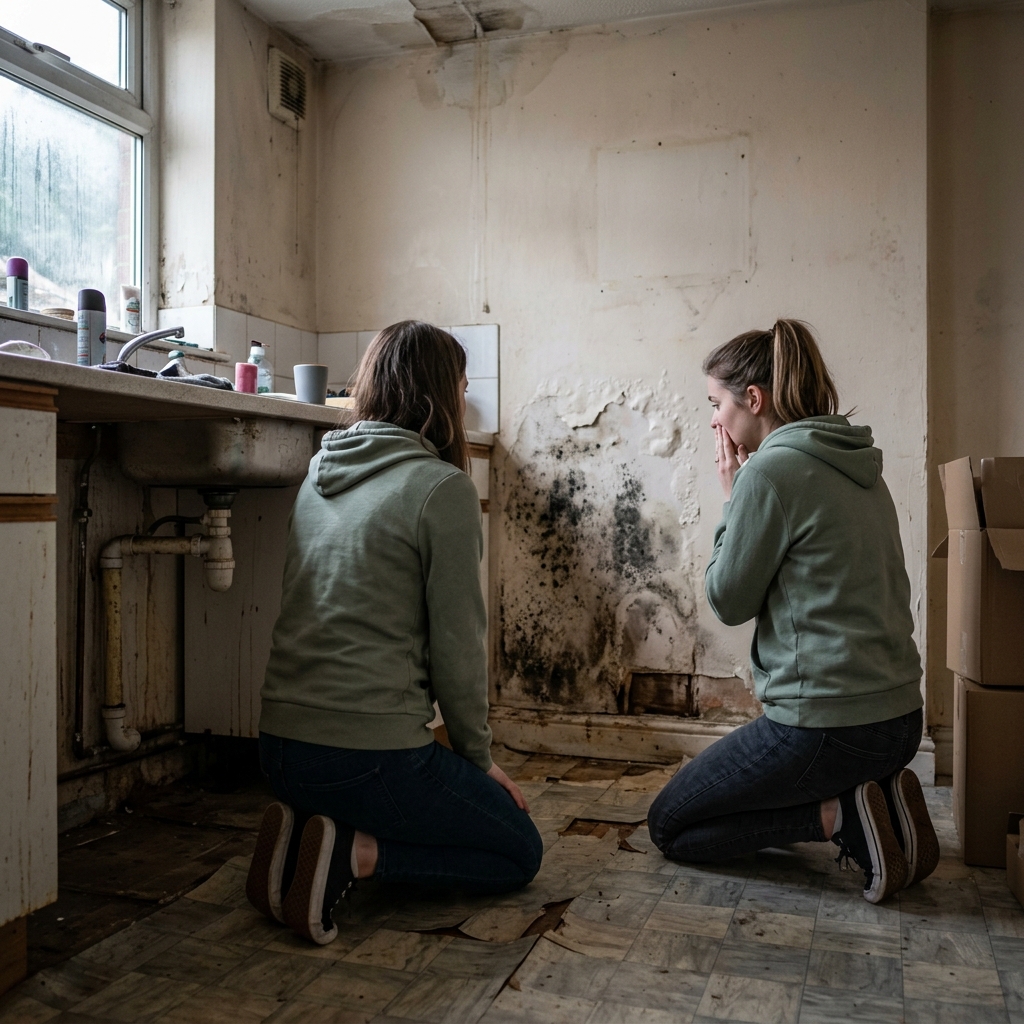
Many tenants only discover their rights after a serious problem—like loss of heat in winter, raw sewage, or extensive mold—turns their home into a health hazard. The key legal protection in these situations is the warranty of habitability, a rule that exists in most U.S. states and requires landlords to provide safe, sanitary housing fit for human occupation. Understanding how this warranty works and how to respond when your unit becomes uninhabitable can help you protect your health and finances.
This guide explains what “uninhabitable” means, how the warranty of habitability works, when you may be able to withhold or reduce rent, and the practical steps to take if your landlord refuses to fix dangerous conditions. Because landlord–tenant laws vary by state, you should always confirm your specific rights with a local attorney or legal aid office.
Core Concept: The Warranty of Habitability
In modern landlord–tenant law, nearly every residential lease includes an implied warranty of habitability, even if the lease never mentions it. This warranty is a non-waivable legal duty imposed on landlords, meaning they cannot avoid it through fine print in a lease or by private agreement.
In practical terms, the warranty of habitability means:
- The rental unit must be safe and sanitary enough for ordinary living.
- Serious defects that threaten health or safety must be repaired within a reasonable time after the landlord is notified.
- Tenants who did not cause the problem may have legal remedies, including ending the lease, repairing and deducting, or withholding rent.
Courts and legislatures commonly rely on local housing codes to define what counts as habitable. The more a condition violates basic safety, sanitation, or building standards, the more likely it is to be considered a breach of the warranty.
What Counts as an Uninhabitable Condition?
An uninhabitable condition is more than a minor annoyance; it is a defect that significantly endangers health or safety or renders part of the unit unusable. Housing agencies and legal guides often focus on issues that affect essential services such as heat, water, structure, and sanitation.
| Likely Uninhabitable | Usually Not Uninhabitable |
|---|---|
| No heat in winter or no potable water | Peeling paint with no lead hazard |
| Serious mold affecting health or large areas | Small cosmetic cracks in walls |
| Raw sewage backups or nonfunctioning sewer | Broken cabinet doors |
| Gas leaks, exposed wiring, or fire hazards | Worn carpet or minor scuffs |
| Infestations of rodents or insects in living areas | Slow response to non-critical maintenance |
Whether a condition is legally “uninhabitable” depends on severity, duration, and local regulations. A single broken window may be inconvenient; a broken front door lock that leaves you unable to secure your home could be a serious security issue. If in doubt, tenants should:
- Consult local housing codes or building standards.
- Request an inspection from code enforcement or a housing authority.
- Seek legal advice from a qualified attorney or legal aid program.
Do You Still Have to Pay Rent for an Uninhabitable Home?
Under the warranty of habitability, a landlord generally cannot charge full rent for a property that is substantially uninhabitable, assuming the tenant did not cause the problem. In some jurisdictions, severe habitability violations may relieve the tenant of all obligation to pay rent from the date the home became uninhabitable. Other states use rent abatement, which reduces the rent in proportion to the loss of use.
For example, guidance from California’s real estate regulator explains that if one of four rooms is unusable due to a serious defect, a tenant may be entitled to withhold 25% of the rent, continuing to pay the remaining 75% for the habitable portion. In extreme cases—such as when a fire or major damage makes the entire unit unusable—not paying rent at all and ending the lease may be permitted by statute.
However, tenants are rarely allowed to simply stop paying rent without following specific legal procedures. Many states require tenants to:
- Notify the landlord in writing and allow a reasonable time to repair.
- Preserve the withheld rent in a separate account or escrow.
- Be prepared to justify withholding in court if the landlord sues for nonpayment.
Failing to follow those steps can expose tenants to eviction for nonpayment, even if serious problems exist. The same factual situation can lead to very different outcomes depending on whether the tenant complied with procedural requirements.
Key Legal Remedies When Conditions Are Uninhabitable
Where the landlord fails to fix serious habitability issues within a reasonable time, tenants in many states may have several options, often including one or more of the following.
1. Ending the Lease and Moving Out
If conditions rise to the level of uninhabitable, some states allow tenants to terminate the lease, move out, and have no further duty to pay rent, provided they did not cause the problem. Statutes in places like New York allow tenants to vacate and cancel the lease when an apartment becomes uninhabitable because of fire or other damage not caused by the tenant; the landlord must refund prepaid rent and security deposits.
Before ending a lease, tenants should typically:
- Send a written notice describing the defects and requesting repair by a clear deadline.
- Allow a reasonable period for the landlord to correct the issues.
- Send a second letter stating that the warranty of habitability has been violated and that you are moving out on a specified date.
2. Withholding Rent
Rent withholding means temporarily stopping payment of some or all rent until serious defects are corrected. Guidance from multiple jurisdictions indicates this remedy is available when the landlord fails to repair serious code violations that breach the warranty of habitability.
Common elements of lawful rent withholding include:
- Written notice to the landlord describing the problems and citing habitability concerns.
- Reasonable time for the landlord to make repairs.
- Saving every dollar of withheld rent—often in a separate account or escrow—to show good faith and ability to pay once conditions are restored.
Some states allow or require tenants to pay rent into court or to a designated escrow agent when the property has been declared unfit by code enforcement. In those systems, a judge may decide how much of the rent the landlord ultimately receives, based on the seriousness and duration of the defects.
3. Repair and Deduct
Another common remedy is repair-and-deduct: tenants pay for necessary repairs themselves and subtract the cost from future rent payments. Legal aid guides often emphasize that tenants should only use repair-and-deduct for genuine habitability problems, not cosmetic issues, and should keep documentation such as:
- Receipts and invoices showing what work was done and how much it cost.
- Photographs showing the before-and-after condition.
- Copies of prior written requests to the landlord asking for repair.
Because procedures and limits (such as caps on the amount you can deduct) differ by jurisdiction, tenants should confirm local law before using this option.
4. Seeking Rent Abatement or Damages in Court
If a landlord sues for unpaid rent or if the tenant files a lawsuit, courts may award rent abatement, effectively reducing past or future rent to reflect the reduced value of the premises during the period of uninhabitability. Tenants may also seek compensation for other harms, such as property damage or health impacts, where supported by evidence.
Court-based remedies typically require strong documentation: inspection reports, photos, witness statements, medical records (if health was affected), and a clear timeline showing the landlord’s failure to respond.
Practical Steps for Tenants Facing Uninhabitable Conditions
Legal rights are only useful if tenants can prove the facts. When serious issues arise, taking structured steps can make the difference between a successful claim and an eviction judgment.
Step 1: Document the Problems
- Photographs and video: Capture the defects clearly, including dates where possible.
- Written log: Keep a diary of when problems started, when they worsened, and any health or safety impacts.
- Witness statements: Ask roommates, neighbors, or visitors to write short statements if they observed the issues.
Step 2: Notify the Landlord in Writing
Legal guides strongly recommend putting the landlord on notice in a written, dated communication rather than relying on verbal complaints. A carefully drafted letter or email should:
- Identify you and the rental address.
- List each serious problem in detail (for example, “no heat since ___,” “sewage backup in bathroom,” “widespread mold on bedroom walls”).
- Explain that these issues affect habitability under local law.
- Request repair by a specific, reasonable deadline.
- State the actions you may take if repairs are not completed (withholding rent, repair-and-deduct, or moving out).
Sending the notice by a method that confirms delivery—such as certified or tracked mail—can help prove the landlord received it.
Step 3: Contact Code Enforcement or Housing Authorities
If the landlord does not act, tenants can often request an inspection from local code enforcement or a municipal housing office. An inspection report can:
- Provide independent confirmation that conditions violate housing or health codes.
- Trigger enforcement actions or penalties against the landlord.
- Serve as strong evidence in court or in rent abatement proceedings.
Step 4: Preserve Withheld Rent and Follow Local Procedures
Tenants who choose to withhold rent must do so very carefully:
- Do not spend withheld rent. Keep it intact in savings or a separate account.
- Follow any requirement to deposit rent into escrow or with a court, if local law demands it.
- Continue documenting conditions and the landlord’s response.
If the landlord starts an eviction for nonpayment, the tenant can often defend by showing that serious code violations persisted and that withholding was justified under the warranty of habitability.
Special Situations: Tenant-Caused Damage and Partial Uninhabitability
When the Tenant Caused the Problem
Legal protections discussed here apply when the landlord, or external factors beyond the tenant’s control, cause uninhabitable conditions. When the tenant or someone under the tenant’s control causes the damage, that is not considered a breach of the warranty of habitability. In those cases, the tenant may be liable for repair costs and cannot rely on habitability law to withhold rent.
Partial Loss of Use
Sometimes only part of a rental becomes unusable—such as a bedroom rendered unusable by severe mold or a bathroom out of order due to plumbing failure. In jurisdictions that use rent abatement, courts or agencies may reduce rent proportionally, such as by calculating the percentage of the unit that is unusable and reducing rent by that amount.
Tenants in these situations should still document conditions, notify the landlord, and seek advice on how much rent reduction is reasonable under local standards.
Frequently Asked Questions (FAQs)
Can I stop paying rent immediately if my home becomes uninhabitable?
Usually no. Even if conditions are serious, most states require you to notify the landlord, allow a reasonable time to repair, and follow specific procedures before withholding rent. Failing to do so can expose you to eviction, even if the property is in poor condition.
What should I do with rent money I withhold?
Keep all withheld rent in a separate account or escrow and do not spend it. Courts and legal guides emphasize that tenants must be ready to pay once repairs are made, and preserving the funds shows good faith.
Do I have to move out to assert my rights?
No. Many tenant remedies, such as repair-and-deduct or rent abatement, apply while you remain in the unit. However, if conditions are extremely dangerous, you may choose to end the lease and move, as permitted by local law.
Can my lease waive the warranty of habitability?
Generally not. Legal authorities explain that the warranty of habitability is a legal duty that cannot be waived by lease language. Clauses attempting to relieve the landlord of responsibility for basic repairs are typically unenforceable.
Where can I get help understanding my specific rights?
Because habitability rules and procedures vary by state, consult:
- Local legal aid organizations or tenant-rights hotlines.
- State attorney general or housing agency websites.
- Licensed attorneys who practice landlord–tenant law.
References
- Do I Have to Pay Rent if My House Is Uninhabitable? — Super Lawyers. 2024-03-15. https://www.superlawyers.com/resources/landlord-and-tenant/tenant-rights/do-i-have-to-pay-rent-if-my-house-is-uninhabitable/
- Tenant’s responsibility for repairs — California Department of Real Estate. 2012-07-01. https://www.dre.ca.gov/publications/ResourceGuidebook/gb09_dealingwith.html
- Legal services and code enforcement — New York State Attorney General. 2023-05-10. https://ag.ny.gov/resources/individuals/tenants-homeowners/legal-services-and-code-enforcement
- Warranty of Habitability — PALawHELP.org. 2023-01-20. https://www.palawhelp.org/resource/warranty-of-habitability
- Landlord Problems — Penn State Wilkes-Barre. 2021-09-15. https://wilkesbarre.psu.edu/student-life/off-campus-housing/landlord-problems
- Healthy at Home: What Tenants Should Do When Their Housing is Unhealthy — Volunteer Lawyers for Justice (New Jersey). 2022-06-30. https://www.vljnj.org/pro-bono-blog/healthy-at-home
- Warranty of Habitability in Rental Housing — Maryland People’s Law Library. 2024-04-05. https://www.peoples-law.org/warranty-habitability-rental-housing
Similar Articles








Read full bio of medha deb


