
Unemployment Insurance and Strikes: When Can Workers Qualify?
A practical guide to when striking, locked-out, or dispute-affected workers may receive unemployment benefits under varying state rules.
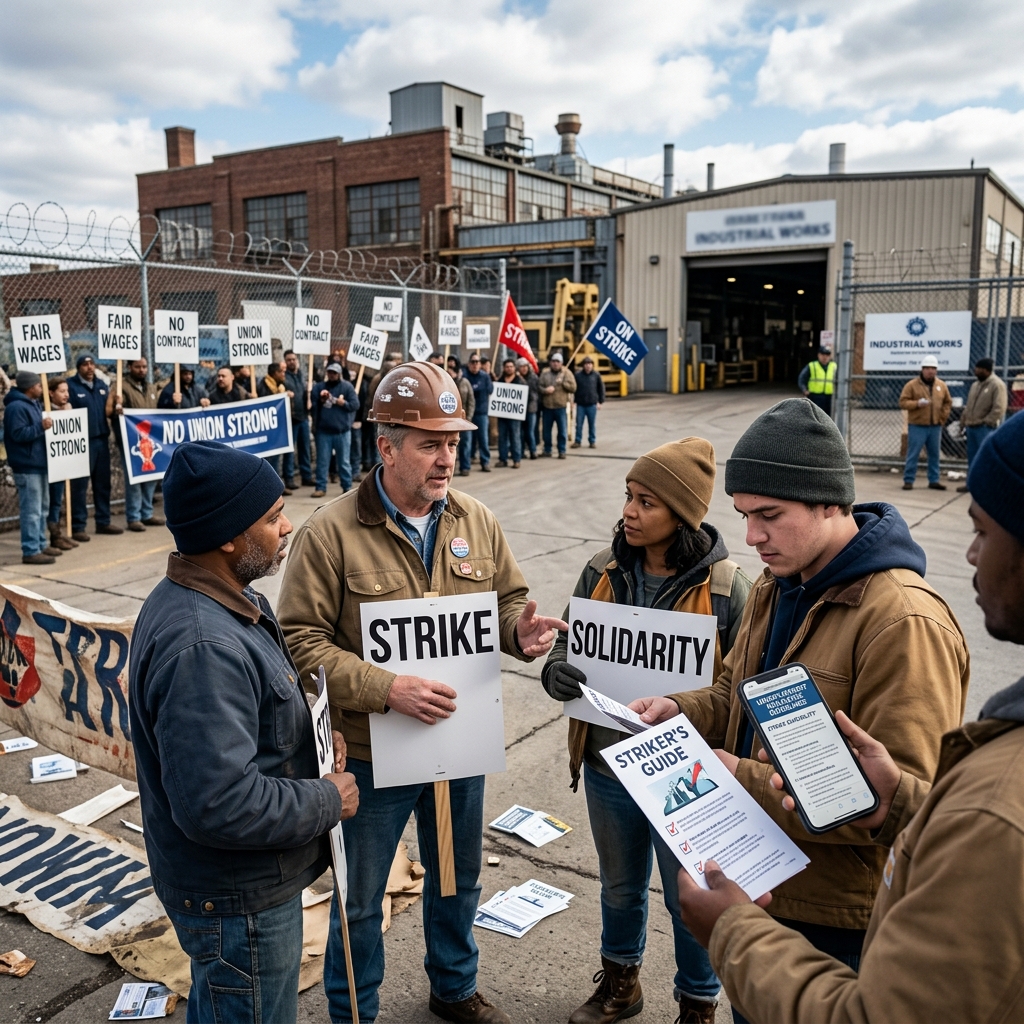
Unemployment insurance (UI) is designed to help workers who lose their jobs through no fault of their own, but its interaction with strikes, lockouts, and other labor disputes is far from straightforward. Because UI is administered at the state level, eligibility rules for striking workers vary dramatically across the United States. This article explains how UI typically works, why striking workers are often treated differently, and what circumstances may allow workers to collect benefits during or after a labor dispute.
Understanding Unemployment Insurance Basics
Before looking at strikes, it helps to understand how unemployment insurance generally functions. UI is a joint federal-state program that provides temporary wage replacement to eligible workers who lose employment or hours through circumstances that are not considered voluntary. States set detailed rules about who qualifies, how long benefits last, and what workers must do to remain eligible.
Common baseline requirements across many states include:
- Having sufficient prior earnings and work history during a defined base period.
- Being unemployed or partially unemployed through no disqualifying conduct.
- Being able to work, available for work, and often actively looking for work.
- Filing timely claims and certifying weekly or biweekly for benefits.
Federal statutes such as the Social Security Act and the Federal Unemployment Tax Act set broad parameters, but they do not dictate how states must handle situations involving strikes or lockouts, leaving those decisions to each state legislature and agency.
Why Strikes Complicate UI Eligibility
A strike is typically viewed as a collective, voluntary work stoppage in support of bargaining demands or workplace concerns. Many state UI laws draw a distinction between workers who are laid off because the employer lacks work and workers who leave work due to a dispute with the employer. Because strikes can be framed as a voluntary decision to stop working, states often treat striking workers differently from those who are involuntarily unemployed.
Key reasons that strikes complicate UI decisions include:
- Voluntary vs. involuntary separation: UI is designed around involuntary job loss; a strike can be treated as a voluntary refusal to work.
- Neutrality in labor disputes: Legislatures may seek to avoid appearing to subsidize either side in collective bargaining.
- Potential cost impacts: Extending benefits to striking workers can raise program costs, even if research suggests those costs may be modest.
- Different types of disputes: Lockouts, contract violations, and secondary effects on uninvolved workers create fact-specific eligibility questions.
As a result, most states place restrictions on UI eligibility for workers directly engaged in a strike, even when those workers otherwise meet baseline requirements.
How State Laws Diverge on Striking Workers
There is no single national rule governing whether striking workers can receive unemployment insurance. Instead, states have adopted a range of approaches.
| Policy Approach | Example Features |
|---|---|
| Full disqualification for strikers | Workers who participate in a strike are treated as voluntarily unemployed and cannot receive UI while the dispute continues. |
| Eligibility only after strike ends | Workers may qualify for UI once the work stoppage is over, if they remain unemployed and meet other requirements. |
| Waiting period for active strikers | Some states allow UI after a fixed suspension or waiting period, such as 7 or 14 days, if the strike persists. |
| Eligibility when employer breaks the law or contract | In several states, a strike triggered by an employer’s violation of labor law or a union agreement can be treated as good cause, allowing benefits. |
| Special rules for lockouts or replacement workers | Workers locked out or permanently replaced may have distinct eligibility pathways, separate from voluntary strikes. |
Research by worker-advocacy and policy organizations shows that in most states, striking workers are disqualified from UI while the strike is underway. However, several states provide targeted access, either during or after a dispute, based on factors such as waiting periods, employer misconduct, or the type of work stoppage.
When Striking Workers May Be Eligible
Despite widespread restrictions, there are situations in which workers engaged directly in a strike can receive unemployment benefits. These situations depend heavily on state law and how agencies interpret labor disputes.
Waiting Period Models
Some states allow striking workers to collect UI after a specified number of days pass and the strike remains unresolved. For example, New York and New Jersey allow workers who miss work specifically because they are on strike to apply for benefits following a 14-day suspension period. State guidance in New York notes that a strike usually must last at least seven days (a suspension period), and workers can then proceed through the usual claim and waiting-week process before benefits are payable.
In these models, key elements include:
- A defined suspension period during which benefits are not payable.
- A subsequent unpaid waiting week required for standard UI claims.
- Continued unemployment due to the dispute after these periods.
- Compliance with all other eligibility criteria, such as sufficient prior earnings.
Employer Misconduct or Contract Violations
A different approach used in several states is to treat certain strikes as arising from an employer’s wrongful conduct. In at least nine states, when a strike results from the employer breaking labor law or violating a union contract, the workers’ decision to stop work can be recognized as a good cause quit, meaning their separation is not considered disqualifying for UI purposes.
Under this reasoning:
- The employer’s failure to comply with legal obligations or the collective bargaining agreement is viewed as the root cause of the work stoppage.
- Workers are not treated as voluntarily unemployed, but rather as responding to unlawful or contract-breaching conditions.
- UI agencies may analyze whether specific facts meet statutory definitions of good cause.
Some states also remove or shorten waiting periods if the employer hires replacement workers, recognizing that the relationship has fundamentally changed and the workers may be effectively displaced.
Partial Benefits or Limited Durations
States that permit UI for striking workers sometimes limit the duration or amount of benefits. For example, a state may cap benefits for striking workers at a set number of weeks, recognizing a policy compromise between supporting income security and avoiding extensive subsidization of prolonged disputes. In one such case, a state unemployment program limits striking workers to eight or ten weeks of benefits depending on the financing schedule in effect when the strike starts.
Workers Affected by a Strike but Not Participating
Separate from workers who actively strike or picket, many employees may lose work because their workplace is shut down or operations scaled back due to a labor dispute they are not directly involved in. States often treat these workers differently from active strikers.
Examples include:
- Support staff or clerical employees furloughed because production workers are striking.
- Employees of a facility temporarily closed while a different bargaining unit is on strike.
- Workers in non-union roles whose hours fall below full-time due to a dispute.
In many states, such workers may qualify for UI if they are not participating in, financing, or directly interested in the dispute. Agencies often look at whether the worker is in the striking bargaining unit, active on picket lines, or otherwise materially involved. If the worker is simply losing work due to reduced operations and meets other criteria, benefits may be available.
However, some states impose broader disqualifications: for example, treating all workers at a firm with a labor dispute as ineligible, even if they are not part of the bargaining unit. These differences underscore the importance of reviewing state-specific rules.
Lockouts and Other Employer-Initiated Work Stoppages
Lockouts occur when employers prevent workers from working, often by closing facilities or barring entry during bargaining. Many states treat lockouts differently from strikes because the work stoppage is initiated by the employer, not by employees.
In numerous jurisdictions, workers who are locked out may qualify for UI since they are unable to work despite being willing to do so. Some states explicitly state that workers are eligible for unemployment benefits if their employer locks them out and the lockout is not part of a multi-employer bargaining unit or other disqualifying arrangement.
Key considerations in lockout cases include:
- Whether the employer’s actions meet the legal definition of a lockout.
- Whether the lockout caused a substantial stoppage of work at the facility.
- Whether other disqualifying factors (such as misconduct) are present.
In some states, employer lockouts or replacement hiring can also shorten waiting periods or remove suspensions for workers otherwise tied to a dispute.
Federal Law and State Authority Over Labor Disputes
Federal labor law governs many aspects of collective bargaining and strikes, but it does not preempt state authority to define UI eligibility in the context of labor disputes. The U.S. Supreme Court has repeatedly held that statutes such as the National Labor Relations Act (NLRA) and federal unemployment legislation do not prevent states from deciding whether and when striking workers may receive benefits.
This means that:
- States can disqualify striking workers, subject to their own constitutional limitations.
- States can create waiting periods or special conditions for eligibility.
- States can expand access for workers in strikes, lockouts, or employer-misconduct disputes.
Recent policy discussions at both state and federal levels have focused on whether expanding UI for striking workers would strengthen collective bargaining and worker power or impose significant costs. Some research suggests that allowing benefits for strikers would be relatively low-cost because strikes are infrequent and generally short in duration, though policymakers may weigh additional factors when considering reforms.
Practical Steps for Workers Involved in a Labor Dispute
Because rules vary widely, workers affected by strikes or lockouts should take proactive steps to understand and protect their potential UI rights. State labor or unemployment agencies often publish detailed guidance on how to file claims during labor disputes and what information to provide.
Practical tips include:
- Check your state’s official UI website: Many states maintain pages dedicated to strikes, lockouts, or labor disputes, explaining eligibility criteria and special procedures.
- Review agency advisories or fact sheets: Documents issued by departments of labor frequently outline suspension periods, waiting weeks, and definitions of work stoppage.
- Clarify your role in the dispute: Determine whether you are an active participant in the strike or an indirectly affected worker, as this may affect eligibility.
- Document employer conduct: If the dispute involves alleged violations of labor law or a collective bargaining agreement, documentation may be relevant for good-cause analyses.
- File timely claims: Agencies often advise workers when to file initial claims based on when their hours fall below full-time or when the stoppage begins.
Workers may also wish to consult legal or union resources for individualized advice, since each situation can raise unique questions under state law.
Frequently Asked Questions
Do striking workers ever receive unemployment benefits?
Yes, in some states striking workers can receive UI, typically after waiting periods or when a strike stems from employer misconduct, contract violations, or lockouts. However, in most states striking workers are disqualified from UI for the duration of the strike.
Are workers who are not in the union but lose work due to a strike eligible?
Often, workers not participating in the dispute may qualify for benefits if they are neither financing nor directly interested in the strike and simply lose work because operations are reduced. However, some states disqualify all workers at a site with a labor dispute, so state-specific rules must be checked.
How do lockouts differ from strikes for UI purposes?
Lockouts are employer-initiated work stoppages, while strikes are employee-initiated. Many states treat lockouts as involuntary loss of work, making UI eligibility more likely, provided other requirements are met.
Does federal law guarantee UI benefits for striking workers?
No. Federal law does not require states to extend UI to striking workers and does not preempt state decisions about labor-dispute eligibility. States retain authority to set their own rules regarding benefits during strikes and lockouts.
Where can workers find authoritative information on their rights?
The most reliable sources are official state unemployment insurance agencies, departments of labor, and published guidance such as claimant handbooks, labor-dispute advisories, and UI eligibility pages. Policy research organizations may also provide useful overviews for comparative understanding.
References
- Unemployment Insurance for Striking Workers — National Employment Law Project. 2024-05-15. https://www.nelp.org/insights-research/unemployment-insurance-for-striking-workers/
- Unemployment insurance for striking workers: A low-cost policy to strengthen collective bargaining and worker power — Economic Policy Institute. 2023-09-07. https://www.epi.org/publication/ui-striking-workers/
- Unemployment and Strikes: What You Need to Know — The Century Foundation. 2023-10-05. https://tcf.org/content/commentary/unemployment-and-strikes-what-you-need-to-know/
- Unemployment Insurance (UI) and Strikes (P835) — New York State Department of Labor. 2025-09-01. https://dol.ny.gov/system/files/documents/2025/09/p835-ui-and-strikes-9-25.pdf
- Strikes, lockouts and labor disputes — Washington State Employment Security Department. 2025-01-01. https://esd.wa.gov/get-financial-help/unemployment-benefits/basic-eligibility-requirements/strikes-lockouts-and-labor-disputes
- Division of Unemployment Insurance: Labor Disputes and Strikes — New Jersey Department of Labor and Workforce Development. 2024-08-01. https://myunemployment.nj.gov/before/circumstances/disputes/
- Striking Workers — Oregon Employment Department, Unemployment Insurance. 2024-06-01. https://unemployment.oregon.gov/strikes
Similar Articles








Read full bio of Sneha Tete




