Encounters with law enforcement can be stressful, confusing, and sometimes frightening. Knowing your legal rights before a police stop happens can help you stay safer, reduce conflict, and protect yourself if anything goes wrong. This guide explains what the law generally protects during police encounters in the United States, what you must do, what you can refuse, and how to respond if your rights are violated.
Core Legal Principles Behind Police Stops
Your rights during a police stop come primarily from the U.S. Constitution, especially the Fourth, Fifth, and Sixth Amendments. Together, these amendments regulate how police may stop, search, and question you, and ensure that you have access to legal counsel.
- Fourth Amendment: Protects against unreasonable searches and seizures; police generally need reasonable suspicion to stop you and probable cause or a warrant to conduct many searches.
- Fifth Amendment: Includes the right against self-incrimination, which supports your right to remain silent.
- Sixth Amendment: Guarantees the right to an attorney in criminal prosecutions, which includes the right to counsel after you are formally charged.
States may also provide additional protections, and local policies can shape how officers are trained to handle stops and searches.
General Rights in Most Police Encounters
Whether you are walking down the street, driving a car, or at home, there are a few core rights that commonly apply:
- Right to remain silent: You generally do not have to answer questions about where you are going, what you are doing, or other details of your life.
- Right to refuse consent to a search: You can usually refuse consent to search yourself, your vehicle, or your home, unless police have legal authority to search without your permission.
- Right to ask if you are free to leave: If you are not under arrest or lawful detention, you have the right to walk away.
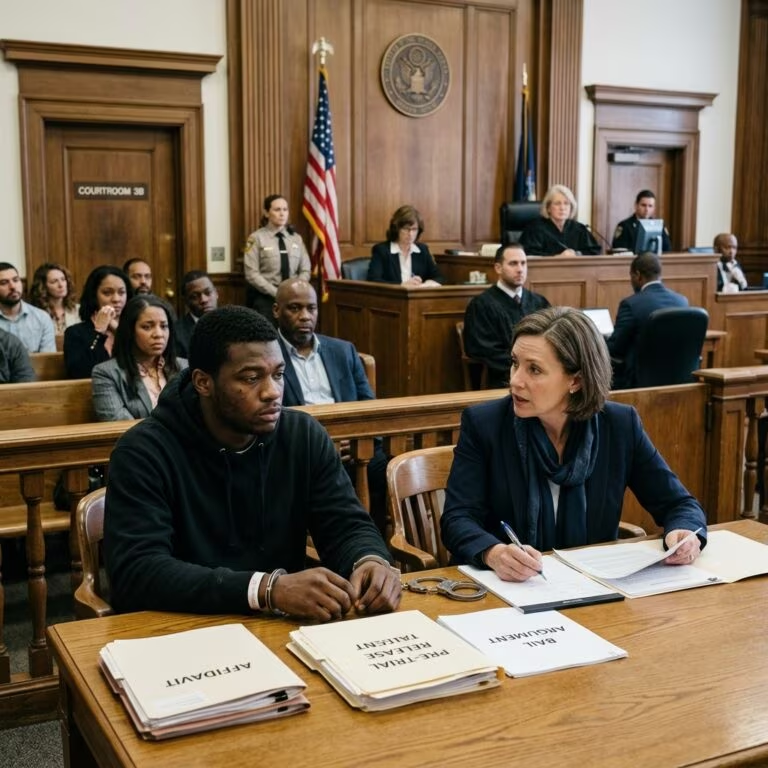
- Right to an attorney if arrested: After an arrest, you have the right to ask for a lawyer and to stop answering questions.
Even when asserting these rights, courts and civil rights organizations emphasize that you should remain calm and avoid physical resistance.
What Happens During a Traffic Stop
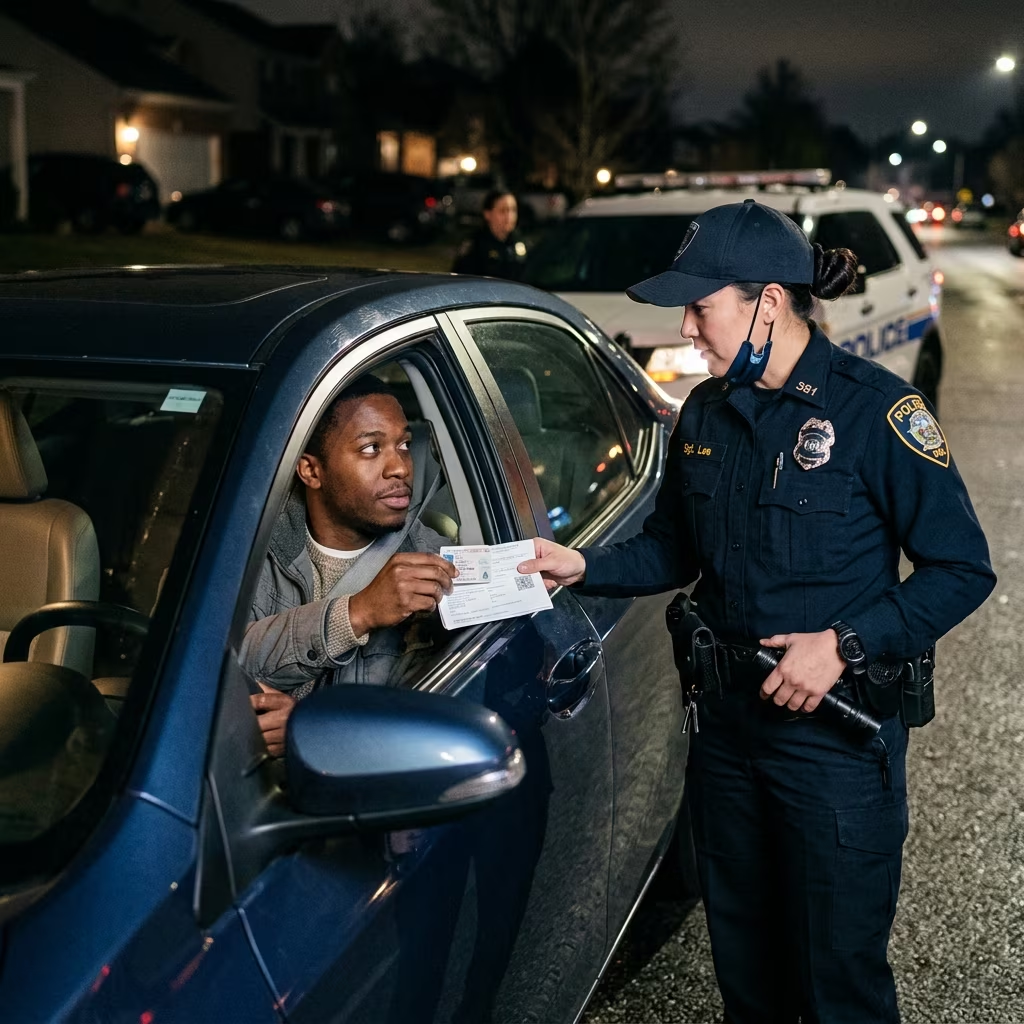
Traffic stops are one of the most common forms of police encounters. Police typically pull a vehicle over if they have reasonable suspicion that a traffic law or other law has been violated.
Initial Steps When You Are Pulled Over
When you see police lights or hear a siren directed at you:
- Safely pull over as soon as you can, using a turn signal.
- Turn off the engine and, if it is dark, consider turning on your interior light.
- Keep your hands visible, usually on the steering wheel.
- Remain inside the vehicle unless the officer instructs you to step out.
Documents You Must Provide
During a lawful traffic stop, you generally must provide certain documents when asked:
- Driver’s license
- Vehicle registration
- Proof of insurance
Refusing to provide these documents can itself lead to legal consequences, including citations or arrest under traffic or identification laws.
Questions You Do Not Have to Answer
Beyond basic identifying information and required documents, you usually have the right to decline to answer questions such as:
- “Where are you coming from?”
- “Where are you going?”
- “Have you been drinking?” (though refusing a chemical test can have separate consequences under state DUI laws)
If you want to rely on your right to remain silent, civil rights organizations recommend stating this clearly, for example: “I choose to remain silent.”
Searches of Your Car, Person, and Belongings
Police may ask for permission to search your car or your belongings. Your response can significantly affect what they are allowed to do.
Consent-Based Searches
When an officer asks, “Do you mind if I look in your car?” or “Can I search your bag?” they are generally seeking your consent.
- If you consent, officers may be permitted to search the areas you allow and use anything they find against you.
- If you refuse consent, police must rely on other legal grounds, such as probable cause, a warrant, or specific exceptions, to perform a search.
To clearly refuse consent, rights organizations advise using direct language, such as: “I do not consent to a search.”
Common Search Situations
| Situation | Typical Rights |
|---|---|
| Officer asks to look inside your car during a traffic stop | You can refuse consent; police may still search if they have probable cause or another legal basis. |
| Officer conducts a brief pat-down of your clothing | Allowed if the officer reasonably suspects you may be armed; you may verbally object but should not physically resist. |
| Police arrive at your home without a warrant and ask to enter | You generally have the right to refuse entry unless there is an emergency or other legal exception. |
| Police arrive at your home with a search warrant | You may request to see the warrant and limit their access to areas and items described in the document. |
Detention, Arrest, and Miranda Rights
Not every police stop is an arrest. Understanding the difference between a brief detention and a full arrest helps you know which rights apply at each stage.
Short Detention vs. Arrest
- Detention: A limited period when officers keep you in place to investigate suspected criminal activity, often based on reasonable suspicion.
- Arrest: A more serious deprivation of liberty, typically based on probable cause that you committed a crime.
If you are not sure whether you are under arrest, you can ask directly: “Am I under arrest, or am I free to leave?”
Miranda Rights and Interrogation
Before custodial interrogation, police are required to inform you of certain rights, commonly known as Miranda rights.
- The right to remain silent.
- Warnings that anything you say can be used against you in court.
- The right to consult an attorney before questioning.
- The right to have an attorney appointed if you cannot afford one.
These rights generally apply once you are in police custody and subjected to interrogation. Courts have emphasized that voluntarily waiving these rights and speaking without an attorney can significantly affect your case.
Special Considerations for Immigration-Related Stops
Encounters with immigration officers or joint operations involving local police and federal immigration authorities raise additional concerns, especially for non-citizens. Many of the same rights apply, but immigration law has unique rules.
Rights for Non-Citizens
During an immigration stop, you generally still have:
- Right to remain silent: You are not required to answer questions about your immigration status or share details of your country of origin, except where specific immigration laws require documentation.
- Right against unreasonable searches and seizures: The Fourth Amendment protections apply to non-citizens inside the United States.
- Right to an attorney in many immigration proceedings, although the government is not required to provide a free lawyer in civil immigration cases.
Immigration Papers and Identification
In some circumstances, non-citizens are legally required to carry specific immigration documents and show them when requested by authorized officials. If you are asked for immigration papers and you have them, failing to produce them may lead to separate legal issues. However, you still retain the right to remain silent about many other matters and can ask to speak to a lawyer or legal representative.
How to Behave Safely and Assert Your Rights
Knowing your rights is only part of the picture; how you behave during a police stop can affect both your safety and the legal outcome. Civil liberties organizations emphasize a few practical guidelines.
Recommended Actions During a Police Stop
- Stay calm and polite: Speak slowly, avoid raising your voice, and do not insult or threaten officers.
- Keep your hands visible: Place them where officers can easily see them, such as on the steering wheel during a traffic stop.
- Follow basic lawful instructions: Including requests to step out of the vehicle or stand in a certain place, unless doing so presents obvious danger.
- Clearly assert your rights: Use simple, respectful statements like “I do not consent to a search” or “I want to remain silent.”
Actions to Avoid
- Do not run away or attempt to flee.
- Do not physically resist, push, or strike an officer, even if you feel they are acting unlawfully.
- Do not interfere with police activity involving other people, as this can itself lead to charges.
- Do not lie or present false documents; false statements can create new criminal charges.
Steps to Take If You Believe Your Rights Were Violated
Even when you do everything correctly, your rights may be violated. Documenting what happened and seeking legal help afterward can be crucial.
Documenting the Incident
- Write down details as soon as possible: date, time, location, officer names, badge numbers, and patrol car numbers.
- Describe what was said and done by everyone involved, including witnesses.
- Collect contact information for any witnesses who saw the encounter.
- If you were injured, seek medical care promptly and keep records of your treatment.
Filing Complaints and Seeking Legal Help
After you are safe and the immediate encounter is over:
- Consider filing a written complaint with the internal affairs division or civilian oversight body for the law enforcement agency involved.
- Consult with a qualified civil rights or criminal defense attorney to discuss potential remedies, including suppression of evidence or civil lawsuits.
- Contact reputable civil liberties organizations, which often provide guidance and sometimes representation.
Frequently Asked Questions (FAQs)
Do I have to show identification if I am just walking down the street?
In many states, you are only required to provide identification if you are lawfully detained or arrested. Some jurisdictions have “stop and identify” laws that may require you to state your name during a lawful stop. Check local law or speak with an attorney for specifics in your area.
Can I record the police during a stop?
Courts in many jurisdictions have recognized a right to record police in public places as long as you do not interfere with their duties. However, you should keep the camera visible, maintain a safe distance, and follow lawful instructions to avoid obstruction charges.
What if the officer searches me even after I say I do not consent?
Police may still conduct a search if they believe they have legal authority, such as probable cause, a warrant, or a recognized exception. Your statement refusing consent can still be important later if a court has to decide whether the search was lawful and whether evidence should be excluded.
Should I answer questions if I am innocent and just want to clear things up?
Many people feel that answering questions will resolve the situation quickly. However, anything you say can be used against you, and misunderstandings can have serious consequences. Civil rights advocates often recommend exercising your right to remain silent and asking for an attorney if there is any risk of criminal liability.
What should I tell my children about police stops?
For minors, the advice is similar: stay calm, be respectful, do not run or resist, and understand that they have a right to remain silent and to ask for a parent or attorney. Parents can rehearse simple phrases with children, such as “I want to remain silent” and “I would like to talk to my parent or a lawyer.”
References
- What Are My Rights When Stopped by the Police? — Super Lawyers. 2023-05-01. https://www.superlawyers.com/resources/civil-rights/what-are-my-rights-when-stopped-by-the-police/
- Stopped by the Police — American Civil Liberties Union of North Carolina. 2022-06-15. https://www.acluofnorthcarolina.org/know-your-rights/stopped-police/
- When Stopped by an Officer — American Civil Liberties Union of Southern California. 2021-09-10. https://www.aclusocal.org/know-your-rights/when-stopped-officer/
- Know Your Rights: Police Interactions — American Civil Liberties Union of Northern California. 2022-04-20. https://www.aclunorcal.org/know-your-rights/police-interactions/
- Citizen Rights when Interacting with Police — Seattle Law Hawks. 2020-08-05. https://seahawklaw.com/citizen-rights-with-police.php
- Know Your Rights When Stopped By Police or Immigration Agents — American Civil Liberties Union of Washington. 2021-03-12. https://www.aclu-wa.org/know-your-rights/when-stopped-police-or-immigration-agents/
- Fourth Amendment: Passengers and Police Stops — U.S. Courts. 2015-01-01. https://www.uscourts.gov/sites/default/files/rights-police-stops.pdf