
Understanding Your Rights After a Company Car Accident
Learn how liability, insurance, and workplace protections work when you are injured or involved in a crash while driving a company vehicle.
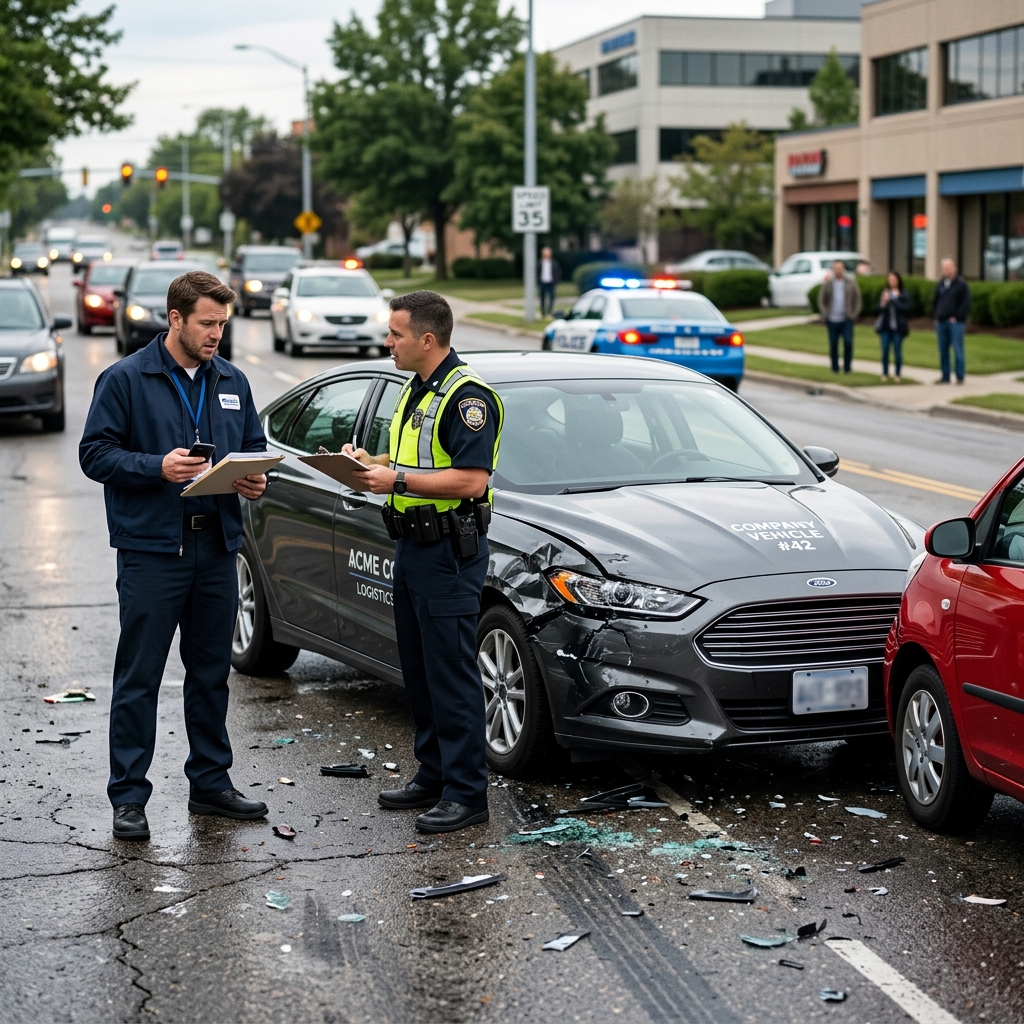
Being involved in a crash while driving a company vehicle can be confusing and stressful. You may wonder who pays for medical bills, which insurance applies, whether you are protected by workers’ compensation, and if your job is at risk. This guide explains how liability and benefits typically work when an accident happens in a company car, and what practical steps you should take to protect your health, finances, and legal rights.
Why Company Car Accidents Are Legally Different
Car accidents involving company vehicles are governed by both traffic law and employment law. Unlike a crash in your personal car, the accident may trigger:
- Claims under the employer’s commercial auto insurance
- Potential workers’ compensation benefits if you were on the job at the time of the accident
- Employer liability under doctrines such as vicarious liability or respondeat superior
- Possible personal liability if you were using the vehicle for non-work purposes
The central questions after a company car collision are:
- Were you acting within the scope of your employment?
- Who was legally at fault for the crash?
- What insurance policies apply and in what order?
Scope of Employment: The Key to Employer Liability
In most states, an employer can be held responsible for an employee’s negligent driving when the employee is performing job duties at the time of the accident. This is known as vicarious liability or respondeat superior. Whether your employer’s insurance and workers’ compensation apply depends on whether your actions fall within the scope of employment.
Typical Examples of Driving Within Scope of Employment
- Driving to a client meeting during work hours
- Making deliveries or service calls in a company truck or van
- Transporting tools or equipment to a job site
- Running employer-approved errands, such as banking or mail runs
In these situations, the employer’s commercial auto policy is usually the primary coverage for damage you cause to other people. If you are injured, you may also be eligible for workers’ compensation benefits because the accident arose out of and in the course of your employment.
When You May Be Outside the Scope of Employment
There are times when an employee uses a company vehicle but is not legally considered to be working. Common examples include:
- Taking the company car for personal errands without authorization
- Detouring significantly from a business route for personal reasons (often called a “frolic”)
- Using the vehicle while off the clock for recreational activities
In these cases, you may lose access to workers’ compensation and could be personally liable for damages, especially if the company car policy prohibits personal use. However, the analysis can be fact-specific, so legal advice is often important.
Who Pays: Employer, Employee, or Third Party?
Responsibility for damages after a company vehicle accident usually turns on fault and employment status. Many states follow an at-fault insurance system, where the driver who caused the crash is liable for injuries and property damage.
| Scenario | Who is Usually Liable? | Primary Coverage |
|---|---|---|
| You cause accident while working | Employer via vicarious liability | Company commercial auto policy |
| You cause accident during personal use of company car | Likely you personally | Personal auto insurance or limited employer coverage, depending on policy |
| Other driver causes accident while you are working | Other driver for negligence | Other driver’s liability insurance; workers’ compensation may also provide benefits |
| Independent contractor in company vehicle | Usually the contractor personally | Contractor’s own insurance; employer often not vicariously liable |
Understanding Insurance Layers in Company Car Claims
Several different insurance policies can apply to the same accident. The order in which they respond can significantly affect how much compensation you receive and how quickly you receive it.
Commercial Auto Insurance
Most employers carry a commercial auto insurance policy that covers:
- Liability for bodily injury and property damage caused to others
- Damage to company vehicles
- Sometimes uninsured or underinsured motorist protection
When you cause a crash while working, this policy is usually the first line of defense and will often provide legal representation if you are sued.
Workers’ Compensation Coverage
If you are injured in a traffic accident while performing job duties, you may qualify for workers’ compensation. This no-fault system typically pays:
- Reasonable medical treatment related to the work injury
- Partial replacement of lost wages if you cannot work
- Benefits for permanent impairment in serious cases
Workers’ compensation generally does not compensate for pain and suffering, and it does not pay for injuries to other drivers. You also usually cannot sue your employer for negligence if you accept workers’ compensation benefits, because the system is designed as an exclusive remedy for workplace injuries.
Other Auto Insurance Coverages
Depending on your state and policy language, you may also encounter:
- Liability insurance of the at-fault driver (primary source for injured parties in at-fault states)
- Uninsured/Underinsured motorist coverage (UM/UIM) when the at-fault driver has no or insufficient insurance
- Personal Injury Protection (PIP) in some states, paying medical expenses and wage loss regardless of fault
Choosing the correct combination of claims—workers’ compensation, liability, UM/UIM, and PIP—can maximize your recovery while avoiding conflicts between policies.
Immediate Steps to Take After a Company Vehicle Crash
What you do in the minutes and hours after a collision can strongly influence the outcome of insurance and legal claims. Many official safety and insurance resources emphasize a structured response.
1. Focus on Safety and Medical Care
- Check yourself and passengers for injuries
- Call emergency services (911 in the United States) for serious injuries or significant damage
- Move vehicles to a safe location if possible and if instructed by police
Even if injuries seem minor, medical evaluation is important. Some conditions, such as whiplash or concussion, may not be obvious immediately.
2. Contact Law Enforcement
In many jurisdictions, you are required to report accidents that involve injuries or substantial property damage. A police report can:
- Document basic facts about the collision
- Record witness names and statements
- Note apparent contributing factors, such as speed or road conditions
Insurance companies and courts often rely on these reports when determining fault and damages.
3. Exchange and Record Information
- Exchange names, contact information, and insurance details with all involved drivers
- Note the company name and policy information if you are driving a work vehicle
- Collect names and phone numbers of witnesses
Keep detailed notes about the time, location, weather, road conditions, and direction of travel. Photos of the vehicles, skid marks, traffic signals, and visible injuries can be invaluable evidence.
4. Notify Your Employer Promptly
Most employers have policies requiring timely reporting of any accident involving a company vehicle. When you inform your supervisor or HR department, be prepared to provide:
- The date, time, and place of the crash
- A brief description of what happened
- Names of involved drivers and witnesses
- Any injuries or immediate medical care received
Prompt reporting supports compliance with safety regulations and can be critical for workers’ compensation and insurance claims.
5. Follow Through on Insurance and Claims
After reporting the incident, you may need to:
- Cooperate with the employer’s commercial auto insurer in providing statements and documents
- File claims under your personal auto policy if coverage is implicated
- Complete workers’ compensation forms if the injury is work-related
Retain copies of the police report, medical records, repair bills, and correspondence with insurers. These documents help establish the extent of your losses and link them to the accident.
Your Rights as an Employee After the Accident
When a crash occurs in the course of your employment, you have specific rights designed to protect you from financial and job-related harm.
Right to File a Workers’ Compensation Claim
In most states, employees injured while driving for work may file a workers’ compensation claim. This right typically includes:
- Access to medical treatment for work-related injuries
- Temporary wage replacement if you cannot work due to the injury
- Protection from retaliation simply for filing a legitimate claim (subject to state law)
While you generally cannot sue your employer for negligence if you accept workers’ compensation, you may still be able to pursue claims against other at-fault drivers.
Potential Right to Sue Third Parties
If another driver’s negligence caused the crash, you may have a personal injury claim against that driver in addition to receiving workers’ compensation benefits. Through such a claim, you may seek:
- Compensation for medical expenses not fully covered by other policies
- Loss of income beyond wage benefits
- Damages for pain, suffering, and loss of enjoyment of life
This dual path—workers’ compensation plus a claim against the at-fault driver—often provides more complete compensation than relying on a single system.
Job Protection and Employer Policies
Laws on job protection vary by jurisdiction, but many employees are concerned about whether an accident in a company car can cost them their job. While employers may take disciplinary action for serious rule violations, simply having an accident does not automatically justify termination. Key factors usually include:
- Whether you violated company vehicle policies (e.g., driving under the influence, unauthorized use)
- Whether the accident was caused by gross negligence or repeated unsafe behavior
- Whether the employer complies with any applicable protections for injured workers
Review your employee handbook and consult an employment or injury attorney if you believe disciplinary action is unfair or retaliatory.
Common Pitfalls to Avoid
Some mistakes can seriously weaken your claims or increase your personal exposure. Being aware of these pitfalls helps you avoid unnecessary risk.
- Not reporting the accident: Failing to notify your employer or law enforcement promptly can raise questions about credibility and coverage.
- Admitting fault at the scene: Stick to factual descriptions of what happened and let police and insurers determine legal responsibility.
- Using the company car for unauthorized personal trips: This can place you outside the scope of employment and jeopardize workers’ compensation and employer-provided coverage.
- Ignoring symptoms or delaying medical care: Insurers may argue that later treatment is unrelated to the crash if you wait too long.
- Signing documents without understanding them: Settlement and release forms can waive important rights; legal review is advisable.
Frequently Asked Questions (FAQ)
Can I get workers’ compensation for a company car accident?
Yes, if the accident happened while you were performing work-related duties, you are often eligible for workers’ compensation benefits. This applies even if you were at fault, because workers’ compensation is generally a no-fault system. However, accidents during personal frolics or while committing a crime are typically excluded.
What if I was off the clock when the crash occurred?
If you were driving the company car for personal reasons or outside the scope of employment, you may not qualify for workers’ compensation and may have to rely on personal auto insurance or other coverage. Employer liability is less likely in these situations, though state law and policy language can affect the outcome.
Does my employer’s insurance cover injuries to other drivers?
When you cause an accident while driving within the scope of your job, the employer’s commercial auto policy typically covers injuries and property damage suffered by other people. The policy limits and exclusions will determine the extent of coverage.
Can I be personally sued after a company car accident?
Yes, injured parties can name you personally in a lawsuit. However, if you were working at the time, your employer’s insurer usually provides a legal defense and pays valid claims within policy limits. If you were outside the scope of employment, you may bear more personal exposure.
What if the other driver was uninsured?
If the at-fault driver is uninsured or underinsured, you may still obtain compensation through uninsured/underinsured motorist coverage and, if you were injured on the job, through workers’ compensation benefits. Reviewing policy details with a legal or insurance professional is often helpful in these complex cases.
Do time limits apply to my claims?
Yes. Each state sets a statute of limitations for personal injury lawsuits and deadlines for workers’ compensation claims. Missing these deadlines can bar recovery, so it is important to act promptly and seek advice early.
When to Seek Legal Advice
Company vehicle accidents often involve overlapping claims, multiple insurance policies, and employer-employee relationships that are not always straightforward. Legal guidance may be particularly valuable if:
- Fault is disputed or the police report is incomplete
- You suffered serious injuries or permanent impairment
- There is uncertainty about whether you were within the scope of employment
- Your employer discourages you from filing workers’ compensation or threatens retaliation
- Settlement offers seem low compared with your medical bills and wage loss
An attorney experienced in motor vehicle and workplace injury claims can help coordinate workers’ compensation benefits, liability claims, and other coverage so you do not inadvertently waive important rights.
References
- What Happens if I Get in a Car Accident in a Company Car? — John Foy & Associates. 2023-06-01. https://www.johnfoy.com/faqs/what-happens-if-i-get-in-a-car-accident-in-a-company-car/
- Liability for Company Car Accidents in Maryland — Leppler Injury Law. 2023-05-10. https://www.lepplerinjurylaw.com/blog/company-car-accident-liability-maryland/
- What Happens if You Get in a Car Accident in a Company Vehicle? — FindLaw. 2022-11-15. https://www.findlaw.com/injury/car-accidents/car-accidents-in-company-vehicles.html
- Car Accident in a Company Vehicle? Here’s What To Do — Rural Mutual Insurance. 2022-08-01. https://www.ruralmutual.com/resource/business/business-auto/car-accident-company-vehicle-what-to-do/
- Car Accident in a Company Car — Ask Adam S. Kutner. 2023-04-20. https://www.askadamskutner.com/auto-accident/car-accident-in-company-car/
Similar Articles








Read full bio of medha deb




