
Wyoming Wills: Complete Guide To Requirements And Probate 2025
A practical guide to creating, validating, and updating wills under Wyoming law for secure estate planning.
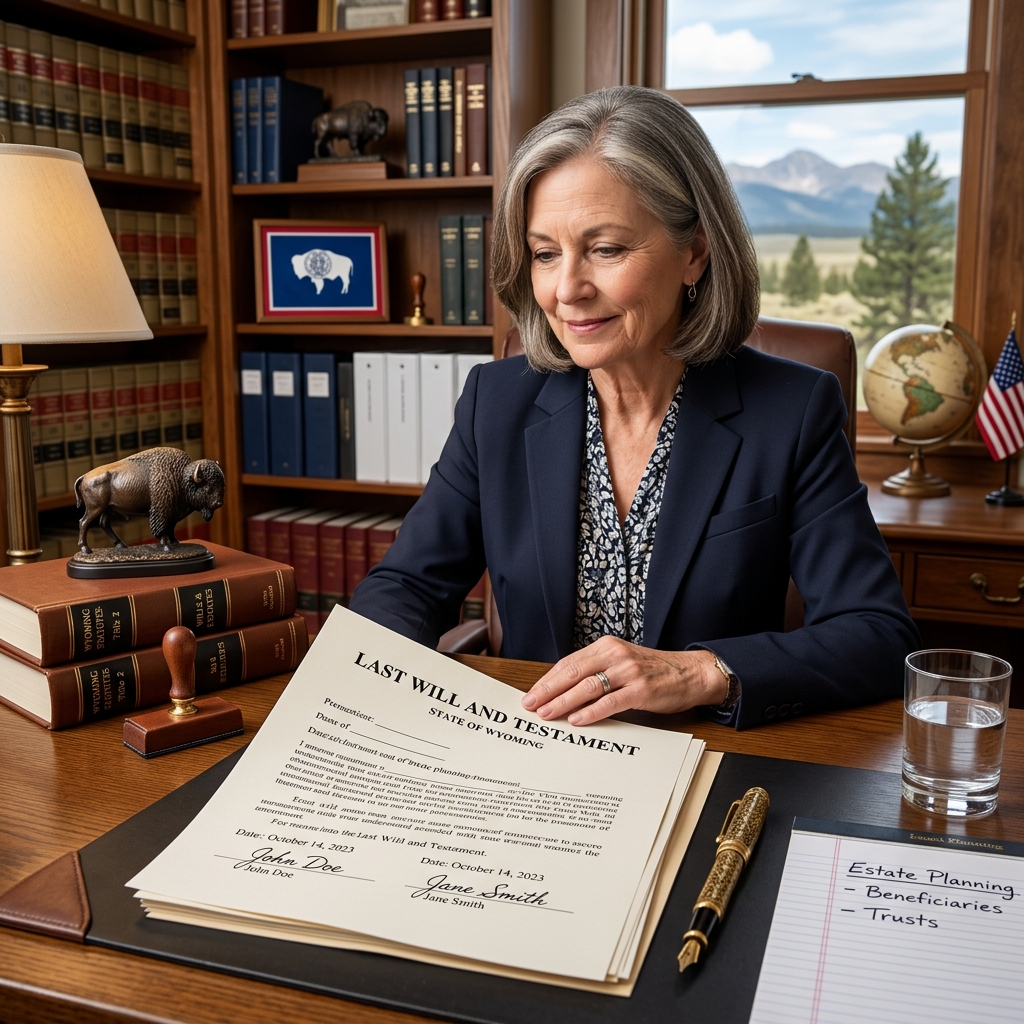
Wyoming has a detailed statutory framework that governs how wills are created, validated, interpreted, and administered after death. This guide explains the core rules so you can plan your estate with confidence and reduce the risk of disputes or probate complications.
Why Having a Will Matters in Wyoming
A will is a legal document that states how your property should be distributed after you die and who will manage your estate. In Wyoming, having a well-drafted will lets you:
- Choose who receives your assets instead of relying on default state law.
- Appoint a personal representative (executor) to handle your estate.
- Provide guidance for the care of minor children through guardianship provisions.
- Reduce uncertainty and the likelihood of family conflict during probate.
Without a will, Wyoming’s intestate succession rules determine who inherits your property, which may not match your wishes.
Who Can Make a Valid Will in Wyoming?
Wyoming law sets specific criteria for who may create a will and have it legally recognized by the courts. In general:
- Minimum age: You must be at least 18 years old to execute a will.
- Mental capacity: You must be of sound mind, meaning you understand the nature of your assets, the people who would ordinarily be your heirs, and the effect of signing a will.
- Voluntary action: The will must be created without coercion, undue influence, or fraud.
If these conditions are not met, the will can be challenged and potentially invalidated during probate.
Form and Format: How a Wyoming Will Must Be Written
Wyoming requires that wills be created on physical paper and follow specific execution rules. Key points include:
- Written document: The will must be written or typewritten on paper.
- No audio or video wills: A recording alone cannot serve as a valid will.
- No purely digital-only wills: A will saved only as an electronic file that isn’t printed and properly signed does not meet statutory requirements.
These traditional form requirements are crucial. Even if your wishes are clear, a will that does not comply with formalities may be rejected by the court.
Execution Requirements: Signing and Witnesses
A will is not valid in Wyoming unless it is properly executed. The basic execution rules are set out in Wyoming’s probate code.
Core Execution Rules
- Signature of the testator: The person making the will (the testator) must sign the document.
- Two competent witnesses: At least two witnesses must observe the testator signing the will, or the testator must acknowledge the signature in their presence.
- Witness competence: Witnesses should be adults capable of understanding what they are witnessing and able to testify if needed.
Remote Witnessing Options
Wyoming permits witnesses to participate by audio-video communication technology in real time, and those remote witnesses may sign electronically. This modern rule allows for more flexibility when in-person signing is difficult, but the process must still comply with statutory standards.
| Method | Allowed? | Key Conditions |
|---|---|---|
| In-person witnessing | Yes | Testator and two witnesses present; testator signs or acknowledges signature; witnesses sign the same paper document. |
| Remote audio-video witnessing | Yes | Real-time audio-video; witnesses see the testator sign or acknowledge; witnesses may sign electronically as allowed by statute. |
| Purely digital will without physical paper | No | Wyoming requires a will on paper; digital-only files are not sufficient. |
Holographic Wills: Handwritten Documents in Wyoming
Wyoming recognizes holographic wills under specific conditions. A holographic will is a handwritten document that may be valid even without witnesses if it meets strict requirements.
- The document must be entirely in the testator’s handwriting.
- It must clearly express the testator’s intent to dispose of property after death.
- It must be signed by the testator in their own hand.
Because holographic wills frequently raise questions about authenticity, clarity, and intent, many attorneys caution against relying on them for complex estates. A formally executed will is generally safer and more predictable in probate.
Do You Need a Notary for a Wyoming Will?
Wyoming law does not require notarization for a will to be legally valid. A properly signed and witnessed will may be accepted by the court without a notary. However, notarization becomes important for a specific feature: the self-proving will.
Self-Proving Wills
A self-proving will includes sworn statements from the testator and witnesses, usually in the form of a notarized affidavit attached to the will. Benefits include:
- The court can accept the will without requiring witnesses to appear in person.
- Probate can proceed more quickly and with fewer evidentiary hurdles.
- It reduces the risk that later witness unavailability will complicate probate.
To make a will self-proving in Wyoming, you and your witnesses typically sign the appropriate self-proving language before a notary at the time of execution or shortly thereafter.
Where and When Is a Will Filed in Wyoming?
In Wyoming, a will is generally not filed with the court during the testator’s lifetime. Instead:
- The signed original is usually kept in a secure place, such as a home safe, attorney’s office, or bank safe deposit box.
- After the testator’s death, the person in possession of the will should file it with the appropriate district court when beginning probate.
Wyoming’s district courts have exclusive original jurisdiction over probate matters, including the probate of wills and the administration of estates.
What Happens If You Die Without a Will? Intestate Succession
If you die without a valid will in Wyoming, your estate passes according to intestate succession rules under state statute. These laws create a default inheritance plan based on family relationships.
Basic Intestacy Principles
- Spouse and children: Your property generally passes first to your surviving spouse and children.
- Other descendants and parents: If there is no spouse or children, property may go to grandchildren or parents.
- Extended relatives: If closer relatives are not living, the statute continues down the family line to more distant relatives.
- No relatives: If no living relatives by blood or marriage can be found, the estate may ultimately pass to the state.
Intestacy ensures assets do not go unclaimed, but it can produce outcomes very different from a person’s preferences. Drafting a will is the most reliable way to keep control over who inherits your property.
Overview of Probate for Wyoming Wills
Probate is the court process used to validate a will, appoint a personal representative, identify and gather assets, pay debts, and distribute remaining property to beneficiaries.
Core Probate Steps
- Filing the will and a petition with the district court after death.
- Determining whether the will is valid under Wyoming law.
- Appointing a personal representative to administer the estate.
- Identifying assets and creditors and satisfying lawful claims.
- Transferring the remaining property according to the will or intestacy rules.
Wyoming law also provides simplified procedures for smaller estates, such as summary distribution and small estate options, which can shorten and streamline probate for qualifying situations.
Changing or Revoking a Wyoming Will
Estate plans often need updating as life circumstances change. Wyoming allows you to revoke or change your will through recognized legal methods.
Common Methods of Revocation
- Executing a new will: The most reliable method is to sign a new will that expressly revokes all prior wills and codicils.
- Physical destruction: Intentionally destroying the old will (for example, tearing or burning it) with the clear intent to revoke can be effective.
Courts look for clear evidence of intent. Ambiguous actions, such as misplacing a will or partially damaging it, may not be enough to prove revocation and can lead to litigation. A formally executed new will is typically the safest approach.
Common Pitfalls and Mistakes in Wyoming Wills
Even when people intend to follow Wyoming law, certain recurring mistakes can cause problems.
- Improper execution: Failing to have two competent witnesses or omitting the testator’s signature can make the will invalid.
- Do-it-yourself handwritten wills: Holographic wills that are unclear or incomplete may create disputes about meaning and validity.
- Out-of-date provisions: Major life changes (marriage, divorce, birth of children, new assets) can render an old will inconsistent with current wishes.
- Relying solely on digital files: Keeping a will only as an electronic document without printing and proper execution does not satisfy Wyoming’s paper requirement.
Working with an attorney familiar with Wyoming’s probate code can help avoid these issues and improve the chances that your estate plan will operate as intended.
Frequently Asked Questions About Wyoming Wills
1. Does every Wyoming will have to go through probate?
Not every asset must pass through full probate, but many estates require some level of court involvement. Assets held with designated beneficiaries, in certain trusts, or with survivorship rights may pass outside probate, while other assets titled solely in the decedent’s name typically require probate or a simplified procedure.
2. Can I store my will with the court before I die?
Generally, wills are not filed with the Wyoming courts while the testator is alive. The will is filed in the district court only after death when probate is initiated.
3. Are electronic signatures valid for witnesses?
Wyoming law allows remote witnessing using audio-video technology, and remote witnesses may sign electronically as permitted by statute, so long as the will itself is on paper and other execution requirements are satisfied.
4. Is a notarized will automatically better?
Notarization alone does not make a will more valid, but a notarized self-proving affidavit attached to the will can simplify probate because it provides sworn evidence of proper execution and may eliminate the need for witnesses to testify.
5. Do Wyoming intestacy rules apply if I have a partial will?
If a valid will does not dispose of all property or certain portions are invalid, Wyoming’s intestacy rules can fill in the gaps for assets not effectively covered by the will.
Practical Tips for Complying With Wyoming Will Laws
To make your estate plan more durable under Wyoming law, consider the following practical steps:
- Confirm you meet the age and capacity requirements before signing.
- Use a written, paper document and avoid relying on audio or video recordings.
- Arrange for two competent witnesses, in person or via real-time audio-video where allowed.
- Consider adding a self-proving affidavit with a notary to streamline probate.
- Review and update your will periodically, especially after major life events.
- Store the original will securely and let your personal representative know how to access it.
Careful adherence to Wyoming’s formalities, combined with clear language and professional guidance, can make probate smoother for your heirs and protect your intentions under state law.
References
- Making a Will in Wyoming — Nolo. 2025-01-01. https://www.nolo.com/legal-encyclopedia/wyoming-make-will-32116.html
- Title 2 – Wills, Decedents’ Estates and Probate Code — State of Wyoming Legislature. 2025-01-01. https://wyoleg.gov/statutes/compress/title02.pdf
- Wills, Decedents’ Estates and Probate Code (Wyoming Statutes) — Justia. 2025-01-01. https://law.justia.com/codes/wyoming/title-2/
- Do All Wills Go Through Probate in Wyoming? — Olsen Legal Group. 2023-06-01. https://olsencrecelius.com/do-all-wills-go-through-probate-in-wyoming/
- 7 Common Mistakes in Wills and How to Avoid Them in Wyoming — Holmes Law Firm. 2024-02-01. https://holmeslawteam.com/common-mistakes-in-wills-and-how-to-avoid-them/
- 1.7.52 – Wyoming – GiftLaw Pro — Calvin University. 2020-01-01. https://giftplanning.calvin.edu/giftlawpro/glawpro_subsection.jsp?CC=1&SS=7&SS2=52
Similar Articles








Read full bio of medha deb


