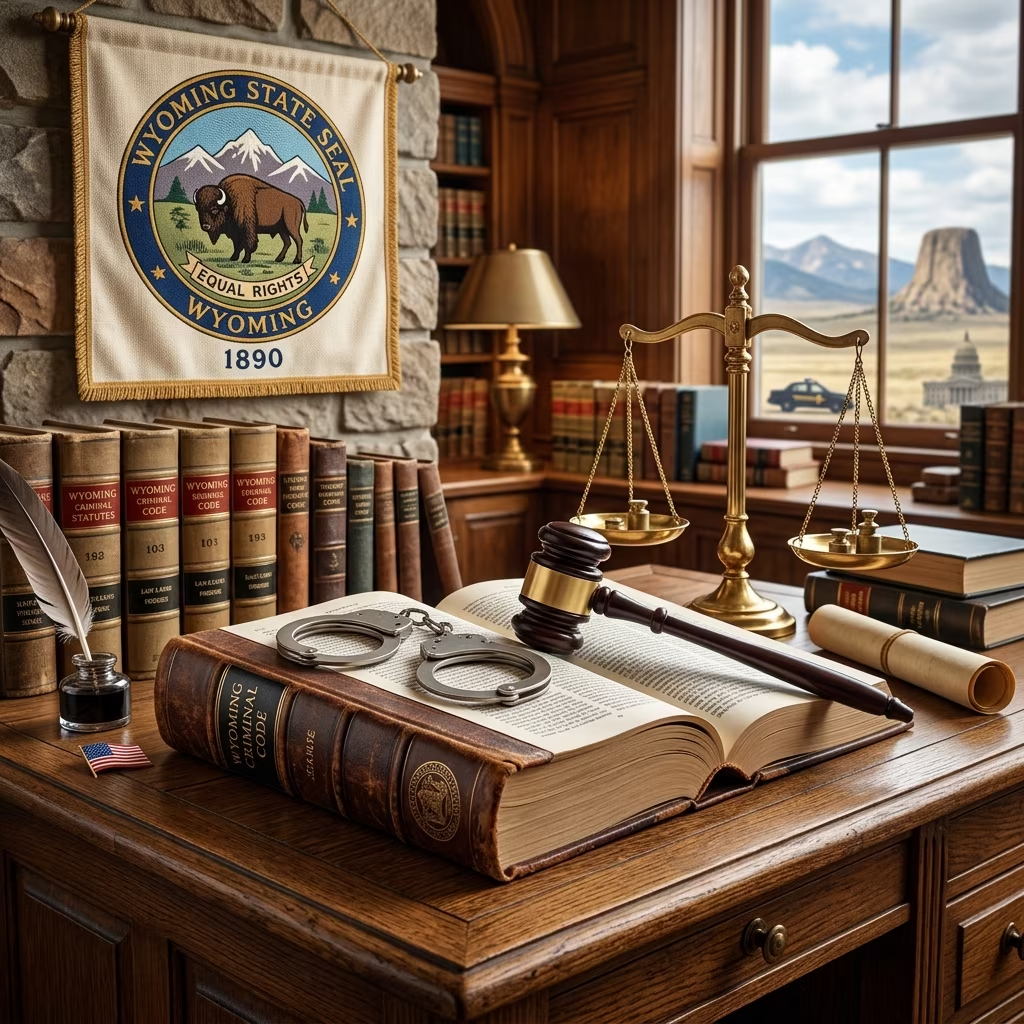
Wyoming’s criminal justice system is shaped by a network of statutes, court rules, and constitutional protections that govern everything from minor traffic infractions to the most serious violent crimes. This guide offers a clear, plain‑language overview of how criminal law works in Wyoming, including how crimes are classified, how penalties are determined, and what rights defendants have as they move through the courts.
Foundations of Criminal Law in Wyoming
Criminal law in Wyoming is primarily codified in Title 6: Crimes and Offenses of the Wyoming Statutes, with related provisions in other titles and separate criminal procedure rules adopted by the Wyoming Supreme Court. Together, these rules define what actions are crimes, prescribe penalties, and set out how cases must be handled in court.
- Substantive law: Defines specific offenses (for example, assault, theft, or homicide) and their elements.
- Procedural law: Governs how cases are investigated, charged, tried, and sentenced, primarily through the Wyoming Rules of Criminal Procedure.
- Common‑law principles: Some traditional defenses and concepts are preserved unless explicitly changed by statute.
Wyoming organizes crimes into broad chapters within Title 6, including offenses against persons, property, and public morals. These chapters help lawyers, judges, and the public navigate the law and locate relevant statutes for particular types of behavior.
Crime Classification: Felonies, Misdemeanors, and Infractions
Wyoming uses three primary categories of criminal offenses: felonies, misdemeanors, and lesser infractions.
| Category | Typical Penalty Range | Examples | Where Served |
|---|---|---|---|
| Felony | More than 1 year in prison; may include large fines or, for certain crimes, capital punishment. | Robbery, aggravated assault, most serious sexual assaults, murder. | State prison or penitentiary. |
| Misdemeanor | Up to 1 year in county or local jail; fines typically under $1,000 unless otherwise specified. | Simple assault, petty theft, some traffic offenses, disorderly conduct. | County or local jail. |
| Infraction / Violation | Usually a fine only; no jail; often for minor regulatory or traffic violations. | Parking violations, minor equipment offenses. | No incarceration; monetary penalty or other civil remedy. |
Under Wyoming law, felonies are defined by their potential punishment of death or more than one year in state prison. Misdemeanors are crimes for which the maximum possible sentence is up to one year in local or county jail. Many statutes also specify fines and other consequences such as restitution, probation, or mandatory treatment programs.
- Felony fines: Often up to $10,000 when no specific limit appears in the statute.
- Misdemeanor penalties: Commonly capped at six months in jail and $750 in fines when not otherwise stated.
- Court discretion: Judges may choose imprisonment, fines, or both, within statutory limits.
Examples of Major Wyoming Crimes and Penalties
Wyoming statutes provide detailed definitions and penalty ranges for specific offenses. Below are illustrations of how several common crime categories are treated, based on Title 6 provisions.
Offenses Against the Person
Crimes against persons include assault, battery, robbery, and homicide. Penalties depend heavily on the seriousness of harm and the defendant’s intent.
- Simple assault: Generally charged when someone unlawfully attempts to injure another or threatens immediate harm without serious injury. In Wyoming, simple assault is usually a misdemeanor with a modest fine.
- Battery: Involves actual unlawful physical contact or injury. Often a misdemeanor punishable by up to six months in jail and a fine within statutory limits.
- Aggravated assault and battery: Charged when serious bodily injury is inflicted, a deadly weapon is used, or the victim is particularly vulnerable. Wyoming treats aggravated assault and battery as a felony, with potential sentences reaching several years in prison.
Homicide: Murder and Manslaughter
Homicide offenses are among the most severe in Wyoming, reflecting the gravity of intentionally or negligently causing another person’s death.
- Murder: Usually requires an intentional killing or extremely reckless conduct showing a depraved indifference to human life. Wyoming penalties range from lengthy prison terms, often 20 years or more, to life imprisonment, and in certain cases capital punishment.
- Manslaughter: Typically involves killing without premeditation, such as in the heat of passion or through criminal negligence. Wyoming law can impose up to 20 years of imprisonment for manslaughter.
These distinctions are crucial because they determine both the maximum penalties and how prosecutors charge a case. Intent, circumstances, and prior record all play a role in how a homicide incident is classified.
Property and Theft‑Related Crimes
Offenses against property include theft, burglary, robbery, and various forms of fraud. Wyoming’s statutes differentiate these crimes based on the method used and the value involved.
- Theft / larceny: Unlawful taking of another’s property, with penalties typically based on the value of what was taken. Higher values may result in felony charges.
- Burglary: Entering a building or vehicle without permission and with intent to commit a crime inside. Often treated as a felony due to the risk of confrontation.
- Robbery: Taking property from a person through force or threat of force, combining theft with assault. Robbery statutes impose felony‑level penalties, particularly when injury occurs.
Sentencing Structure and Special Programs
Wyoming sentencing laws aim to punish unlawful conduct while also allowing courts flexibility to consider rehabilitation, risk, and community safety.
Standard Sentencing Ranges
Most crimes include specific penalty ranges within their defining statute, such as maximum prison terms and fine limits. When a statute omits precise limits, Wyoming law provides default caps for fines and jail time based on whether the offense is classified as a felony or misdemeanor.
- Court may impose imprisonment only, fine only, or a combination, as long as the sentence remains within statutory bounds.
- In serious cases, including repeat violent offenses, longer sentences and restricted parole eligibility may apply.
First Offender and Diversion‑Type Options
Wyoming statutes authorize certain forms of first offender treatment, particularly for individuals with little or no prior criminal history. These programs are not available for all offenses but may allow qualifying defendants to avoid a formal conviction if they successfully complete probation and other requirements.
- One general statute permits deferred adjudication or probation for eligible felony and misdemeanor cases, subject to court and sometimes prosecutorial approval.
- A separate statute provides drug‑specific first offender treatment for certain possession or use offenses, designed to prioritize treatment over incarceration and does not always require the prosecutor’s consent.
- Successful completion may lead to dismissal of charges, while failure can result in adjudication of guilt and sentencing under the original criminal statute.
Such options are limited: they typically exclude defendants with serious prior convictions, or those charged with murder, major sexual assaults, arson, or domestic violence offenses. This reflects a policy balance between second chances and protection of the public.
Procedural Rules: How Criminal Cases Move Through Wyoming Courts
The Wyoming Rules of Criminal Procedure govern the steps in a criminal case, ensuring orderly processing and protection of constitutional rights. These rules apply in state courts and detail expectations for both prosecutors and defense counsel when handling charges.
Key Stages of a Wyoming Criminal Case
- Investigation and arrest: Law enforcement investigates possible offenses and, when supported by probable cause, may arrest the suspect or seek a warrant from a judge.
- Initial appearance: The defendant appears before a court to be informed of the charges, advised of rights, and considered for bail or other pretrial release conditions.
- Charging documents: Prosecutors file a complaint, information, or indictment outlining the alleged criminal conduct and its statutory basis.
- Pretrial proceedings: Includes motions, discovery (exchange of evidence), plea negotiations, and hearings regarding admissibility of evidence or constitutional issues.
- Trial: If the case does not resolve through a plea, it proceeds to trial, usually with a jury in felony matters. The state must prove every element of the crime beyond a reasonable doubt.
- Sentencing: If the defendant is convicted, the court imposes sentence within statutory ranges, considering factors such as criminal history, victim impact, and any mitigating circumstances.
- Appeal: Defendants may challenge convictions or sentences before the Wyoming Supreme Court under applicable appellate rules.
Wyoming periodically updates its criminal procedure rules and bail schedules to reflect legal developments and policy changes. It is important to consult current rules, as standards for bail, plea hearings, and remote appearances may evolve over time.
Unique Features of Wyoming Criminal Law
Several aspects of Wyoming’s criminal framework stand out when compared with other states.
- No general criminal statute of limitations: Wyoming does not apply broad time limits for bringing criminal charges. This means that prosecutions for many crimes can be initiated long after the alleged conduct, especially for serious offenses.
- Broad offense coverage: Criminal provisions appear not only in Title 6 but across multiple titles of the Wyoming Statutes, sometimes covering highly specific conduct.
- Judicial discretion: Courts have significant discretion in imposing sentences within statutory ranges, allowing judges to tailor penalties to individual circumstances while following legislative guidelines.
These features can affect both how cases are investigated and how defendants plan their defense strategies, particularly for long‑ago conduct or specialized regulatory crimes.
Rights and Defenses in Wyoming Criminal Cases
Defendants in Wyoming benefit from protections grounded in the United States Constitution, the Wyoming Constitution, and statutory law. While details vary by case, several core rights are central to the system.
- Right to counsel: Defendants facing incarceration are generally entitled to legal representation, and courts appoint counsel if a defendant cannot afford one.
- Presumption of innocence: Every accused person is presumed innocent unless and until the state proves guilt beyond a reasonable doubt.
- Right to a fair and public trial: Including the right to confront witnesses, present evidence, and have a jury hear the case in many felony matters.
- Protection against unreasonable searches and seizures: Evidence obtained in violation of constitutional standards may be suppressed, meaning it cannot be used at trial.
- Common‑law and statutory defenses: Wyoming retains some traditional defenses (such as self‑defense or duress) unless statutes specifically alter them.
Because criminal law and procedure can be complex, individuals charged with a crime in Wyoming should consult a qualified criminal defense attorney to understand available defenses and procedural options.
Frequently Asked Questions About Wyoming Criminal Laws
Do all crimes in Wyoming have the same time limit for prosecution?
No. In fact, Wyoming is known for not having a general criminal statute of limitations, meaning many offenses can be prosecuted at any time unless a specific statute provides otherwise. Serious crimes, such as homicide, are typically subject to prosecution regardless of how much time has passed.
How do I know if an offense is a felony or a misdemeanor?
You can determine the classification by checking the relevant statute: if the maximum possible punishment includes more than one year in state prison or death, it is a felony; if the maximum is up to one year in local or county jail, it is a misdemeanor. Some minor violations with only fines are treated as infractions or civil offenses.
Can a first‑time offender avoid a conviction in Wyoming?
In some cases, yes. Wyoming law provides first offender treatment options that allow certain defendants, especially those charged with non‑violent or specific drug offenses and who meet eligibility criteria, to receive probation or deferred adjudication instead of an immediate conviction. Successful completion of program conditions can lead to dismissal, but serious crimes and prior significant records usually disqualify a person.
Where can I find the official text of Wyoming criminal statutes?
The official statutes are published by the Wyoming Legislature and are available in Title 6 for crimes and offenses. Updated codifications are accessible through official legislative or court websites, and annotated versions may be provided by commercial legal publishers.
Who sets the rules for criminal procedure in Wyoming courts?
The Wyoming Supreme Court adopts and amends the Wyoming Rules of Criminal Procedure, which apply throughout the state’s court system. These rules cover topics such as bail, arraignment, pleas, trials, and sentencing hearings.
References
- Title 6: Crimes and Offenses — Wyoming Legislature. 2024-01-01. https://wyoleg.gov/statutes/compress/title06.pdf
- Wyoming Criminal Law and Legal Issues Overview — LawInfo. 2023-06-15. https://www.lawinfo.com/resources/criminal-defense/wyoming/
- Criminal Law in Wyoming: An Overview and Analysis of Possible Reforms — Wyoming Liberty Group. 2016-09-01. https://wyliberty.org/criminal-law-in-wyoming-an-overview-and-analysis-of-possible-reforms
- 2025 Wyoming Statutes, Title 6 – Crimes and Offenses — Justia. 2025-01-10. https://law.justia.com/codes/wyoming/title-6/
- Criminal Law: Legal Information by Topic — University of Wyoming Student Legal Services. 2022-08-01. https://www.uwyo.edu/studentatty/legal-information-by-topic/criminal-law.pdf
- Wyoming Rules of Criminal Procedure — Wyoming Supreme Court. 2023-07-01. https://www.wyocourts.gov/court-rules/wyoming-rules-of-criminal-procedure/