
Understanding What Makes an Arrest Legal
Learn when police can lawfully arrest you, what probable cause really means, and how the Constitution protects your rights.
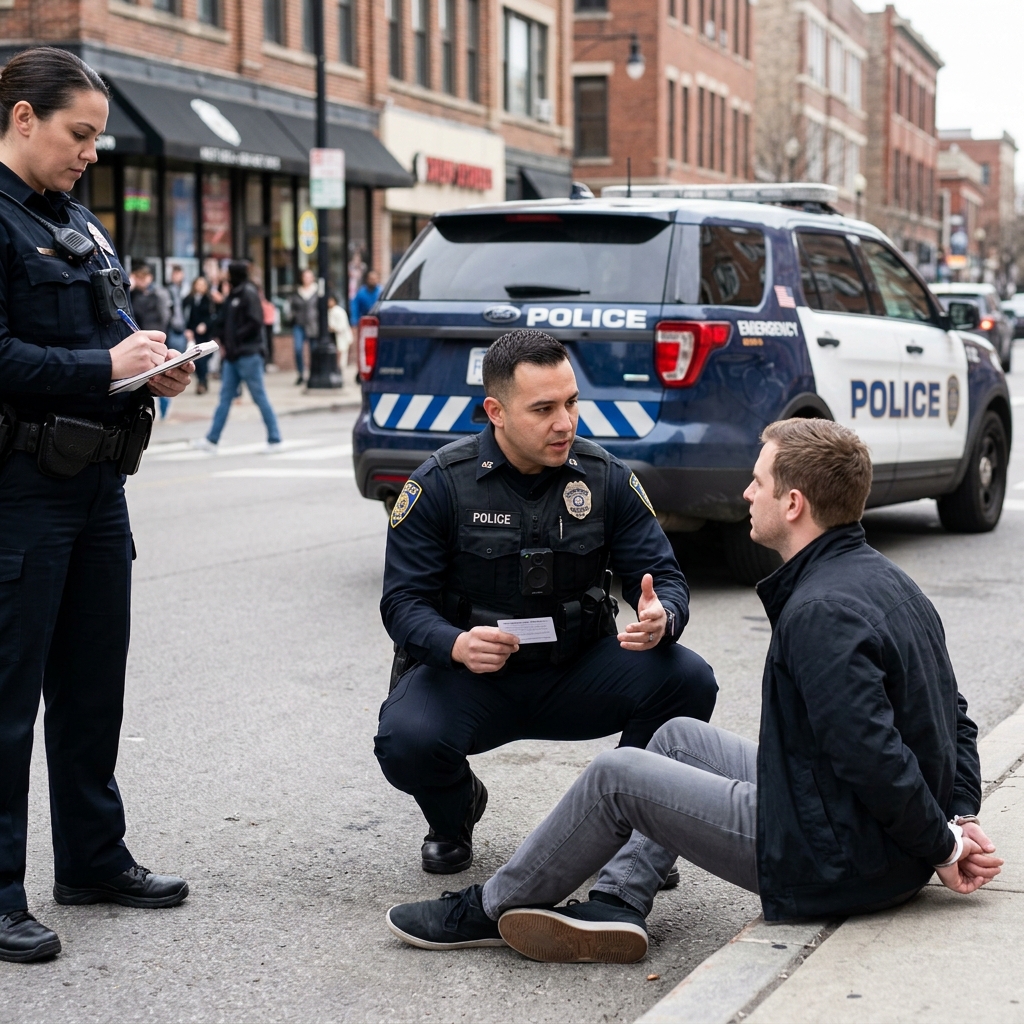
Being stopped by the police and told you are under arrest is one of the most serious encounters you can have with the criminal justice system. Yet not every arrest is automatically lawful. To be a legal arrest, the officer must act under valid legal authority, comply with constitutional rules, and respect key procedural safeguards.
This article explains, in clear language, when an arrest is legally valid, how probable cause works, when a warrant is required, and what rights you have if you are taken into custody. It is general information, not legal advice, but it can help you better understand your position if you or someone close to you is arrested.
Basic Definition of a Lawful Arrest
A lawful arrest occurs when a person is taken into custody by a law enforcement officer or other authorized individual in a way that complies with all applicable legal rules. That typically means:
- The officer has legal authority to arrest (for example, a sworn police officer or sheriff’s deputy).
- The arrest is supported by probable cause or a valid arrest warrant issued by a court.
- The manner of arrest respects constitutional protections, especially the Fourth Amendment ban on unreasonable searches and seizures.
You are considered under arrest once you are no longer free to leave and the officer asserts control over your movement, even if handcuffs are not used.
Core Legal Foundations: The Fourth Amendment
In the United States, the main constitutional safeguard governing arrests is the Fourth Amendment, which prohibits unreasonable searches and seizures and requires that warrants be supported by probable cause. In practice, this means:
- An arrest counts as a seizure of your person and must be reasonable in light of the circumstances.
- When police seek a warrant, they must show a judge or magistrate enough facts to establish probable cause.
- Even without a warrant, officers still need probable cause to make a lawful arrest, with limited exceptions.
Courts evaluate the facts known to the officer at the time of the arrest, not information learned afterward. If those facts do not amount to probable cause or do not fit within a recognized exception, the arrest can be challenged as unlawful.
Three Main Paths to a Legal Arrest
Although individual state laws vary, there are three common ways in which an arrest is usually considered legal across U.S. jurisdictions.
1. Crime Committed in the Officer’s Presence
One of the clearest situations for a lawful arrest is when an officer personally observes someone commit a crime. Common examples include:
- An officer watches a person shoplift from a store.
- An officer sees a driver run a red light while intoxicated.
- An officer observes a physical assault happening directly in front of them.
When a crime happens in plain view, the officer generally has immediate authority to arrest without seeking a warrant first, as long as they are acting within the scope of their duties and jurisdiction.
2. Probable Cause to Believe a Crime Was Committed
Most arrests do not occur in full view of law enforcement. Instead, they are based on what is known as probable cause—a key legal standard.
Probable cause exists when, based on objective facts and circumstances, a reasonable person would believe that:
- A crime has been committed or is about to be committed; and
- The individual being arrested is the person responsible.
Probable cause is more than a mere hunch or suspicion, but less than the proof needed to convict someone at trial. It is a practical, common-sense standard reviewed by courts to ensure arrests are not arbitrary or abusive.
3. Arrest Pursuant to a Valid Warrant
Another central route to a lawful arrest is through a court-issued arrest warrant. A warrant is a formal order directing law enforcement to arrest a specific person, usually based on sworn statements or evidence presented by police or prosecutors.
For a warrant-based arrest to be legal, several elements must be satisfied:
- The warrant is issued by a neutral judge or magistrate, not by the police themselves.
- The warrant application shows probable cause that the named person committed a specific offense.
- The warrant clearly identifies the person to be arrested and, in many cases, the underlying charge.
Warrants are especially important for arrests inside private homes, where constitutional protections are strongest. The U.S. Supreme Court has held that, absent consent or exigent circumstances, police generally need a warrant to make an arrest inside a suspect’s residence.
Warrantless Arrests: When Are They Allowed?
Although warrants provide strong protection, the law recognizes that police sometimes must act quickly. As a result, officers may arrest without a warrant in certain circumstances, so long as they still have probable cause.
Common situations where warrantless arrests are permitted include:
- Felony offenses, even if the officer did not personally witness the crime, when probable cause exists based on investigation and reliable information.
- Crimes committed in the officer’s presence, such as public disturbances or traffic offenses.
- Exigent circumstances, where delaying to obtain a warrant would pose safety risks, allow a suspect to flee, or compromise important evidence.
State laws and departmental policies often spell out additional examples, such as domestic violence incidents or violations of protective orders, where warrantless arrest is authorized to protect victims and public safety.
Probable Cause in Detail: Facts, Not Feelings
Because probable cause is the key ingredient in both warrant and warrantless arrests, understanding how it is evaluated is essential.
| Aspect | What It Means for Probable Cause |
|---|---|
| Source of Information | Officers may rely on personal observations, statements from victims or witnesses, physical evidence, or reliable tips. |
| Objective Standard | Courts ask whether a reasonable officer, knowing the same facts, would believe a crime was committed and the suspect is responsible. |
| Timing | Only facts known at the time of arrest count toward probable cause, not information learned later. |
| Level of Certainty | Greater than mere suspicion or gut feeling, but less than proof beyond a reasonable doubt. |
If an arrest is made without probable cause, it can be challenged in court as unlawful. Consequences may include suppression of evidence, dismissal of charges, or civil remedies, depending on the details and harm caused.
Where You Are Matters: Public Places vs. Your Home
Location plays a major role in determining whether an arrest complies with constitutional rules. Courts treat arrests in public differently from those in private homes.
Public Places
Police generally have more flexibility to arrest in public spaces, such as streets, parks, or businesses open to the public. If they have probable cause that a person has committed a felony, they can usually arrest in a public location without a warrant.
Inside a Home
Entering a private home to arrest someone raises stronger privacy concerns. Under U.S. Supreme Court precedent, a warrant is normally required to arrest someone in their own home, unless an exception applies.
Recognized exceptions include:
- Consent: The resident freely and voluntarily allows officers to enter.
- Exigent circumstances: There is an immediate emergency, such as danger to life, risk of escape, or imminent destruction of evidence.
Arrests made in violation of these rules may lead courts to exclude evidence or find constitutional violations, even if the person later turns out to be guilty.
Your Rights Once You Are Under Arrest
A lawful arrest triggers specific procedural rights aimed at ensuring fairness in the criminal process. While the precise details depend on the jurisdiction, several core protections are widely recognized.
- Right to be informed of the charges: After arrest, you must be told what offense you are suspected of and brought before a judge without unnecessary delay.
- Miranda warnings: Before custodial interrogation, officers must advise you of your rights to remain silent and to have an attorney. This requirement stems from U.S. Supreme Court decisions interpreting the Fifth Amendment and applies once you are under arrest or equivalent restraint.
- Right to counsel: You have the right to consult an attorney and, in many cases, to have one appointed if you cannot afford one.
- Protection against unreasonable force: Officers may use only the amount of force reasonably necessary to make the arrest and keep everyone safe, consistent with Fourth Amendment standards.
These rights exist regardless of whether the arrest is ultimately found legal or illegal. However, violations can affect whether statements or evidence are admissible in court.
What Happens If an Arrest Is Not Legal?
If police arrest you without proper authority, without probable cause, or in violation of constitutional protections, the arrest may be deemed unlawful. There are several potential consequences.
- Challenging the arrest in court: Your attorney may file motions asking the judge to review the legality of the arrest. If the judge finds no probable cause or improper procedure, certain evidence may be suppressed or the case dismissed.
- Habeas corpus: If you are held for an extended period without lawful basis or charges, your lawyer may seek a writ of habeas corpus, asking a court to review the lawfulness of your detention.
- Civil remedies: In some cases, an unlawful arrest may support a civil lawsuit for violation of rights, depending on the facts, damages, and applicable law.
It is important to understand that being innocent does not automatically make your arrest illegal. Courts focus on what the officer reasonably believed at the time, not on the eventual outcome of the case.
Practical Dos and Don’ts If You Are Being Arrested
Regardless of whether you feel the arrest is justified, how you respond can significantly affect your safety and legal position.
- Do not resist physically. Resisting, even if you believe the arrest is unlawful, can lead to additional charges and increased risk of harm.
- Stay calm and ask basic questions. You may politely ask if you are under arrest and what you are being arrested for.
- Exercise your right to remain silent. Beyond identifying yourself where required by law, you are generally not obligated to answer questions. Ask to speak with an attorney before answering substantive questions.
- Document details later. As soon as you can safely do so, write down what happened—time, location, officers’ names, witnesses, and anything said or done. This can help your lawyer assess whether the arrest was lawful.
- Contact legal counsel promptly. An attorney can advise you on challenging the arrest, protecting your rights, and avoiding self-incrimination.
Frequently Asked Questions About Legal Arrests
Does an officer always need a warrant to arrest me?
No. While warrants provide strong protection, law enforcement may arrest without a warrant when they have probable cause, particularly for felonies or crimes committed in their presence, and in some urgent situations. However, arrests inside a home generally require a warrant unless an exception applies.
If I am innocent, was my arrest automatically illegal?
Not necessarily. The legality of an arrest depends on whether the officer had probable cause and followed required procedures at the time of the arrest, not on whether you are later found innocent or charges are dropped.
What is the difference between a stop and an arrest?
A brief investigative stop (often called a “detention”) allows officers to temporarily question or check for weapons based on reasonable suspicion, which is a lower standard than probable cause. An arrest occurs when you are formally taken into custody and are no longer free to leave, which requires probable cause.
Can police arrest me based on an anonymous tip?
It depends. Anonymous tips alone are usually not enough for probable cause. Officers must corroborate the tip with additional facts or observations that make it reliable before making a lawful arrest.
How soon must I see a judge after being arrested?
While specific time limits vary by jurisdiction, the general rule is that you must be brought before a judge without unnecessary delay to be informed of the charges and, in many cases, to have bail considered.
References
- When Is an Arrest a Legal Arrest? — FindLaw. 2023-06-01. https://www.findlaw.com/criminal/criminal-rights/when-is-an-arrest-a-legal-arrest.html
- Your Guide to Your Rights If Arrested — Illinois State Bar Association. 2020-01-01. https://www.isba.org/public/guide/yourrightsifarrested
- Arrest — Legal Information Institute, Cornell Law School. 2022-05-10. https://www.law.cornell.edu/wex/arrest
- 1-5 Arrest and Legal Procedures — Virginia Commonwealth University Police Department. 2021-09-01. https://police.vcu.edu/facts/policies/1-5-arrest-and-legal-procedures/
- SECTION 703 LAWFUL, ARREST, PROBABLE CAUSE — Evangeline Parish Sheriff. 2019-03-15. https://www.evangelineparishsheriff.org/section-703-lawful
Similar Articles








Read full bio of Sneha Tete




