
Understanding What Appears on Your Criminal Record
Learn what information is stored in a criminal record, who can see it, and how it can affect your future opportunities.
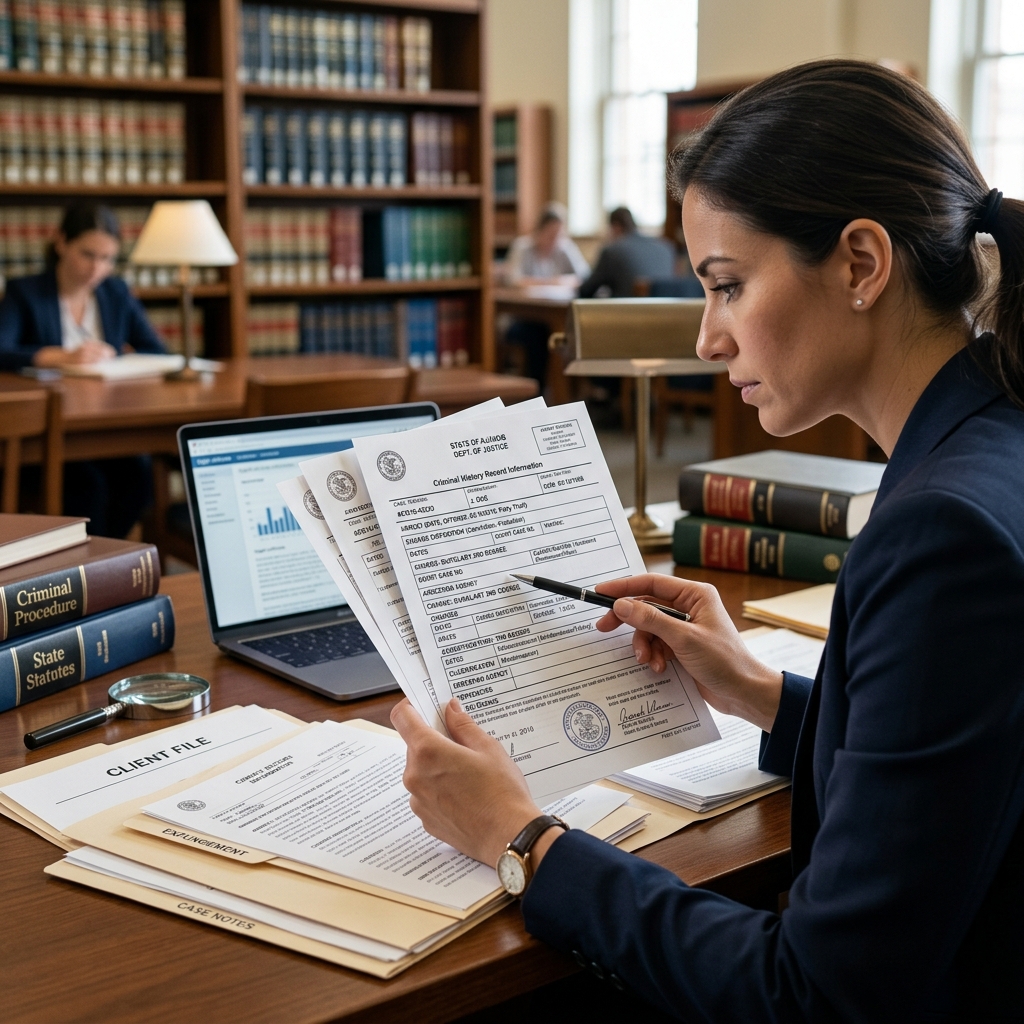
A criminal record is more than a simple note that a person has been arrested or convicted. It is a structured summary of a person’s interactions with the criminal justice system and can influence employment, housing, immigration, licensing, and many other areas of life. Because of its importance, it is essential to understand what typically appears on a criminal record, how that information gets there, and what you can do if you need to review, correct, or clear it.
What Is a Criminal Record?
In most jurisdictions, a criminal record is an official compilation of information about your criminal convictions and, in some places, selected arrests or charges. It is usually maintained by a national, state, or regional law enforcement or justice agency and is used for investigations, court proceedings, sentencing, and background checks. While terminology varies, you may see it referred to as:
- Criminal history or criminal history record information
- Summary criminal history or “rap sheet” (often used by law enforcement)
- GCIC record or similar state database record, depending on the state’s name for its system
These records are typically built around fingerprint-based identification, which helps match events to the correct individual even when names or other identifiers are similar.
Core Components of a Typical Criminal Record
Although details differ from one jurisdiction to another, most criminal records follow a similar structure. They start with basic identifying information and then list entries for each encounter with the criminal justice system that meets the criteria for inclusion.
1. Personal Identifying Information
Criminal records almost always begin with personal data so that agencies and employers can match the record to the right person. Common elements include:
- Full legal name and any known aliases
- Date of birth
- Sex and, in some systems, race or ethnicity
- Physical characteristics (such as height and weight)
- Internal identification numbers assigned by the justice system
In some state systems, more sensitive information like Social Security numbers may be stored internally and used to match records, but typically is not shown on public background check reports.
2. Arrest Information
Many official criminal history databases store information about arrests, particularly when the person was fingerprinted. Whether the arrest appears on reports available to employers or the public will depend on local law. Arrest-related entries usually include:
- Date of arrest
- Arresting agency (police department, sheriff’s office, etc.)
- Initial charges or suspected offenses
- Internal case or incident numbers
The presence of an arrest on a record does not necessarily mean the person was convicted. The final outcome, or disposition, should be shown later in the record.
3. Charges and Prosecutor Information
After an arrest, the prosecutor (such as a district attorney) decides whether to file formal charges. Criminal records often contain:
- Name of the prosecutor’s office handling the case
- Formal charges filed (including statute or code references)
- Any changes to the charges, such as reductions or dismissals
In some jurisdictions, the record may show that the prosecutor declined to file charges or later dismissed the case, which is important context for understanding a person’s history.
4. Court Outcomes and Sentences
Convictions are usually the central focus of a criminal record. For each case, the record typically indicates:
- Whether the person was convicted, acquitted, or the case was dismissed
- The specific offense of conviction, including whether it is a felony or misdemeanor
- Date of conviction
- Sentence imposed (such as jail or prison time, probation, fines, or community service)
- Participation in diversion or similar programs, when recorded
Some systems also indicate whether the conviction is still considered “active” or has reached a point where it no longer appears on certain types of background checks, depending on local law.
5. Additional Encounters With the Justice System
Criminal records may contain other legally significant events, including:
- Outstanding or past warrants
- Probation or parole status
- Prior deportations or immigration-related outcomes in some law enforcement databases
- Notations that records have been sealed or restricted under specific laws
However, they generally do not include every single document from a case, such as complete court files or officer notes.
Criminal Records vs. Background Checks
Many people first hear about criminal records when they are asked to undergo a background check for a job, license, or volunteer opportunity. While background checks rely on criminal records, they are not the record itself.
What Employers Usually See
Employment-focused criminal background checks typically summarize key details from official records:
- Defendant’s name
- Offense charged and whether it is a felony or misdemeanor
- Case number and court information
- Verdict or disposition (convicted, dismissed, acquitted, etc.)
- Sentencing information, including any jail or prison terms and fines
Depending on local law, certain older convictions, juvenile matters, or arrests without convictions may be excluded from routine employment checks.
Information Commonly Excluded From Background Reports
Even though official criminal history databases may contain detailed information, many background reports do not include the following:
- Full court files and transcripts
- Police reports and officer notes
- Evidence or witness statements
- Confidential juvenile records (in most cases)
Outside the employment context, background information may also be requested for immigration, foreign travel, licensing, or security clearances, sometimes through national-level checks such as an FBI identity history summary.
What Usually Does Not Appear on a Criminal Record
To avoid misunderstanding, it helps to know what types of information are typically excluded from criminal records or restricted to specific uses.
- Minor civil issues such as parking tickets or most civil lawsuits, which are usually handled in separate systems.
- Medical and mental health records, even when treatment is court-ordered, which are typically kept in protected health files.
- Sealed or expunged records, which should not appear in standard summaries once they are formally cleared or restricted.
- Juvenile court matters, in many jurisdictions, especially when records have been sealed after a person reaches adulthood.
However, rules differ widely. In some places, older convictions and certain non-criminal violations drop off employment checks after a set number of years, while in other places they remain accessible longer.
Access: Who Can See Your Criminal Record?
Access to criminal history information is carefully regulated, but it has become more widely used over time as background checks have expanded. Generally, access falls into several categories:
- Law enforcement and courts – Typically have full access for investigations, prosecutions, and sentencing decisions.
- Public agencies – May require criminal history reports for certain benefits, licenses, or public-sector positions.
- Private employers, landlords, and organizations – Often obtain filtered background reports through consumer reporting agencies for hiring, renting, or volunteer screening.
- Individuals – Usually have a right to request and review their own criminal history for accuracy.
Internationally, people may be asked to provide a criminal record check or proof that they have no criminal history for immigration or residency purposes in another country.
How Long Does a Criminal Record Last?
There is no single global rule for how long entries stay on a criminal record. In many countries and regions, criminal records focus primarily on convictions and may retain them for long periods, with differences between minor violations and serious crimes. Some systems allow older convictions to be treated as “spent” for certain purposes, reducing when they appear on standard background checks, while still preserving them for law enforcement, courts, or specific sensitive roles.
Because retention rules are highly jurisdiction-specific, it is important to consult local law or a qualified legal resource if you need precise timelines for how long particular offenses will appear on your record.
What a Typical Criminal Record Entry Looks Like
To make the structure easier to visualize, the table below shows a simplified example of how one case might be represented in a criminal record or background report. This is not based on any real person’s data and is only illustrative.
| Field | Example Entry |
|---|---|
| Name | Jane Doe |
| Date of Birth | 01/15/1990 |
| Arrest Date | 06/10/2020 |
| Arresting Agency | City Police Department |
| Initial Charge | Shoplifting (local statute reference) |
| Court Case Number | 2020-CR-12345 |
| Disposition | Convicted – Misdemeanor |
| Sentence | 12 months probation, $300 fine |
Reviewing and Correcting Your Criminal Record
Because errors and outdated information can have serious consequences, many legal aid organizations encourage individuals to periodically review their own criminal history. The process typically involves:
- Requesting a copy of your state or local criminal history from law enforcement or a designated agency
- Requesting a national-level identity history summary, such as through the FBI, if needed for immigration or other federal purposes
- Carefully checking each entry for accuracy, including dates, charges, and outcomes
- Following formal procedures to dispute incomplete, inaccurate, or misleading information
Correction procedures usually require contacting the agency that reported the information, and in some cases, returning to the original court to seek an order to fix the record.
Clearing, Sealing, or Restricting Criminal Records
Many jurisdictions offer some form of record relief, such as expungement, sealing, or restriction of certain arrests and convictions. The specific terminology and eligibility rules vary, but common features include:
- Removing or hiding qualifying arrests that did not result in conviction, especially when charges were dismissed or the person was acquitted
- Sealing records of certain minor offenses, often after a waiting period and showing rehabilitation
- Preventing sealed or restricted entries from appearing on most employment background checks
Relief processes may include automatic restriction when a case is dismissed, or may require the person to file a formal petition with the court and, in some places, pay a fee. Because outcomes can significantly affect future opportunities, it is often advisable to seek legal guidance when exploring expungement or sealing options.
Practical Tips for Managing Your Criminal Record
For individuals concerned about how their criminal history may impact their lives, the following practical steps can be useful:
- Obtain and review your record before applying for jobs or immigration benefits so you know what appears.
- Document outcomes such as dismissals, diversions, or successful completion of probation to help explain entries when necessary.
- Explore legal relief including expungement, sealing, or record restriction where available.
- Stay informed about changes in local law that may expand access to record-clearing remedies or limit how employers can use criminal history in hiring.
Frequently Asked Questions (FAQs)
Does every arrest show up on a criminal record?
Not always. Some systems only record arrests when fingerprints are taken, and certain non-criminal incidents may not be included. In addition, some jurisdictions later restrict or seal arrests that did not lead to conviction.
Can employers see charges that were dismissed?
In some places, dismissed charges may still appear on official criminal histories, though they should be clearly marked as dismissed or not prosecuted. Whether they appear on private employment background checks depends on local law and how the reporting agency filters data.
Are juvenile records part of my adult criminal record?
Juvenile matters are often handled separately and may be sealed or protected from public disclosure, especially once a person becomes an adult. However, rules vary by jurisdiction, and law enforcement or courts may still have access to certain juvenile information.
How can I get proof that I have no criminal record?
You can generally request a criminal record check from your local or state police department, and for U.S. federal purposes, obtain an identity history summary from the FBI. These documents can be used to show that there is no record or that your record is clear.
What should I do if I find an error on my criminal record?
Most jurisdictions have procedures for correcting inaccurate or incomplete information. You typically must contact the agency that reported the entry and, if necessary, appeal to the original court to have the record fixed. Legal aid organizations often provide guidance on this process.
References
- Criminal Records Checks — U.S. Department of State. 2023-05-01. https://travel.state.gov/en/international-travel/living-abroad/criminal-records.html
- What Should I Know About My Criminal Record in Georgia? — Georgia Legal Services Program. 2022-08-10. https://www.georgialegalaid.org/resource/what-should-i-know-about-my-criminal-record-in-georgia
- Information about Criminal Records — Legal Aid at Work. 2021-09-15. https://legalaidatwork.org/factsheet/records/
- Criminal history record information — EBSCO Research Starters. 2017-06-01. https://www.ebsco.com/research-starters/law/criminal-history-record-information
- HOW TO CHECK IF YOU HAVE A CRIMINAL RECORD — Immigrant Legal Resource Center. 2020-10-01. https://www.ilrc.org/sites/default/files/resources/practice_advisory_-_background_checks_final.pdf
- What Shows Up on a Criminal Background Check — backgroundchecks.com. 2023-02-20. https://www.backgroundchecks.com/background-screening-101/what-shows-up-on-a-criminal-background-check
Similar Articles








Read full bio of Sneha Tete




