
Washington Traffic Laws: 9 Essential Rules For Drivers Today
A practical guide to Washington traffic laws, common violations, and driver responsibilities to help you stay safe and avoid costly penalties.
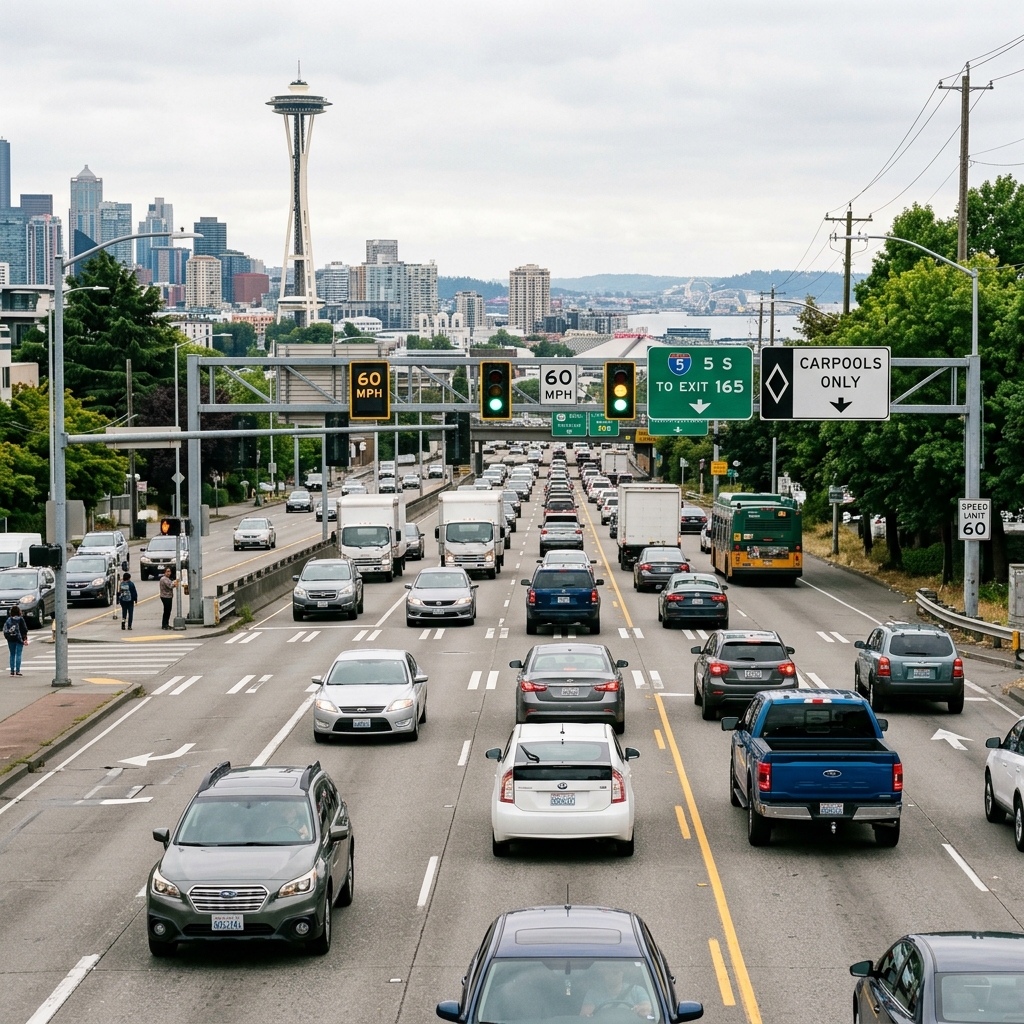
Washington drivers are subject to a detailed set of traffic rules designed to reduce crashes, protect pedestrians, and keep traffic flowing smoothly. These laws apply broadly to drivers, motorcyclists, bicyclists, and pedestrians, and violations can lead to fines, license consequences, and in serious cases, criminal charges. This guide provides an original, practical overview of key Washington traffic laws so you can navigate the roads with confidence.
1. How Washington Traffic Laws Are Organized
Most Washington traffic rules are found in the Revised Code of Washington (RCW), particularly in Chapter 46.61, which covers vehicles on highways and related rules. The state driver guide also explains how these rules are tested and enforced as part of licensing.
- RCW 46.61 – Core “rules of the road” for drivers, bicyclists, and pedestrians.
- Washington State Driver Guide – Explains signs, signals, and basic traffic law concepts used on the knowledge and driving tests.
- Agency policies and local ordinances – Cities and counties may adopt additional traffic measures, such as specific speed limits or local parking rules.
Although the law is written for all road users, enforcement is especially focused on common high-risk behaviors, such as speeding, failing to yield, distracted driving, and driving under the influence.
2. Right-of-Way and Pedestrian Safety
Collisions at intersections and crosswalks often occur because one party misunderstood or ignored right-of-way rules. Washington law places a strong emphasis on protecting pedestrians and managing the flow of vehicles through intersections.
2.1 General Right-of-Way Rules
Right-of-way rules determine who proceeds first when paths cross. If every driver asserts the right to go first, crashes quickly result, so the law provides clear default rules.
- Uncontrolled intersections: When two vehicles arrive about the same time, the driver on the left must yield to the driver on the right.
- Stop and yield signs: Drivers must come to a complete stop where required and only proceed when it is safe and legal to do so.
- Left turns: A driver turning left must yield to oncoming traffic, unless they have a green arrow specifically granting right-of-way.
- Private drives and alleys: Drivers entering from private property or alleys must yield to traffic already on the main roadway.
Misunderstanding these rules can result in citations for failure to yield the right-of-way, particularly in crashes where the investigating officer determines one driver violated a clear duty to yield.
2.2 Crosswalks and Pedestrians
Pedestrian protection is a central feature of Washington traffic law. The law treats many locations as crosswalks even when they are not painted.
- Every intersection is considered a crosswalk, whether or not it is marked with lines.
- Drivers must stop and remain stopped for pedestrians in marked and unmarked crosswalks.
Failure to stop is a common traffic violation and can carry fines and, in serious injury cases, more severe legal consequences. - Pedestrians also have duties, such as obeying traffic signals and avoiding stepping out suddenly into the path of a closely approaching vehicle.
Because collisions with pedestrians can involve serious injury, officers often issue citations for not stopping at crosswalks and failing to yield to pedestrians according to statutory rules.
3. Speed Limits and Special Speed Zones
Washington’s speed limits are set to balance safety and traffic efficiency. The law provides default maximums and allows state and local agencies to modify limits where appropriate.
3.1 Default Speed Limits
| Road Type | Typical Maximum Speed | Authority |
|---|---|---|
| City and town streets | 25 mph | RCW 46.61.400 |
| County roads | 50 mph | RCW 46.61.400 |
| State highways | 60 mph (up to 75 mph if adjusted) | RCW 46.61.400 & 46.61.410 |
Agencies may adjust these limits, but any change becomes effective only after appropriate signs are posted. Speed limits must be set in 5 mph increments, and drivers are expected to obey posted limits regardless of typical traffic behavior.
3.2 School and Playground Zones
Washington law establishes strict speed limits near schools and playgrounds to protect children.
- Within 300 feet of a marked school or playground crosswalk, speeds may not exceed 20 mph when signs for the reduced limit are posted.
- Cities and counties may establish broader school speed zones bordering school or playground property, limited to areas of active use.
- Drivers must be especially alert for flashing beacons and variable speed signs that indicate when the lower limit is in effect.
Speeding in a school zone can result in increased fines, and violations in construction or emergency zones may carry enhanced penalties as well.
3.3 Construction and Emergency Zones
Several Washington rules target traffic behavior near roadway work zones and emergency scenes.
- Construction zones: Drivers may not exceed posted speed limits, and fines for speeding in these zones are typically doubled compared to similar violations elsewhere.
- Emergency zones: On multi-lane highways, drivers approaching police, fire, tow, or other emergency vehicles must change lanes away from the emergency or reduce speed if lane changes are not safe.
- Failure to move over or slow down can result in penalties up to twice a standard speeding ticket, reflecting the elevated danger faced by workers and responders.
If a driver operates a vehicle in a way that endangers roadway workers or intentionally strikes traffic control devices, they may face gross misdemeanor charges for reckless endangerment, not just a simple infraction.
4. DUI and Impaired Driving in Washington
Driving under the influence (DUI) is one of the most serious traffic-related offenses in Washington. It can involve alcohol, drugs, or a combination, and penalties increase dramatically with prior offenses and aggravating circumstances.
4.1 Basic Legal Limits
Under Washington law, a driver may be presumed impaired at a specific blood alcohol concentration (BAC), although officers can also charge DUI based on observed impairment.
- Traditionally, the per se limit for drivers has been 0.08% BAC, meaning a BAC at or above this level can support a DUI charge even without evidence of erratic driving.
- Recent legislative proposals and new laws have considered or implemented a 0.05% BAC limit, aligning Washington with Utah’s stricter standard for both drivers and vessel operators.
Drug-impaired driving, including the use of illegal substances or misused prescription medications, is handled under similar frameworks, even though there is no single BAC-type number for many drugs.
4.2 Felony DUI and Lookback Period
Not all DUI cases are alike. Some repeat offenses rise from misdemeanors to felonies, bringing more severe penalties.
- Recent legislation extended the lookback period for counting prior DUI convictions from 10 years to 15 years.
- A fourth DUI within that 15-year window can be charged as a Class B felony, with significantly longer jail terms and higher fines than a gross misdemeanor.
- Priors from 10–15 years ago that previously might not have triggered felony treatment can now be used to enhance charges.
This extended lookback period means older convictions remain legally significant for a longer time, increasing the consequences of repeated impaired driving.
4.3 Ignition Interlock and Related Requirements
Washington uses ignition interlock devices (IIDs) to prevent repeat DUI offenders from driving while impaired. IIDs require a breath sample before starting the vehicle, and in many cases, while driving.
- Drivers with certain DUI convictions may be required to install an IID as a condition of licensing or probation.
- New provisions allow a driver to raise an affirmative defense if they are accused of driving without a functioning IID but an employer exemption applies.
- Some drivers with IID obligations dating before mid-2016 may seek relief if they can demonstrate a physical disability that prevents them from complying with device requirements.
Violating IID requirements, or driving while suspended for DUI-related reasons, can lead to further license suspensions and possible criminal charges.
5. Cell Phones, Distractions, and Safe Operation
Distracted driving is a growing concern nationwide. Washington law addresses distraction through cell phone rules and other safety requirements.
5.1 Hand-Held Cell Phone Restrictions
Drivers are prohibited from using hand-held cell phones while driving, even if they are merely stopped in traffic or at a red light, except in limited emergencies.
- Holding a phone to talk, text, or browse while driving is generally unlawful.
- Drivers contacting emergency services may have an exception, but routine communications are not exempt.
- Hands-free devices and integrated in-car systems may be allowed, provided they do not interfere with safe control of the vehicle.
These rules aim to ensure drivers keep their attention on the road and both hands available for vehicle control where needed.
5.2 Other Distraction-Related Rules
Beyond cell phone use, Washington’s driver guidance and related laws address a variety of potentially distracting behaviors.
- Drivers are expected to avoid wearing headphones that block surrounding sounds and horns.
- Unnecessary use of the horn, loud music, or objects obstructing the windshield may contribute to unsafe driving and lead to citations under general safety provisions.
- All occupants should use proper restraints, and drivers must maintain control of the vehicle at all times.
These requirements support the broader legal expectation that drivers will operate vehicles carefully and prudently to avoid harm to people and property.
6. Lane Use, Passing, and Roadway Position
Lane rules ensure that traffic flows smoothly and minimize confusion about where drivers should be.
6.1 Driving on the Right and Lane Choice
On most Washington roads, vehicles must travel on the right half of the roadway except in limited circumstances, such as passing or turning.
- On multi-lane roads with traffic going the same direction, drivers are expected to use the right-hand lane when practical.
- Left lanes are generally for passing, traveling faster than the general flow, making room for merging traffic, or preparing for a legal left turn.
- Lingering in the left lane without cause can impede traffic and, in some cases, lead to enforcement action.
6.2 Passing and Overtaking
Passing must be completed safely and legally.
- Drivers may pass on the left when the lane is clear and they can safely return without interfering with the passed vehicle.
- Passing in construction, school, or other restricted zones may be limited by signs or markings.
- When passing bicycles, drivers should maintain at least three feet of clearance and avoid crowding the bicycle into the curb or shoulder.
Illegal passing can result in citations and may be considered aggressive or reckless driving if it creates significant danger.
7. Common Traffic Violations and Their Consequences
While Washington traffic law is broad, certain violations occur frequently and are heavily enforced.
7.1 Examples of Common Violations
- Failing to stop at crosswalks – Not yielding to pedestrians at marked or unmarked crosswalks.
- Failure to stop for emergency vehicles – Not moving over or slowing when emergency or roadside assistance vehicles are present.
- DUI/DWI – Operating a vehicle while impaired by alcohol or drugs.
- Right-of-way violations – Entering intersections or turning without yielding as required.
- Entering or exiting private roads unsafely – Failing to yield when joining public traffic from driveways or private access roads.
7.2 Penalties and Enforcement
Consequences depend on whether a violation is treated as an infraction or a criminal offense.
- Infractions typically result in fines and potential impacts on insurance costs and driving records.
- Criminal traffic offenses—such as reckless driving, felony DUI, or reckless endangerment of roadway workers—may lead to jail time, probation, and longer license suspensions.
- Some zones, including construction and school zones, carry enhanced fines or mandatory minimum penalties.
The Washington State Driver Guide emphasizes that maintaining a clean record requires both knowledge of the rules and consistent safe-driving habits.
8. Practical Tips to Avoid Traffic Tickets
Knowing the law is only part of the equation. Applying it consistently helps prevent collisions and legal problems.
- Always scan for signs: Speed limits, lane use restrictions, and school zones rely heavily on posted signs.
- Assume pedestrians have priority at intersections: Treat every intersection as a potential crosswalk.
- Slow down in special zones: School, playground, construction, and emergency areas almost always warrant lower speeds and higher awareness.
- Plan for sober transportation: Use designated drivers, public transit, or ride services when consuming alcohol or drugs.
- Put the phone away: Use hands-free systems sparingly and avoid any activity that takes your eyes off the road.
By adhering to these practices, drivers can significantly reduce the likelihood of receiving citations and contribute to safer roadways for everyone.
9. Washington Traffic Laws FAQs
FAQ 1: Do Washington traffic laws apply to bicyclists?
Yes. Washington’s traffic laws specifically state that many rules apply to persons riding bicycles, not just drivers. Bicyclists must obey signals, signs, and right-of-way rules, and may face citations for violations similar to those issued to motor vehicle drivers.
FAQ 2: Can I use my phone while stopped at a red light?
Generally no. Washington rules prohibit hand-held cell phone use even when you are temporarily stopped in traffic or at a signal, except in emergencies. Using a phone at a red light can still result in a distracted driving citation.
FAQ 3: How fast can I drive near a school?
In school or playground zones with marked crosswalks and posted signs, the maximum speed is typically 20 mph within 300 feet of the crosswalk. Drivers should watch for flashing beacons and schedule signs that indicate when the reduced limit is in effect.
FAQ 4: When does a DUI become a felony in Washington?
Under recent legislation, DUI can become a Class B felony if a driver has a sufficient number of prior impaired driving offenses within a 15-year lookback period—for example, a fourth DUI within that timeframe. Felony DUI carries much harsher penalties than a gross misdemeanor.
FAQ 5: Do these laws apply only to Washington residents?
No. Any driver using Washington roads, whether a resident or visiting from out of state, must obey Washington traffic laws. Violations can affect their driving privileges within Washington and, in some cases, in their home state.
References
- Chapter 46.61 RCW: Rules of the Road — Washington State Legislature. Accessed 2026-07-10. https://app.leg.wa.gov/rcw/default.aspx?cite=46.61
- Rules of the Road — Washington State Patrol. Accessed 2026-07-10. https://wsp.wa.gov/driver/rules-of-the-road/
- Washington State Driver Guide — Washington State Department of Licensing. 2023-02-01 (approx.). https://irp.cdn-website.com/f19acc47/files/uploaded/driverguide.pdf
- Speed Limits and Traffic Calming — Municipal Research and Services Center (MRSC). 2022-08-30. https://mrsc.org/explore-topics/public-safety/traffic-safety/speed-limits-traffic-calming
- Washington Traffic Laws — FindLaw. Accessed 2026-07-10. https://www.findlaw.com/state/washington-law/washington-traffic-laws.html
- New Washington State Driving Laws 2026: What Drivers Need to Know — West Coast Trial Lawyers. 2024-12-15 (approx.). https://westcoasttriallawyers.com/new-washington-state-traffic-laws-2026
- Rules of the Road | Seattle Car Accident Lawyers Kraft Davies — Kraft Davies Olsson PLLC. Accessed 2026-07-10. https://www.admiralty.com/practice-areas/car-accidents/rules-of-the-road/
Similar Articles








Read full bio of Sneha Tete


