
Understanding Washington’s Family and Medical Leave Rights
A practical guide to Washington’s Paid Family and Medical Leave rules, eligibility, benefits, and employer responsibilities.
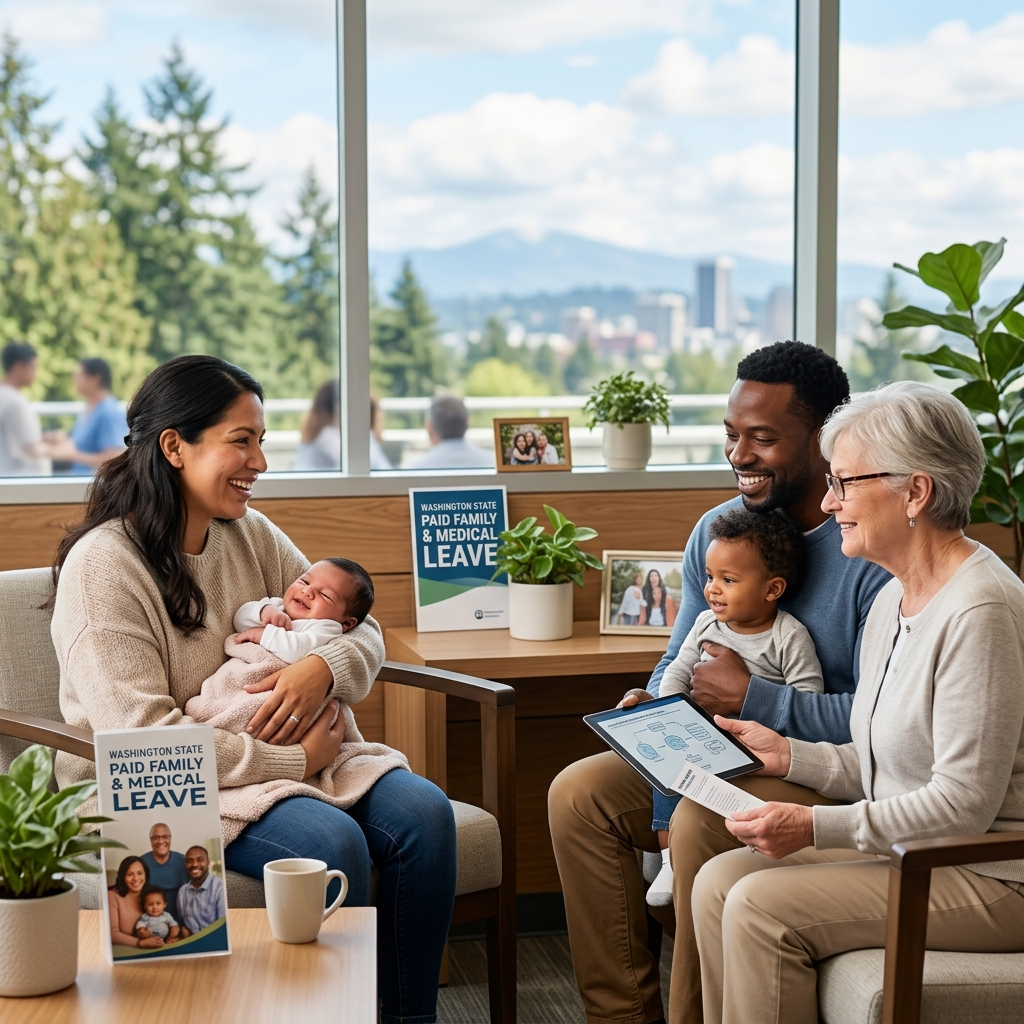
Washington State provides strong protections and income support for workers who need time away from work for serious health needs, to care for family, or to welcome a new child. This guide explains how Washington’s Paid Family and Medical Leave program works, how it interacts with other laws, and what both employees and employers should know to use these rights effectively.
1. Overview of Washington’s Paid Family and Medical Leave
Washington’s Paid Family and Medical Leave (PFML) is a statewide insurance program that offers partial wage replacement when eligible workers take approved family or medical leave. It is separate from the federal Family and Medical Leave Act (FMLA), which generally provides unpaid, job-protected leave. PFML focuses on income support, while job protection depends on employer size and other conditions.
The program is administered by the state’s Employment Security Department (ESD) and covers most workers in Washington, including many part-time and seasonal employees.
- Paid benefit: Workers receive a weekly payment based on their prior earnings during approved leave.
- Broad coverage: Full-time, part-time, temporary, and seasonal work generally counts toward eligibility.
- Multiple qualifying reasons: Leave can be taken for your own serious health condition, to care for family, to bond with a new child, and for certain military-related events.
2. Who Is Covered and Basic Eligibility Rules
Most Washington workers are covered by PFML if they meet minimum work-history requirements. Coverage is based on hours worked in the state, not on federal status or immigration status.
2.1 Hours requirement
To qualify for PFML benefits, you must have worked at least 820 hours in Washington during the relevant qualifying period before you apply. These hours can come from multiple jobs or employers.
- Both private and public sector work generally counts.
- Full-time, part-time, temporary, and seasonal hours are included.
- You do not need to work for the same employer the entire time.
2.2 Covered types of employment
Most employers in Washington participate in PFML by deducting premiums from employee paychecks and making required employer contributions. Some very specific categories (such as certain federal employees) may be outside the program, but the majority of workers in the state are covered.
3. Reasons You Can Take Paid Family or Medical Leave
PFML is designed to support workers during major life events. You must experience a qualifying event to be approved for leave.
3.1 Medical leave for your own health
You can take medical leave when you cannot work due to a serious health condition.
- Recovery from major surgery or illness
- Management of chronic conditions that require intensive treatment
- Pregnancy-related conditions and recovery from childbirth, including complications that cause incapacity
3.2 Family leave to care for loved ones
Family leave allows you to care for a qualifying family member with a serious health condition or to support them during treatment.
Under Washington’s law, family includes a broad range of relatives:
- Spouse or registered domestic partner
- Children and grandchildren (biological, adopted, step, foster)
- Parents, legal guardians, and parents-in-law
- Grandparents
- Your child’s spouse (such as a son-in-law or daughter-in-law)
3.3 Bonding with a new child
PFML covers time to bond with a child newly added to your family through birth, adoption, or foster placement.
- Bonding leave generally must be taken within the first 12 months after the child’s birth or placement in your home.
- Both parents may be eligible for bonding leave if they meet PFML requirements.
- Postnatal medical leave for birth parents can be combined with bonding leave, potentially extending total time away from work.
3.4 Bereavement and military-related leave
PFML also recognizes that some events require time away that is not strictly medical treatment.
- Bereavement: Limited paid leave may be available after the death of a newborn or in specific circumstances related to a child’s death.
- Military exigency: Family leave can cover certain needs related to a family member’s military deployment or service, such as attending deployment ceremonies or addressing legal and financial arrangements.
4. Length of Leave: How Many Weeks You Can Take
Within a claim year, PFML provides a flexible but capped amount of paid leave. The maximum depends on the type and combination of qualifying events.
| Type of Leave | Maximum Duration (per 52-week period) |
|---|---|
| Medical leave only | Up to 12 weeks |
| Family leave only | Up to 12 weeks |
| Combined medical + family leave | Up to 16 weeks |
| Combined leave with pregnancy incapacity | Up to 18 weeks |
Workers are generally entitled to leave equal to a certain number of their typical workweek hours rather than a fixed number of calendar weeks, which allows for flexibility in scheduling. Recent changes require that workers be absent at least four consecutive scheduled work hours in a week to qualify for PFML benefits for that week.
5. How Much You Are Paid During PFML
PFML provides partial wage replacement, so your weekly benefit is a percentage of your average weekly earnings, up to a statewide cap.
5.1 Benefit formula
Washington’s PFML uses a progressive formula designed to replace a larger share of wages for lower-income workers:
- A portion of your weekly benefit is calculated at about 90% of your average weekly wage up to half of the statewide average weekly wage.
- Any earnings above that threshold are replaced at a lower percentage (often around 50%).
- The total benefit cannot exceed a maximum weekly amount tied to the statewide average weekly wage.
The maximum weekly benefit adjusts over time based on statewide wage data. For example, the statewide cap has been in the range of roughly $1,500–$1,650 depending on the year, reflecting changes in average earnings.
5.2 Premium contributions
PFML is funded through payroll premiums shared between employers and employees.
- Employers pay a portion of the total premium cost, while employees pay the remainder through paycheck deductions.
- Premiums are not applied to wages above the Social Security contribution base, so very high earnings may not be fully assessed.
- Small employers may be eligible for grants or support if they face significant costs due to employees taking leave.
6. Job Protection and Health Coverage During Leave
PFML itself is a wage replacement program, but job protection and benefits continuation depend on employer size and how state PFML rules interact with other laws such as FMLA.
6.1 Job protection thresholds
Recent revisions to Washington law have expanded job protection for PFML users over time.
- Employers with at least 25 employees must provide job protection starting in 2026.
- Employers with at least 15 employees must provide protection starting in 2027.
- Employers with at least 8 employees must provide protection starting in 2028.
To qualify for job protection, employees generally must have worked for their current employer for a minimum period, such as 180 calendar days under newer standards. This requirement replaced a higher hour-based threshold, making protection more accessible.
6.2 Health insurance continuation
Under updated rules, employers must maintain an employee’s health care coverage during PFML if the employee is also entitled to employment protection. This means your health insurance should continue as if you were still working, provided you meet the relevant conditions and any required employee premium contributions.
6.3 Returning to work
Employment restoration rights are not unlimited. In general, workers must return by the earlier of:
- The first scheduled workday after their approved leave period ends, or
- The first scheduled workday after a continuous or combined intermittent period totaling 16 typical workweeks of leave (extended to 18 workweeks if some of the leave involved pregnancy-related incapacity).
If an employee fails to return by these points without a written agreement to extend leave, they may lose their right to reinstatement.
7. Steps to Apply for PFML
Using PFML involves both communicating with your employer and filing a claim with the Employment Security Department.
7.1 Notify your employer
Workers must generally give written notice to their employer at least 30 days before leave for foreseeable events, such as the birth or placement of a child or planned surgery.
- If the need for leave is unexpected (for example, a sudden medical emergency), you should notify your employer as soon as reasonably possible.
- Each employer may have specific procedures or forms for requesting leave, but these cannot override PFML rights.
7.2 Apply with the state
In addition to notifying your employer, you must apply to the PFML program to receive benefits.
- Experience a qualifying event (such as a serious health condition, new child, or military exigency).
- Submit your application to the Employment Security Department, typically within 30 days after the event.
- Provide any required documentation, like medical certification or proof of birth or placement.
- Wait for a determination letter explaining whether your claim is approved and the benefits you’ll receive.
7.3 Claiming weekly benefits
Once your leave is approved, you must file weekly claims to receive payments.
- You can take leave intermittently or in blocks, but each week must include at least four consecutive hours of PFML leave to qualify for payment.
- Some types of leave, such as bonding leave and certain military-related leave, may not require a waiting week before benefits start.
8. PFML and Other Leave Laws: How They Work Together
Washington’s PFML often overlaps with federal FMLA and other state leave laws, such as paid sick leave. Understanding how they coordinate helps avoid confusion.
8.1 PFML vs. federal FMLA
FMLA is a federal law that generally provides up to 12 weeks of unpaid, job-protected leave for certain medical and family reasons when eligibility criteria are met. By contrast:
- PFML provides pay during leave but does not automatically guarantee job protection unless other criteria are satisfied.
- In many cases, PFML and FMLA run at the same time: you receive PFML benefits while your FMLA leave is job-protected.
- Employer policies should explain how PFML and FMLA interact, especially for employees who meet FMLA’s hours and tenure requirements.
8.2 Relationship to Washington paid sick leave
Washington also requires employers to provide paid sick leave that accrues based on hours worked. This is separate from PFML and is typically used for shorter-term or less serious health needs. Workers may choose to use sick leave at the beginning of an illness and then transition to PFML if the condition becomes serious and extended.
9. Practical Tips for Employees and Employers
Getting the most out of PFML requires planning and clear communication. The following strategies can help.
9.1 Tips for employees
- Track your hours: Keep records of your work history so you can confirm when you reach the 820-hour threshold.
- Plan ahead for foreseeable events: If you expect a new child or scheduled surgery, give your employer the required 30-day notice and explore how PFML, FMLA, and any employer benefits fit together.
- Talk to HR: Ask about company policies on job protection, health insurance, and coordinating PFML with paid time off and sick leave.
- Document medical information: Work with your health care provider to ensure certifications clearly describe your serious health condition and expected duration of leave.
9.2 Tips for employers
- Update policies: Ensure employee handbooks and leave policies reflect current PFML requirements, job protection thresholds, and health coverage obligations.
- Train managers: Supervisors should understand PFML basics so they respond appropriately to leave requests and avoid discouraging employees from exercising their rights.
- Use grants and supports: Small employers should explore state grants that help offset the cost of hiring temporary replacements or covering extra wage-related expenses.
- Coordinate benefits: Align PFML with internal disability, parental leave, and vacation policies for consistent and compliant treatment.
10. Frequently Asked Questions (FAQs)
10.1 Is PFML the same as FMLA?
No. PFML is a Washington State paid leave benefit program, while FMLA is a federal law that provides unpaid, job-protected leave. In many situations, you may use PFML for income replacement while your absence is concurrently protected under FMLA if you qualify for both.
10.2 Do I have to use all my PFML at once?
No. You can take PFML either in a continuous block or intermittently. However, to receive benefits for a given week, you usually must claim at least four consecutive hours of leave in that week.
10.3 Can both parents use PFML to bond with a new child?
Yes, as long as each parent individually meets the eligibility requirements. Bonding leave must generally be taken within the first 12 months after the child’s birth, adoption, or placement.
10.4 Will my job be protected while I use PFML?
Job protection depends on factors such as employer size and your length of employment. If you qualify for job protection under PFML-related rules or FMLA, your employer must restore you to the same or an equivalent position at the end of your leave, subject to specific limits on total duration and timely return.
10.5 Do I still earn sick leave or vacation during PFML?
Whether you continue to accrue other benefits like sick leave or vacation during PFML depends on your employer’s policies. PFML itself does not mandate accrual of additional paid time off, but some employers allow accruals to continue during protected leave.
References
- Overview of Family Leave Laws in the United States: Washington — A Better Balance. 2025-01-01. https://www.abetterbalance.org/family-leave-laws/washington/
- What is Washington Paid Family and Medical Leave? — WashingtonLawHelp. 2024-06-01. https://www.washingtonlawhelp.org/en/what-washington-paid-family-and-medical-leave
- Find out how paid leave works — Washington State Paid Family & Medical Leave (ESD). 2025-01-01. https://paidleave.wa.gov/find-out-how-paid-leave-works/
- Paid Family and Medical Leave: Eligibility and Benefits — University of Washington Human Resources. 2025-03-01. https://hr.uw.edu/time-absence/fmla-and-pfml/paid-family-and-medical-leave/eligibility-and-benefits/
- 2025 Revisions to Washington Paid Family Medical Leave, Paid Sick Leave, and Domestic Violence Leave Laws — MRSC. 2025-06-12. https://mrsc.org/stay-informed/mrsc-insight/june-2025/pfml-psl-dvl-changes
- Significant Changes to Washington’s Paid Family Medical Leave Act Impose New Obligations on Employers — Ballard Spahr LLP. 2026-01-24. https://www.ballardspahr.com/insights/alerts-and-articles/2026/01/significant-changes-to-washingtons-paid-family-medical-leave-act-impose-new-obligations-on-employers
- Washington State’s Paid Family and Medical Leave — Employment Security Department. 2025-01-01. https://paidleave.wa.gov/
Similar Articles








Read full bio of medha deb




