
Understanding Washington Auto Theft Laws
A practical guide to Washington’s auto theft crimes, penalties, defenses, and victims’ rights for drivers and vehicle owners.
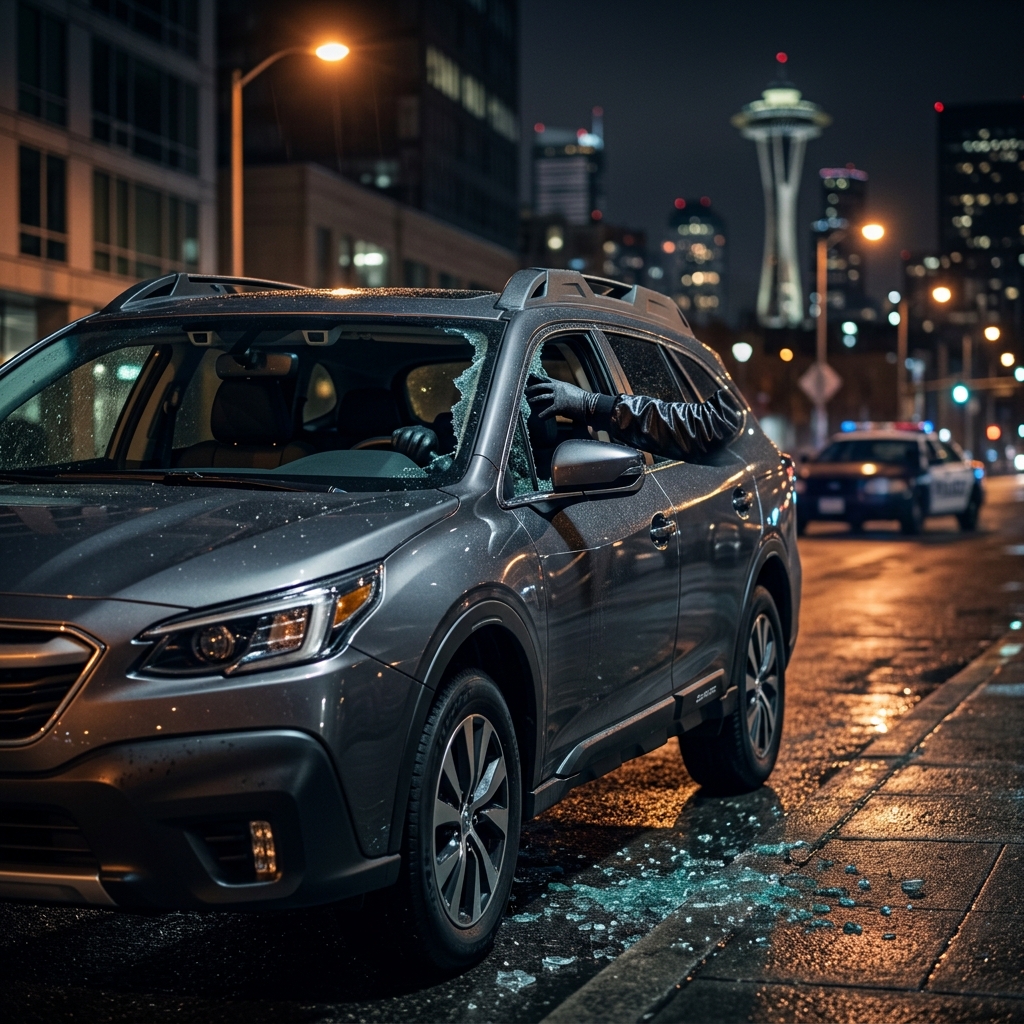
Washington treats crimes involving cars and trucks very seriously. Most auto theft offenses in the state are charged as felonies, meaning a conviction can lead to years in prison, thousands of dollars in fines, and a permanent criminal record. This guide explains how Washington law defines different motor vehicle theft crimes, what prosecutors must prove, the penalties involved, and how victims can respond.
Overview: How Washington Classifies Auto Theft Crimes
Under Washington law, auto theft is not a single offense. Instead, several distinct crimes cover different types of illegal behavior involving vehicles, including:
- Theft of a motor vehicle – stealing or wrongfully controlling a vehicle with intent to keep it.
- Taking a motor vehicle without permission (sometimes called joyriding) – using a vehicle without consent, with or without aggravating factors.
- Possession of a stolen vehicle – having a stolen vehicle while knowing it is stolen.
All three offenses are governed by Washington’s criminal code and are treated as serious property crimes. In most circumstances, the law does not consider the value of the vehicle when deciding whether a felony charge applies; the fact that the property is a motor vehicle is enough to trigger felony-level treatment.
Key Legal Concepts in Washington Auto Theft Cases
Although each offense has specific elements, several core ideas are central to nearly every auto theft case:
- Unauthorized control or use – the vehicle must be taken, driven, or possessed without the owner’s permission.
- Intent – in some crimes, the state must show the defendant meant to permanently deprive the owner of the vehicle; in others, the focus is on knowingly using or possessing a vehicle without consent.
- Knowledge – for possession of a stolen vehicle, proving that the defendant knew the vehicle was stolen is critical.
Understanding these concepts helps distinguish between a direct theft, joyriding, and simply being caught with a car that belongs to someone else.
Theft of a Motor Vehicle: Direct Auto Theft
Theft of a motor vehicle is the most straightforward auto theft crime: someone steals or exercises control over another person’s vehicle, intending not to give it back. Washington codifies this offense in RCW 9A.56.065, which identifies it as a separate theft category just for vehicles.
Legal Definition
A person is guilty of theft of a motor vehicle if they commit theft involving a motor vehicle. In practice, prosecutors must show:
- The defendant wrongfully obtained or exerted unauthorized control over a motor vehicle owned by someone else.
- The defendant intended to permanently deprive the owner of the vehicle or deprive them for a significant period.
This requirement of intent distinguishes motor vehicle theft from joyriding, where the person may plan to return the vehicle eventually.
Felony Classification and Penalties
Theft of a motor vehicle is a class B felony in Washington. Under Washington’s general felony penalty statute, a class B felony is punishable by:
- Up to 10 years in prison; and
- Up to $20,000 in fines.
Sentencing in a particular case depends on several factors, including the defendant’s prior criminal history and any other associated crimes. However, the statutory maximum gives a clear indication of how seriously the state treats vehicle theft.
Taking a Motor Vehicle Without Permission (Joyriding)
Not every unauthorized car use involves an intention to permanently steal the vehicle. Washington addresses this behavior under the crimes known as taking a motor vehicle without permission, sometimes informally called joyriding.
First-Degree Taking a Motor Vehicle Without Permission
First-degree taking a motor vehicle without permission covers more serious conduct. Under RCW 9A.56.070, a person commits this offense when they intentionally take or drive a vehicle without the owner’s permission and also engage in aggravating conduct, such as:
- Altering or removing identifying marks, like the vehicle identification number (VIN), to change its appearance or identification.
- Removing parts for sale or profit.
- Exporting or attempting to export the vehicle across state or national borders.
- Using the vehicle to commit another felony offense.
- Causing damage, driving recklessly, or trying to evade police.
- Participating in a conspiracy to steal vehicles for sale, including using juveniles in the scheme.
Because of these serious factors, first-degree taking is treated as a class B felony, with the same maximum penalty as theft of a motor vehicle: up to 10 years in prison and a $20,000 fine.
Second-Degree Taking a Motor Vehicle Without Permission
Second-degree taking a motor vehicle without permission addresses less aggravated unauthorized use. Under RCW 9A.56.075, a person may be guilty if they:
- Intentionally take or drive a vehicle without the owner’s consent; or
- Ride in a vehicle knowing it was unlawfully taken.
This statute does not require intent to permanently deprive the owner. Instead, it focuses on unauthorized use and knowledge that the car was taken without consent.
Second-degree taking is a class C felony, carrying a maximum of:
- 5 years in prison; and
- Up to $10,000 in fines.
Intent vs. Permission: A Comparison Table
| Offense | Main Focus | Felony Class | Maximum Penalty |
|---|---|---|---|
| Theft of a motor vehicle | Unauthorized control with intent to permanently deprive the owner. | Class B felony | 10 years in prison; $20,000 fine. |
| First-degree taking without permission | Unauthorized taking plus aggravating conduct (e.g., parts removal, export, reckless driving). | Class B felony | 10 years in prison; $20,000 fine. |
| Second-degree taking without permission | Unauthorized taking or riding; no intent to permanently deprive required. | Class C felony | 5 years in prison; $10,000 fine. |
This comparison highlights how Washington law distinguishes between stealing a vehicle, seriously misusing it, and less aggravated unauthorized use.
Possession of a Stolen Vehicle
Washington also criminalizes not just theft or unauthorized taking, but simply possessing a stolen vehicle. A person does not have to be the one who actually stole the car to face serious charges.
Legal Requirements
Under RCW 9A.56.068, a person is guilty of possession of a stolen vehicle if they possess a stolen motor vehicle. The prosecution must prove:
- The defendant had possession or control of a motor vehicle; and
- The vehicle was stolen; and
- The defendant knew the vehicle was stolen.
The knowledge element is crucial. Simply being near a stolen car or riding in it might not be enough unless evidence shows that the person understood the vehicle’s unlawful status. However, suspicious circumstances—such as a heavily damaged ignition, missing license plates, or an extremely low purchase price—can be used by prosecutors to argue that the person must have known something was wrong.
Penalties
Possession of a stolen vehicle is also a class B felony in Washington. As with theft of a motor vehicle, the maximum penalty is:
- Up to 10 years in prison; and
- Up to $20,000 in fines.
Impact on Victims and Civil Remedies
Auto theft devastates individuals and communities. Recent reports from the Washington Auto Theft Prevention Authority indicate that the state has ranked among the top states nationally in auto theft numbers, although recent years have seen a decline in incidents. Beyond the criminal case, victims face costs related to transportation, repairs, insurance, and lost time.
Washington law offers a limited civil remedy for auto theft victims. In certain circumstances, victims may file a civil lawsuit against the person responsible and recover up to a statutory amount in damages, plus costs of the suit and reasonable attorney’s fees. While this remedy does not guarantee recovery—particularly if the defendant lacks assets—it gives victims an additional legal avenue beyond criminal prosecution.
Long-Term Consequences of Auto Theft Convictions
A conviction for auto theft, taking a vehicle without permission, or possession of a stolen vehicle can have far-reaching effects beyond the immediate sentence. According to Washington criminal defense practitioners, individuals face:
- A permanent felony record, which can affect employment, housing, and professional licensing.
- Potential loss of certain civil rights, such as firearm rights, depending on the offense and sentence imposed.
- Enhanced penalties if they are later charged with new crimes, due to prior convictions on their record.
Because these consequences can last long after the case concludes, legal advice is especially important for anyone under investigation or facing charges related to auto theft.
Common Defenses and Legal Issues in Washington Auto Theft Cases
The specific defense strategy in any case depends heavily on the facts, but several recurring legal issues appear in Washington auto theft prosecutions:
Lack of Intent to Permanently Deprive
For theft of a motor vehicle, the state must prove an intent to permanently deprive the owner. Defendants sometimes argue that, while they used the vehicle without consent, they planned to return it and therefore should be charged, if at all, under joyriding statutes rather than theft.
No Knowledge the Vehicle Was Stolen
In possession of a stolen vehicle cases, the core question is often whether the defendant knew the vehicle was stolen. Evidence such as legitimate purchase paperwork, reasonable price, and lack of obvious signs of tampering may support a claim that the defendant acted in good faith.
Permission or Belief of Permission
Some defendants argue they had permission to use the vehicle or believed they did (for example, borrowing from a friend or family member). If a judge or jury finds that sincere permission was granted, unauthorized use elements may not be met.
Insufficient Evidence of Control or Possession
Prosecutors must show that the defendant actually exercised control over the vehicle. In complex situations involving multiple people, it may be contested whether the accused person had sufficient control to meet statutory requirements for theft or possession.
Because these issues involve detailed factual analysis and application of Washington statutes, speaking with a qualified criminal defense attorney is often crucial for anyone facing such charges.
Washington Auto Theft Trends and Prevention
Auto theft is not just a legal problem but also a public safety and policy concern. The Elizabeth Nowak-Washington Auto Theft Prevention Act, referenced in Washington statutes, reflects the legislature’s effort to reduce vehicle theft through tighter laws and coordinated enforcement.
Recent data from the Washington Auto Theft Prevention Authority indicates that Washington has historically had high auto theft numbers but has seen reductions in recent years, including a reported 31% decline in auto thefts in 2024 compared to the prior year. Prevention efforts include:
- Public awareness campaigns encouraging drivers to lock vehicles and avoid leaving keys or valuables inside.
- Coordination between state agencies and local law enforcement to identify repeat offenders and organized theft rings.
- Use of technology such as vehicle tracking and improved ignition security.
While individual actions cannot eliminate risk, understanding the seriousness of auto theft under Washington law encourages better prevention habits and more prompt reporting of suspicious activity.
FAQs About Washington Auto Theft Laws
Is auto theft always a felony in Washington?
Most motor vehicle theft-related offenses—such as theft of a motor vehicle, first-degree taking without permission, and possession of a stolen vehicle—are felonies (class B or class C). In some situations, related conduct might be charged as a gross misdemeanor, but the core auto theft statutes generally result in felony charges.
Can I be charged even if I did not personally steal the car?
Yes. Washington’s possession of a stolen vehicle statute allows prosecutors to charge individuals who knowingly possess or control a stolen vehicle, even if they were not involved in the original theft.
What is the difference between theft of a motor vehicle and joyriding?
The main difference is intent. Theft of a motor vehicle requires intent to permanently deprive the owner of the car, while joyriding (taking a motor vehicle without permission) focuses on unauthorized use, with or without aggravating behavior, and does not require intent to keep the vehicle forever.
Does the value of the car matter in Washington auto theft charges?
For auto theft-related offenses, the law generally does not require proof of a minimum value for the vehicle. Any stolen or unlawfully used motor vehicle can support felony charges, regardless of value.
What should I do if I am an auto theft victim in Washington?
Victims should report the theft to law enforcement as soon as possible, notify their insurance company, and preserve any documentation related to ownership and loss. In some cases, they may also consider pursuing civil remedies, such as statutory damages and attorney’s fees, against the person responsible.
References
- Washington Auto Theft Laws — FindLaw. 2024-01-10. https://www.findlaw.com/state/washington-law/washington-auto-theft-laws-1.html
- Auto Theft Attorney in Seattle — Hale Law Enterprises. 2023-05-02. https://www.halelawenterprises.com/criminal-defense/theft/auto-theft/
- Joyriding vs. Theft of a Motor Vehicle Under Washington Law — Black Law PLLC. 2023-11-15. https://www.blacklawseattle.com/joyriding-vs-theft-of-a-motor-vehicle-under-washington-law/
- RCW 9A.56.065: Theft of a motor vehicle — Washington State Legislature. 2007-07-22. https://app.leg.wa.gov/rcw/default.aspx?cite=9A.56.065
- Taking a Motor Vehicle Without Permission — Blair & Kim, PLLC. 2022-09-01. https://www.blairkim.com/practice-areas/criminal-defense/theft-and-property-crimes/taking-a-motor-vehicle-without-permission/
- RCW 9A.56.068: Possession of a stolen vehicle — Washington State Legislature. 2007-07-22. https://apps.leg.wa.gov/rcw/default.aspx?cite=9A.56.068
- WA Auto Theft Prevention Authority 2024 Annual Report — Washington Auto Theft Prevention Authority. 2025-02-01. https://waautotheftpreventionauthority.org/wp-content/uploads/2025/02/WA-AUTO-THEFT-PREVENTION-AUTHORITY-5.pdf
Similar Articles








Read full bio of medha deb




