
Understanding Virginia Resisting Arrest Laws
A practical, plain-language guide to how Virginia defines resisting arrest, the penalties involved, and what rights you still have.
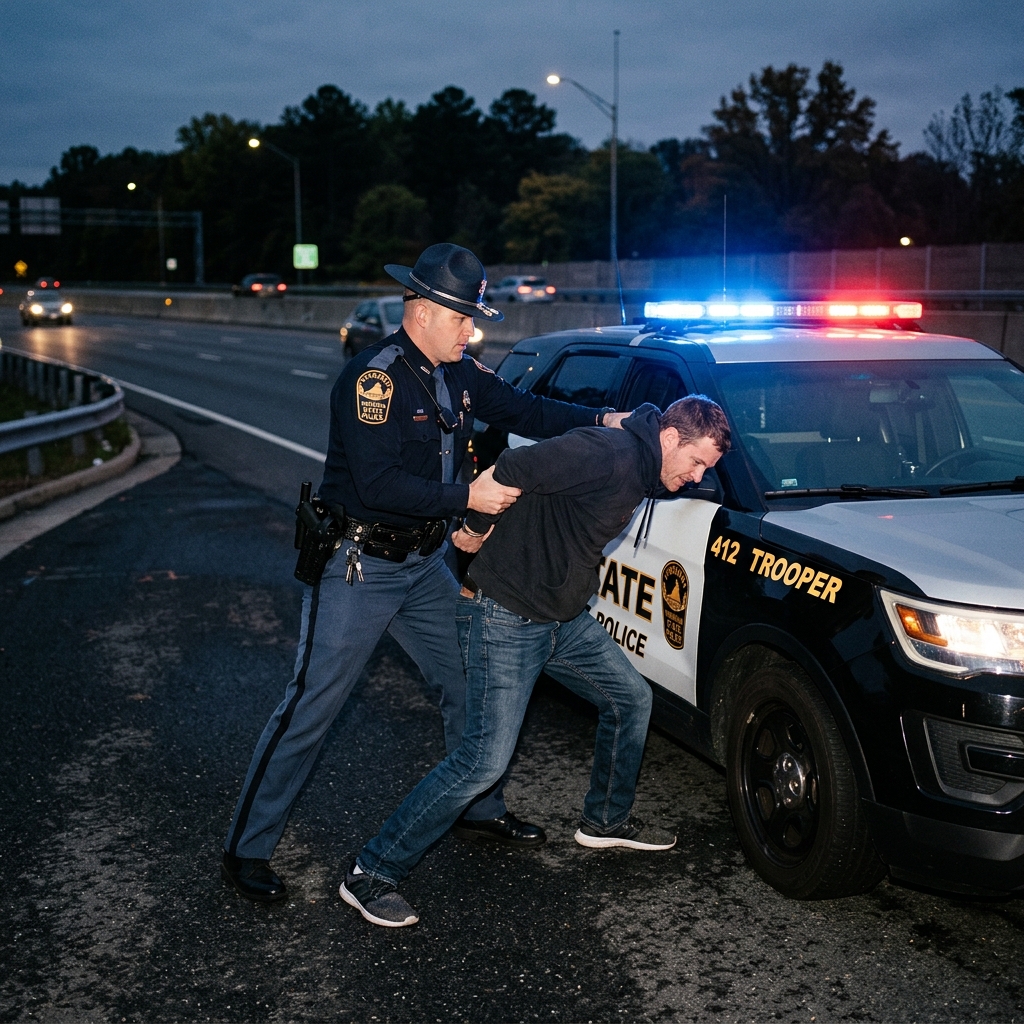
Being arrested is stressful and often confusing, especially if you do not fully understand what the law considers resisting arrest in Virginia. A momentary decision to run or pull away from an officer can lead to a separate criminal charge, even if the underlying offense is minor. This guide explains how Virginia law defines resisting arrest, the penalties involved, and how these rules fit within the broader concept of obstruction of justice.
Overview of Resisting Arrest in Virginia
In Virginia, resisting arrest is a specific criminal offense governed by statute. The law focuses on situations where a person intentionally tries to stop a law enforcement officer from carrying out a lawful arrest. The offense exists to protect officers as they perform their duties and to ensure arrests can be completed safely.
Resisting arrest is classified as a Class 1 misdemeanor, which is the most serious misdemeanor level in Virginia. Although it is not a felony, the potential consequences are significant and can affect employment, housing, and immigration status.
Key Statutory Framework
Two main statutes are central to understanding resisting arrest and related conduct in Virginia:
- Virginia Code § 18.2-479.1 – specifically addresses resisting a lawful arrest.
- Virginia Code § 18.2-460 – covers obstructing justice, including a separate subsection on resisting arrest and fleeing from officers.
Both provisions focus on deliberately preventing an officer from making an arrest, but they also clarify what counts as resisting and what does not. Understanding the language of these statutes helps distinguish between lawful self-protection and criminal resistance.
What Conduct Counts as Resisting Arrest?
Under Virginia law, resisting arrest is framed around fleeing from a law enforcement officer once certain conditions are met. The law does not require a physical fight; simply running away can be enough if the officer has already initiated the arrest.
For an action to qualify as resisting arrest under § 18.2-479.1, the statute focuses on the idea of intentionally preventing or attempting to prevent a lawful arrest. The law then defines that idea more precisely.
Conditions That Trigger the Offense
Virginia’s legal definition of resisting arrest relies on several specific elements. Fleeing becomes resisting arrest when:
- The officer applies physical force to the person (for example, grabbing an arm or placing handcuffs); or
- The officer clearly communicates that the person is under arrest and:
- The officer has the legal authority and immediate physical ability to complete the arrest; and
- A reasonable person in that situation would know they are not free to leave.
Once those conditions exist, intentionally fleeing from the officer can be charged as resisting arrest. The focus is on whether the person knew or reasonably should have known that an arrest was in progress.
Intentional vs. Accidental Conduct
The statute requires intentional prevention or attempted prevention of arrest. This means the person must make a conscious choice to avoid being taken into custody. Examples include:
- Running away immediately after being told they are under arrest.
- Pulling free from an officer’s grasp and fleeing.
- Ducking behind buildings or vehicles to evade pursuit.
Conduct that is truly accidental – such as stumbling or momentarily moving in confusion without trying to escape – generally does not meet the legal standard for resisting arrest. However, in practice, officers and courts may interpret behavior differently, which is why individual legal advice is crucial in real cases.
Resisting a Lawful Arrest vs. Unlawful Arrest
Virginia’s statute specifically refers to lawful arrest. In other words, the officer must have legal authority to arrest the person, either with or without a warrant, for the resisting arrest charge to stand.
Lawful Arrest Requirement
For prosecutors to secure a conviction under § 18.2-479.1, they must prove:
- An officer was attempting to carry out a lawful arrest.
- The officer communicated the arrest or used physical force consistent with an arrest.
- The defendant intentionally fled or otherwise tried to prevent the arrest.
If the underlying arrest was not lawful, the resisting arrest charge may be challenged. Lawfulness can depend on factors like probable cause, warrant validity, jurisdiction, and compliance with constitutional rights.
Reasonable Force Against Unlawful Arrest
Virginia courts acknowledge that people may use reasonable force to resist an unlawful arrest or a lawful arrest carried out with unreasonable force. This principle exists to prevent abuse of police authority. However, what counts as “reasonable” is fact-specific and can become a contested issue.
Importantly, this does not grant unlimited permission to fight with officers. It merely recognizes that the resisting arrest statute cannot be used to criminalize every act of self-protection when the officer’s conduct is plainly illegal or excessively violent. Anyone in such a situation should later raise the issue through a lawyer rather than trying to litigate it in the street.
Penalties for Resisting Arrest
Resisting arrest is a Class 1 misdemeanor under Virginia law. This classification carries the most severe potential punishment available for misdemeanors.
| Offense | Classification | Maximum Jail Time | Maximum Fine |
|---|---|---|---|
| Resisting lawful arrest | Class 1 misdemeanor | Up to 12 months | Up to $2,500 |
In addition to these statutory maximums, judges may impose probation, community service, or other conditions. A conviction also results in a criminal record, which can have long-term consequences.
Collateral Consequences
Beyond jail and fines, a resisting arrest conviction can affect:
- Employment – many employers perform background checks and may be wary of hiring someone with a recent criminal record.
- Professional licensing – certain careers, especially in law enforcement, security, or licensed professions, may be closed off or require disclosure.
- Immigration status – non-citizens can face immigration consequences for certain criminal convictions.
- Future sentencing – prior convictions can influence penalties if the person is charged with crimes later.
Relationship to Obstruction of Justice
Resisting arrest does not exist in isolation. It fits within a broader group of offenses aimed at preventing interference with the justice system. Virginia Code § 18.2-460 covers obstruction of justice more generally and includes resisting arrest and fleeing from officers as part of that structure.
Obstruction of Justice Basics
Under § 18.2-460, a person can be guilty of obstruction if, without just cause, they knowingly obstruct or refuse to cease obstructing judges, prosecutors, witnesses, law enforcement officers, and certain other officials in the performance of their duties. This can include refusing to comply with lawful orders, interfering with investigations, or preventing service of legal process.
Resisting arrest is treated as one form of obstruction, focusing on the specific moment when an officer is trying to place someone under arrest. The law reflects the idea that justice requires cooperation at critical stages like arrest and court proceedings.
Resisting Arrest vs. Assault on an Officer
It is important to distinguish between resisting arrest and more serious offenses such as assault on a law enforcement officer. Though both may occur during the same incident, they involve different legal elements and penalties.
Resisting arrest may involve fleeing or basic physical pulling away. If the person threatens, strikes, or injures the officer, prosecutors may additionally or alternatively charge assault on a law enforcement officer under Virginia Code § 18.2-57, which is treated as a felony and carries more severe consequences, including mandatory minimum jail time.
| Aspect | Resisting Arrest | Assault on Law Enforcement Officer |
|---|---|---|
| Primary Conduct | Fleeing or preventing lawful arrest | Threatening or physically attacking an officer |
| Typical Classification | Class 1 misdemeanor | Felony |
| Potential Penalties | Up to 12 months jail, up to $2,500 fine | Harsher penalties, including mandatory minimum confinement |
Practical Guidance During Police Encounters
Understanding how Virginia defines resisting arrest can help people make safer choices during police encounters. While every situation is different, several general points are useful:
- Do not flee once the officer initiates arrest. Running away after being told you are under arrest or after the officer begins to restrain you can quickly become a separate criminal charge.
- Remain as calm as possible. Emotional reactions are understandable, but deliberate resistance can have lasting legal consequences.
- Use your legal rights later, not by resisting. Challenge the legality of the arrest, probable cause, or officer conduct through a lawyer and the courts rather than by physically resisting.
- Ask clearly for a lawyer. You can state that you wish to remain silent and want to speak with an attorney; this does not count as resisting arrest.
These simple steps do not guarantee the officer will act correctly, but they help minimize additional charges and preserve your legal position.
Defending a Resisting Arrest Charge
Several defenses may be available when someone is charged with resisting arrest in Virginia. The applicability of each depends on the specific facts, evidence, and officer testimony.
Common Defense Strategies
- Challenging lawfulness of the arrest – If the arrest lacked probable cause or violated constitutional protections, the resisting arrest charge may fail because the statute requires a lawful arrest.
- Disputing intent – The defense may argue that the person did not intentionally attempt to prevent arrest but acted in confusion, fear, or reflex.
- Questioning whether arrest was communicated – If officers never clearly indicated the person was under arrest or did not apply physical force consistent with arrest, prosecutors may struggle to prove one of the statutory elements.
- Claiming unreasonable force or unlawful conduct by officers – In rare cases, evidence of excessive or unlawful force may support arguments that the person’s reaction should not be treated as criminal resistance.
Because resisting arrest charges often rely heavily on officer testimony, defense counsel must carefully review body camera footage, witness statements, and any physical evidence to reconstruct what actually happened.
Frequently Asked Questions
Is resisting arrest in Virginia ever charged as a felony?
No. Resisting arrest as defined in § 18.2-479.1 is a Class 1 misdemeanor in Virginia, not a felony. However, related charges like assault on a law enforcement officer may be felonies if the conduct escalates.
Can I be charged with resisting arrest if I only run away?
Yes, if the officer has already applied physical force or clearly told you that you are under arrest and has the authority and ability to complete the arrest, running away can qualify as intentionally preventing or attempting to prevent a lawful arrest.
What if the officer never said I was under arrest?
To prove resisting arrest, the Commonwealth generally must show either physical force associated with arrest or clear communication that you are under arrest, along with the other elements. If neither occurred, your attorney may challenge whether the statute applies to your conduct.
Does asking why I am being arrested count as resisting?
Simply asking questions or verbally challenging an officer’s decision does not automatically amount to resisting arrest. The statute focuses on intentionally preventing or attempting to prevent the arrest, particularly by fleeing. However, interfering physically or refusing to comply with lawful commands can lead to charges.
Should I talk to a lawyer if I am charged with resisting arrest?
Yes. Because resisting arrest can carry up to 12 months in jail and a substantial fine, and because it may be accompanied by other charges, consulting a qualified attorney as soon as possible is strongly recommended. A lawyer can evaluate the lawfulness of the arrest, available defenses, and the best strategy for your specific situation.
When to Seek Legal Help
Anyone facing a resisting arrest charge in Virginia is dealing with a serious allegation. Even if the underlying incident seemed minor, the law treats intentional interference with a lawful arrest as a significant offense. Legal assistance is especially important when:
- The arrest involved possible constitutional violations or questionable police conduct.
- There are multiple charges, including obstruction of justice or assault on an officer.
- The person has prior convictions or is on probation.
- The individual is not a U.S. citizen and may face immigration consequences.
Virginia’s resisting arrest laws aim to balance public safety, orderly enforcement of the law, and protection of individual rights. Understanding these rules can help you respond more carefully during police encounters and seek informed legal guidance if a charge arises.
References
- Virginia Code § 18.2-479.1 – Resisting lawful arrest; penalty — Commonwealth of Virginia. 2003-01-01. https://law.justia.com/codes/virginia/2006/toc1802000/18.2-479.1.html
- § 18.2-460. Obstructing justice; resisting arrest; fleeing from a law-enforcement officer; penalties — Virginia Legislative Information System. 2024-01-01. https://law.lis.virginia.gov/vacode/title18.2/chapter10/section18.2-460/
- Resisting Lawful Arrest; Penalty (Virginia Code § 18.2-479.1) — Justia US Law. 2006-01-01. https://law.justia.com/codes/virginia/2006/toc1802000/18.2-479.1.html
- Virginia Resisting Arrest Laws — FindLaw. 2023-08-01. https://www.findlaw.com/state/virginia-law/virginia-resisting-arrest-laws.html
- Resisting Arrest in Virginia 18.2-479.1 Proof and Penalties — Humbrecht Law. 2022-05-01. https://humbrechtlaw.com/criminal-charges-in-virginia/resisting-arrest-in-virginia/
- Virginia Resisting Arrest Laws & Penalties — Medvin Law. 2021-11-01. https://medvinlaw.com/virginia-resisting-arrest-laws-penalties-explained-by-criminal-defense-attorney/
Similar Articles








Read full bio of Sneha Tete




