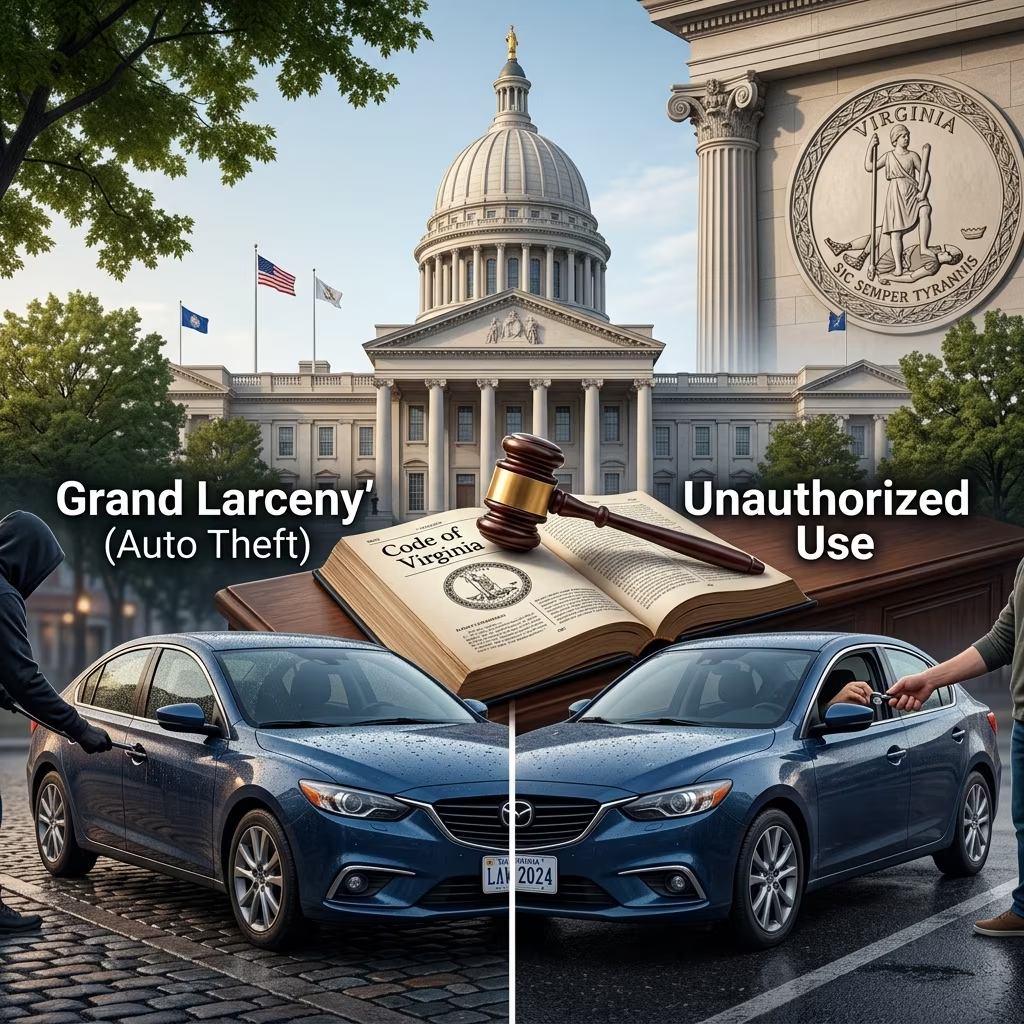
Motor vehicle theft and unauthorized use of a car are serious crimes in Virginia and can lead to felony convictions, lengthy prison sentences, and the loss of driving privileges. Although the Commonwealth does not have a single statute labeled “auto theft,” stealing or misusing a car is prosecuted under the state’s larceny and unauthorized use laws. This guide explains how those laws work, what penalties you could face, and why even temporary misuse of a vehicle can carry major consequences.
How Virginia Legally Treats Auto Theft
Virginia’s criminal code approaches auto theft by treating a motor vehicle like any other item of property subject to larceny—the unlawful taking of property with the intent to permanently deprive the owner of it. Instead of a special “auto theft” statute, prosecutors rely on general theft laws and a separate statute for unauthorized use of vehicles.
- Auto theft is typically charged as grand larceny if the vehicle’s value meets the threshold for a felony.
- Unauthorized use applies when someone takes or drives a vehicle without consent, intending only to temporarily deprive the owner of possession, rather than permanently steal it.
- Virginia also criminalizes receiving or transferring a stolen vehicle, even if the person did not do the original taking.
These different legal theories allow prosecutors to pursue car-related crimes ranging from joyriding to sophisticated theft schemes.
Grand Larceny vs. Petit Larceny Involving Vehicles
Whether auto theft is treated as a felony or a misdemeanor largely depends on the value of the vehicle and how it was stolen. Virginia’s larceny statutes define two main categories: grand larceny and petit larceny.
| Type of Larceny | Value Threshold / Circumstances | Classification | Potential Penalties |
|---|---|---|---|
| Grand larceny | Simple larceny of goods worth $1,000 or more, or certain property from the person of another at lower thresholds. | Felony | 1–20 years in state prison, or up to 12 months in jail and/or a fine up to $2,500, at the court’s discretion. |
| Petit larceny | Property valued below the grand larceny thresholds (under $1,000 in most situations). | Class 1 misdemeanor | Up to 12 months in jail and/or a fine up to $2,500. |
Because motor vehicles almost always exceed the grand larceny value threshold, auto theft in Virginia is commonly charged as grand larceny, making it a felony offense with potentially severe punishment.
Unauthorized Use of a Vehicle (Joyriding and Similar Conduct)
Not every car-related crime involves an intent to permanently steal. Virginia Code § 18.2-102 covers the unauthorized use of a vehicle when someone takes or drives a car without the owner’s consent to temporarily deprive them of possession.
Key Elements of Unauthorized Use
- Taking, driving, or using a vehicle that belongs to someone else.
- Acting without the owner’s consent and in the owner’s absence.
- Intent to temporarily deprive the owner of possession, without intent to steal the vehicle permanently.
This statute is often associated with conduct sometimes referred to as joyriding—such as using someone’s car without permission for a short trip—but the legal consequences can still be serious. The law also makes it clear that prior consent does not imply consent on future occasions, preventing people from claiming they could use the vehicle again simply because they used it before with permission.
Penalties for Unauthorized Use
The severity of punishment for unauthorized use depends on the vehicle’s value.
- If the vehicle is valued at $1,000 or more, unauthorized use is a Class 6 felony with potential prison time of up to five years and a fine up to $2,500 under Virginia’s general penalty scheme for that class.
- If the vehicle is valued at less than $1,000, the offense is treated as a Class 1 misdemeanor, punishable by up to 12 months in jail and a fine up to $2,500.
Anyone who assists, acts as an accessory, or otherwise participates in the unauthorized taking or use of a vehicle is subject to the same level of punishment as the principal offender.
Receiving or Transferring a Stolen Vehicle
Virginia law does not limit criminal liability to the person who physically steals or misuses the vehicle. Under Virginia Code § 18.2-109, knowingly receiving, transferring, or holding a title interest in a stolen vehicle is itself a crime.
What the Law Prohibits
- Receiving a vehicle that the person knows or has reason to believe is stolen, with the intent to obtain or pass title.
- Transferring possession of such a vehicle from one person to another.
- Possessing a stolen vehicle for the purpose of procuring or passing title, while not being a law enforcement officer acting in the line of duty.
A violation of this statute is a Class 6 felony, exposing the accused to the same general range of penalties applied to other Class 6 felonies. This provision is an important tool for addressing fraud involving car titles and organized schemes where vehicles are stolen, retagged, and resold.
Driver’s License Consequences for Auto Theft and Unauthorized Use
Beyond imprisonment and fines, auto theft-related convictions may affect a person’s ability to drive. Under Virginia law governing motor vehicle offenses, a court must impose a mandatory suspension of the driver’s license when an individual is convicted of theft of a motor vehicle, unauthorized use of the vehicle, or theft of its parts.
- For a first offense, the suspension generally lasts between 60 days and six months.
- For a second or subsequent offense, the license can be suspended for up to one year.
These administrative consequences make auto theft and unauthorized use particularly disruptive, since losing driving privileges can affect employment, family responsibilities, and everyday life.
Typical Sentencing Range for Auto Theft Cases
When auto theft is prosecuted as grand larceny, the potential sentence under Virginia law is notably severe. A conviction for grand larceny related to a vehicle can lead to:
- Imprisonment in a state correctional facility for one to 20 years.
- In the discretion of the court or jury, a lesser sentence of up to 12 months in jail and/or a fine of up to $2,500.
For petit larceny involving a lower-value vehicle or vehicle parts, the offense is a Class 1 misdemeanor, still punishable by up to 12 months in jail and a fine up to $2,500. The specific sentence in each case depends on factors such as criminal history, the facts of the offense, and any plea negotiations.
Factors That Can Influence Auto Theft Charges
Although the statutes define clear thresholds and categories, the outcome in a given case can vary based on circumstances. Some factors that may influence how an auto-related offense is charged or punished include:
- Vehicle value: Whether the car’s value exceeds the grand larceny threshold almost always pushes the case into felony territory.
- Intent: Evidence that the defendant intended to permanently keep or sell the vehicle supports a grand larceny charge, while a temporary taking may fit unauthorized use.
- Use of the vehicle in another crime: If the vehicle was used to commit additional offenses, that can increase exposure to further charges and harsher sentencing.
- Prior record: Repeat offenders are more likely to face longer prison terms and longer license suspensions.
- Involvement in organized schemes: Participation in multi-vehicle theft rings or title fraud operations may trigger more aggressive prosecution under receiving and transferring stolen vehicle statutes.
Because these factors can significantly affect the legal outcome, individuals facing investigation or charges related to a vehicle should seek legal advice promptly.
Practical Tips to Avoid Auto Theft Charges
Many auto-related criminal cases begin with misunderstandings about permission or casual decisions to use someone else’s car. Taking precautions can help avoid unlawful situations:
- Always obtain clear permission from the vehicle owner before using their car, ideally in writing for extended or repeated use.
- Do not rely on past consent for future use; Virginia law specifically rejects the idea that prior permission implies new consent.
- Be cautious when buying used vehicles and verify the title history to avoid inadvertently receiving a stolen car.
- Return borrowed vehicles promptly and as agreed, to avoid disputes that could be interpreted as unauthorized use.
- Never alter or falsify titles or VIN information, which can lead to charges under statutes governing stolen vehicles and title fraud.
These steps are not legal defenses, but they can reduce the risk of conduct being viewed as criminal and of becoming involved, even unintentionally, with stolen vehicles.
Frequently Asked Questions About Virginia Auto Theft Laws
Is there a specific “auto theft” statute in Virginia?
No. Virginia does not have a statute titled “auto theft.” Instead, theft of a motor vehicle is prosecuted primarily under the Commonwealth’s general larceny laws, usually as grand larceny because of the vehicle’s value.
Can I be charged with a felony for using a car without permission, even if I intended to return it?
Yes. Unauthorized use of a vehicle under Virginia Code § 18.2-102 is a Class 6 felony when the vehicle’s value meets the statutory threshold, even if the intent was only to temporarily deprive the owner of possession.
What happens to my driver’s license if I am convicted of auto theft or unauthorized use?
Upon conviction for theft of a motor vehicle, its unauthorized use, or theft of its parts, Virginia law requires a court to suspend the offender’s driver’s license for a set period, commonly 60 days to six months for a first offense and up to one year for later offenses.
Is receiving a stolen vehicle as serious as stealing it?
Receiving or transferring possession of a vehicle known or reasonably believed to be stolen, with intent to procure or pass title, is a Class 6 felony under Virginia Code § 18.2-109, and can carry similar punishment ranges to other Class 6 felonies.
When is auto theft considered grand larceny?
Auto theft is considered grand larceny when the vehicle’s value meets or exceeds the threshold for simple larceny of goods (currently $1,000), which is usually the case for motor vehicles. In those situations, the offense is a felony, and a person convicted may face one to twenty years in prison.
References
- § 18.2-102. Unauthorized use of animal, aircraft, vehicle or boat; consent — Code of Virginia, Virginia General Assembly. 2024-01-01. https://law.lis.virginia.gov/vacode/title18.2/chapter4/section18.2-102/
- § 18.2-95. Grand larceny defined; how punished — Code of Virginia, Virginia General Assembly. 2024-01-01. https://law.lis.virginia.gov/vacode/title18.2/chapter5/section18.2-95/
- § 18.2-109. Receipt or transfer of possession of stolen vehicle, aircraft, boat or vessel — Code of Virginia, Virginia General Assembly. 2024-01-01. https://law.lis.virginia.gov/vacode/title18.2/chapter5/section18.2-109/
- Virginia Theft Laws: Grand & Petit Larceny — Virginia-CriminalLawyer.com. 2023-06-01. https://www.virginia-criminallawyer.com/virginia-theft-lawyer/laws/
- Auto Theft Offenses and Sentences in Fairfax — Greenspun Shapiro PC. 2022-09-15. https://www.greenspunlaw.com/library/auto-theft-crimes-and-punishments-in-virginia.cfm
- Shoplifting — Virginia Rules, Office of the Attorney General of Virginia. 2023-05-10. https://virginiarules.org/varules_topics/shoplifting/
- Virginia Law & Penalties for Unauthorized Use of Vehicle — Medvin Law. 2022-07-20. https://medvinlaw.com/virginia-law-penalties-unauthorized-use-of-vehicle-defense-attorney/