
Utah Insurance Fraud: Complete Guide To Laws, Penalties 2025
A practical guide to Utah’s insurance fraud rules, penalties, reporting duties, and complaint options for policyholders and professionals.
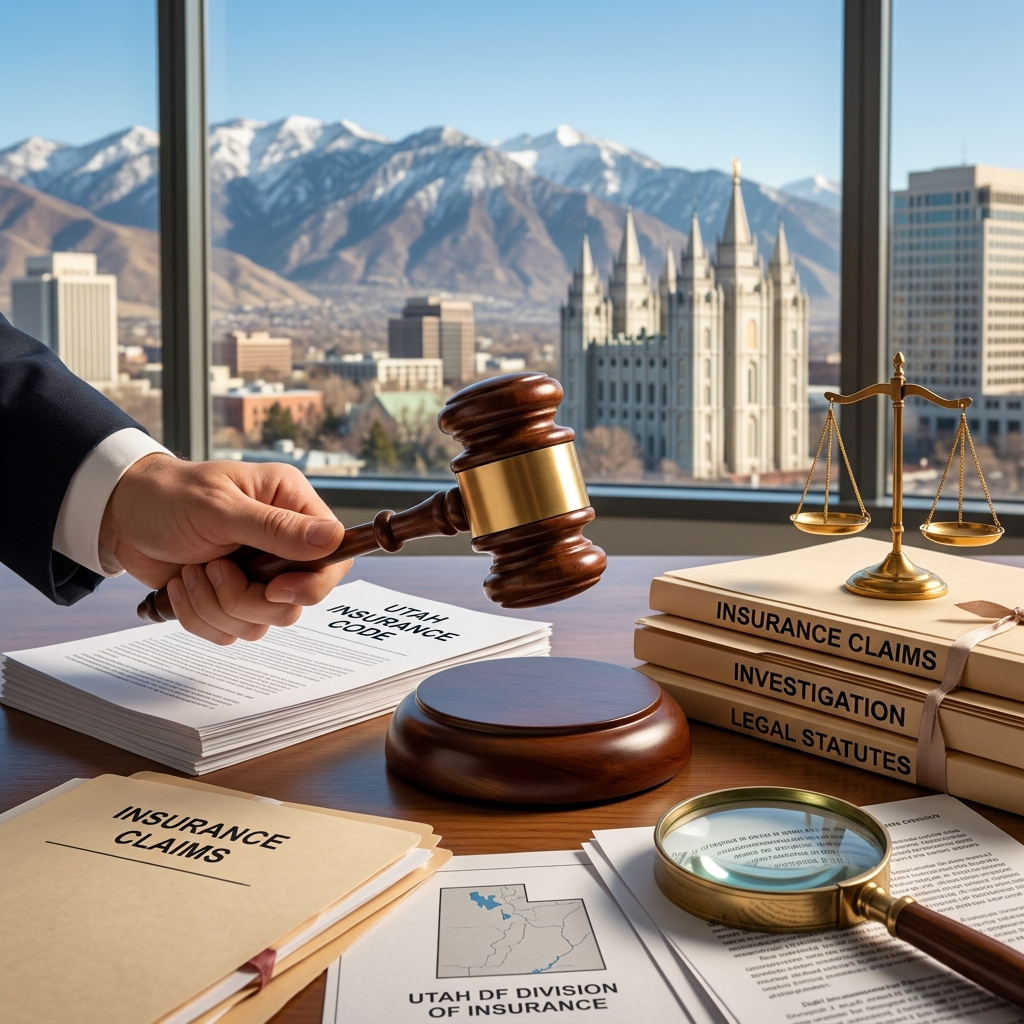
Utah has a detailed legal framework aimed at detecting, preventing, and punishing insurance fraud. These laws apply not only to individual policyholders, but also to insurers, medical and other service providers, and people who help facilitate fraudulent schemes. This guide explains how Utah law defines a fraudulent insurance act, the types of conduct that are prohibited, potential criminal and civil penalties, special rules for workers’ compensation fraud, and how to report suspicious activity or file complaints.
Overview of Insurance Fraud in Utah
Insurance fraud generally occurs when someone intentionally uses false, incomplete, or misleading information to obtain money, benefits, coverage, or other value from an insurance system. Utah’s Insurance Fraud Act and related criminal statutes make these acts crimes and also authorize civil penalties and regulatory action against violators.
Key purposes of Utah’s insurance fraud laws include:
- Protecting consumers from higher premiums and reduced coverage caused by fraudulent claims.
- Deterring dishonest behavior by policyholders, insurers, and service providers through criminal penalties.
- Ensuring accurate information in insurance applications, claims, and billing records.
- Supporting investigations by the Utah Insurance Department’s Fraud Division and law enforcement.
Legal Definition of a Fraudulent Insurance Act
Under Utah law, a person commits a fraudulent insurance act when they act with intent to deceive or defraud and engage in certain types of misrepresentation or deceptive conduct relating to insurance. This definition spans multiple categories of actors, including individuals, service providers, and insurers.
Acts by Individuals and Claimants
For policyholders or other individuals, Utah Code § 31A-31-103 and § 76-6-521 specify several forms of prohibited conduct. Common examples include:
- Providing false, incomplete, or misleading information in an insurance application or renewal, if the information is material to underwriting or policy issuance.
- Submitting or supporting a claim for payment, benefits, or damages using statements or representations that the person knows are false or materially incomplete.
- Accepting benefits or proceeds that are known to originate from a fraudulent insurance act.
- Helping or conspiring with others to carry out insurance fraud, such as organizing staged accidents or false claims.
The law focuses on intent to deceive or defraud and the materiality of the false information. Minor errors that are not intentional and do not affect underwriting or the decision to pay a claim generally do not constitute fraud.
Acts by Service Providers
Health care professionals, repair shops, and other service providers can also commit insurance fraud. Utah’s Insurance Fraud Act specifically addresses provider conduct, such as billing abuses and schemes to obtain professional fees through deceit.
Examples of fraudulent acts by service providers include:
- Submitting bills or requests for payment that contain charges substantially above what is reasonable for the service provided, or billing for services that were not actually rendered.
- Intentionally upcoding or misrepresenting the nature of services to obtain higher reimbursement from an insurer.
- Devising a scheme to obtain professional fees or anything of value by false pretenses, material omissions, or deceptive promises.
- Using or employing so‑called “runners” to recruit claimants for the purpose of committing insurance fraud, such as steering accident victims into unnecessary treatment or claims.
Because service providers operate within regulated industries, fraudulent conduct can also lead to licensing consequences, including suspension or revocation.
Acts by Insurers
Utah law recognizes that insurers themselves may engage in fraudulent practices. An insurer commits a fraudulent insurance act if, with intent to deceive or defraud, it withholds or misrepresents material information relating to application, coverage, benefits, or claims.
Fraudulent conduct by insurers may involve:
- Providing false or misleading information about coverage or benefits in policy documents or communications.
- Knowingly supplying fraudulent material information in documents or statements required by the Utah Insurance Department.
- Conspiring with others or accepting benefits derived from a fraudulent insurance act.
At the same time, Utah law limits insurer liability for fraudulent acts committed by employees without the insurer’s authority, unless the insurer knew or should have known of the misconduct.
Criminal Penalties for Insurance Fraud
Criminal charges for insurance fraud in Utah depend on factors such as the type of conduct and the dollar value of benefits or property involved. Utah’s insurance fraud provisions and the general criminal code work together to classify offenses and set sentencing ranges.
Penalties for Application and Claim Fraud
When a person lies in an insurance application or claim, penalties are typically tied to the value of the benefits or property fraudulently sought. Utah practitioners describe the scheme as follows:
| Value of fraudulent claim | Typical offense level | Potential incarceration |
|---|---|---|
| Less than $1,500 | Class B or Class A misdemeanor (depending on statute and conduct) | Up to 6–12 months in jail |
| $1,500 to less than $5,000 | Third degree felony | Up to 5 years in prison |
| $5,000 or more | Second degree felony | Up to 15 years in prison |
For relatively minor application fraud, Utah law identifies a class B misdemeanor offense that can carry up to 180 days in jail plus fines and probation conditions. More serious schemes involving larger dollar amounts are treated as felonies under Utah Code § 76-6-521 and related provisions.
Restitution, Fines, and Civil Penalties
Criminal sentencing for insurance fraud often includes restitution, requiring the defendant to repay money obtained through fraud. Utah law also allows courts to impose civil penalties, including an amount up to three times the value that was sought or received through fraudulent acts.
In practice, a person convicted of insurance fraud may face:
- Repayment of benefits or claims improperly obtained (restitution).
- Criminal fines set by statute or the sentencing court.
- Civil penalties up to three times the value of the fraudulent claim.
- Costs such as attorney’s fees and investigative expenses.
Licensing Consequences for Service Providers
Service providers who commit insurance fraud risk not only criminal conviction but also professional discipline. Under Utah’s regulatory structure, a provider’s license may be suspended or revoked for participating in fraudulent schemes, submitting false bills, or obtaining fees through deception.
Workers’ Compensation Insurance Fraud
Utah has specific rules for workers’ compensation insurance fraud, reflecting the importance of accurate information in the workplace injury system. The law makes it a crime to intentionally make false or fraudulent statements or omit material information in order to obtain workers’ compensation benefits.
Prohibited Conduct in Workers’ Compensation Cases
Workers’ compensation fraud can involve employees, employers, or providers. Examples include:
- An employee exaggerating or fabricating an injury to receive wage replacement or medical benefits.
- An employer misclassifying employees or failing to report payroll accurately to reduce premium costs.
- A medical provider billing for unnecessary treatment or services never rendered to injured workers.
Penalty Levels Based on Value and Impact
Utah differentiates workers’ compensation fraud by the value of benefits involved and the number of employees affected. When the value of benefits sought or obtained is less than $1,000, or fewer than five employees are deprived of benefits, the offense is treated as a misdemeanor. Higher dollar amounts or broader impact can elevate the conduct to felony status.
This graduated approach reflects a policy choice: small, isolated incidents are punished, but large-scale schemes that deprive many workers of benefits or involve substantial sums are treated more severely.
Mandatory Reporting of Insurance Fraud
Utah imposes mandatory reporting duties on certain entities. Under Utah Code § 31A-31-110, an insurer and certain title insurance auditors must report suspected fraudulent insurance acts to the Utah Insurance Department if they have a good faith belief based on a preponderance of the evidence that fraud is occurring or has occurred.
Who Must Report
The mandatory reporting obligations primarily apply to:
- Insurers operating in Utah.
- Auditors employed by title insurers, in relation to title insurance business.
Timing and Content of Reports
When the duty to report is triggered, the reporting party must submit a written report to the Utah Insurance Department within 90 days of forming a good faith belief that a fraudulent act is being, will be, or has been committed.
The report must:
- Describe the fraudulent insurance act in detail.
- Provide information about the alleged perpetrator.
- State whether the matter has also been reported to other agencies, such as the Attorney General, law enforcement, or local prosecutors, and identify those agencies.
These requirements create a channel for systematic reporting and allow regulators to coordinate with criminal investigators when necessary.
Role of the Utah Insurance Department Fraud Division
The Fraud Division of the Utah Insurance Department is charged with detecting, investigating, and preventing insurance fraud across the state. It functions as a specialized unit that handles complaints, conducts investigations, and cooperates with prosecutors.
Fraud Division Functions
According to the Utah Insurance Department, the Fraud Division:
- Investigates fraud involving insurers, agents, service providers, and policyholders.
- Fosters public awareness of insurance fraud and encourages tips from consumers and industry participants.
- Works with law enforcement and prosecutors to bring criminal cases when appropriate.
The Division can be reached through contact information published by the Department, including a toll‑free phone number for reporting suspected fraud.
Filing Complaints Against Utah Insurance Companies
In addition to criminal enforcement and regulatory investigations, Utah residents who have problems with an insurance company or agent can file a complaint with the Utah Insurance Department. Complaints may relate to claim handling, premium disputes, misrepresentation of coverage, or other issues.
Typical Complaint Process
While specific procedures can change over time, the general complaint process usually involves:
- Submitting a written or online complaint to the Utah Insurance Department, providing policy information and a description of the issue.
- Attaching documentation such as denial letters, billing statements, or correspondence with the insurer.
- Allowing the Department to review the complaint, contact the insurer, and determine whether any legal or regulatory violations have occurred.
The Department does not act as a personal attorney for the complainant, but it can help enforce Utah insurance laws and ensure that companies follow legal and regulatory requirements.
Practical Tips to Avoid Insurance Fraud Issues
Because insurance fraud can carry serious consequences, individuals and businesses should take steps to avoid unintentional violations and protect themselves from fraudulent schemes.
- Be accurate and honest in all applications and claim forms. Never exaggerate losses, injuries, or property values.
- Keep documentation such as receipts, medical records, and repair invoices to support legitimate claims.
- Review bills and explanations of benefits to confirm that services billed to your insurer match services actually received.
- Report suspected fraud promptly to your insurer and, when appropriate, to the Utah Insurance Department’s Fraud Division.
- Consult legal counsel if you are investigated or charged with insurance fraud, as penalties can include jail time, fines, and restitution.
Frequently Asked Questions (FAQs)
1. What is the core legal definition of insurance fraud in Utah?
Utah law defines a fraudulent insurance act as conduct undertaken with intent to deceive or defraud, involving false, incomplete, or misleading information that is material to insurance applications, claims, or benefits, or schemes to obtain fees or value through deceptive practices.
2. Who can be charged with insurance fraud under Utah law?
Individuals (policyholders or claimants), service providers (such as doctors or repair shops), and insurers themselves can be charged with insurance fraud if they meet the legal definition and act with the required intent.
3. How does Utah determine whether insurance fraud is a misdemeanor or a felony?
Offense level typically depends on the dollar value of benefits or property fraudulently sought or obtained. Smaller amounts often result in misdemeanors, while larger claims (for example, above $1,500 or $5,000) can lead to third or second degree felony charges.
4. Are insurers required to report suspected fraud?
Yes. Under Utah Code § 31A‑31‑110, insurers and certain title insurance auditors must report suspected fraudulent insurance acts to the Utah Insurance Department when they have a good faith belief, based on a preponderance of the evidence, that fraud has occurred or is occurring.
5. How can consumers file a complaint against a Utah insurance company?
Consumers can file complaints with the Utah Insurance Department, providing policy details, a description of the issue, and supporting documents. The Department reviews the complaint and may contact the insurer or take regulatory action where appropriate.
6. What happens if a service provider commits insurance fraud?
A service provider who commits insurance fraud may face criminal charges, restitution, civil penalties, and professional discipline such as license suspension or revocation under Utah’s Insurance Fraud Act and related regulations.
References
- Utah Code § 31A-31-103 – Fraudulent insurance act — Utah Legislature. 2024-01-01. https://law.justia.com/codes/utah/title-31a/chapter-31/section-103/
- Defending Insurance Fraud Charges — Howard Lewis & Petersen, P.C. 2023-05-01. https://www.howarddefense.com/criminal-defense-attorneys-utah/felony-charges/insurance-fraud-charges/
- Utah – Insurance Fraud Definition — Coalition Against Insurance Fraud. 2022-11-15. https://insurancefraud.org/statutes/utah-insurance-fraud-definition-u-c-a-1953-%C2%A4-31a-31-103-u-c-a-1953-%C2%A4-76-6-521/
- Chapter 31 Insurance Fraud Act — Utah Legislature. 2018-01-01. https://le.utah.gov/xcode/Title31A/Chapter31/C31A-31_1800010118000101.pdf
- Utah Insurance Fraud Laws — FindLaw. 2023-08-10. https://www.findlaw.com/state/utah-law/utah-insurance-fraud-laws.html
- Utah Code § 31A-31-110 – Mandatory reporting of fraudulent insurance acts — Utah Legislature / Coalition Against Insurance Fraud. 2022-11-15. https://insurancefraud.org/regulations/utah-mandatory-reporting-utah-code-section-31a-31-110/
- Fraud Division — Utah Insurance Department. 2024-03-01. https://insurance.utah.gov/fraud/
- Utah Code § 76-6-521 – Insurance fraud — Utah Legislature. 2024-01-01. https://le.utah.gov/xcode/Title76/Chapter6/76-6-S521.html
Similar Articles








Read full bio of medha deb




