
Utah Adoption Laws: Complete Guide To Eligibility, Consent,
A detailed, plain‑language guide to eligibility, procedures, and key legal rules for adoption under Utah law.
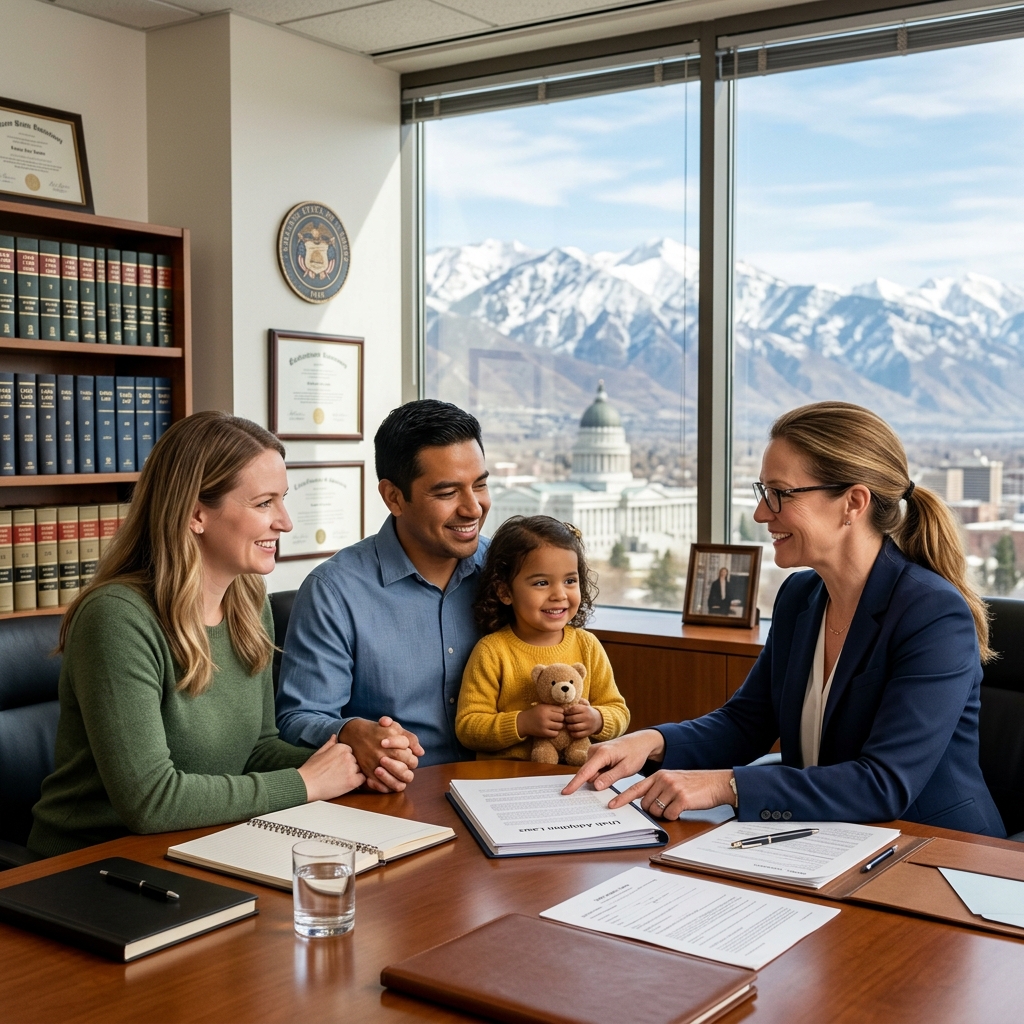
Utah has a detailed legal framework governing adoption, designed to protect children, support birth parents, and guide adoptive families through a safe and transparent process. If you are considering adoption in Utah, it is essential to understand who may adopt, who can be adopted, how consent works, and what procedures and protections apply.
This guide explains Utah adoption laws in clear language, drawing primarily from Utah statutes and official child welfare resources. It is informational only and does not replace advice from a licensed attorney.
1. Who May Adopt in Utah?
Utah law specifies which adults are allowed to adopt and sets conditions around marital status, age, and living arrangements.
1.1 Basic eligibility to adopt
Under Utah law, the following adults may generally adopt a child:
- Legally married couples adopting jointly, including stepparent adoptions.
- Single adults who meet statutory requirements.
- Relatives of the child in certain circumstances, including some otherwise restricted situations.
Utah also allows adoption by same‑sex couples, provided they are legally married under state law.
1.2 Restrictions on cohabiting couples
A significant feature of Utah adoption law is the limitation on adults who are living together but not married. A child generally may not be adopted by a person who is cohabiting in a relationship that is not a legally valid, binding marriage under Utah law.
There are narrow exceptions, such as when the adoptive parent is a relative of the child or the placement is recognized under the federal Indian Child Welfare Act (ICWA).
1.3 Age difference between adoptive parent and child
Utah adoption law requires a minimum age gap between the adoptive parent and child.
- The adoptive parent must be at least 10 years older than the child being adopted.
- If a married couple is adopting, only one spouse must satisfy this 10‑year difference.
Separate from this age gap rule, many agencies and professionals also require that adoptive parents be at least 21 years old, but that is typically a policy requirement rather than a statutory one.
1.4 Spousal consent for married adoptive parents
Utah law specifies that a married person may not adopt a child without the consent of their spouse, unless they are legally separated.
| Marital status | Consent requirement |
|---|---|
| Married (living together) | Spouse must either join in the petition or give written consent to the adoption. |
| Legally separated | Spousal consent is generally not required. |
| Single adult | No spousal consent needed, but cohabitation rules still apply. |
2. Who May Be Adopted?
Utah law allows both minors and adults to be adopted, subject to specific consent and eligibility requirements.
2.1 Minors and adults as adoptees
- Minor children (under age 18) can be adopted when parental rights are terminated or voluntarily relinquished, and all statutory requirements are met.
- Adults may also be adopted, often for inheritance, emotional, or family reasons, provided they consent and legal requirements are satisfied.
In all cases, the adoptive parent must still be at least 10 years older than the person being adopted, whether the adoptee is a minor or an adult.
2.2 Consent of the child or adult adoptee
Utah law recognizes the importance of the child or adult’s agreement to the adoption.
- Any person 12 years or older must consent to their own adoption, as long as they have the mental capacity to do so.
- A mentally competent adult adoptee must provide consent to be adopted.
This consent is in addition to parental consents and court approvals required for the adoption to be finalized.
3. Consent and Termination of Parental Rights
Adoption cannot move forward until the legal relationship between the child and their birth parents is addressed. This usually involves voluntary consent or court‑ordered termination of parental rights (TPR).
3.1 Birth parent consent
In most cases, a child’s biological parents must consent before an adoption can be completed. Consent involves formally relinquishing parental rights according to Utah statutes and procedures.
Key points about birth parent consent include:
- Consent must follow specific statutory forms and be given before a court or in a legally recognized manner.
- Consent is typically irrevocable once properly executed and approved, subject to any new statutory waiting periods or reforms.
- For children who are members of federally recognized tribes, additional protections and procedures apply under the Indian Child Welfare Act (ICWA).
3.2 Termination of parental rights
When a court terminates a birth parent’s rights, their consent is no longer required for an adoption to proceed. Termination can occur because of abuse, neglect, abandonment, or other grounds specified in Utah law.
For children in the custody of Utah’s Division of Child and Family Services (DCFS), termination of parental rights is usually a prerequisite before the child is formally eligible for adoption through the state’s system.
3.3 Challenging or contesting an adoption
Utah law provides a framework for challenging adoptions, including time limits and rules regarding fraud.
- Birth parents may attempt to contest an adoption, but challenges are limited once a final decree is entered.
- Even if the adoption cannot be undone, civil or criminal penalties can be sought for adoption‑related fraud.
Recent reform efforts in Utah have focused on expanding protections against coercive practices and clarifying the ability of birth mothers to change their minds shortly after birth, though exact rights depend on current statute language and effective dates.
4. Placement Rules and Licensed Agencies
Utah tightly regulates who may place a child for adoption and how adoption services may be provided.
4.1 Who may place a child for adoption
A child may be legally placed for adoption in Utah only by certain individuals or entities:
- A parent placing their own child for adoption.
- A licensed child‑placing agency that meets state standards.
Other professionals—such as attorneys or physicians—may help connect prospective birth parents and adoptive families but are limited in what they may do and what compensation they may receive.
4.2 Licensing and regulation of agencies
Utah requires agencies that place children for adoption to be properly licensed and prohibits unlicensed child‑placing activity.
- No unlicensed person, corporation, association, or group home may place a child for adoption or solicit assistance for child placement.
- Recent reforms require agencies to operate as nonprofit entities and include restrictions on transporting birth mothers late in pregnancy and on coercive conduct.
These regulations seek to prevent exploitation and ensure ethical, transparent adoption practices.
4.3 Adoption‑related expenses and financial limits
Utah law allows certain adoption‑related expenses but regulates them carefully.
- Reasonable costs such as legal fees, counseling, travel, maternity, and basic living expenses for birth parents may be covered.
- Before the final adoption decree, adoptive parents must file a detailed report of all expenses, gifts, and items of value exchanged in connection with the adoption.
- Recent legislation caps living expenses paid to birth mothers at a specified amount (for example, an $8,000 limit) with a process to request exceptions when necessary.
These rules are meant to prevent payments that could amount to buying or selling parental rights, which is prohibited under Utah and federal law.
5. Special Rules for Foster Care and DCFS Adoptions
Many adoptions in Utah occur through the foster care system, under the supervision of the state’s child welfare agency.
5.1 Utah’s child welfare and adoption agency
The primary state agency handling foster care and many child adoptions is Utah’s Division of Child and Family Services (DCFS), part of the Department of Health and Human Services.
- DCFS cares for children who cannot safely remain with their birth families.
- Once reunification is no longer viable, DCFS may move toward adoption as a permanent plan.
- Utah’s Adoption Connection provides public information on children awaiting adoption and resources for families.
5.2 Placement preferences in DCFS cases
When DCFS places a child for adoption, Utah law expresses a preference for married couples, but allows exceptions when other placements better serve the child’s best interests.
- Preference for placement with a married man and woman adopting jointly, especially in non‑relative placements.
- Placement with relatives of the child is often favored where safe and appropriate.
- Placement with a single adult may be appropriate if that option best serves the child’s needs.
ICWA imposes additional placement preferences for Native American children, including placement with extended family, other members of the child’s tribe, or other Native American families before non‑Native placements are considered.
6. Residency and Home Study Requirements
Prospective adoptive parents in Utah must often complete a home study and satisfy residency requirements before an adoption can be finalized.
6.1 Home study for prospective adoptive parents
All hopeful adoptive families generally must be approved through a Utah‑licensed home study provider.
- Home studies usually include interviews with family members, home visits, background checks, and training courses.
- The purpose is to verify that the adoptive family can provide a safe, stable, and nurturing environment.
- Home study approval is required for most forms of adoption, whether domestic infant, foster care, or international, when finalized in Utah.
6.2 Minimum time the child lives in the home
Utah law typically requires that a child live in the adoptive home for a period before the court will issue a final adoption decree.
- For most adoptions, the child must reside with the adoptive family for around six months before finalization.
- For stepparent adoptions, Utah often requires the child to live with the stepparent for at least one year before completion.
During this period, the court and, where applicable, child welfare agencies monitor the placement to ensure it is appropriate and in the child’s best interests.
7. Common Types of Adoption in Utah
While the legal framework is unified, families encounter Utah adoption laws through several common adoption paths.
7.1 Stepparent adoption
Stepparent adoptions occur when a stepparent adopts the child of their spouse.
- Requires consent or termination of the non‑custodial parent’s rights.
- Typically requires at least one year of the child residing with the stepparent.
- May have streamlined procedures compared to non‑relative adoptions.
7.2 Relative (kinship) adoption
Relatives may adopt children within their extended family, often after DCFS involvement or private arrangements.
- Can allow adoptions by cohabiting relatives who would otherwise be barred from adopting non‑related children.
- Often considered when the child cannot safely return to their parents but can remain within the family network.
7.3 Foster care adoption
Foster care adoptions follow from placement in state custody.
- Conducted under DCFS oversight, with a focus on permanency for children who cannot be reunified.
- Subject to placement preferences, ICWA requirements for Native children, and state home study rules.
7.4 Private domestic infant adoption
Private agency or attorney‑facilitated adoptions involve birth parents voluntarily placing an infant with adoptive parents.
- Must use licensed child‑placing agencies when placing, with strict limitations on compensation and advertising.
- Subject to consent, expense reporting, and recent reforms aimed at reducing coercion and “adoption tourism.”
8. Utah Adoption Laws: Quick Reference Table
| Topic | Utah rule (summary) |
|---|---|
| Who may adopt | Legally married couples and single adults; restrictions on unmarried cohabiting adults, with limited exceptions for relatives and ICWA placements. |
| Age difference | Adoptive parent must be at least 10 years older than the adoptee; only one spouse needs to meet this in a married couple. |
| Adoptee eligibility | Both minors and adults may be adopted if they and necessary parties consent and statutory requirements are met. |
| Child/adult consent | Adoptees age 12 or older must consent, assuming mental capacity; adult adoptees must consent. |
| Spousal consent | Married person may not adopt without their spouse’s consent, unless legally separated. |
| Placement authority | Only parents and licensed child‑placing agencies may place; others may assist but cannot be compensated beyond allowed limits. |
| Home residency | Child typically must reside in adoptive home for a set period (often six months, one year for stepparents) before finalization. |
9. Frequently Asked Questions About Utah Adoption Laws
9.1 Can unmarried partners adopt jointly in Utah?
Generally, no. Utah law does not allow adults who are cohabiting in a non‑marital relationship to adopt jointly, unless one of them is a relative of the child or a qualifying placement under ICWA.
9.2 Is adoption by same‑sex couples legal in Utah?
Yes. Same‑sex couples may adopt in Utah if they are legally married. The state’s restrictions focus on marital status, not sexual orientation.
9.3 Do children get a say in whether they are adopted?
Yes. Any child who is 12 or older must consent to their own adoption, provided they are mentally competent to do so. Adult adoptees must also consent.
9.4 Who oversees foster care adoptions in Utah?
Foster care adoptions are managed through Utah’s Division of Child and Family Services (DCFS), which works with courts and licensed agencies to achieve safe, permanent placements.
9.5 Are there limits on payments to birth parents?
Yes. Utah allows reasonable adoption‑related expenses but requires full reporting of all payments and gifts before finalization. Recent reforms impose caps on certain living expenses and prohibit coercive conditions tied to financial support.
9.6 Do I need an attorney to adopt in Utah?
While the law does not always require representation, adoption is a complex legal process. Most families benefit from working with a licensed attorney or reputable agency familiar with Utah statutes and local court procedures.
References
- Utah Adoption Laws – FindLaw — FindLaw. 2023-05-01. https://www.findlaw.com/state/utah-law/utah-adoption-laws.html
- Utah Adoption Laws You Need to Know — American Adoptions. 2022-08-10. https://www.americanadoptions.com/utah-adoption/utah-adoption-laws
- Who May Adopt, Be Adopted, or Place a Child for Adoption – Utah — Child Welfare Information Gateway (U.S. HHS). 2021-04-01. https://www.childwelfare.gov/resources/who-may-adopt-be-adopted-or-place-child-adoption-utah/
- Adoption – Utah Courts Self-Help — Utah State Courts. 2023-02-15. https://www.utcourts.gov/en/self-help/case-categories/family/adoption.html
- Adoption | Child and Family Services – Utah DHHS — Utah Department of Health and Human Services. 2023-09-01. https://dcfs.utah.gov/services/adoption/
- ‘A Giant Leap Forward’: Utah Governor Signs Adoption Reform Bill — FOX 13 News. 2024-03-13. https://www.fox13now.com/news/fox-13-investigates/a-giant-leap-forward-utah-governor-signs-adoption-reform-bill
Similar Articles








Read full bio of Sneha Tete


