
Understanding Usury Laws and Loan Interest Limits
Learn how usury laws limit loan interest rates, protect borrowers from predatory lending, and shape credit options across U.S. states.
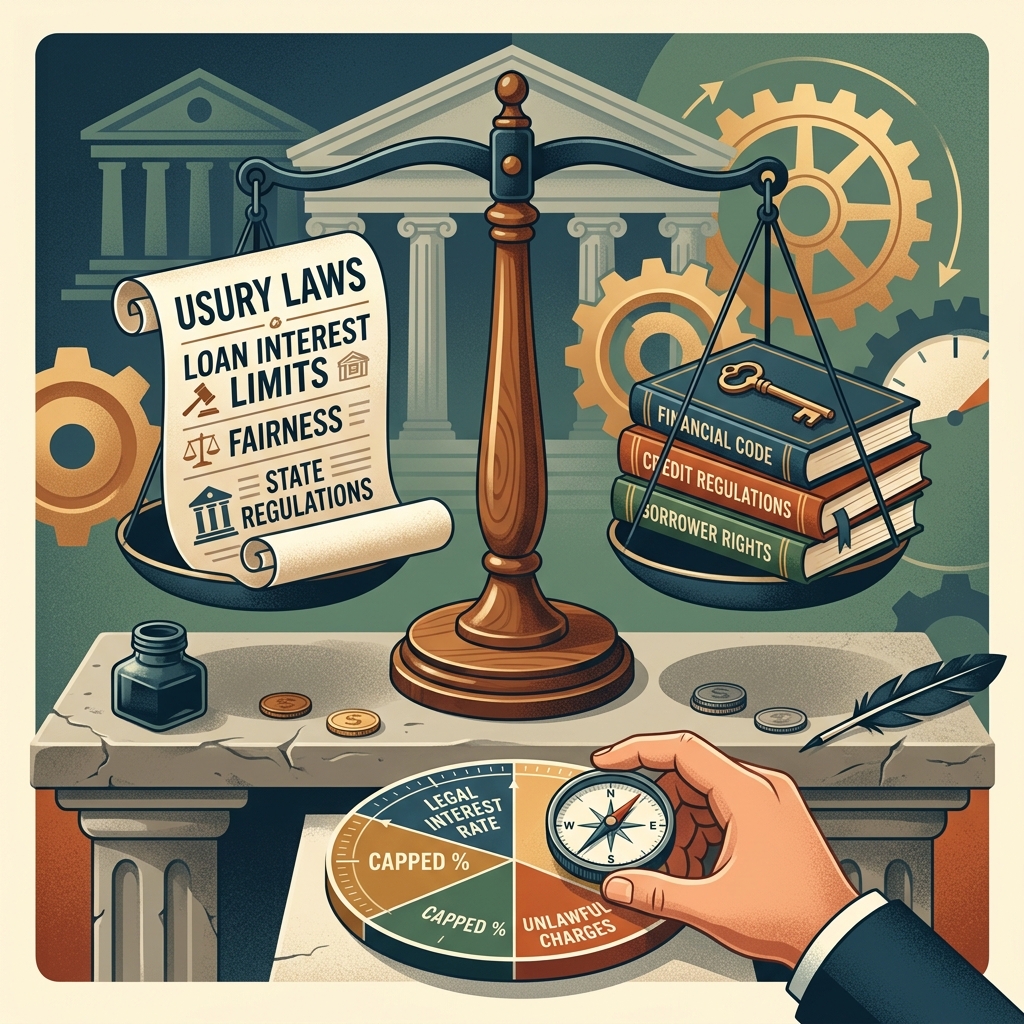
Borrowing money is a normal part of modern life, whether you use a credit card, take out a car loan, or finance a small business. But there is a point at which interest charges can become so high that they are considered abusive or unlawful. Usury laws are the rules that define that line, setting maximum interest rates and protecting borrowers from extreme costs and predatory lending practices.
What Is Usury and Why Does It Matter?
In everyday language, usury refers to charging interest that is viewed as unfairly high or exploitative. In legal terms, it usually means charging an interest rate that is higher than the maximum allowed by law for a particular type of loan.
These laws matter because interest can compound quickly. A seemingly small difference in the rate can add up to thousands of dollars over the life of a loan. Usury rules help keep that cost within a range lawmakers consider reasonable.
Key ideas behind usury laws
- Protecting consumers from predatory lending and debt traps.
- Setting clear boundaries for lenders on how much interest they can legally charge.
- Reducing economic harm caused by extremely expensive credit, especially to vulnerable borrowers.
Who Sets Usury Laws in the United States?
In the United States, the power to regulate usury is primarily held by the individual states, not the federal government. Each state has its own statutes that define maximum interest rates, when they apply, and what happens if a lender violates the law.
State-level regulation
State legislatures typically decide:
- The maximum interest rate for general loans and certain specific loan types.
- Different rules for consumer loans versus commercial or business loans.
- Exceptions for particular products, such as payday loans or small-dollar credit, which may have separate regulatory schemes.
Limited federal role
While Congress could regulate interest rates under its power over interstate commerce, it has historically taken a limited role in setting direct caps on loan interest. Instead, federal law focuses more on disclosure and fairness in lending than on specific rate limits.
For example:
- The Truth in Lending Act (TILA) requires lenders to clearly disclose the annual percentage rate (APR) and total finance charges on consumer credit, making it easier for borrowers to compare costs.
- The CARD Act adds protections for credit card users, such as clearer rate disclosures and restrictions on certain fees and rate hikes, but it does not impose a universal federal cap on credit card interest.
How Usury Limits Are Defined
Usury laws do not simply name a single number and apply it to every situation. States often use several related concepts to structure their rules.
Common types of interest limits
| Type of Limit | What It Means | Typical Use |
|---|---|---|
| Legal interest rate | A default rate set by state law, often used when no rate is stated in a contract or for certain court judgments. | Judgment interest; some unpaid obligations without a written rate. |
| General usury limit | The main ceiling on how much interest a lender can charge on typical loans. | Most consumer loans and standard credit agreements. |
| Special caps | Different maximums for specific products or borrowers. | Small loans, payday loans, or certain business credit. |
Some states tie these limits to an external benchmark, such as a certain number of percentage points above the Federal Reserve’s key interest rate. This allows limits to move as overall market rates change.
Historical Background of Usury Restrictions
Usury concerns have existed for centuries. Religious traditions across different cultures condemned lending at excessive rates, and early civil laws often included strict rules about interest. In the American context, colonies in the 18th century adopted some of the first formal usury statutes, commonly setting a cap around 8%.
Over time, these laws evolved along with financial markets. A detailed study of 19th‑century U.S. usury laws shows that states frequently adjusted their caps, sometimes tight and sometimes loose, in response to political pressures, economic conditions, and the needs of growing credit markets.
Major developments over time
- Colonial era: Early caps around single-digit interest rates.
- 19th century: Changing caps and enforcement as states experimented with regulation and observed effects on credit supply.
- Modern era: More complex systems with different caps for different loan types, combined with disclosure-based federal regulation.
Usury Laws and Consumer Protection
In modern practice, usury rules are part of a broader effort to shield consumers from harmful lending practices. When interest rates are very high, even small loans can become unmanageable, leading to repeated rollovers, refinancing, and long-term debt traps.
How usury limits help borrowers
- Prevent extreme costs: Caps make it illegal to charge certain very high rates, reducing the risk that borrowers will pay multiples of the principal in interest.
- Promote fair competition: By setting upper boundaries, states can discourage lenders from competing primarily on aggressive pricing that harms consumers.
- Support responsible credit markets: Well-designed caps can encourage lenders to offer credit that borrowers are more likely to repay successfully.
Usury laws and predatory lending
Predatory lending generally refers to the use of misleading terms, excessive fees, or exploitative interest rates that target vulnerable borrowers. Usury caps are one of the blunt but effective tools regulators may use to stop the most extreme abuses. However, they are not the only protection:
- States may also regulate fees, loan rollovers, and required disclosures.
- Federal law requires standardized information so borrowers can see the real cost of credit.
- Consumer advocacy groups monitor markets and identify products that appear to circumvent existing caps.
Why Interest Rate Caps Vary by State
Usury laws are not uniform. Each state chooses its own legal framework, based on local politics, economic philosophy, and industry influence. As a result, the maximum legal interest rate you face can differ significantly depending on where you live and what kind of loan you take.
Factors that influence state caps
- Economic development goals: States aiming to attract financial businesses might allow higher rates or more flexibility.
- Consumer protection priorities: States with strong consumer advocacy traditions may push for lower caps and tighter rules.
- Credit availability concerns: Policymakers worry that very low caps could discourage lenders from offering credit to risky borrowers, potentially pushing them into unregulated or illegal markets.
Illustrative differences
Some states set separate usury limits for consumer loans and for loans to businesses or other non‑consumer borrowers, with lower caps for individuals and higher ceilings for commercial credit. In addition, certain types of lenders may be exempt from general caps if they fall under special regulatory regimes, such as banks chartered under particular laws.
Usury Laws and Credit Cards
Many borrowers encounter high interest rates for the first time through credit card debt. A common question is whether there is a legal maximum interest rate for credit cards. On the federal level, there is no universal cap on credit card interest rates.
How card rates are controlled
- State usury laws: In principle, these can limit card rates, but the way credit card lending crosses state lines creates complexity.
- Bank charters and location: Some card issuers operate from states with more flexible interest rules and export their home-state rates to borrowers elsewhere, within legal frameworks established by federal banking law.
- CARD Act protections: Rather than capping rates, federal law emphasizes transparency, notice before rate increases, and limits on certain practices like retroactive rate hikes.
What cardholders can do
Even without a federal cap, cardholders have options if interest costs are too high:
- Request a rate reduction from the issuer.
- Use a balance transfer card with a lower promotional rate to consolidate and pay down debt.
- Seek credit counseling from reputable nonprofit organizations that help negotiate more manageable payment terms.
Consequences of Violating Usury Laws
When a lender charges more interest than the law allows, the loan may be considered usurious. State statutes specify the consequences, which can range from adjustments to the interest due to more serious penalties.
Possible legal outcomes
- Reduction of interest: Courts may limit the lender to the legal maximum rate or require refund of excess interest.
- Civil penalties: Borrowers may be entitled to damages or statutory penalties in addition to interest relief.
- Criminal sanctions: In some states or countries, charging interest above certain thresholds can be a criminal offense, although this is less common in typical consumer lending contexts.
Because penalties can be significant, lenders usually design their products with legal advice to avoid crossing state usury limits.
Practical Tips for Borrowers
Borrowers do not need to be experts in every detail of usury law, but understanding the basics can help you make better decisions and spot potential problems.
Steps to protect yourself
- Check the APR: Always review the annual percentage rate and total cost of credit before agreeing to a loan.
- Compare offers: Look at multiple lenders. Large differences in rate or fees can signal higher risk.
- Know your state rules: Many state agencies and legal aid organizations provide summaries of local interest caps and consumer protections.
- Be cautious with short‑term, high‑cost loans: These products often sit near the legal boundaries and may be regulated under special statutes.
- Seek help early: If you are struggling with high interest debt, contact a credit counselor or legal aid organization before the situation worsens.
Considerations for Lenders and Businesses
Lenders, including small businesses that extend credit to customers, must also pay attention to usury laws. Violating a cap can undermine the enforceability of a contract and lead to financial and legal consequences.
Compliance points for lenders
- Identify applicable caps: Determine which state’s usury rules apply to each credit product, especially if lending across state lines.
- Distinguish consumer and commercial credit: Some states allow higher rates for business loans but impose stricter limits on loans to individuals.
- Align with federal disclosure rules: Comply with TILA, the CARD Act, and other federal statutes to ensure clear and accurate information.
- Monitor changes: State legislatures and regulators periodically adjust interest limits and introduce new protections, particularly in response to economic downturns or concerns about predatory lending.
FAQs About Usury Laws
1. Are usury laws the same in every state?
No. Each state sets its own interest rate caps and rules, so maximum legal rates vary widely across the country.
2. Is there a federal maximum interest rate for credit cards?
There is no single federal cap on credit card interest rates. Instead, federal law focuses on disclosure and fairness, while state laws may impose certain limits that interact with banking rules.
3. Do usury laws apply to all types of loans?
Not always. Some loan products, lenders, or borrower categories are subject to special statutes or may be exempt from general usury caps, depending on state law.
4. How can I find out my state’s usury limit?
You can review your state’s statutes, visit official state websites that explain consumer credit rules, or consult summaries from reputable financial information providers that list general usury limits by state.
5. What should I do if I suspect a loan is charging illegal interest?
If you believe a loan violates your state’s usury laws, consider speaking with a consumer attorney or legal aid service. They can review the contract, compare it with state caps, and advise you on possible remedies.
References
- Usury Laws: Definition and Purpose — Investopedia. 2024-03-01. https://www.investopedia.com/terms/u/usury-laws.asp
- Usury — Encyclopedic overview of legal and historical context. (Publisher: Wikimedia Foundation; used for background, not cited as authority.) 2024-01-10. https://en.wikipedia.org/wiki/Usury
- Evidence from U.S. State Usury Laws in the 19th Century — National Bureau of Economic Research Working Paper 12851. 2007-01-01. https://www.nber.org/system/files/working_papers/w12851/w12851.pdf
- Usury Laws by State: Max Loan APR Guide — Paidnice. 2025-02-15. https://www.paidnice.com/usury-laws-by-state
- What Are Usury Laws and Maximum Interest Rates? — Bankrate. 2023-09-20. https://www.bankrate.com/credit-cards/zero-interest/does-law-cap-credit-card-interest-rates/
- Interest Rate, Usury, & Other Credit Laws — National Consumer Law Center. 2023-05-10. https://www.nclc.org/topic/interest-rate-usury-and-other-credit-laws/
Similar Articles








Read full bio of medha deb




