
Understanding U.S. Federal Drone Registration Rules
Learn when drones must be registered with the FAA, who must register, and how compliance protects you from costly penalties.
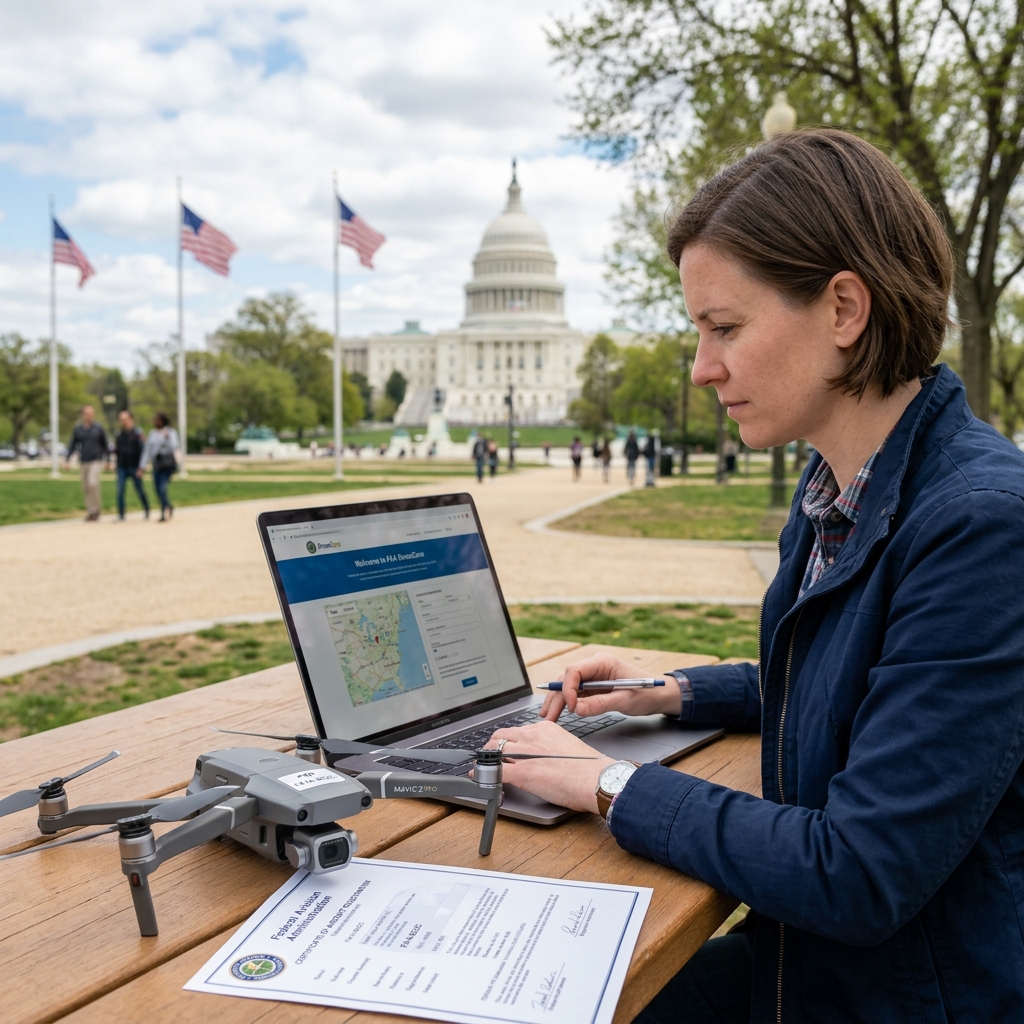
Small unmanned aircraft, commonly called drones, are now used for everything from weekend photography to sophisticated commercial inspections. In the United States, drones are treated as aircraft, and federal law requires many of them to be registered with the Federal Aviation Administration (FAA) before they are flown. Failing to understand these rules can expose pilots to enforcement actions and significant fines. This guide explains when registration is required, how to comply, and how federal registration fits into the broader regulatory picture.
Why Drone Registration Exists
Drone registration serves several safety and accountability purposes in the national airspace:
- Identification: Registration links a drone’s unique number to its owner, helping authorities identify responsible parties after incidents such as near-misses or property damage.
- Safety oversight: A national database allows regulators to understand how many aircraft are operating and where, supporting safe integration with manned aviation.
- Enforcement: Registration creates a legally enforceable requirement; operating unregistered drones when registration is required can lead to civil and criminal penalties.
- Remote ID compatibility: Many drones must broadcast location and identification information (Remote ID), and registration provides the underlying identification record.
In short, registration is an entry point into the regulated aviation system, even for small hobby aircraft.
Who Must Register a Drone?
Federal law sets clear thresholds for when a drone must be registered. The two main factors are weight and purpose of operation.
Weight Thresholds for Registration
The FAA uses the drone’s weight at takeoff, including batteries and any payload attached, to determine whether registration is required.
| Drone Weight at Takeoff | Recreational Operations | Commercial (Part 107) Operations |
|---|---|---|
| Less than 0.55 lb (250 g) | Registration not required if flown under the recreational exception. | Registration required if flown under Part 107, regardless of weight. |
| 0.55 lb to < 55 lb | Registration required. | Registration required. |
| 55 lb or more | Registration required using the traditional aircraft (paper) process. | Registration required using the traditional aircraft (paper) process. |
This means that most consumer drones used outdoors will fall into the middle category and must be registered.
Recreational vs. Commercial Registration
Registration obligations differ slightly depending on whether you fly for pleasure or for business:
- Recreational flyers operating under the Exception for Limited Recreational Operations (49 U.S.C. § 44809) must register any drone that weighs 250 grams (0.55 lb) or more.
- Commercial operators flying under Part 107 must register their drones for any weight, including sub-250 gram aircraft.
Therefore, a very small drone used purely for fun may avoid registration, but the same drone used for paid work would require registration.
Eligibility and Basic Requirements
Not every person is eligible to register a drone. The FAA imposes minimum criteria to ensure accountability.
- Age: You must generally be at least 13 years old to register a drone. A parent or guardian may register on behalf of a younger child.
- Citizenship/Residency: Standard registration is available to U.S. citizens and legal permanent residents; foreign visitors use a similar process to obtain recognition of ownership.
- Contact information: A valid physical mailing address and email address are required.
- Fee: Registration typically costs $5 and is valid for three years.
These requirements apply whether you register online or through the traditional paper-based system for larger unmanned aircraft.
How to Register Your Drone with the FAA
The FAA provides two primary registration methods, depending on the drone’s weight and how it will be used.
Online Registration for Most Consumer Drones
Most small drones (less than 55 pounds) can be registered quickly online through the FAA’s DroneZone portal.
Typical steps for online registration include:
- Create an account in the FAA DroneZone system using your email address and contact details.
- Confirm whether you are registering for recreational or Part 107 commercial use.
- Provide information about the drone, such as:
– Manufacturer and model
– Serial number (and Remote ID serial if applicable)
– Intended use and approximate weight - Review the acknowledgment of FAA rules, confirming that you understand and will abide by applicable regulations.
- Pay the $5 registration fee by credit or debit card.
- Receive your FAA registration number and download or print the certificate as proof.
Once completed, your registration is valid for three years and must be renewed if you continue using the drone.
Paper Registration for Larger or Special-Case Drones
Drones that weigh 55 pounds or more, will be operated outside U.S. territorial airspace, or must be registered through a trust or voting trust are registered using the FAA’s traditional aircraft registration process under Part 47. This involves paper forms and additional documentation, such as proof of ownership.
Marking Your Drone with the Registration Number
Registering online is not enough; federal law also requires that the registration number be displayed on the drone itself.
- The registration number must be placed on an external surface of the aircraft.
- The marking must be legible and visible without the use of tools, such as removing panels.
- Labels, stickers, or engraved plates can be used, so long as they are durable and easy to see.
Many pilots mark the number near the battery compartment or on the underside of the drone’s fuselage where it is easy for inspectors to check.
Remote ID and Its Interaction with Registration
Remote Identification (Remote ID) is a newer set of FAA rules requiring many drones to transmit certain information during flight, such as the drone’s identity and location.
Key points about Remote ID as it relates to registration:
- Most drones that must be registered also must comply with Remote ID requirements, either through built-in capabilities or an add-on module.
- Exceptions include some drones weighing less than 0.55 pounds and operations taking place within designated FAA-Recognized Identification Areas (FRIAs).
- When registering a drone, pilots may need to provide a Remote ID serial number if their aircraft is Remote ID compliant.
Remote ID does not replace registration; instead, it builds on the registration system by broadcasting the identity linked to the FAA’s database.
Penalties for Skipping Registration
Operating a drone that should be registered without valid registration can expose the owner and pilot to enforcement actions.
- Civil penalties may include fines of up to tens of thousands of dollars per violation.
- Criminal penalties for willful violations can include substantially higher fines and potential imprisonment.
- Additional consequences may arise if an unregistered drone is involved in an incident, such as insurance disputes or liability complications.
Beyond formal penalties, failure to register can also result in confiscation of the drone or termination of operations in controlled airspace.
Federal Registration vs. State and Local Rules
Registering with the FAA does not override state or local regulations. While the FAA regulates airspace and aircraft registration nationwide, individual states and municipalities may add rules related to privacy, critical infrastructure, or public property use.
- Some states require separate registration for drones used in specific settings, such as educational programs.
- Local governments may restrict flights over certain facilities, parks, or urban areas.
- Pilots must comply with both FAA rules and any lawful state or local regulations applicable to their operations.
Federal registration should be seen as the baseline requirement, not a complete authorization to fly anywhere or in any manner.
Special Considerations for Recreational Flyers
Recreational pilots benefit from a simplified regulatory framework but still have specific obligations beyond registration.
- To qualify as recreational, flights must be for personal enjoyment only, not for business or compensation.
- Pilots must follow the safety guidelines of an FAA-recognized community-based organization (CBO), such as established model aircraft clubs.
- Recreational operators must pass the free TRUST safety test and carry proof of completion when flying.
- Registered drones must be marked with the registration number and comply with Remote ID requirements unless an exception applies.
These conditions work together with registration to keep hobby flying safe and clearly distinguished from commercial activity.
Best Practices for Staying Compliant
Beyond the minimum legal requirements, prudent drone operators adopt habits that make compliance easier and reduce risk:
- Maintain documentation: Keep digital and printed copies of your registration certificate and TRUST completion record with your flight gear.
- Review rules regularly: Drone regulations continue to evolve. Periodically check FAA guidance for updated requirements.
- Plan flights carefully: Use official sources or approved tools to verify airspace restrictions before launching.
- Train all operators: If multiple people fly the same registered drone, ensure each understands registration responsibilities and broader safety rules.
- Renew on time: Note the registration expiration date and renew before operating once the three-year period ends.
These steps help keep drone operations legal, safe, and less vulnerable to enforcement actions or accidents.
FAQs: Federal Drone Registration
Do I need to register a very small toy drone?
If the drone weighs less than 0.55 pounds (250 grams) and you fly it strictly for recreation under the limited recreational exception, FAA registration is not required. However, if that same drone is used for commercial work under Part 107, then registration is required regardless of weight.
Can one registration number cover multiple drones?
Recreational operators may use a single registration number for multiple drones they own, because the registration is tied to the operator rather than each individual aircraft. By contrast, commercial operators under Part 107 typically must register each drone separately.
Where should I put the registration number on the drone?
The number must be on the outside of the drone, visible without tools. Common placements include the body near the battery door or on the underside of the fuselage, using a durable label or engraving.
What happens if I forget to renew my registration?
Operating a drone with an expired registration is treated similarly to flying an unregistered aircraft. You may face civil or criminal penalties for noncompliance and could be ordered to cease operations until registration is restored. Renewing through DroneZone generally follows the same steps as initial registration.
Does FAA registration mean I can fly anywhere I want?
No. Registration only satisfies the identification requirement. Pilots must still obey airspace rules, altitude limits, Remote ID requirements, and any state or local restrictions on where drones may be flown.
References
- Do I need to register my drone and if so, how do I register? — Federal Aviation Administration. 2024-02-01. https://www.faa.gov/faq/do-i-need-register-my-drone-and-if-so-how-do-i-register
- How to Register Your Drone — Federal Aviation Administration. 2023-09-18. https://www.faa.gov/uas/getting_started/register_drone
- Ultimate Guide to U.S. Drone Regulations — Rupprecht Law. 2024-03-10. https://jrupprechtlaw.com/drone-regulations/
- Drone Laws in the USA [2026] — Drone U. 2026-01-05. https://www.thedroneu.com/blog/usa-drone-laws-regulations-by-state/
- Drone Registration: What You Need to Know — Pilot Institute. 2024-05-12. https://pilotinstitute.com/drone-registration/
- Regulation of UAVs in the United States — Summary of FAA rules. 2023-08-30. https://en.wikipedia.org/wiki/Regulation_of_UAVs_in_the_United_States
- Recreational Flyers & Community-Based Organizations — Federal Aviation Administration. 2023-09-16. https://www.faa.gov/uas/recreational_flyers
- Drone Laws & Regulations — NCAT. 2023-04-01. https://ncatech.org/drone-laws-regulations/
Similar Articles








Read full bio of medha deb


