
Understanding U.S. Age Verification Laws for Online Adult Content
How new state age verification rules are reshaping access to online pornography, user privacy, and website compliance duties.
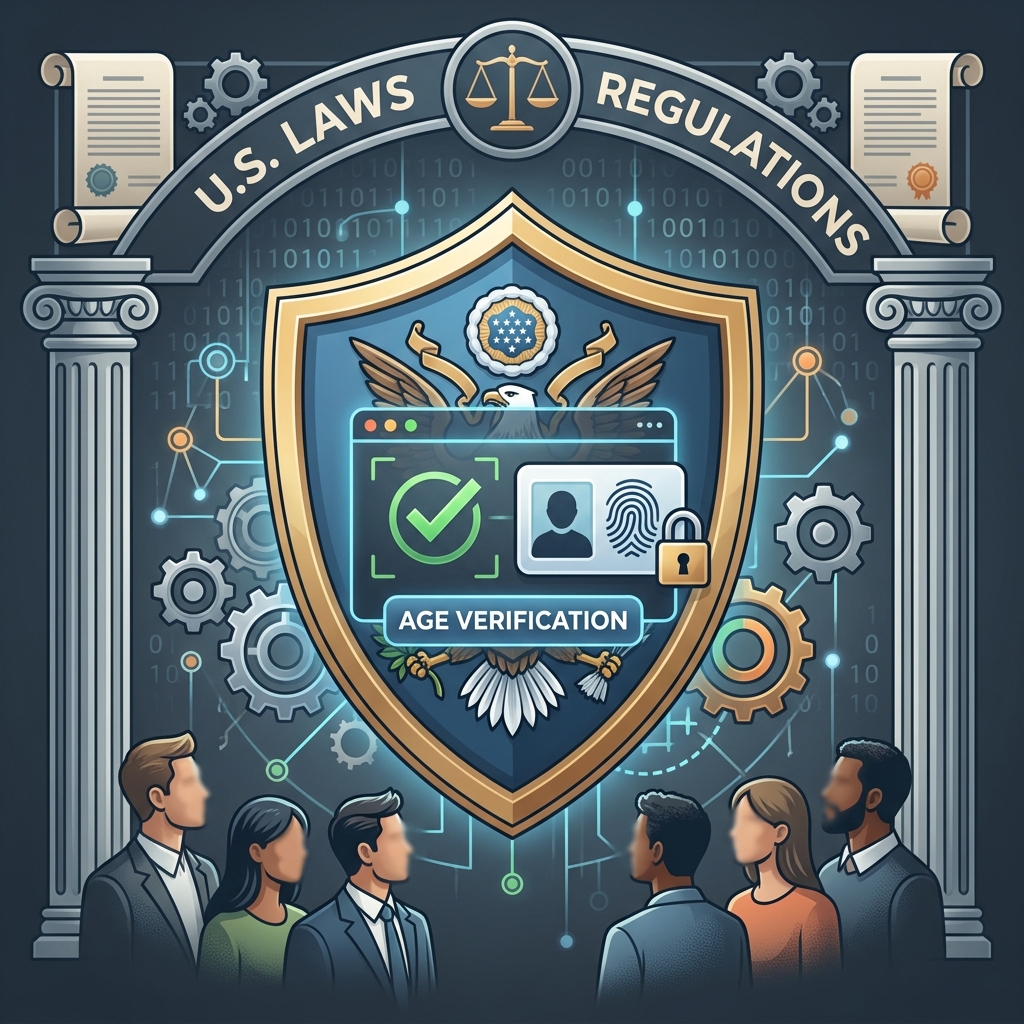
Across the United States, a growing number of states now require age verification before users can access commercial websites that host significant amounts of online pornography or other material deemed harmful to minors. These laws are reshaping how adult content platforms operate, how users prove they are over 18, and how courts balance child protection against free speech and privacy concerns.
Why Age Verification Laws Are Expanding
Age verification laws are rooted in a simple policy goal: prevent minors from easily accessing sexually explicit online material while preserving legal access for adults. Lawmakers point to widespread smartphone use, social media, and high-speed internet as reasons why minors can find adult pornography in seconds, often without parental knowledge.
At the same time, states have become more confident in passing these laws because courts, including the U.S. Supreme Court, have recently upheld age verification mandates for pornography under intermediate scrutiny, finding that they are closely related to the legitimate state interest of protecting minors. This means legislatures now have clear constitutional guidance for crafting rules that restrict young people’s access while allowing adults to continue viewing lawful material.
Core Features of Modern Age Verification Requirements
While the details differ from state to state, most age verification laws share several common elements.
- Targeted websites: Laws focus on commercial sites that host a substantial portion of adult or sexually explicit content, often defined as at least one-third of the site’s material.
- Definition of harmful content: States use legal definitions of “material harmful to minors” that reference prurient interest, offensive depiction of sexual conduct, and lack of serious value for minors.
- Proof of age: Before displaying adult content, covered sites must implement “reasonable” or specified age verification mechanisms that confirm users are at least 18.
- Enforcement tools: States impose fines, civil liability, or even criminal penalties for noncompliance.
Thresholds for When a Site Is Covered
Most laws do not apply to every website that occasionally hosts adult content. Instead, they use content thresholds to identify sites whose main business or a substantial segment of their material involves pornography or similar content.
| Typical Threshold | Description | Example Approaches |
|---|---|---|
| 33.3% of content | Site is covered if one-third or more of its material is pornographic or harmful to minors. | Common in early state laws such as Louisiana and others. |
| 25% of content | Lower threshold, capturing more mixed-content sites. | Used by some states to broaden coverage. |
| No percentage threshold | Any site with harmful sexual material may be covered, regardless of proportion. | Examples include laws that apply to all sites hosting material harmful to minors. |
Common Types of Age Verification Methods
States typically require a “reasonable” or specified verification method, giving sites a degree of technological flexibility. However, users often experience these mandates as more intrusive than simple “I am over 18” pop-ups.
Government ID-Based Verification
Many laws explicitly mention government-issued identification as a compliant verification method.
- Users upload or scan a driver’s license, state ID, or passport via a secure portal.
- Third-party verification providers compare the data against government or commercial records to ensure the ID is valid and belongs to an adult.
- Some laws allow or require that the site itself never stores raw ID images, instead relying on tokenized or anonymized confirmation from the verifier.
Digital Identity Systems and Databases
As digital identity technology develops, certain states explicitly contemplate alternatives to traditional ID uploads.
- Digital IDs: Mobile or app-based credentials issued by governments or trusted entities that attest a user’s age without exposing full personal data.
- Credit record checks: Commercial databases cross-reference name, date of birth, and other attributes to verify age.
- Age estimation signals: Laws such as those targeting device manufacturers can require systems to estimate or communicate the primary user’s age to sites, which then allow or block adult content accordingly.
Biometric and Facial Recognition Systems
Some state and international frameworks include biometric verification, such as facial scanning, as an approved method.
- Users take a live selfie or short video; software estimates age based on facial characteristics and compares the image to ID documents, if provided.
- These systems aim to verify age without always capturing full identifying details, but they raise concerns about accuracy, bias, and biometric data security.
Illustrative State Approaches
By early 2026, more than twenty U.S. states had enacted some form of age verification requirement for online pornography or similar content. Law details vary, but several patterns have emerged.
Louisiana: Early Adopter of Age Verification
Louisiana was among the first states to require age verification for commercial pornographic websites that contain at least one-third harmful content. Its law demands “reasonable age verification” and authorizes fines per day of violation, with higher penalties when the operator knowingly fails to comply.
Florida: Linking Harmful Content to Civil Penalties
Florida’s 2024 law requires websites publishing material legally defined as “harmful to minors” to implement reasonable age verification before access. Under the statute, covered sites must confirm that users are at least 18, typically via government ID or commercial verification services. Noncompliance can trigger civil penalties per violation and potential liability if a minor views harmful material due to inadequate verification.
Broader Landscape of State Laws
Other states have taken varying approaches:
- Some focus specifically on pornography sites, while others also regulate social media platforms, app stores, or device manufacturers where mature content may appear.
- A few states authorize civil lawsuits by parents or minors against non-compliant sites, expanding enforcement beyond regulators.
- Others classify violations as criminal offenses, including felony-level penalties for repeated or intentional violations.
Constitutional and Free Speech Considerations
Age verification laws implicate the First Amendment because they regulate access to lawful adult speech. Courts therefore examine whether these rules unduly burden adults’ rights or are narrowly tailored to protect minors.
The U.S. Supreme Court has upheld at least one state age verification law for pornography under intermediate scrutiny, concluding that the law substantially furthers the compelling interest in protecting minors and that its limitations on adult access are comparatively modest. This decision signaled to lower courts and lawmakers that properly designed age verification requirements can survive constitutional challenge.
At the same time, civil liberties organizations argue that mandatory ID or biometric checks can chill adult expression, because users may avoid viewing lawful material if they must reveal personal data or face potential data breaches. These critics contend that less intrusive tools, such as improved content filters or parental control technologies, could protect minors without forcing adults to surrender sensitive information.
Privacy, Security, and Data Protection Concerns
From a user’s perspective, the most immediate concern with age verification is privacy. Uploading government IDs or biometric scans to websites associated with pornography or other sensitive topics raises risk of data leakage, misuse, or unauthorized surveillance.
Key Privacy Risks
- Data breaches: If verification providers or sites experience a security incident, leaked data could expose users’ identities and viewing habits.
- Function creep: Collected age verification data might be repurposed for marketing, profiling, or law enforcement beyond its original purpose, especially if statutes are loosely drafted.
- Discriminatory impact: Civil society groups have warned that age verification mandates can disproportionately burden marginalized communities by requiring documentation or technological tools they are less likely to have.
Safeguards in Some Laws
In response, several states add explicit safeguards:
- Mandating that sites or verifiers delete age verification data after a short period or store only non-identifying tokens.
- Requiring “anonymized” options, such as third-party checks where the site only receives a yes/no confirmation of age without seeing ID details.
- Restricting disclosure of verification data to law enforcement or third parties except under narrow, legally defined circumstances.
Compliance Considerations for Website Operators
Operators of adult websites or platforms that host a large volume of sexually explicit content must now treat age verification as a central compliance responsibility in many jurisdictions.
Steps for Assessing Legal Exposure
- Determine content share: Estimate what percentage of your site’s content could be legally classified as pornographic or harmful to minors based on state definitions.
- Map user locations: Identify where your user base is located and which states’ laws might apply, including geofencing considerations for blocking minors in specific states.
- Review statutory thresholds: Compare your content and business model to thresholds in relevant states, such as one-third content rules or “any harmful material” standards.
Choosing an Age Verification Solution
Once a site determines that it falls within one or more legal frameworks, it must choose appropriate verification technologies.
- Evaluate third-party vendors for security certifications, data handling practices, and legal compliance with applicable privacy laws.
- Consider offering multiple methods (ID upload, digital ID, or anonymized verification) to reduce barriers for different user groups.
- Document policies for data retention, deletion, and incident response to demonstrate good-faith efforts if regulators investigate.
Potential Penalties for Noncompliance
Consequences vary by state but can include:
- Daily fines, which can accumulate quickly for ongoing violations.
- Civil lawsuits brought by individuals or state attorneys general.
- Criminal prosecution, including felony classification in some jurisdictions for intentional or repeated violations.
Impact on Users and Families
For adults, age verification changes the experience of accessing online pornography and other mature content. Instead of clicking a simple confirmation box, many now must provide ID or use a verification service.
For parents and guardians, these laws are meant to complement parental controls, content filters, and communication with children about online safety. Age verification alone cannot eliminate all exposure to harmful material, but it can make casual access more difficult and signal societal norms about protecting young users.
Frequently Asked Questions (FAQs)
Is viewing adult pornography still legal for adults under these laws?
Yes. In states such as Florida, viewing legal adult pornography remains lawful for individuals aged 18 or older. The laws do not criminalize adult viewing; they require websites to verify age before allowing access to content defined as harmful to minors.
Do these laws apply to all websites with any sexual content?
No. Most laws focus on commercial sites where a substantial portion of content is pornographic or harmful to minors, often quantified as one-third or more of the site’s material. However, a few frameworks apply more broadly to any site hosting such material, regardless of proportion.
What counts as “reasonable” age verification?
“Reasonable” verification typically includes government ID checks, digital identity solutions, or commercial databases that reliably confirm a user’s age. The exact standards vary by statute, and sites should consult legal counsel to ensure that their chosen methods meet local requirements.
Will my ID or biometric data be stored when I verify my age?
In some jurisdictions, laws require or encourage minimization and prompt deletion of age verification data, and some verification providers claim to store only anonymized tokens. However, practices differ widely, so users should review privacy policies and understand that any collection of sensitive data carries inherent risk.
How do these laws affect free speech rights?
Courts have held that age verification laws can be constitutional when narrowly targeted at protecting minors and when they leave adults with reasonable access to lawful material. Civil liberties advocates remain concerned that intrusive verification may deter adults from exercising their rights or create disproportionate burdens on vulnerable communities.
References
- Pornography Age Verification Laws: State-By-State Regulations — Super Lawyers. 2026-02-XX. https://www.superlawyers.com/resources/internet/age-verification-laws-accessing-adult-content/
- The Evolution of Age Verification Laws for Adult Content — Ondato. 2025-11-XX. https://ondato.com/blog/adult-content-age-verification-laws/
- US State Age Verification Laws for Adult Content — Age Verification Providers Association. 2026-02-XX. https://avpassociation.com/us-state-age-verification-laws-for-adult-content/
- Is Porn Legal in Florida? Age Verification Law Explained — Brancato Law. 2024-01-XX. https://www.brancatolawfirm.com/blog/is-porn-legal-in-florida-what-the-2024-age-verification-law-means-for-you/
- Age verification — UK Parliament Online Safety Act summary via official sources referenced therein. 2023-10-XX. https://www.legislation.gov.uk/ukpga/2023/50/contents
- Online Pornography Age Verification Laws by US State — Kindbridge. 2025-12-XX. https://kindbridge.com/online-pornography-age-verification-laws-by-state-map/
- 10 (Not So) Hidden Dangers of Age Verification — Electronic Frontier Foundation. 2025-12-XX. https://www.eff.org/deeplinks/2025/12/10-not-so-hidden-dangers-age-verification
Similar Articles








Read full bio of medha deb


