
Understanding Traffic Tickets and Your Legal Options
Learn how traffic tickets work, what they can cost you, and the smart steps to protect your license, wallet, and driving record.
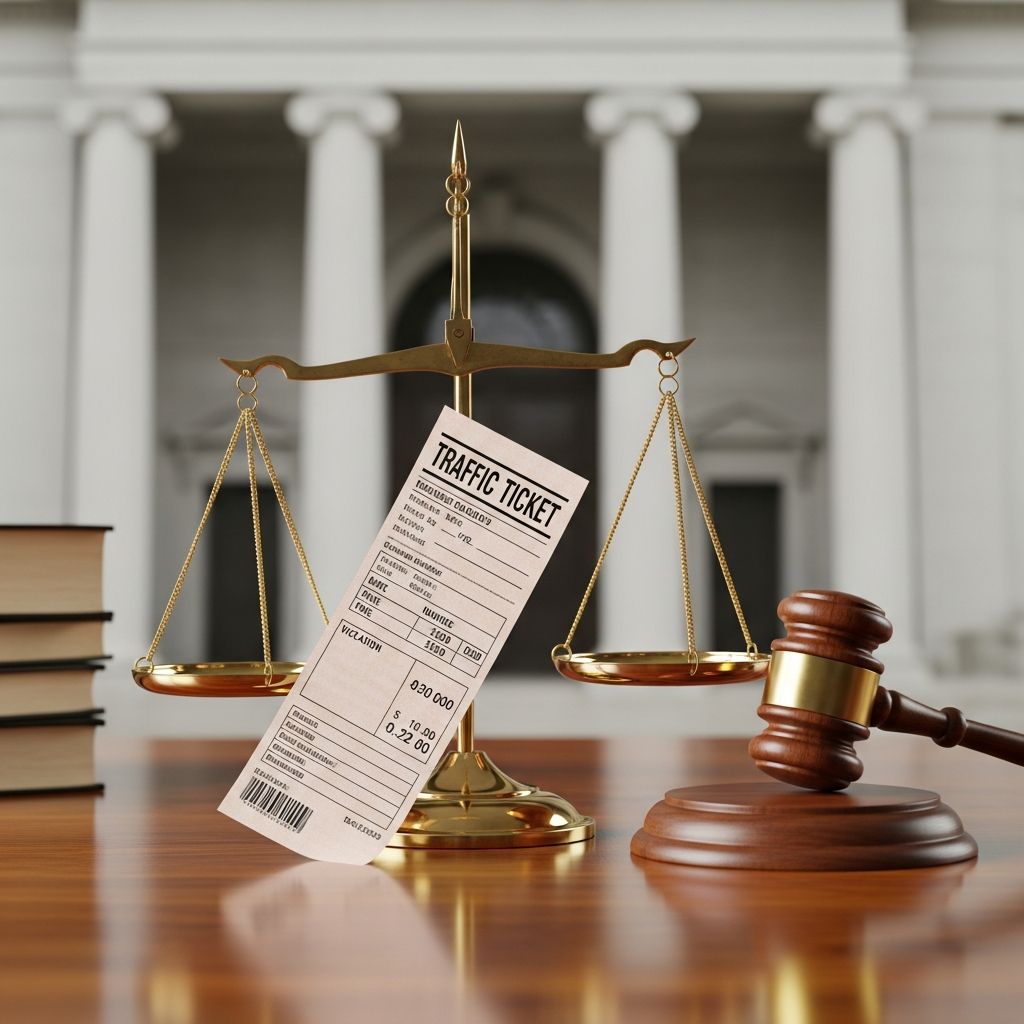
Traffic tickets might seem like a routine part of driving, but each citation can affect your wallet, your driving record, and even your ability to stay on the road. This guide walks you through what a traffic ticket really means, the potential penalties, and how to decide the best way to respond.
What Is a Traffic Ticket?
A traffic ticket is an official notice that a law enforcement officer believes you violated a traffic law. In most U.S. states, many of these violations are treated as civil infractions, which usually carry fines and administrative penalties instead of jail time.
While minor violations are often handled by simply paying a fine, more serious offenses can be treated as crimes, leading to court appearances, potential jail time, and long-term consequences for your driving privileges.
Categories of Traffic Violations
Traffic offenses are typically grouped in several overlapping ways. Understanding these categories helps you predict how serious a particular ticket might be.
Infractions vs. Misdemeanors and Felonies
- Infractions: Non-criminal violations, usually resolved by paying a fine. Examples often include minor speeding, rolling a stop sign, or improper lane changes.
- Misdemeanor traffic offenses: Treated as crimes, often involving more dangerous behavior such as driving under the influence or reckless driving. These can lead to higher fines, probation, or short jail terms.
- Felony traffic offenses: The most serious traffic-related crimes, such as DUI causing injury or death, or leaving the scene of a serious crash. These can result in lengthy license suspensions, substantial fines, and imprisonment.
In many states, the exact classification depends not just on what law was broken, but also on the outcome. For example, running a red light that causes a crash may be handled more severely than a red light violation with no accident.
Moving vs. Non-Moving Violations
- Moving violations: Violations committed while the vehicle is in motion, such as speeding, failing to yield, or unsafe lane changes. These usually carry higher penalties and often add points to your driving record.
- Non-moving violations: Offenses generally related to parking, registration, or vehicle condition—like parking in a no-parking zone, expired plates, or illegal window tint. These usually lead to fines but may not add points in many jurisdictions.
Common Types of Traffic Tickets
While every state has its own traffic code, certain types of tickets are especially common across the country.
- Speeding – Exceeding posted limits or driving too fast for conditions. Speeding is typically the most frequent moving violation and can rapidly add points to your record if repeated.
- Red light and stop sign violations – Failing to stop fully or entering an intersection after the light has turned red.
- Improper lane use – Including unsafe lane changes, failing to maintain a single lane, or illegal passing.
- Following too closely – Tailgating another vehicle, which increases crash risk.
- Distracted driving – Including texting or using a handheld phone while driving, which many states now regulate strictly.
- Seat belt and child restraint violations – Failing to properly secure adults or children.
- Parking offenses – Parking in prohibited areas, blocking driveways, or overstaying a meter.
Consequences of a Traffic Ticket
Paying a fine is only one part of the story. A single ticket can trigger several different consequences at once.
Fines and Court Costs
Each offense carries a base fine set by law. Courts may also add administrative fees or surcharges, which can substantially increase what you actually pay.
Factors that can raise fines include:
- High speeds above the posted limit
- Construction or school zones
- Repeat offenses within a set timeframe
Points on Your Driving Record
Many states use a point system, assigning a set number of points for each moving violation. Accumulating too many points within a specific time window can trigger license suspension or other administrative penalties.
Typical features of point systems include:
- More serious violations (such as high-speed speeding or reckless driving) carrying more points than minor infractions.
- Points remaining on your record for a certain number of years.
- The possibility of removing or reducing points by taking a state-approved driving course in some jurisdictions.
License Suspension or Revocation
Under state law, your driver’s license may be suspended if you:
- Accumulate too many points within a certain period.
- Commit specific serious violations (for example, DUI or excessive speeding).
- Fail to pay fines or appear in court when required.
For commercial drivers, the rules are usually stricter. A commercial driver’s license (CDL) can be disqualified for certain traffic offenses committed in either a commercial or personal vehicle, which can seriously affect employment.
Insurance Rate Increases
Insurers look at your driving record to assess risk. Multiple moving violations, or a single serious offense, can lead to premium hikes or even non-renewal of your policy.
While each insurer uses its own formula, some common patterns include:
- Minor first offenses may have a small or temporary effect.
- Serious or repeated violations can significantly raise rates for several years.
- Completion of defensive driving or traffic school might reduce the impact in some states or with certain insurers.
Typical Outcomes for Different Ticket Types
| Type of Violation | Likely Classification | Common Penalties |
|---|---|---|
| Low-level speeding (a few mph over limit) | Infraction, moving violation | Fine, possible points, modest insurance impact |
| High-speed or work-zone speeding | Infraction or misdemeanor, moving | Higher fine, more points, likely insurance increase |
| Parking in a no-parking zone | Infraction, non-moving | Fine only, usually no points |
| Reckless driving / DUI | Misdemeanor or felony | Heavy fines, license suspension, possible jail, major insurance impact |
What to Do When You Receive a Traffic Ticket
How you respond can make a big difference. The steps below are general guidelines; specific procedures vary by state and by court.
1. Read the Ticket Carefully
Immediately after receiving a ticket, review it line by line. Confirm:
- Your name and address
- Vehicle make, model, and license plate
- The alleged violation and statute number
- Date, time, and location of the incident
- Instructions on how and when to respond
Errors on the ticket will not automatically result in dismissal, but they may become part of a defense strategy if you contest the citation.
2. Note All Deadlines
Most jurisdictions require you to respond to a traffic ticket by a certain date—either by paying the fine, entering a plea online or by mail, or appearing in court.
- Mark the response deadline and any initial court date.
- Missing a deadline can lead to extra fines, license suspension, or a default judgment against you.
3. Understand the Charge and Possible Penalties
Before deciding what to do, research the specific statute you are accused of violating, including:
- Minimum and maximum fines
- Number of points that may be added to your record
- Whether the offense carries a possible license suspension
- Consequences for CDL holders or probationary drivers
Most state court or motor vehicle department websites publish this information for drivers.
4. Evaluate Your Response Options
In many states, you usually have three basic choices:
- Plead guilty and pay: You accept responsibility and pay the fine. The violation is typically reported to the motor vehicle agency and may add points and affect insurance.
- Plead no contest: You do not admit guilt but accept the penalties. This plea may be used to avoid an express admission of fault where a related civil claim (such as a crash) is possible.
- Plead not guilty: You challenge the ticket and request a trial or hearing, either by written declaration (in some states) or in person.
Some jurisdictions also offer alternatives such as:
- Attending traffic school to avoid or reduce points.
- Deferred adjudication or probation, where the ticket is dismissed if you meet certain conditions.
Preparing to Contest a Ticket
If you decide to fight the ticket, preparation is crucial. Good organization can improve your chances in traffic court.
Gather Evidence
- Photographs and videos: Show road signs, lane markings, sight lines, or weather conditions as they existed at the time.
- Witness statements: Obtain written statements or contact information for passengers or bystanders who observed the incident.
- Documents: GPS logs, repair records, or calibration certificates for speedometers and similar equipment can be useful in specific cases.
- Personal notes: Write down everything you remember about the event while it is fresh in your mind.
Understand Court Procedure
Traffic court procedures are designed to be simpler than full criminal trials, but they are still formal legal proceedings. Common features include:
- Check-in with the clerk or bailiff before your hearing time.
- Opportunity to speak with a prosecutor about a possible plea agreement in some courts.
- A short hearing where the officer may testify, you may question the officer, present your evidence, and make arguments.
State court and judicial branch websites typically provide basic guides to how traffic sessions work and what to expect.
Considering Legal Representation
For relatively inexpensive minor tickets, many drivers represent themselves. For more serious matters or for drivers who hold a CDL, consulting an attorney can be worthwhile because the long-term cost of a conviction can be far greater than the fine itself.
Traffic School and Other Alternatives
Many states allow eligible drivers to reduce the impact of a ticket through education or similar programs.
- Defensive driving or traffic school: Completing an approved course can sometimes keep points off your record or prevent insurance increases. States like Florida and Texas explicitly offer such options under certain conditions.
- Deferred disposition: You may be placed on a type of probation; if you remain violation-free and meet conditions (such as paying costs and perhaps taking a course), the ticket may be dismissed.
- Reduced charges: Prosecutors may agree to amend a ticket to a less serious offense in exchange for a plea, particularly for drivers with clean records.
How Traffic Tickets Affect Long-Term Driving Privileges
Even small tickets can add up. Understanding the cumulative effect can help you make better choices about whether to fight or accept a citation.
Accumulation of Points
Once you reach the point threshold in your state, you may face:
- Mandatory license suspension for a set period.
- Requirements to attend driver improvement programs.
- Probationary or restricted licenses, limiting when and where you can drive.
Commercial Drivers
CDL holders are held to stricter standards under both federal and state law. Certain serious traffic convictions, including some committed in a personal vehicle, can lead to CDL disqualification, which may effectively end or interrupt a commercial driving career.
Practical Tips to Reduce the Risk of Tickets
Preventing tickets is always better than dealing with them after the fact. While specific rules vary, these general practices can help:
- Consistently obey speed limits and adjust speed for traffic and weather.
- Avoid distracted driving; use hands-free devices if allowed and avoid texting entirely.
- Keep vehicle equipment in good working order—lights, signals, brakes, and tires.
- Stay current on registration, inspection, and insurance requirements.
- Leave extra time for trips so you are not tempted to speed or drive aggressively.
Frequently Asked Questions About Traffic Tickets
Q: If I just pay the ticket, is that the end of it?
A: Paying a ticket is usually treated as a guilty plea. The case may end in court, but the conviction can still add points to your driving record and affect your insurance for several years, depending on state law.
Q: Do non-moving violations add points to my license?
A: In many states, parking and other non-moving violations do not add points, though they still carry fines. However, rules differ, so you should check your state’s motor vehicle or court website.
Q: Can I get a ticket dismissed by fixing the problem?
A: Some equipment violations or documentation issues (like a broken light or expired registration) may be eligible for reduced penalties or dismissal if you show proof of correction, but this depends on local law and court policy.
Q: Is it worth hiring a lawyer for a minor speeding ticket?
A: For low-level tickets with modest fines, many people choose to appear on their own. Hiring a lawyer may make more sense if you face a potential license suspension, hold a commercial license, or risk large insurance increases.
Q: What happens if I ignore a traffic ticket?
A: Ignoring a ticket or missing a required court date can lead to late fees, a default judgment, license suspension, and in some cases a warrant. States strongly encourage drivers to respond by the listed deadlines.
References
- How Traffic Tickets Work — HowStuffWorks. 2011-03-09. https://auto.howstuffworks.com/car-driving-safety/safety-regulatory-devices/traffic-ticket.htm
- What to Do If You Get a Traffic Ticket: A Step-by-Step Guide — TrafficLaw411. 2024-09-01. https://www.trafficlaw411.com/blog/2024/september/what-to-do-if-you-get-a-traffic-ticket-a-step-by/
- Traffic Tickets and Court Procedures — Mass.gov. 2023-06-01. https://www.mass.gov/traffic-tickets
- Traffic Tickets — Nolo. 2023-08-15. https://www.nolo.com/legal-encyclopedia/traffic-tickets
- A New Yorker’s Survival Guide to Fighting a Speeding Ticket — Villanueva & Sanchala. 2022-05-10. https://www.villanuevalaw.com/a-new-yorker-s-survival-guide-to-fighting-a-speeding-ticket.html
- How to Prepare for Traffic Court — Dohman Law Group. 2023-02-20. https://dohmanlaw.com/prepare-for-traffic-court/
Similar Articles








Read full bio of medha deb


