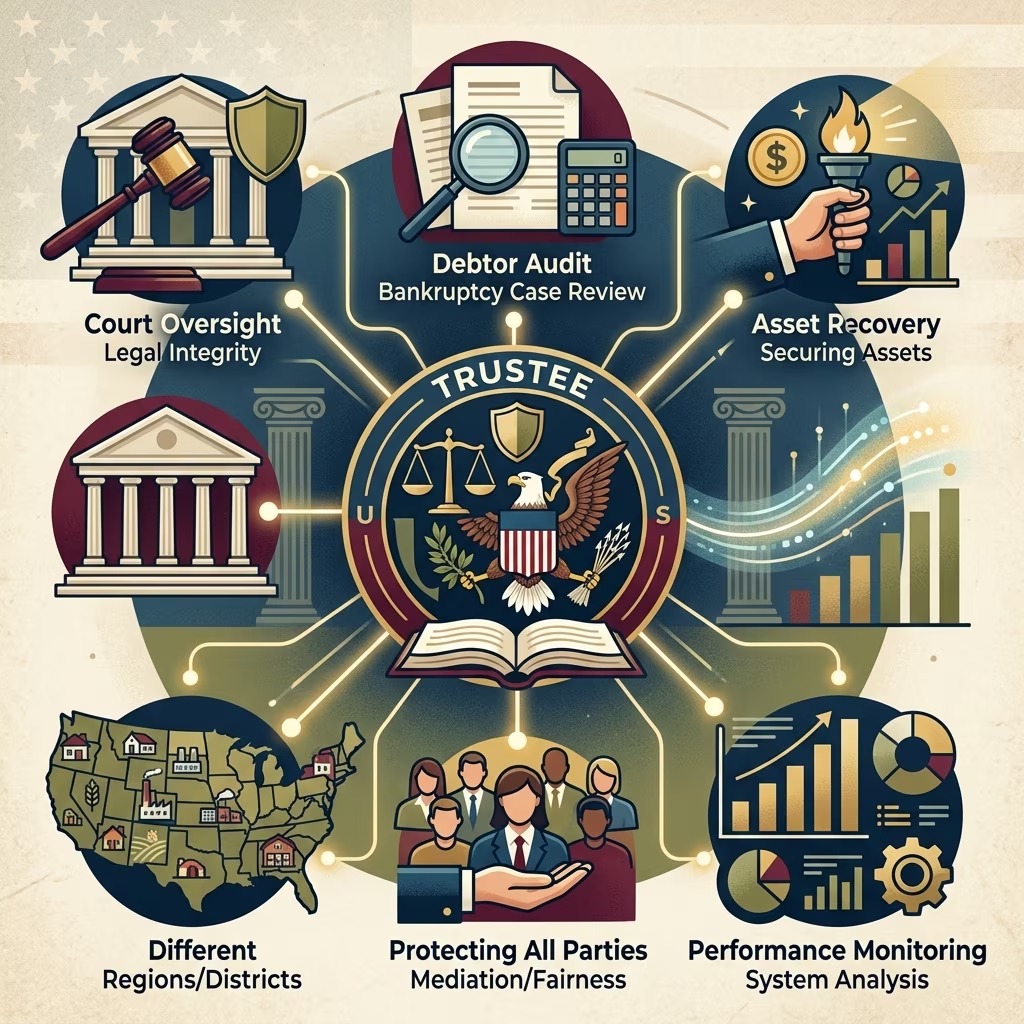
The United States Trustee Program (USTP) is the federal government’s primary oversight body for bankruptcy cases and the private trustees who administer them. It operates within the U.S. Department of Justice and is often described as the watchdog of the bankruptcy system because of its central role in promoting integrity, efficiency, and fairness in bankruptcy proceedings.
This article explains what the USTP is, how it is structured, the key responsibilities it carries out, and why it matters to debtors, creditors, professionals, and the public. It is designed as an accessible, SEO‑friendly guide that mirrors the breadth of information in official materials while presenting it in fresh language and structure.
1. What Is the United States Trustee Program?
The United States Trustee Program is a nationwide component of the Department of Justice responsible for overseeing the administration of bankruptcy cases and supervising private trustees who manage bankruptcy estates. Its authority is grounded in federal statutes, including 28 U.S.C. § 586 and provisions of the Bankruptcy Code found in 11 U.S.C. § 101, et seq.
At its core, the USTP exists to ensure that the bankruptcy system works fairly and lawfully for all participants. That includes:
- Individuals and families seeking relief from overwhelming debt
- Businesses reorganizing or liquidating under the Bankruptcy Code
- Creditors attempting to recover what they are owed
- The public, whose trust in the financial and legal system depends on honest and transparent processes
Bankruptcy is a powerful remedy, granting debt relief and a fresh start. The USTP’s job is to make sure that this remedy is not misused through fraud, abuse, or misconduct, and that cases proceed in an orderly and efficient way.
2. Mission and Role in the Bankruptcy System
The USTP’s mission, as reflected in official descriptions, is to protect the integrity and efficiency of the bankruptcy system for the benefit of all stakeholders—debtors, creditors, and the public. In practical terms, this mission involves several overlapping goals:
- Promoting honesty and compliance in bankruptcy filings and administration
- Deterring and addressing fraud and abuse through civil actions and referrals for criminal enforcement
- Ensuring timely and economical case administration, so cases do not linger and fees remain reasonable
- Supporting access to justice by overseeing credit counseling and debtor education providers, which are required for consumer filers in many cases
Because bankruptcy can affect large numbers of creditors and often involves complex financial transactions, an effective oversight program is essential. The USTP has standing to participate in virtually every individual and business bankruptcy case, which allows it to intervene whenever legal requirements or ethical standards are at risk.
3. Organizational Structure: How the USTP Is Set Up
The USTP combines national leadership with local presence to oversee bankruptcy cases throughout the United States. According to public sources, the program operates under the Executive Office for U.S. Trustees (EOUST), based in Washington, D.C., and works through a network of U.S. Trustees and field offices.
| Component | Primary Function |
|---|---|
| Executive Office for U.S. Trustees (EOUST) | Provides national leadership, policy direction, and administrative oversight for the program. |
| United States Trustees | Regional officials responsible for supervising trustees and overseeing bankruptcy administration within designated districts. |
| Field Offices | Local offices (approximately 95 nationwide) that implement USTP policies and interact directly with courts, trustees, and case participants. |
Each U.S. Trustee is appointed to oversee one or more federal judicial districts. These officials supervise panels of private trustees, interact with bankruptcy judges and clerks, and manage the USTP’s participation in specific cases.
The program is funded primarily through the United States Trustee System Fund, which consists largely of fees paid by parties using the federal bankruptcy system. That funding model reflects the idea that those who benefit from bankruptcy protection help support the program that keeps the system operating fairly.
4. Major Responsibilities of the United States Trustee Program
In official descriptions, the USTP is assigned a range of duties that collectively ensure the sound operation of bankruptcy law in practice. These responsibilities can be grouped into several broad categories.
4.1 Oversight of Private Trustees
Private trustees play a critical role in many bankruptcy cases, especially under Chapters 7, 12, and 13. The USTP is responsible for appointing and supervising these trustees.
- In Chapter 7 cases, U.S. Trustees appoint interim trustees from a panel of private individuals to collect and liquidate non‑exempt assets and distribute proceeds to creditors.
- In Chapter 12 and Chapter 13 cases, the program oversees standing trustees who administer repayment plans.
- Where private trustees are unable or unwilling to serve, the U.S. Trustee may act as trustee directly.
Supervision involves monitoring case administration, reviewing reports, ensuring that trustees follow legal and ethical standards, and evaluating whether professional fees and expenses are reasonable.
4.2 Civil Enforcement and Case Oversight
The USTP has authority to take legal action in bankruptcy court to enforce compliance with the Bankruptcy Code and related rules. This civil enforcement role can include:
- Objecting to the discharge of debts when there is evidence of debtor misconduct or false statements
- Challenging fee applications from attorneys and other professionals if they are excessive or inadequately documented
- Opposing abusive or non‑feasible reorganization plans
- Seeking dismissal or conversion of cases that violate statutory requirements
In Chapter 11 business reorganization cases, U.S. Trustees also appoint and convene creditors’ committees when appropriate, review disclosure statements, and monitor the debtor‑in‑possession’s performance. This helps ensure that financially distressed companies treat creditors fairly and follow the law as they restructure.
4.3 Criminal Enforcement Support and Fraud Detection
Bankruptcy fraud can involve concealing assets, filing false statements, engaging in identity theft, or abusing the system for improper gain. The Office of the United States Trustee is explicitly tasked with monitoring the administration of bankruptcy cases and detecting bankruptcy fraud.
While the USTP does not prosecute criminal cases itself, it:
- Identifies potential fraud and abuse through case review and complaints
- Coordinates with United States Attorneys, the Federal Bureau of Investigation, and other law enforcement agencies when criminal prosecution may be warranted
- Provides information and assistance during investigations
By serving as an early warning system for misconduct, the program helps maintain public confidence in the bankruptcy process and discourages would‑be abusers from exploiting legal protections.
4.4 Oversight of Credit Counseling and Debtor Education
Consumer debtors often must complete credit counseling before filing bankruptcy and debtor education before receiving a discharge. The USTP is responsible for overseeing the providers that offer these services.
- Reviewing and approving organizations that provide mandatory credit counseling
- Monitoring debtor education providers to ensure they meet standards and deliver meaningful instruction
- Taking action when providers fail to comply with statutory or program requirements
This function supports the broader goal of facilitating informed decision‑making and helping individuals gain the knowledge needed to avoid future financial crises.
4.5 Facilitating Access to Justice
Beyond enforcement and supervision, the USTP plays a role in facilitating access to the bankruptcy system. Official guidance notes that one of its duties is to ensure that people can effectively use the legal protections available to them and understand the requirements of bankruptcy.
The program advances access to justice by:
- Providing public information about bankruptcy processes on its official website
- Maintaining news and resources about policy changes, case developments, and educational materials
- Participating in rulemaking and policy discussions related to bankruptcy procedures
5. The USTP’s Role in Different Types of Bankruptcy Cases
The USTP is involved in nearly every bankruptcy case, but its functions vary depending on the chapter of the Bankruptcy Code under which the case is filed.
5.1 Chapter 7: Liquidation Cases
In Chapter 7 cases, debtors’ non‑exempt assets are liquidated and distributed to creditors. The USTP’s responsibilities include:
- Appointing interim trustees from an approved panel to administer Chapter 7 estates
- Monitoring trustees’ actions to ensure prompt and efficient liquidation
- Reviewing whether trustees and professionals charge reasonable fees
- Objecting to discharge or seeking other relief when misconduct is identified
5.2 Chapter 11: Business Reorganization
Chapter 11 is commonly used by businesses to reorganize while continuing operations. U.S. Trustees play a significant oversight role in these complex cases.
- Appointing and convening creditors’ committees to represent the interests of unsecured creditors
- Reviewing disclosure statements and applications to retain professionals such as lawyers and financial advisors
- Monitoring the debtor‑in‑possession’s conduct and financial reporting
- Advocating in court regarding compliance with the Bankruptcy Code and procedural rules
5.3 Chapter 12 and 13: Family Farmers, Fishermen, and Wage‑Earner Plans
In Chapter 12 (family farmers and fishermen) and Chapter 13 (individual wage‑earner repayment plans), the USTP oversees standing trustees who manage the ongoing administration of repayment plans.
- Supervising trustees’ handling of plan payments and disbursements
- Ensuring that plans comply with statutory requirements
- Reviewing trustee performance and compensation
These roles help ensure that long‑term payment plans remain viable and fair over the life of the case.
6. Why the United States Trustee Program Matters
The existence of a strong oversight program has significant practical consequences for everyone touched by bankruptcy proceedings.
6.1 Benefits for Debtors
- Protection from abusive practices by creditors, professionals, or trustees
- Confidence that their case is handled according to law and that relief is not undermined by corruption or negligence
- Educational support through regulated counseling and debtor education providers
6.2 Benefits for Creditors
- Fair distribution of assets supervised by impartial trustees
- Oversight of debtor disclosures and financial reporting, reducing the risk of concealed assets
- Voice in reorganization through properly convened creditors’ committees in Chapter 11 cases
6.3 Benefits for the Public and the Legal System
- Preserved credibility of the federal bankruptcy system
- Deterrence of fraud and abuse, helping protect financial markets and consumer confidence
- Consistent standards for trustee performance and professional conduct across districts
By acting as a neutral, law‑enforcing counterweight to private interests in bankruptcy, the USTP supports a balance between debtor relief and creditor rights.
7. Frequently Asked Questions (FAQs)
7.1 Is the United States Trustee Program part of the court system?
No. The USTP is part of the executive branch, located within the Department of Justice. It works closely with the judiciary but is not itself a court and does not issue judicial rulings.
7.2 Does the USTP represent debtors or creditors?
The USTP does not serve as legal counsel for debtors or creditors. Instead, it represents the public interest in the integrity and proper functioning of the bankruptcy system. It can take positions in court that may align with either debtors or creditors, depending on what the law and facts require.
7.3 How does the USTP detect bankruptcy fraud?
The program reviews case filings, trustee reports, and other information, and it follows up on complaints or unusual patterns. Its responsibilities explicitly include monitoring bankruptcy administration and detecting fraud. When potential criminal conduct is identified, the USTP may refer the matter to United States Attorneys or other law enforcement agencies for investigation and prosecution.
7.4 What is the difference between a U.S. Trustee and a private trustee?
A U.S. Trustee is a federal official who oversees bankruptcy administration within certain districts and supervises private trustees, while a private trustee is an individual appointed to administer specific bankruptcy estates in Chapters 7, 12, or 13. U.S. Trustees are part of the USTP; private trustees are not government employees but operate under USTP oversight.
7.5 Where can I find official information about the USTP?
The Department of Justice maintains an official website for the U.S. Trustee Program that provides contact information, news, and resources for debtors, creditors, and professionals. Court systems and educational institutions also publish explanatory materials about the program’s role.
References
- U.S. Trustee Program — U.S. Department of Justice. 2024-01-10. https://www.justice.gov/ust
- United States Trustee Program — Executive Office for U.S. Trustees (summary via secondary source). 2023-06-01. https://en.wikipedia.org/wiki/United_States_Trustee_Program
- The United States Trustee Program — Consumer Legal Services LLC. 2021-04-15. https://consumerlegalservicesllc.com/the-united-states-trustee-program/
- U.S. Trustee Program – The Consumer Bankruptcy Choice — University of Oklahoma Libraries. 2023-09-20. https://guides.ou.edu/c.php?g=1461265&p=10875326
- What is the function of the United States Trustee and where is it located? — U.S. Bankruptcy Court, Northern District of California. 2020-05-01. https://www.canb.uscourts.gov/faq/general-bankruptcy/what-function-united-states-trustee-and-where-it-located