
Understanding the Occupational Safety and Health Act
A practical overview of the OSH Act, OSHA, and core duties that shape workplace safety and health compliance in the United States.
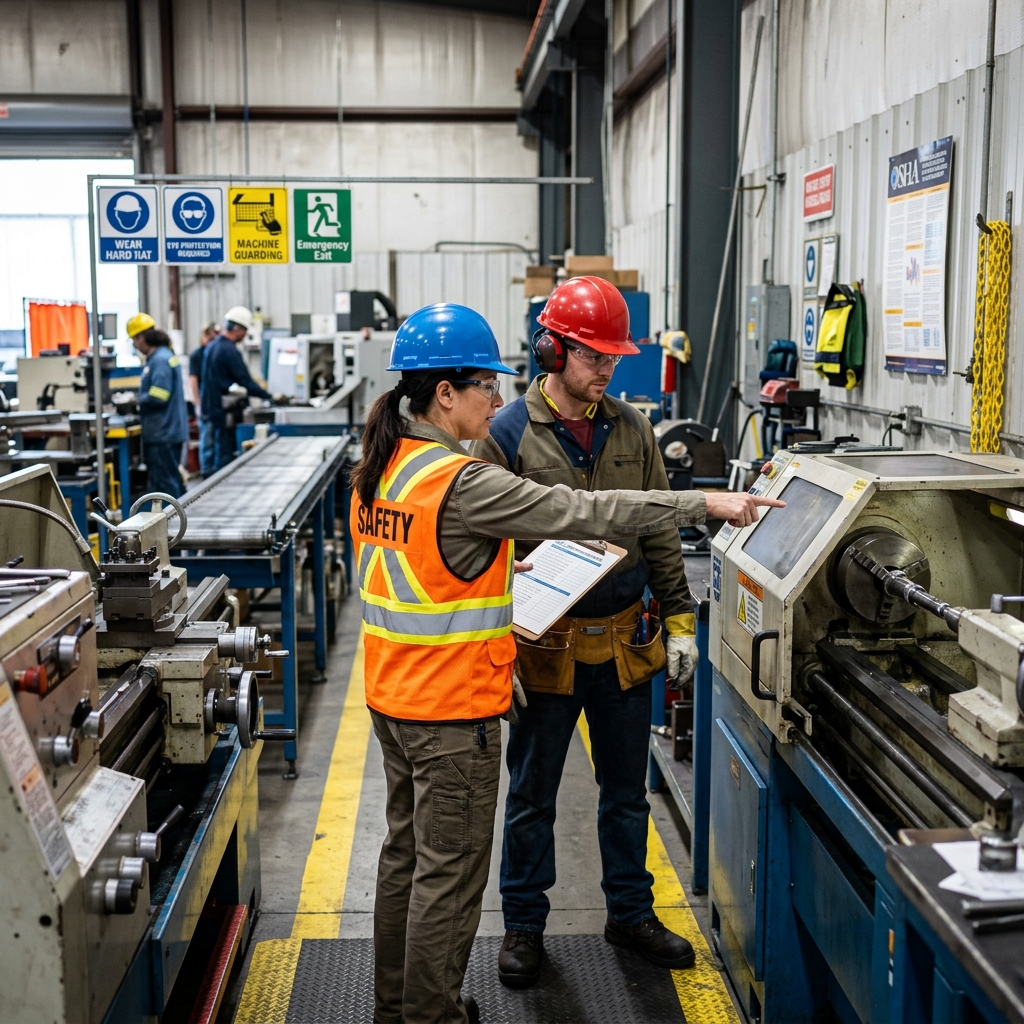
The Occupational Safety and Health Act of 1970 (OSH Act) is the cornerstone of workplace safety law in the United States. It establishes the basic expectation that employers must provide working conditions free from recognized hazards that may cause death or serious physical harm to employees. This guide explains what the OSH Act requires, how the Occupational Safety and Health Administration (OSHA) enforces it, and what both employers and workers should know to maintain a safe and healthy workplace.
1. Origins and Purpose of the OSH Act
The OSH Act was enacted by Congress in 1970 after decades of concern about high rates of workplace injuries, illnesses, and fatalities. Lawmakers concluded that unsafe conditions were causing human suffering and imposing substantial costs on interstate commerce through lost productivity, medical expenses, and disability compensation.
To address these problems, Congress passed the OSH Act with a clear overarching goal: to assure safe and healthful working conditions for working men and women across the country.
1.1 Key Objectives of the Act
Although the Act is complex, its main objectives can be summarized in a few core aims.
- Set enforceable safety and health standards for workplaces.
- Authorize enforcement actions to hold employers accountable.
- Support state efforts to establish and administer their own safety and health programs.
- Promote research and education in occupational safety and health.
- Provide workers with rights to participate in identifying and correcting hazards.
1.2 Agencies Created Under the Act
The OSH Act did more than set standards; it created institutions to carry out and support its mission.
- Occupational Safety and Health Administration (OSHA) – A division of the U.S. Department of Labor responsible for enforcing the Act and issuing workplace safety and health regulations.
- National Institute for Occupational Safety and Health (NIOSH) – A research agency originally within the Department of Health, Education, and Welfare, now part of the Centers for Disease Control and Prevention, tasked with studying workplace hazards and providing scientific support for standards.
OSHA focuses on enforcement and rulemaking, while NIOSH provides research, information, and recommendations that inform OSHA standards and broader safety policies.
2. Scope of Coverage: Who the OSH Act Protects
The OSH Act applies to most private-sector employers and employees in all 50 states, the District of Columbia, and U.S. territories. However, there are important nuances and exclusions.
2.1 General Coverage
In broad terms, the OSH Act covers:
- Businesses engaged in interstate commerce employing workers in the private sector.
- Employees of most manufacturing, construction, service, and healthcare employers.
- Certain public-sector employees when states operate OSHA-approved state plans.
2.2 Common Exclusions
Not all workers fall under OSHA’s jurisdiction. Examples of exclusions include:
- Self-employed individuals not employing other workers.
- Immediate family members working on small family farms where no outside employees are hired.
- Workplaces regulated by other federal agencies (for example, certain mining operations regulated by the Mine Safety and Health Administration).
When a state operates an OSHA-approved plan, state authorities enforce standards that must be at least as protective as federal OSHA rules, and can sometimes be more stringent.
3. The General Duty Clause: The Core Obligation
At the heart of the OSH Act is a broad legal obligation often called the General Duty Clause. This clause requires every covered employer to provide employees with a workplace free from recognized hazards that are causing or are likely to cause death or serious physical harm.
3.1 What Counts as a “Recognized Hazard”?
Under the General Duty Clause, hazards may be considered “recognized” when they are generally known in the industry or by the employer, or are documented in consensus standards, scientific literature, or prior OSHA guidance.
Examples of recognized hazards include:
- Exposure to toxic chemicals such as solvents, metals, or pesticides.
- Infectious agents in healthcare and laboratory settings.
- Excessive noise levels that can cause hearing loss.
- Mechanical dangers from unguarded machinery.
- Heat or cold stress in outdoor or industrial environments.
- Unsanitary conditions that could lead to illness.
3.2 When OSHA Uses the General Duty Clause
OSHA may rely on the General Duty Clause to cite employers when no specific standard applies to a hazard but the danger is clearly recognized and feasible means of abatement exist. This clause ensures that safety obligations extend beyond the written text of individual regulations.
4. OSHA Standards: Specific Rules for Workplace Safety
In addition to the General Duty Clause, OSHA issues specific standards that address particular hazards, industries, or operations. These standards prescribe detailed methods for protecting employees from harm.
4.1 How OSHA Standards Function
OSHA standards generally:
- Define permissible exposure limits for various chemical substances.
- Require engineering controls such as guards, ventilation, or noise-dampening systems.
- Mandate personal protective equipment (PPE) like gloves, respirators, or eye protection where appropriate.
- Establish training requirements for specific hazards (e.g., hazard communication, lockout/tagout, fall protection).
- Set recordkeeping and reporting rules for injuries, illnesses, and fatalities.
4.2 Development of Standards
OSHA develops standards based on research, demonstrations, experiments, input from NIOSH, and stakeholder participation. The process often includes:
- Scientific analysis of risk and feasibility.
- Public notice and comment periods.
- Review of consensus standards and expert recommendations.
This framework is designed to ensure that standards are grounded in evidence and technically achievable while providing meaningful protection.
4.3 Examples of Key OSHA Standards
Although OSHA standards cover a wide range of topics, a few common examples include:
- Hazard Communication – Requires employers to classify chemical hazards and provide labels, safety data sheets, and training so employees can understand and manage risks.
- Respiratory Protection – Sets requirements for respirator selection, fit testing, and medical evaluations.
- Fall Protection – Addresses guardrails, personal fall arrest systems, and safe work practices in construction and general industry.
- Bloodborne Pathogens – Protects healthcare workers and others from exposure to infectious materials.
5. Employer Responsibilities Under the OSH Act
Employers bear primary responsibility for compliance with the OSH Act and OSHA standards. Their obligations extend beyond simply reacting to incidents; they must proactively identify and control hazards.
5.1 Core Legal Duties
Key employer responsibilities include:
- Providing a safe and healthful workplace free from recognized hazards likely to cause serious harm or death.
- Complying with all applicable OSHA standards and regulations.
- Posting required OSHA notices informing workers of their rights and responsibilities under the Act.
- Maintaining accurate records of work-related injuries and illnesses and submitting electronic reports to OSHA when required.
- Not retaliating against employees who report hazards, injuries, illnesses, or exercise their safety and health rights.
5.2 Practical Steps for Compliance
Beyond legal obligations, effective compliance usually involves building a comprehensive safety and health program. Common steps include:
- Conducting regular hazard assessments of work areas, tasks, and equipment.
- Implementing controls such as engineering changes, administrative procedures, and PPE.
- Providing training and education tailored to job tasks and hazards.
- Investigating incidents and near-misses to identify root causes and prevent recurrence.
- Engaging employees in safety committees, inspections, and risk reporting.
| Legal Requirements | Recommended Best Practices |
|---|---|
| Comply with OSHA standards and the General Duty Clause. | Develop a written safety and health program that integrates hazard identification, control, training, and evaluation. |
| Maintain injury and illness records and report severe cases to OSHA. | Use data analysis and trend tracking to prioritize prevention efforts. |
| Post OSHA rights and responsibilities notices. | Regularly communicate safety expectations through meetings, signage, and digital tools. |
| Protect workers from retaliation when they raise safety concerns. | Encourage open reporting and recognize employees who contribute to improving safety. |
6. Employee Rights and Responsibilities
The OSH Act not only imposes duties on employers; it grants
6.1 Rights of Workers
Under the Act and OSHA regulations, workers typically have the right to:
- Work in conditions free from serious recognized hazards.
- Receive information and training about workplace hazards and how to protect themselves.
- Review records of work-related injuries and illnesses.
- File a complaint with OSHA and request an inspection if they believe serious hazards exist.
- Participate in OSHA inspections and speak privately with inspectors.
- Report injuries, illnesses, and hazards without fear of retaliation.
6.2 Responsibilities of Workers
Employees also share responsibility for maintaining a safe workplace. The OSH Act states that each employee must comply with occupational safety and health standards and all rules applicable to their own conduct.
Typical responsibilities include:
- Following employer safety procedures and instructions.
- Using required PPE correctly.
- Reporting unsafe conditions or practices.
- Cooperating with training, medical evaluations, and fit testing where required.
7. OSHA Enforcement and Inspections
OSHA enforces the OSH Act through a combination of inspections, citations, penalties, and outreach. Understanding how enforcement works can help employers and employees prepare and respond appropriately.
7.1 Types of OSHA Inspections
OSHA may initiate inspections for various reasons, including:
- Imminent danger situations where workers face immediate risk of death or serious harm.
- Fatalities and severe injuries that employers are required to report.
- Worker complaints or referrals from other agencies.
- Programmed inspections in high-hazard industries.
7.2 Citations and Penalties
If inspectors identify violations, OSHA may issue citations that describe the hazard, reference applicable standards, and specify deadlines for abatement. Monetary penalties can vary based on factors such as:
- Severity and likelihood of harm.
- Employer size and compliance history.
- Whether the violation is classified as serious, willful, repeated, or other-than-serious.
Employers have the right to contest citations and penalties, but they must also ensure that hazards are corrected within required timeframes.
8. Building a Strong Safety Culture Under the OSH Act
Legal compliance is only one part of effective worker protection. Organizations that go beyond minimum requirements to build a strong safety culture tend to experience fewer incidents and better overall performance.
8.1 Elements of an Effective Safety Culture
Research and practice in occupational safety suggest several common features of high-performing safety cultures:
- Visible leadership commitment to safety as a core organizational value.
- Employee involvement in hazard identification, solutions, and decision-making.
- Open communication about risks and near-misses.
- Continuous learning from incidents, audits, and external developments.
- Integration with operations so safety considerations are embedded in planning and execution.
8.2 Aligning Culture With Legal Requirements
When safety culture supports OSH Act requirements, compliance becomes part of daily work rather than a separate obligation. For example:
- Supervisors proactively identify hazards, supporting the General Duty Clause.
- Workers feel safe reporting concerns, reinforcing anti-retaliation protections.
- Training and communication ensure practical understanding of OSHA standards.
9. Frequently Asked Questions (FAQs)
9.1 Does the OSH Act apply to my small business?
Most small businesses that employ workers and engage in interstate commerce are covered by the OSH Act, regardless of size. However, self-employed individuals and certain small family farms are excluded. If you are unsure, reviewing OSHA guidance or consulting legal counsel can clarify your status.
9.2 Are remote or home-based workers covered?
Generally, if employees work from home, the employer still has obligations to ensure that work-related conditions are safe, though OSHA does not routinely inspect private residences. The specifics depend on the nature of the work and applicable standards; employers should assess risks associated with remote tasks and equipment.
9.3 What should I do if I see a serious hazard at work?
Workers should report the hazard to their supervisor or safety representative immediately and, if the risk is serious and not addressed, may file a complaint with OSHA. Employees are protected from retaliation for raising safety and health concerns.
9.4 How often do OSHA standards change?
OSHA standards evolve based on new evidence, technological advances, and emerging risks. While major rulemakings can take time due to scientific and legal review, OSHA also issues guidance, interpretations, and enforcement policies to address new hazards more quickly.
9.5 Can states set their own workplace safety rules?
Yes. States may operate OSHA-approved state plans, which allow them to administer their own safety and health programs so long as their standards and enforcement are at least as effective as federal OSHA. Some state plans cover public-sector employees not covered by federal OSHA.
References
- Occupational Safety and Health Act of 1970 (Complete OSH Act) — Occupational Safety and Health Administration. 2004-01-01. https://www.osha.gov/laws-regs/oshact/completeoshact
- The Occupational Safety and Health Act and OSHA Standards — National Institute for Occupational Safety and Health, CDC. 2020-03-31. https://www.cdc.gov/niosh/learning/safetyculturehc/module-5/2.html
- Summary of the Occupational Safety and Health Act — U.S. Environmental Protection Agency. 2017-02-09. https://www.epa.gov/laws-regulations/summary-occupational-safety-and-health-act
- OSH Act of 1970 | What is Occupational Health and Safety? — ADP. 2021-07-14. https://www.adp.com/resources/articles-and-insights/articles/o/osh-act.aspx
- The Occupational Safety and Health Act at 50—A Labor Perspective — American Journal of Public Health. 2020-04-01. https://pmc.ncbi.nlm.nih.gov/articles/PMC7144450/
- The Job Safety Law of 1970: Its Passage Was Perilous — U.S. Department of Labor. 2004-01-01. https://www.dol.gov/general/aboutdol/history/osha
- About OSHA — Occupational Safety and Health Administration. 2023-09-01. https://www.osha.gov/aboutosha
Similar Articles








Read full bio of Sneha Tete




