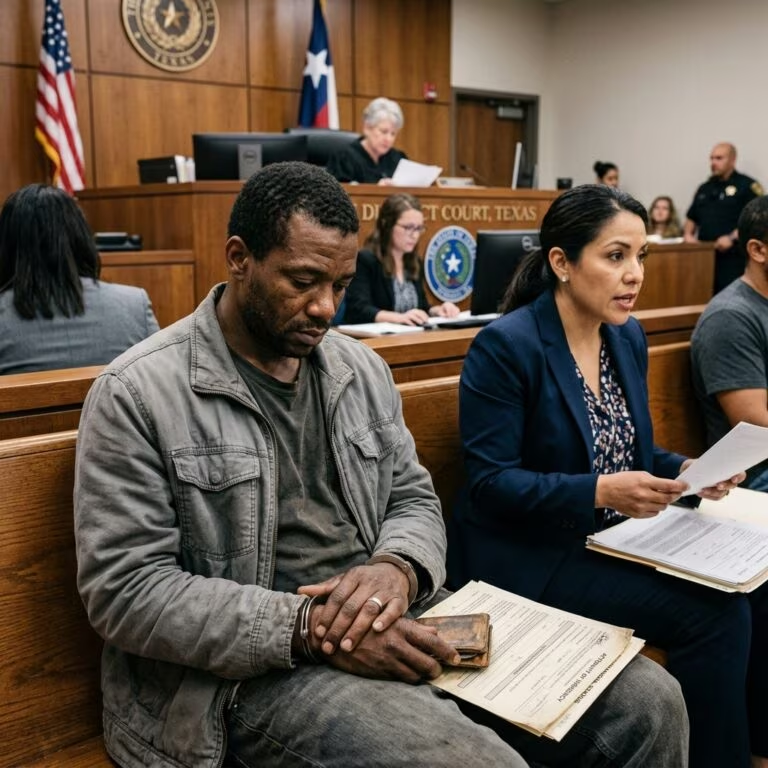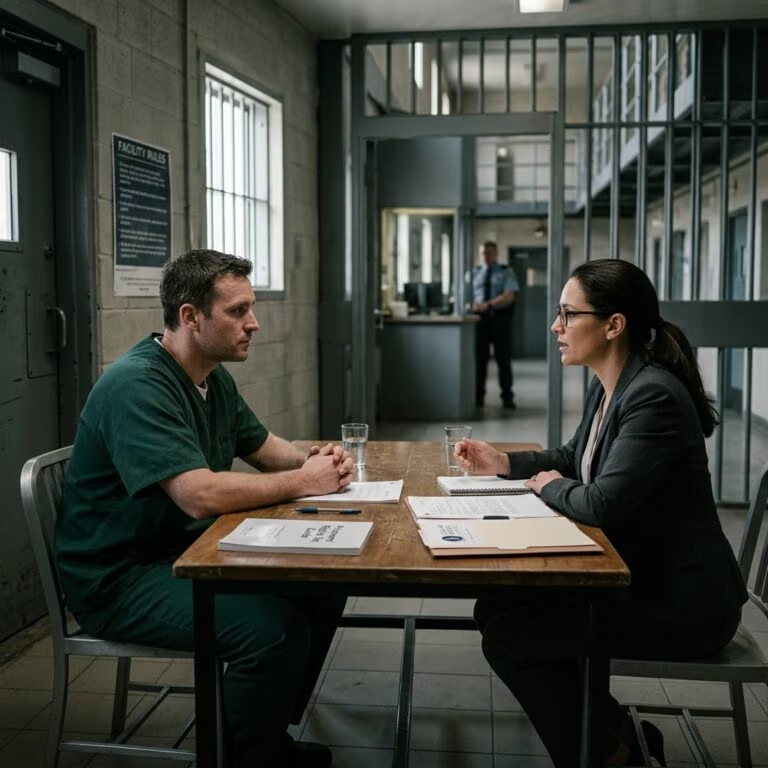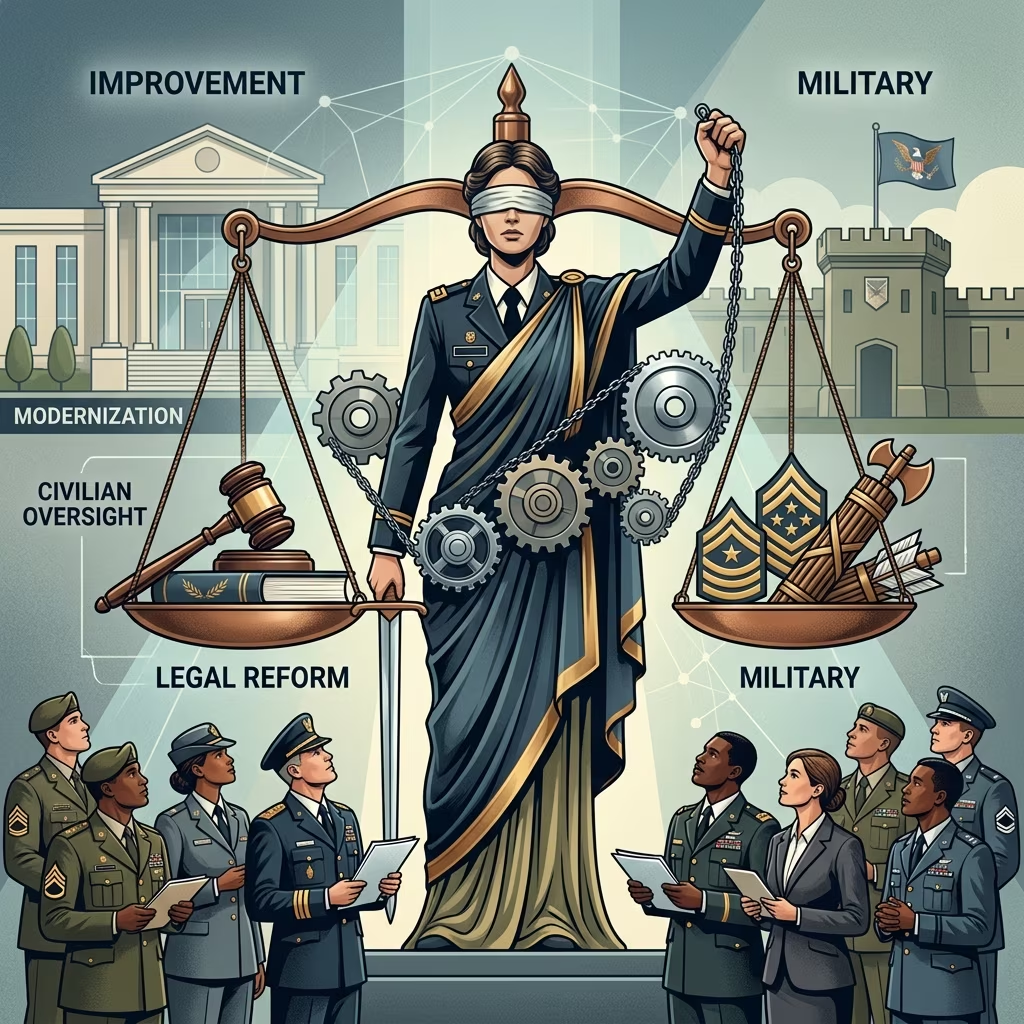
The Military Justice Improvement Act (MJIA) is a proposed federal law that aims to significantly change how the United States armed forces investigate and prosecute serious criminal offenses, especially sexual assault, within the military justice system. Although the bill itself has not been enacted, many of its core reforms have been adopted through recent changes to the National Defense Authorization Act (NDAA), reshaping the landscape of military justice.
Background: How Military Justice Traditionally Works
The U.S. military operates under its own criminal code, the Uniform Code of Military Justice (UCMJ), and its own court system, including courts-martial, separate from civilian courts. Historically, a central feature of this system has been the role of the commanding officer, who has extensive authority over whether criminal charges are brought, which charges proceed to court-martial, and how cases are disposed.
Under longstanding practice, commanders have had the power to:
- Initiate and oversee criminal investigations within their units.
- Decide whether to refer charges to court-martial and what type of court-martial to convene.
- Select panel members (jurors) for courts-martial.
- Approve or disapprove sentences and grant clemency.
- Authorize immunity for witnesses and approve expert witnesses.
This command-centric structure is rooted in the idea that good order and discipline are essential to military effectiveness and that commanders need broad tools to maintain that discipline. However, over time, concerns grew that this structure could discourage reporting of serious crimes and lead to inconsistent or biased decision-making, particularly in cases of sexual assault.
Why the Military Justice Improvement Act Was Proposed
The MJIA was introduced in 2013 by Senator Kirsten Gillibrand and other lawmakers in response to widespread concern about how sexual assault and other serious offenses were being handled in the armed forces. High-profile reporting, internal Pentagon studies, and congressional hearings highlighted persistent problems:
- Underreporting of sexual assault, often attributed to fear of retaliation, lack of trust in the chain of command, and skepticism that perpetrators would be prosecuted.
- Perception that commanders might be influenced by unit cohesion, career considerations, or personal relationships when deciding whether to prosecute.
- Instances where commanding officers overturned or declined to pursue cases despite recommendations by legal advisors.
Reform advocates argued that serious crimes should be treated more like they are in civilian systems, with charging decisions made by independent, legally trained professionals rather than line commanders. The MJIA emerged as a legislative vehicle to change how cases move from allegation to trial.
Core Objectives of the Military Justice Improvement Act
The MJIA focuses on a specific structural shift in the military justice system. Its primary objectives include:
- Transfer charging authority for certain serious offenses from unit commanders to independent military prosecutors.
- Remove the direct chain of command from decisions on whether a case goes to court-martial for covered offenses.
- Improve trust among service members, particularly survivors of sexual assault, in the fairness and professionalism of the justice system.
- Standardize prosecutorial decisions across the services, reducing perceived disparities between commands.
While the bill does not seek to dismantle the entire military justice system, it targets the decision point that determines whether serious crimes result in trial before a court-martial.
Key Features of the Military Justice Improvement Act
Shift of Charging Decisions to Independent Prosecutors
At the heart of the MJIA is the proposal that independent military lawyers, rather than commanders, should decide whether to bring charges in serious criminal cases. In practical terms, this means:
- Creating or designating a cadre of specialized military prosecutors who operate outside the accused’s chain of command.
- Authorizing these prosecutors to make binding decisions on whether evidence justifies court-martial for covered offenses.
- Ensuring that commanders cannot override prosecutorial determinations in those cases.
This model draws on civilian criminal justice practice, where public prosecutors, not organizational leaders, decide which cases to prosecute.
Scope of Covered Offenses
The MJIA concentrates on serious, non-military-specific crimes, particularly those punishable by more than one year of confinement. Examples discussed in legislative debates and related proposals include:
- Rape and sexual assault
- Domestic violence and stalking
- Murder and manslaughter
- Kidnapping
- Robbery, larceny, and certain fraud offenses
- Bribery, extortion, and obstruction of justice
- Perjury and subornation of perjury
By contrast, offenses that are unique to military service—such as desertion, absence without leave, or disobedience of orders—remain under traditional command authority in related reform frameworks.
Maintaining Command Authority for Discipline
Importantly, the MJIA and related reform proposals do not strip commanders of all judicial-related functions. Commanders retain substantial authority over:
- Good order and discipline offenses, like disrespect, minor misconduct, and some property crimes.
- Administrative actions, including non-judicial punishment, reprimands, and separation proceedings.
- Leadership and operational decisions that shape unit culture and responsiveness to misconduct.
The legislation seeks a balance: serious criminal prosecutions would be professionalized and insulated from potential conflicts of interest, while commanders continue to manage the day-to-day discipline necessary for military effectiveness.
The Military Justice Improvement and Increasing Prevention Act
In 2021, a related measure, the Military Justice Improvement and Increasing Prevention Act (MJIIPA), was introduced to update and expand the original MJIA framework.[10] This bill follows the same core principle—independent charging decisions for serious offenses—but also emphasizes prevention and support for survivors.
Key elements of the 2021 proposal include:
- Establishment of an independent group of lawyers to make charging decisions across all service branches for specified serious offenses.
- Coverage of a broad range of crimes punishable by more than one year in confinement, beyond sex-related offenses alone.
- Strengthening prevention programs, training, and resources intended to reduce sexual violence and improve reporting.
The MJIIPA reflects an evolving approach: not only changing who makes legal decisions, but also reinforcing structural and cultural efforts to reduce sexual assault.
How Recent NDAA Reforms Implement MJIA Concepts
Although the MJIA has not been enacted as a stand-alone bill, many of its central ideas have been incorporated into recent National Defense Authorization Acts, particularly the fiscal year 2022 and 2023 NDAAs.
Creation of Special Trial Counsel Offices
Congress directed the armed services to establish Special Trial Counsel (STC) offices—independent military prosecutors tasked with handling serious offenses. These lawyers:
- Are legally trained officers appointed by the service secretaries.
- Have authority to make binding recommendations on whether to prosecute certain major crimes, including sexual assault, murder, manslaughter, domestic violence, and stalking.
- Operate outside the direct chain of command of the accused and the victim.
This design closely mirrors the MJIA’s goal of independent prosecutorial decision-making for serious offenses.
Removal of Commanders’ Remaining Judicial Functions
The fiscal 2023 NDAA goes further by stripping commanders of residual judicial and prosecutorial duties in covered cases and directing these powers to STCs or other designated officials. This includes functions such as:
- Convening preliminary hearings
- Granting immunity to witnesses
- Approving expert witnesses
- Granting clemency or modifications in covered cases
Advocates describe these reforms as “finishing touches” on a decade-long effort to move serious criminal prosecutions away from command-centric control, fulfilling much of what the MJIA envisioned.
Expansion of Covered Offenses
The list of offenses under STC jurisdiction has expanded over time. The 2023 NDAA adds crimes such as sexual harassment, death or injury of an unborn child, and deposit of obscene matter to the covered offense list. This evolution reflects an ongoing effort to align prosecutorial responsibility with the seriousness and impact of the offenses.
Supporters’ and Critics’ Perspectives
| Supporters of MJIA-style reforms | Critics and skeptics |
|---|---|
| Argue that independent prosecutors reduce conflicts of interest and increase fairness in serious cases. | Worry that reducing command authority could weaken commanders’ ability to enforce discipline and respond quickly to misconduct. |
| Believe survivors will be more willing to report crimes if they know decisions are made by legal professionals rather than their chain of command. | Question whether structural changes alone will address deeper cultural issues and underreporting. |
| View the reforms as aligning the military more closely with modern criminal justice standards. | Raise concerns about possible complexity or fragmentation if multiple bodies share justice responsibilities. |
Practical Implications for Service Members
As NDAA-based reforms take effect, service members will experience a justice system that, in key respects, operates differently than in the past. Some practical implications include:
- Who makes charging decisions: For covered offenses, independent prosecutors rather than commanders will decide whether a case goes to court-martial.
- Perceived neutrality: The separation from the chain of command is intended to reduce the perception that rank or unit priorities influence prosecutorial decisions.
- Reporting pathways: While reporting may still occur through various channels (including command, law enforcement, and dedicated support services), the ultimate decision-maker for serious crimes is no longer the unit commander.
- Command discipline responsibilities: Commanders still manage many aspects of discipline and morale, but must now coordinate with STC offices for serious criminal matters.
Frequently Asked Questions
Does the Military Justice Improvement Act apply in civilian courts?
No. The MJIA focuses entirely on the military justice system, specifically how charges are disposed and courts-martial are convened under the UCMJ. It does not change civilian criminal law or procedure.
Is the MJIA currently law?
The original MJIA bill has not been enacted as a stand-alone statute. However, many of its core ideas—especially independent prosecutorial authority for serious crimes—have been implemented through provisions in the fiscal 2022 and 2023 National Defense Authorization Acts.
Which crimes are most affected by these reforms?
The reforms primarily affect serious non-military-specific offenses, including sexual assault, rape, domestic violence, stalking, murder, manslaughter, kidnapping, and certain property and corruption-related crimes.
Do commanders still have any role in criminal cases?
Yes. Commanders retain significant responsibilities for maintaining good order and discipline, handling many lesser offenses, and managing unit-level administrative actions. But for covered serious offenses, key judicial and prosecutorial powers have been reassigned to independent military prosecutors.
Why are some offenses left under command authority?
Reform frameworks generally treat uniquely military offenses—such as desertion or failure to obey orders—as integral to command responsibility and operational effectiveness. These offenses are seen as closely tied to military discipline rather than general criminal conduct, which supports keeping them under command-centric processes.
What These Changes Mean Going Forward
The evolution of the MJIA and its implementation through NDAA reforms marks a major turning point in modern military justice. For survivors of sexual assault and other serious crimes, the shift to independent prosecutors is intended to enhance confidence that cases will be evaluated by professionals whose duty is solely to the law and evidence, not to unit politics or command pressures.
At the same time, these reforms preserve the distinctive features of military discipline by maintaining command authority over day-to-day misconduct and uniquely military offenses. The result is a hybrid system that aims to balance two imperatives:
- Justice and fairness in serious criminal prosecutions.
- Operational readiness and command responsibility for good order and discipline.
As implementation continues, policymakers, military leaders, and advocates will likely keep assessing whether these changes reduce underreporting, increase successful and fair prosecutions, and strengthen trust across the ranks in the military justice system.
References
- Gillibrand Hails Historic Military Justice Reforms in Defense Bill — Office of U.S. Senator Kirsten Gillibrand. 2022-12-06. https://www.gillibrand.senate.gov/news/press/release/gillibrand-hails-historic-military-justice-reforms-in-defense-bill/
- Military Justice Improvement Act — Congress.gov / 113th Congress, S.1752. 2013-11-20. https://www.congress.gov/bill/113th-congress/senate-bill/1752
- Military Justice Improvement and Increasing Prevention Act of 2021 — Congress.gov / 117th Congress, S.1520. 2021-05-25. https://www.congress.gov/bill/117th-congress/senate-bill/1520
- Gillibrand calls new NDAA ‘huge milestone’ in military justice — Roll Call. 2022-12-07 (clarified 2022-12-08). https://rollcall.com/2022/12/07/gillibrand-calls-new-ndaa-huge-milestone-in-military-justice/
- The Military Justice Improvement and Increasing Prevention Act: Are the Solutions Commensurate with the Problem? — Lawfare. 2021-06-18. https://www.lawfaremedia.org/article/military-justice-improvement-and-increasing-prevention-act-are-solutions-commensurate-problem
- Encroaching on Command Authority: How History Informs the “Military Justice Improvement and Increasing Prevention Act” — Notre Dame Journal of Legislation. 2022. https://scholarship.law.nd.edu/cgi/viewcontent.cgi?article=1742&context=jleg