
Understanding the Law on Online Stalking and Harassment
A clear legal guide to cyberstalking, online harassment, victims’ rights, and practical safety steps in the digital age.
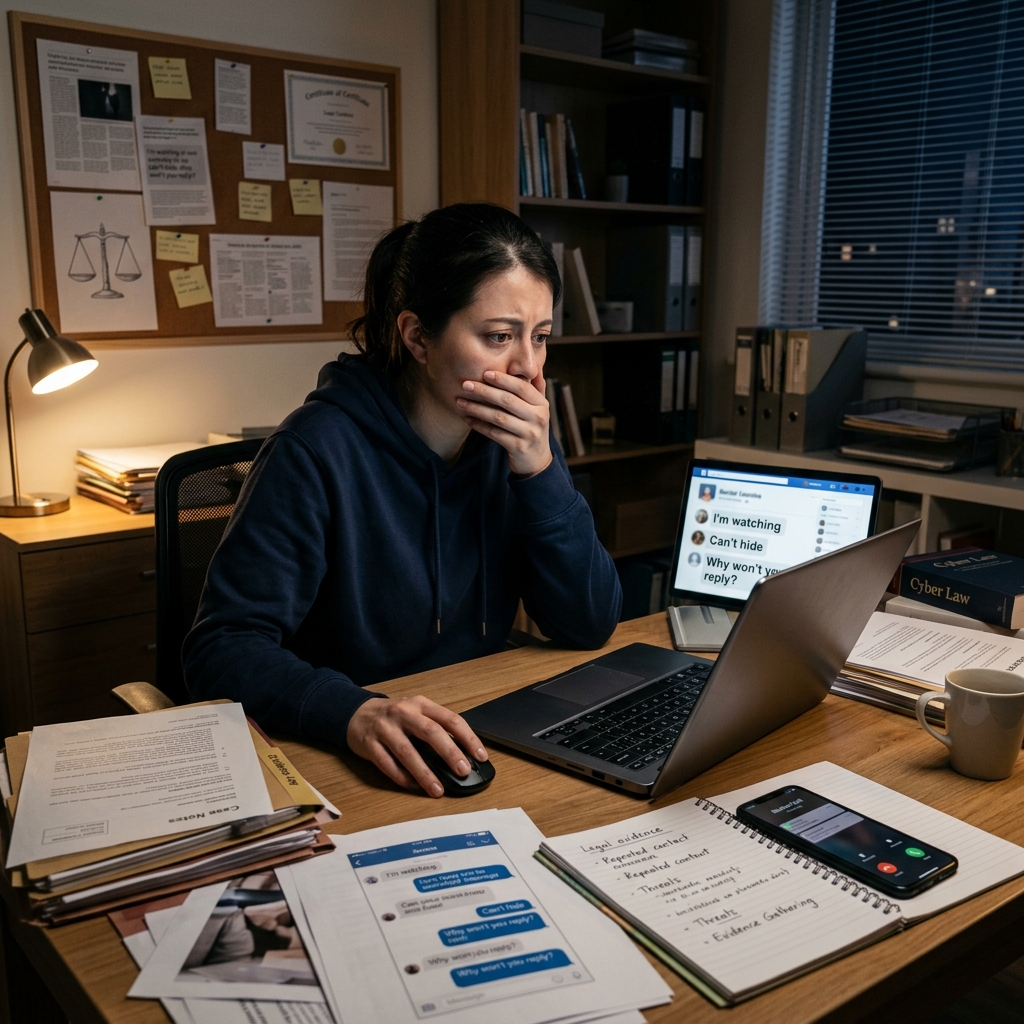
Online communication is part of daily life, but the same technologies that connect people can also be used to threaten, intimidate, and monitor them. Cyberstalking and online harassment are serious problems, and in many situations they are crimes under U.S. federal and state law. This article explains how the law views online stalking, what conduct can be illegal, and what steps victims can take.
From Traditional Stalking to Cyberstalking
Stalking historically refers to repeated, unwanted contact or surveillance that causes a person to feel afraid, harassed, or in danger. As communication shifted online, similar patterns emerged in email, text messages, social media, forums, and other digital spaces.
Cyberstalking generally means using the internet or other electronic devices to engage in a pattern of unwanted contact or monitoring directed at a specific person, causing fear or substantial emotional distress. Although definitions vary by jurisdiction, several elements recur:
- Use of electronic communication (for example, email, text, social media, messaging apps).
- Repeated or ongoing conduct rather than a single message.
- Intent to harass, threaten, or seriously alarm the victim.
- Impact on a reasonable person, such as fear of bodily injury or significant emotional distress.
Many laws treat cyberstalking as an extension of traditional stalking, while others have specific statutes that address online conduct directly.
How Online Stalking Commonly Occurs
Online stalking and harassment can take many forms. Not every unpleasant or rude interaction is illegal, but the following patterns often appear in cases that attract law enforcement attention:
- Persistent unwanted messages via email, text, social media, or messaging platforms, despite clear requests to stop.
- Threatening communications that imply or state physical harm, damage to property, or harm to reputation.
- Monitoring and surveillance, such as repeated location checks, tracking accounts, or using spyware to follow someone’s activities.
- Doxxing, which involves publishing personal information like home address or workplace to enable others to target the victim.
- Impersonation, including fake profiles created to damage the victim’s reputation or lure them into unsafe interactions.
While much of this conduct also violates platform rules, it can reach the level of criminal behavior when it becomes a course of conduct that is knowing, willful, and causes serious alarm or fear.
Key Legal Concepts in Cyberstalking Cases
Most laws that address cyberstalking use similar core concepts. Understanding these terms helps clarify when online behavior crosses the line into criminal activity.
| Legal Term | Typical Meaning | Relevance to Cyberstalking |
|---|---|---|
| Course of conduct | A pattern of acts over time showing continuity of purpose. | Distinguishes ongoing stalking from a single message or isolated incident. |
| Harassment | Knowing, willful conduct that seriously alarms or bothers a person, serving no legitimate purpose. | Used to describe repeated unwanted messages, calls, or online contact. |
| Credible threat | A threat that would cause a reasonable person to fear bodily injury or death. | When present, stalking charges often escalate from misdemeanor to felony. |
| Substantial emotional distress | Serious mental suffering that a reasonable person would experience in the same situation. | Required in many statutes to show the impact of the conduct. |
| Interstate communication | Messages sent across state lines using phones, email, or the internet. | Triggers federal jurisdiction and federal criminal laws. |
Constitutionally protected activities, such as lawful protest or free speech that does not target a specific person with threats, are typically excluded from these definitions.
Federal Laws Covering Online Stalking and Harassment
In the United States, several federal statutes cover serious forms of online harassment and cyberstalking, especially when communication crosses state lines or uses channels of interstate commerce such as the internet.
- 18 U.S.C. § 2261A – Cyberstalking
This law prohibits using any channel of interstate commerce (including the internet) to engage in a course of conduct that causes substantial emotional distress or places a person in reasonable fear of death or serious bodily injury, directed at them, their immediate family, or intimate partner. - 18 U.S.C. § 875 – Interstate threats
This statute penalizes transmitting threats to kidnap, injure, or extort across state lines via electronic communication, including demands for ransom or threats to harm property or reputation. - 47 U.S.C. § 223 – Harassing communications
This law prohibits using telecommunications devices to transmit obscene or threatening messages with intent to harass or abuse a specific person across state lines.
Federal authorities may get involved when online abuse is severe, crosses state boundaries, or involves other federal crimes such as hacking or identity theft.
How States Address Cyberstalking
State laws vary, but many have updated their statutes to address electronic communication. Some states treat cyberstalking as a variation of traditional stalking, while others have specific provisions for online conduct.
Examples of State Approaches
- Florida
Under Florida Statute § 784.048, cyberstalking involves willful, malicious, and repeated electronic communications that cause substantial emotional distress to a specific person and serve no legitimate purpose. Basic cyberstalking is typically a first-degree misdemeanor, punishable by up to one year in jail, but can become a third-degree felony if it involves a credible threat or violation of a protective order. - California
California Penal Code § 646.9 treats cyberstalking as a form of stalking using an electronic communication device, including internet, phones, texts, and emails. A person can be guilty of stalking if they willfully and maliciously harass someone and make a credible threat intended to place the victim or their family in fear for their safety. Misdemeanor cyberstalking can lead to up to one year in jail and fines, while felony charges may result in up to three years in state prison. - Texas
Texas Penal Code § 42.072 defines stalking as a pattern of behavior that the person knows or should know would cause another to feel threatened, fearful, harassed, or alarmed. The behavior can include repeated contact via phone, social media, or email. Stalking is usually a third-degree felony with potential prison terms of 2 to 10 years and fines up to $10,000, increasing to a second-degree felony for repeat offenders. - Cyber-stalking and harassment statutes
Some jurisdictions have explicit cyber-stalking laws that criminalize electronic communications sent solely to harass a person or their family, defining harassment as a knowing and willful course of conduct that seriously alarms or bothers the target and serves no legitimate purpose.
Because definitions and penalties differ significantly, it is important for victims and accused persons to consult legal professionals familiar with the law in their state.
Is Online Stalking Always a Crime?
Not every unpleasant online interaction meets the legal definition of cyberstalking or harassment. Laws usually require several elements:
- A pattern of repeated or continuous behavior, not just a single remark.
- Conduct that is knowing and willful, rather than accidental or mistaken.
- Intent to harass, threaten, intimidate, or seriously alarm the victim.
- Impact on the victim, such as substantial emotional distress or fear of physical harm.
Many laws also recognize that some speech, even if offensive, may be protected under the Constitution, especially when it does not target a specific person with threats or a sustained pattern of harassment. However, threats of violence, serious invasion of privacy, and persistent targeted harassment are generally not protected.
Practical Steps for Victims of Online Stalking
Legal remedies are important, but immediate safety and documentation also matter. Victims can take several practical steps when facing online stalking or harassment.
Document and Preserve Evidence
- Save emails, text messages, direct messages, and comments that show the pattern of conduct.
- Take screenshots of posts or profiles, including date and time if visible.
- Keep a log of incidents, including how each episode made you feel and any steps you took.
- Store evidence in a safe place, preferably backed up in more than one location.
Use Platform and Device Tools
- Block or mute the harasser on social media, messaging apps, and email services.
- Report abusive content to the platform through its reporting mechanisms.
- Review privacy settings to limit who can view your profiles, posts, and contact information.
- Consider changing usernames, email addresses, or phone numbers if the harassment continues.
Seek Legal and Safety Support
- If you are in immediate danger, contact emergency services.
- File a report with local law enforcement and provide them with organized evidence.
- Ask about restraining orders or protection orders, which can prohibit contact and may enhance penalties if violated.
- Reach out to victim support organizations or hotlines for safety planning, emotional support, and referrals.
Because stalking can escalate into physical violence, early intervention and documentation can be critical in protecting victims.
How Courts Distinguish Harassment from Cyberstalking
Courts often need to decide whether conduct is merely offensive or crosses into criminal harassment or cyberstalking. While standards vary, several factors are commonly considered:
- Frequency and duration – How often did the contact occur, and over what period of time?
- Content of messages – Do messages include threats, explicit intimidation, or deeply invasive personal information?
- Relationship history – Is the contact part of a breakup, workplace conflict, or stranger encounter?
- Victim impact – Did the victim experience fear, change daily routines, or seek protection orders?
- Presence of a credible threat – Is there a realistic fear of physical harm or serious damage to property or reputation?
States such as Texas treat stalking as a serious felony because patterns of harassment are associated with escalation into more serious crimes, including violence. Courts therefore look closely at evidence of repeated behavior and its impact on victims.
Preventive Digital Safety Practices
While the law provides remedies after abuse occurs, preventive steps can reduce risk and limit the amount of information available to potential stalkers.
- Limit public personal details – Avoid posting your home address, routine locations, or workplace on public profiles.
- Use strong privacy settings – Restrict who can see your posts, photos, and contact information.
- Separate identities – Use different email addresses or usernames for sensitive activities.
- Review app permissions – Disable unnecessary location sharing and access to contact lists.
- Educate friends and family – Ask them not to tag or geolocate you in ways that reveal your whereabouts.
These measures cannot guarantee safety, but they make it more difficult for stalkers to gather information and track victims.
Frequently Asked Questions About Online Stalking Laws
1. Does sending one rude message count as cyberstalking?
Typically no. Most cyberstalking statutes require a course of conduct, meaning a series of acts over time that show continuity of purpose. A single message may violate a platform’s rules but usually does not meet the legal threshold for stalking, unless it involves a serious criminal threat under other laws.
2. Is anonymous online harassment still illegal?
Yes, anonymity does not prevent conduct from being illegal. Laws focus on the content and impact of the messages, not whether the sender uses a real name. However, anonymity can make investigations more complex, and law enforcement may need cooperation from platforms to identify the sender.
3. Can I get a restraining order for cyberstalking?
In many jurisdictions, courts can issue restraining or protection orders in response to stalking, including online stalking. These orders typically bar the stalker from contacting you or coming near you. Violating such orders can elevate the crime to a felony in some states.
4. What should I tell the police when I report online harassment?
Provide a clear timeline of incidents, copies or screenshots of all relevant messages, information about any prior relationship with the person, and details about how the conduct has affected your sense of safety. Organized documentation can help officers see the pattern and evaluate potential charges under stalking or harassment laws.
5. Are all threats online treated the same under the law?
No. Laws distinguish between vague insults and specific threats of violence or serious harm. Federal statutes like 18 U.S.C. § 875 focus on threats to kidnap or injure a person, or to damage property or reputation across state lines. State laws may also increase penalties when threats are credible and cause reasonable fear of bodily injury or death.
References
- Federal Laws & Online Harassment — PEN America. 2023-08-01. https://onlineharassmentfieldmanual.pen.org/federal-laws-online-harassment/
- 465. Cyber-stalking and cyber-harassment prohibited — WomensLaw.org. 2021-05-05. https://www.womenslaw.org/laws/vi/statutes/465-cyber-stalking-and-cyber-harassment-prohibited
- Cyberstalking And Digital Harassment Under Florida Law — The Path to Justice. 2024-02-10. https://thepathtojustice.com/cyberstalking-and-digital-harassment-under-florida-law-modern-stalking/
- Cyberstalking Laws in California | Penal Code 646.9 PC — Esfandi Law Group. 2023-07-15. https://www.egattorneys.com/cyberstalking-laws-in-california
- Texas Stalking & Cyberstalking Laws, Penalties & Defenses — Neal Davis Law Firm. 2022-11-20. https://www.nealdavislaw.com/criminal-defense-guides/texas-stalking-laws/
- Protecting Americans From Cyberstalking — U.S. House of Representatives (Fitzpatrick). 2017-03-01. https://fitzpatrick.house.gov/protecting-americans-from-cyberstalking
- Cyberstalking — General background article, accessed 2026-07-10. https://en.wikipedia.org/wiki/Cyberstalking
Similar Articles








Read full bio of medha deb


