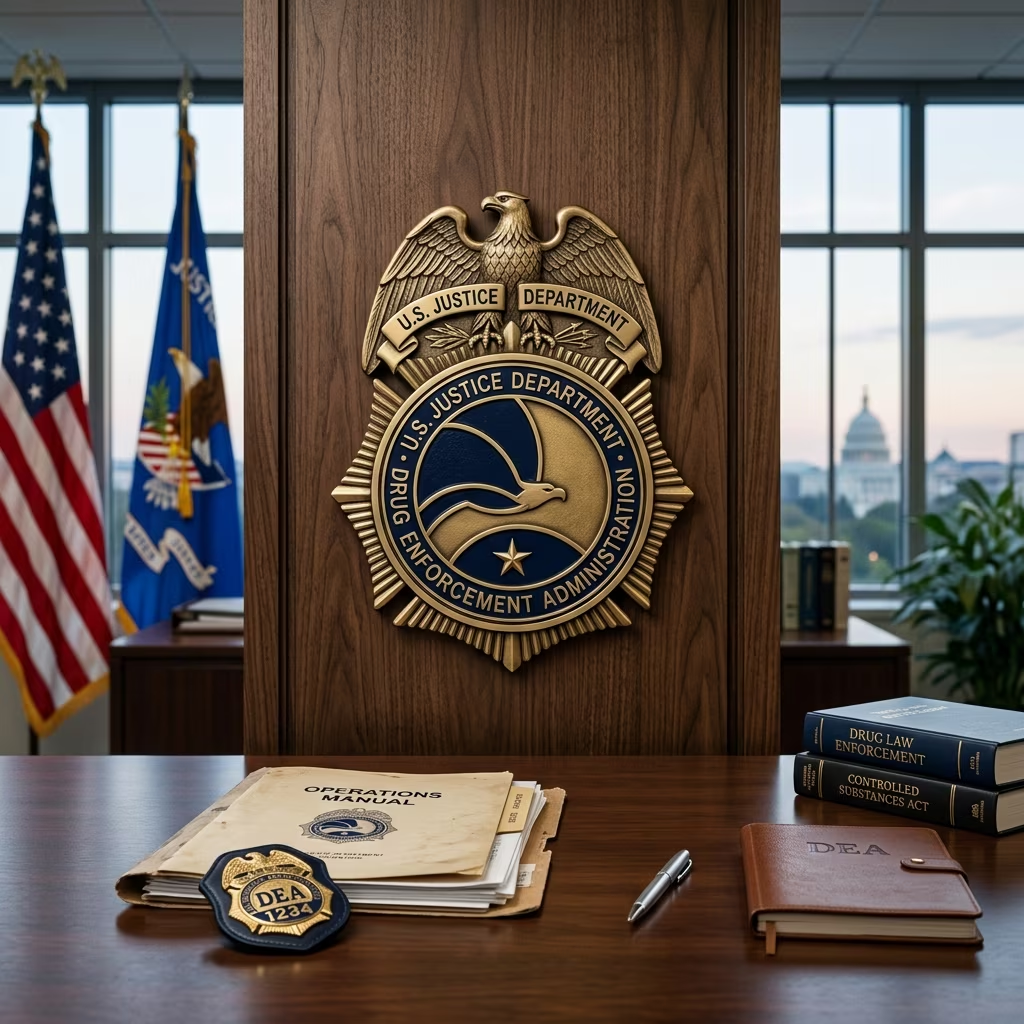
The Drug Enforcement Administration (DEA) is the primary federal law enforcement agency responsible for enforcing the nation’s controlled substances laws and combating drug trafficking organizations in the United States and abroad. This guide explains what the DEA does, how it is structured, what powers it has, and how its actions can affect individuals and businesses.
1. The DEA in the U.S. Legal System
The DEA is part of the U.S. Department of Justice and focuses specifically on crimes involving controlled substances, such as narcotics, prescription medications, and chemicals used to manufacture drugs. While state and local police also investigate drug crimes, the DEA operates at the federal level and concentrates on larger, more complex cases.
- Federal agency: The DEA is a subdivision of the Department of Justice, alongside agencies like the FBI.
- Controlled Substances Act (CSA): DEA is the lead agency charged with enforcing the CSA, the main federal law regulating the manufacture, distribution, and possession of controlled substances.
- Concurrent jurisdiction: In many cases, DEA agents work jointly with other agencies, including FBI and Customs and Border Protection, when drug crimes overlap with other federal issues such as terrorism or border security.
Because DEA cases are prosecuted in federal court, penalties can be significantly higher than for comparable state-level offenses. Defendants may face mandatory minimum sentences, asset forfeiture, and long-term supervised release.
2. Historical Background and Creation of the DEA
The DEA was established in 1973, during a period when the U.S. government was reorganizing its approach to drug control. Prior to the DEA, federal drug enforcement was spread across several agencies, which made coordination difficult.
Key historical points include:
- Pre‑DEA era: Early federal drug enforcement traces back to the early 20th century, with responsibilities initially housed in divisions of the Treasury Department and later within the Department of Justice.
- Comprehensive Drug Abuse Prevention and Control Act of 1970: This law modernized drug policy and created the framework for the Controlled Substances Act.
- Birth of the DEA (1973): The DEA was formed to centralize drug law enforcement, streamline investigations, and create a single agency responsible for major domestic and international drug cases.
Since its creation, the DEA has expanded its reach by opening field offices across the United States and foreign offices in dozens of countries, reflecting the global nature of drug trafficking.
3. Mission and Core Responsibilities
The DEA’s mission has two main components: enforcing federal controlled substances laws and supporting strategies to reduce the availability of illegal drugs.
3.1 Mission Statement
According to the Department of Justice, the DEA’s mission is to enforce controlled substances laws and regulations and to bring to justice organizations and individuals involved in the growing, manufacture, and distribution of controlled substances destined for illicit markets. It also supports non‑enforcement programs aimed at reducing the availability of illicit drugs.
3.2 Key Functional Areas
- Criminal investigations: Targeting drug trafficking organizations, cartels, and networks that produce, transport, and distribute illegal drugs.
- Regulatory oversight: Monitoring and enforcing compliance among legitimate manufacturers, distributors, pharmacies, and practitioners who handle controlled substances.
- Intelligence gathering: Collecting and analyzing information about drug trends, trafficking routes, and criminal organizations to support enforcement and policy.
- International cooperation: Working with foreign law enforcement and organizations like the United Nations and Interpol to disrupt global drug networks.
- Prevention and outreach: Supporting drug education, awareness campaigns, and community programs to reduce demand and improve public safety.
4. Organizational Structure and Global Presence
The DEA is a large organization, with thousands of employees and offices across the United States and abroad. Its structure is designed to manage both nationwide enforcement and specialized programs.
4.1 Size and Funding
The DEA operates with a multibillion‑dollar budget and a workforce of nearly 9,500 employees, including thousands of special agents. Recent federal spending data shows DEA expenditures exceeded $2.6 billion in the 2024 fiscal year. This growth reflects the agency’s expanding role in domestic and international drug control.
4.2 Field Offices and Divisions
As of the mid‑2020s, the DEA maintains hundreds of domestic offices and dozens of foreign offices around the world. These offices are organized into geographic divisions that cover specific regions of the United States, enabling localized investigation, coordination with state and local agencies, and rapid response.
| Area | Approximate Reach | Primary Focus |
|---|---|---|
| Domestic Offices | Over 200 offices in multiple divisions across the U.S. | Investigations, diversion control, support to local and state agencies |
| International Offices | 90+ offices in dozens of countries. | Cooperation with foreign law enforcement, intelligence on global trafficking |
4.3 Types of Personnel
- Special agents: Sworn law enforcement officers who conduct investigations, make arrests, execute search warrants, and prepare cases for prosecution.
- Intelligence analysts: Professionals who analyze data, identify patterns in trafficking, and provide strategic and operational intelligence.
- Diversion investigators: Specialists who focus on preventing legal controlled substances, such as prescription medications, from being diverted into illegal channels.
- Support staff: Including forensic scientists, administrative personnel, and technical experts who assist with evidence handling, communications, and logistics.
5. How the DEA Enforces Drug Laws
DEA enforcement ranges from street‑level operations to complex, multi‑year investigations of international trafficking organizations. Its authority derives primarily from federal statutes, including the Controlled Substances Act.
5.1 Controlled Substances Act and Drug Schedules
The Controlled Substances Act classifies drugs into five schedules based on their medical use, potential for abuse, and safety profile. The DEA, in consultation with other agencies, administers these scheduling decisions.
- Schedule I: Drugs with high potential for abuse and no accepted medical use (e.g., certain hallucinogens). These substances are generally prohibited for any non‑research use.
- Schedules II–V: Drugs that have accepted medical uses but varying levels of abuse potential and restrictions (including opioids, stimulants, and some sedatives).
Scheduling affects how strictly a substance is regulated, how it may be prescribed, and the severity of penalties for illegal manufacture or distribution.
5.2 Investigative Tools and Powers
DEA investigations can be extensive and may involve undercover operations, surveillance, and coordination with other agencies. DEA agents have authority to:
- Conduct searches and seizures pursuant to warrants issued by federal courts.
- Make arrests for federal drug offenses and related crimes such as money laundering or conspiracy.
- Subpoena records, including financial documents and communications, through legal processes.
- Seize assets believed to be connected to drug trafficking, subject to federal forfeiture laws.
Many large DEA cases are built through long‑term investigations, often involving confidential informants, wiretaps, and cooperation with foreign or state partners.
5.3 Diversion Control and Prescription Drugs
Not all DEA activity targets street‑level drug trafficking. A significant part of its work focuses on preventing the diversion of legally manufactured prescription medications into illegal markets.
Examples of diversion control efforts include:
- Auditing pharmacies and clinics for compliance with record‑keeping and dispensing rules.
- Investigating suspicious prescribing patterns and “pill mill” operations.
- Working with manufacturers and distributors to secure supply chains.
These efforts have become more prominent in response to the opioid crisis and concerns about misuse of other prescription drugs.
6. Cooperation with Other Agencies and Governments
The DEA does not operate in isolation. Drug trafficking often intersects with issues like organized crime, border security, and financial crime, so coordination is essential.
6.1 Domestic Partnerships
- Federal partners: DEA works with agencies such as the FBI, Homeland Security, Customs and Border Protection, and the Bureau of Alcohol, Tobacco, Firearms and Explosives on overlapping matters.
- State and local law enforcement: Joint task forces allow DEA agents and local officers to share resources, intelligence, and authority in investigating regional drug markets.
- Public health agencies: Cooperation with agencies like the Centers for Disease Control and Prevention (CDC) and state health departments helps align enforcement with public health strategies.
6.2 International Collaboration
Because drug trafficking is a global enterprise, DEA maintains foreign offices and works closely with international partners.
- Foreign law enforcement: Joint investigations or advisory roles in host countries.
- International organizations: Acting as a liaison with entities like the United Nations and Interpol on transnational drug crime.
- Information sharing: Providing and receiving intelligence on trafficking routes, emerging substances, and cartel activity.
7. Impact on Individuals, Businesses, and Communities
The DEA’s work affects a wide range of people—from individuals accused of drug crimes to businesses in the pharmaceutical supply chain and communities dealing with drug‑related harm.
7.1 Individuals Accused of Federal Drug Crimes
When DEA investigations lead to charges, defendants may face serious consequences. Federal drug cases often involve:
- Significant prison sentences, especially for trafficking, conspiracy, or cases involving large quantities or prior convictions.
- Asset forfeiture, where property alleged to be connected to drug activity can be seized.
- Collateral impacts, such as immigration consequences, loss of professional licenses, or long‑term supervised release after prison.
Because federal procedure and sentencing rules are complex, legal representation experienced in federal drug cases is critical.
7.2 Regulated Entities: Healthcare and Pharmaceutical Industry
Doctors, pharmacists, clinics, manufacturers, and distributors must comply with DEA regulations when handling controlled substances.
- Maintaining accurate records of prescribing, dispensing, manufacturing, and distribution.
- Implementing security measures to prevent theft and diversion.
- Responding to inspections and audits, and correcting any compliance issues identified.
Non‑compliance can lead to civil penalties, loss of registration, or criminal investigation in serious cases.
7.3 Community Safety and Public Health
The DEA’s enforcement activities are intended to reduce the supply of illegal drugs and disrupt criminal organizations. At the same time, the agency supports prevention and education initiatives that aim to reduce demand and improve community safety.
- Community outreach programs providing information on drug risks.
- Support for take‑back initiatives that allow safe disposal of unused medications.
- Data and trend reporting that informs policymakers and public health strategies.
8. Frequently Asked Questions About the DEA
8.1 Is the DEA the same as local police?
No. The DEA is a federal agency within the Department of Justice, focused specifically on enforcing federal controlled substances laws. Local police enforce state and local laws. They may work together on joint task forces, but they operate under different legal frameworks and chains of command.
8.2 What kinds of cases does the DEA usually handle?
The DEA tends to focus on:
- Large‑scale trafficking and distribution networks.
- Organizations involved in manufacturing illegal drugs.
- Prescription drug diversion schemes and high‑volume illegal prescribing.
- Cases tied to violent crime, organized crime, or international cartels.
Smaller possession cases are often handled by local or state authorities, though they can be linked to broader DEA investigations.
8.3 How does a drug become a “controlled substance”?
Drugs are scheduled under the Controlled Substances Act based on recommendations from agencies such as the Department of Health and Human Services, scientific evidence, and policy decisions. The DEA plays a major role in administering these schedules and enforcing the resulting regulations.
8.4 Does the DEA work outside the United States?
Yes. The DEA maintains foreign offices and works with other governments and international organizations to combat drug trafficking that affects the U.S. Much of the illegal drug supply originates or passes through other countries, so international cooperation is central to the DEA’s mission.
8.5 What should a medical professional do if contacted by the DEA?
Healthcare providers and pharmacists who are contacted by the DEA should take the communication seriously. It is generally advisable to:
- Cooperate professionally and provide requested records as required by law.
- Consult legal counsel experienced in healthcare or regulatory law, especially if an investigation is indicated.
- Review internal prescribing and dispensing practices to ensure compliance with DEA regulations.
Proactive compliance programs can reduce the risk of regulatory problems and help demonstrate good‑faith efforts to follow the law.
References
- Drug Enforcement Administration — United States Department of Justice, Organization, Mission and Functions Manual. 2022-05-10. https://www.justice.gov/doj/organization-mission-and-functions-manual-drug-enforcement-administration
- Drug Enforcement Administration (DEA) — EBSCO Research Starters, Law. 2021-09-01. https://www.ebsco.com/research-starters/law/drug-enforcement-administration-dea
- Drug Enforcement Administration — USAFacts, Subagency Explainer. 2024-06-01. https://usafacts.org/explainers/what-does-the-us-government-do/subagency/drug-enforcement-administration/
- Drug Enforcement Administration (DEA) — USAGov, Agency Profile. 2023-03-15. https://www.usa.gov/agencies/drug-enforcement-administration
- Drug Enforcement Administration — DEA.gov, Official Mission and Programs. 2023-11-20. https://www.dea.gov/what-we-do
- Drug Enforcement Administration — Federal Register, Agency Overview. 2020-08-01. https://www.federalregister.gov/agencies/drug-enforcement-administration