
Understanding the Credit Repair Organizations Act
A clear guide to how federal law regulates credit repair services and protects consumers.
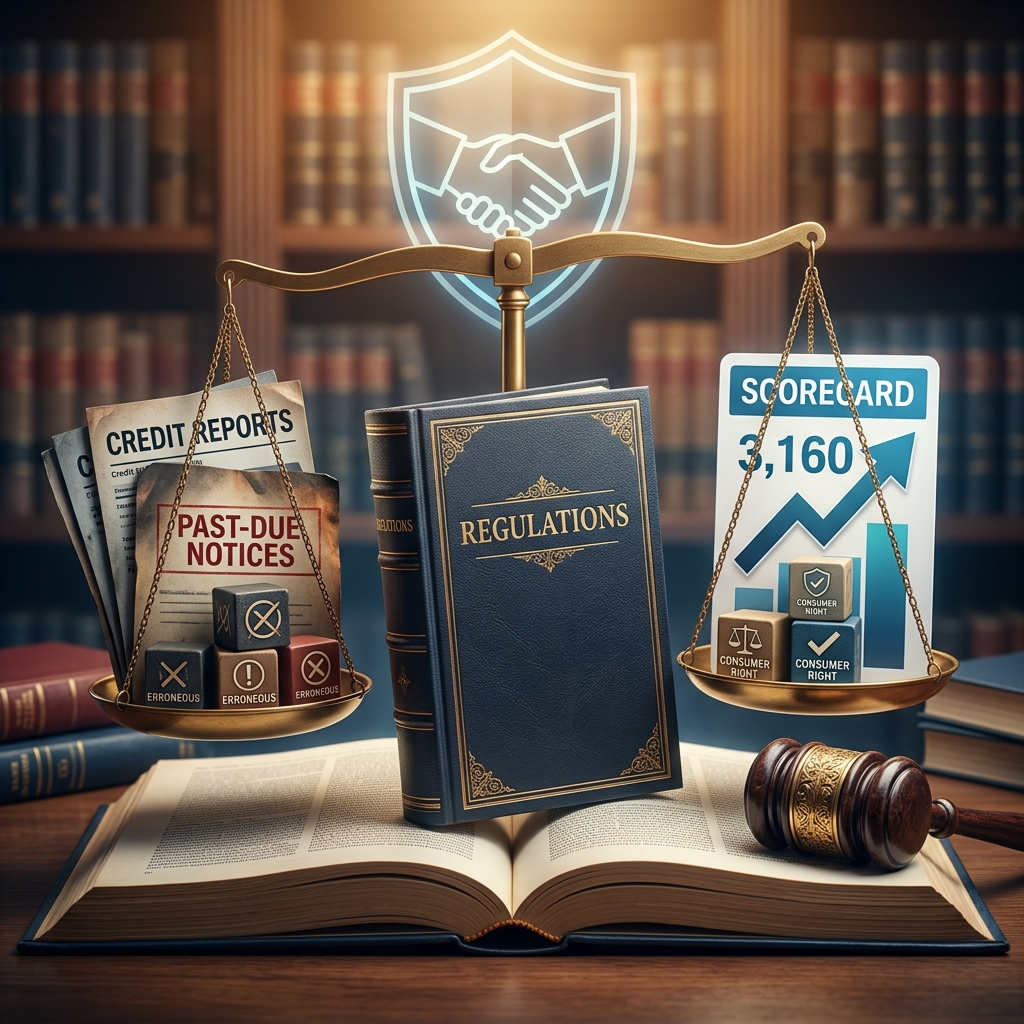
The Credit Repair Organizations Act, often called the CROA, is a federal consumer protection law that regulates businesses offering credit repair services. It was created to curb deceptive promises, hidden fees, and misleading sales tactics in an industry that often targets people who are trying to improve their financial lives.
At its core, the law does not ban credit repair services. Instead, it sets clear rules for how those services can be marketed, sold, and performed. Consumers are entitled to written disclosures, a proper contract, the ability to cancel quickly, and protection from being charged before promised work is actually completed.
Why this law exists
Credit repair services can be legitimate when they help consumers identify errors, understand their reports, and dispute inaccurate information. Problems arise when companies exaggerate what they can do or imply they have special powers to erase accurate negative history. The CROA was designed to stop those practices and make sure people can make informed choices before paying for help.
The law reflects a simple policy goal: if a business sells help with credit improvement, the consumer should know exactly what is being offered, what it will cost, and what results are realistic. That protection matters because credit concerns often involve urgency, stress, and a limited ability to evaluate flashy sales claims.
What counts as a credit repair organization
The law applies to businesses that sell, provide, or promise services for the purpose of improving a consumer’s credit record, credit history, or credit rating. It also covers businesses that offer advice or assistance tied to those goals. In other words, a company does not avoid the law simply by using different wording in its marketing.
That definition is broad enough to include many for-profit companies that advertise credit “repair,” “restoration,” “clean-up,” or similar services. If the business is being paid to help improve how credit information appears or is handled, the CROA may apply.
| Topic | How the CROA treats it |
|---|---|
| Promising credit improvement | Covered if the service is sold for the purpose of improving credit history or rating |
| Advice on disputes | Covered when the advice is part of a paid credit-improvement service |
| Marketing labels | The law looks at substance, not just the company’s chosen name |
Key consumer protections under the law
The CROA gives consumers several concrete rights. These protections are intended to reduce pressure selling, make contract terms easier to understand, and prevent people from paying for empty promises.
- No false claims: A company may not misrepresent what it can do for a consumer’s credit.
- No advance payment: A credit repair business generally cannot collect fees before services are performed.
- Written contract: The company must provide a written agreement describing the service terms.
- Cancellation right: Consumers have a short window to cancel the contract after signing.
- Required disclosures: The company must inform consumers about their rights and limitations.
These safeguards are especially important because the law expects consumers to understand that they can work on their own credit without paying a third party. A reputable company should explain that fact plainly rather than implying that professional help is the only route to improvement.
What credit repair companies cannot do
Federal law forbids several common deceptive practices. A company cannot promise to erase accurate negative information, cannot claim it has a special relationship with credit bureaus, and cannot suggest it can legally create a new identity or otherwise hide poor credit history.
The law also blocks practices that pressure consumers into quick decisions. If a business tries to collect money upfront before any work is completed, that is exactly the kind of arrangement the CROA was meant to stop. Likewise, vague sales language that overstates likely results can run afoul of the statute when it gives consumers an unrealistic picture of what credit repair can achieve.
- Misleading advertising: Claims of guaranteed score increases or guaranteed deletions are especially risky.
- Fake urgency: High-pressure sales tactics can undermine informed consent.
- Hidden fee structures: Charges must be tied to lawful performance, not mere enrollment.
- Identity manipulation: The law prohibits using false information to disguise credit problems.
What the written contract must include
Before a consumer agrees to services, the business must provide a written contract. The point is to make the transaction understandable and to prevent disputes over what was promised. A proper contract should explain the service terms, the consumer’s obligations, and the length or timing of the work.
Written terms also help consumers compare different providers. If one company is vague while another is specific, the difference in transparency can reveal a lot about the quality of the service. Consumers should be cautious if a provider resists putting promises in writing.
| Contract element | Why it matters |
|---|---|
| Service description | Shows exactly what the company says it will do |
| Timeframe | Helps the consumer judge whether the plan is realistic |
| Cost terms | Clarifies when and how the consumer can be charged |
| Cancellation rights | Explains how the consumer can back out early |
Why the three-day cancellation right matters
Consumers have the right to cancel the contract within three business days after signing. That cooling-off period is important because credit repair services are often sold in stressful situations, where a buyer may feel rushed or overwhelmed.
This cancellation right allows people to step back, reread the paperwork, and decide whether the offer truly makes sense. A company that makes it hard to cancel, hides the cancellation process, or discourages the consumer from exercising that right may be signaling a compliance problem.
How consumers can protect themselves before paying
Not every person who needs help should hire a credit repair company. Many consumers can improve their credit by checking reports, disputing errors directly, and managing balances carefully. Before entering into any paid agreement, it helps to compare the service with what can be done independently.
- Review credit reports from the major reporting agencies for inaccuracies.
- Dispute errors directly with the bureau and the furnisher of information.
- Pay down revolving balances to reduce credit utilization.
- Make payments on time to protect payment history.
- Ask for a complete written explanation of what the company will do.
These steps do not replace legitimate help when a consumer needs it, but they create a baseline for judging whether a paid service adds value. If a company cannot explain why its service is better than a consumer’s own efforts, that is worth questioning.
How to spot warning signs
Some warning signs appear again and again in deceptive credit repair schemes. Consumers should be especially careful when a company makes broad promises, asks for money before doing work, or avoids discussing legal limits. Transparency is usually a good indicator of legitimacy.
- Guaranteed results: No one can lawfully guarantee a specific credit score outcome.
- Upfront payment demands: Advance fees are a major red flag under federal law.
- No written agreement: A refusal to document terms is a serious concern.
- Pressure to sign immediately: Legitimate providers should allow review time.
- Claims of secret methods: Credit reporting laws are public, not secret.
Consumers should also be wary of services that appear to sell confusion rather than expertise. A lawful provider can explain the process clearly and still be honest about its limits.
What to do if a company breaks the law
If a credit repair business violates the CROA, a consumer may have legal remedies. Depending on the facts, those remedies can include damages, attorney’s fees, and other relief allowed by law. The statute also supports enforcement by government agencies.
Practical next steps usually include saving advertisements, contracts, payment records, emails, text messages, and any letters the company sent. Those records can help show what the business promised and whether it followed through. A consumer who has been misled may also consider reporting the conduct to the appropriate consumer protection authorities.
| Helpful evidence | Why it is useful |
|---|---|
| Contract | Shows the agreed services and refund or cancellation terms |
| Advertising materials | Captures claims made before the sale |
| Payment history | Shows when money was collected |
| Messages and emails | Help prove promises, delays, or refusal to cancel |
How this law fits with other credit rights
The CROA is only one part of the broader consumer credit framework. Credit reporting rules, debt collection rules, and general consumer protection laws may also apply depending on the facts. For example, if a report contains inaccurate information, consumers often have independent rights to dispute that information without paying a third party.
That overlap matters because some companies market credit repair as if it were the only way to fix errors. In reality, the law gives consumers multiple tools. A paid service may be useful in some circumstances, but it is not a substitute for knowing one’s rights.
Frequently asked questions
Can a credit repair company legally promise to raise my score?
No company should promise a guaranteed score increase. Credit outcomes depend on the consumer’s full file, the accuracy of the information, and how creditors and bureaus respond to disputes.
Do I have to pay a credit repair company upfront?
No. The CROA prohibits charging for services before the promised work is performed.
Can I cancel after I sign?
Yes. The law gives consumers a three-business-day right to cancel the contract.
Can I fix my credit on my own?
Yes. Consumers can dispute errors, review reports, and work on payment habits without hiring a third party.
What if a company lied to me?
You may have legal claims if the company made false promises, failed to disclose required terms, or charged unlawfully.
Why informed consumers are harder to exploit
The biggest value of the CROA is not just punishment after a violation. It is the way the law encourages better decision-making before a consumer hands over money. Clear disclosures, written terms, and cancellation rights make it harder for a business to rely on pressure or confusion.
For consumers, the takeaway is straightforward: read the paperwork, compare alternatives, and treat any big promises with caution. A trustworthy credit repair business should be able to explain its process in plain language, show its fees honestly, and respect your right to walk away.
References
- Subchapter II-A — Credit Repair Organizations — Office of the Law Revision Counsel, U.S. House of Representatives. 2026-07-09. https://uscode.house.gov/view.xhtml?req=granuleid:USC-prelim-title15-chapter41-subchapterII-A&num=0&edition=prelim
- 15 U.S. Code Chapter 41 Subchapter II–A — Credit Repair Organizations — Cornell Law School, Legal Information Institute. 2026-07-09. https://www.law.cornell.edu/uscode/text/15/chapter-41/subchapter-II-A
- Overview of Credit Repair Law — Super Lawyers. 2026-07-09. https://www.superlawyers.com/resources/credit-repair/
- Understanding the Credit Repair Organizations Act (CROA) — Investopedia. 2026-07-09. https://www.investopedia.com/terms/c/credit-repair-organizations-act-croa.asp
- The Credit Repair Organizations Act: What You Need to Know — FindLaw. 2026-07-09. https://www.findlaw.com/consumer/credit-banking-finance/credit-repair-organizations-act-what-you-need-to-know.html
Similar Articles








Read full bio of medha deb




