
Understanding Texas Theft and Larceny Laws
A practical guide to how Texas defines, charges, and penalizes theft and larceny, with clear explanations for everyday situations.
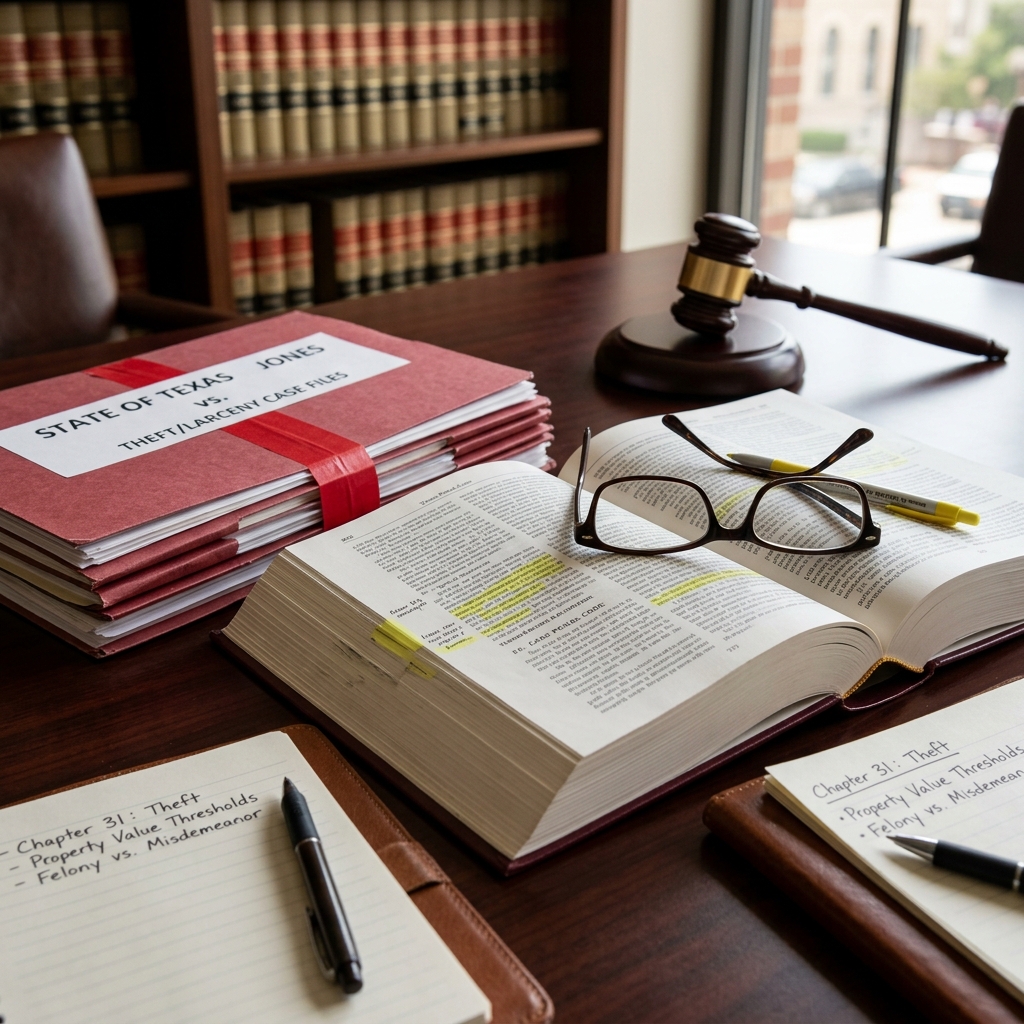
Texas treats theft and larceny as serious offenses, ranging from minor municipal court cases to major felony prosecutions that can lead to years in prison. Knowing how these laws work can help you recognize potential criminal exposure, better understand your rights, and decide when to seek legal advice.
1. How Texas Legally Defines Theft
In Texas, theft is defined in the state criminal code rather than through common-law terms like “larceny.” The core idea is unlawful taking or control over property that belongs to someone else.
Under Texas Penal Code § 31.03, a person commits theft when they unlawfully appropriate property with the intent to deprive the owner of that property.
1.1 Key elements the state must prove
For a theft conviction, prosecutors generally must establish all of the following:
- Appropriation of property – Some form of taking, acquiring, or exercising control over property owned by another.
- Unlawfulness – The appropriation must be unlawful, which typically means it is done without the owner’s effective consent or involves property already known to be stolen.
- Intent to deprive – The accused must intend to keep the property, withhold it, or otherwise permanently or substantially deprive the owner of its use.
If prosecutors cannot prove all three components beyond a reasonable doubt, a theft charge may fail or be reduced.
1.2 What makes appropriation “unlawful”
The law explains several ways appropriation can be considered unlawful, including:
- Taking property without the owner’s effective consent.
- Acquiring property that you know was stolen by someone else.
- Certain business-related scenarios where secondhand dealers fail to record seller information or obtain assurances of lawful ownership, creating a legal presumption they know the property is stolen.
These rules are designed to target not only the original thief but also people who help move or conceal stolen property.
2. Theft vs. Larceny: Terminology in Texas
Historically, many states used the word larceny for what is now broadly called theft. Modern Texas law uses “theft” as the official statutory term, but the concepts are closely aligned.
- Theft – The current umbrella term used in the Texas Penal Code to cover unlawful appropriation of property.
- Larceny – Often used informally or in older materials, but generally refers to the same underlying conduct of stealing property in Texas.
In practice, if you see “larceny” in a Texas context, it almost always refers to charges brought under the theft statute (§ 31.03), not a separate crime.
3. How Texas Classifies Theft Offenses
Texas grades theft offenses primarily based on the value of the property involved, although certain types of property or prior convictions can change the level of the charge. This grading affects whether the case is treated as a misdemeanor or a felony, and the potential sentence you face.
3.1 Value-based categories of theft
Below is a simplified overview of theft categories by value, drawn from Texas statutes and commonly cited penalty ranges.
| Value of property | Offense level | Typical maximum penalties |
|---|---|---|
| Less than $100 | Class C misdemeanor | Fine up to $500, no jail time. |
| $100 to < $750 | Class B misdemeanor | Up to 180 days in jail and up to $2,000 in fines. |
| $750 to < $2,500 | Class A misdemeanor | Up to 1 year in county jail and up to $4,000 in fines. |
| $2,500 to < $30,000 | State jail felony | 180 days to 2 years in state jail and up to $10,000 in fines. |
| $30,000 to < $150,000 | Third-degree felony | 2 to 10 years in prison and up to $10,000 in fines. |
| $150,000 to < $300,000 | Second-degree felony | 2 to 20 years in prison and up to $10,000 in fines. |
| $300,000 or more | First-degree felony | 5 to 99 years (or life) in prison and up to $10,000 in fines. |
These ranges are general; actual sentences depend on the facts of the case, prior criminal history, and any applicable enhancements.
3.2 When misdemeanors apply
Most lower-value theft cases fall into the misdemeanor category, but the consequences can still be significant, especially with prior convictions.
- Class C theft – Typically minor, often handled in municipal or justice court, usually involving fines and possibly community service.
- Class B or Class A theft – Higher value property or repeat theft, often prosecuted in county court, with potential jail time and higher fines.
Even misdemeanor theft can affect employment, housing, and professional licensing because it is a crime of dishonesty.
3.3 When theft becomes a felony
Theft generally becomes a felony when the property value crosses certain thresholds or involves specially protected items.
- State jail felony theft – Often starts at $2,500 in property value, with penalties served in a state jail facility rather than county jail.
- Higher-degree felonies – As the value increases, the offense level escalates from third-degree to first-degree felony.
- Special categories – Theft involving firearms, livestock, metal, or certain other property can be treated as a felony even at lower values.
Felony theft convictions carry long-term consequences, including the loss of certain civil rights and significant difficulties with employment and housing.
4. Property Types, Enhancements, and Special Situations
While value is the main factor, Texas theft laws also consider the kind of property, how it was taken, and the defendant’s history. These details can raise the offense level or create separate legal issues.
4.1 Protected types of property
Texas law gives special treatment to certain property types, which can increase the severity of the charge.
- Firearms – Theft of a gun is often charged at a higher level than ordinary property of similar value.
- Livestock or agricultural products – Livestock, cattle, and related property can trigger enhanced penalties due to economic and public safety concerns.
- Metals and critical infrastructure materials – Certain metals (like copper) may result in higher charges when theft affects utilities or infrastructure.
These enhancements reflect the broader impact that theft of particular items can have on communities and businesses.
4.2 Shoplifting and retail theft
Retail theft, often called shoplifting, is prosecuted under the same general theft statute. The main difference is the setting: taking merchandise from a store rather than from an individual or other location.
- Value-based classification – The same thresholds and penalty ranges apply, depending on the total value of the items taken.
- Use of tools – Using devices to shield items from security sensors or remove security tags can lead to more serious charges, sometimes elevating a case to Class A misdemeanor even at lower dollar amounts.
Retail businesses often cooperate closely with law enforcement, and shoplifting cases may involve store surveillance video, witness testimony from employees, and civil recovery demands in addition to criminal charges.
4.3 Prior theft convictions
Texas law considers prior theft convictions as an aggravating factor. For example, theft of property worth less than $100 can be charged at a higher level if the defendant has a past theft conviction.
- A low-value theft may be raised from Class C to Class B when a prior conviction is present.
- Multiple prior thefts can affect plea negotiations, sentencing decisions, and judicial willingness to grant probation.
This structure is designed to treat repeat theft more severely and encourage defendants to avoid further criminal conduct.
5. Sentencing, Fines, and Collateral Consequences
Courts have discretion in sentencing within statutory limits, but the law sets maximum penalties for each level of theft. Understanding these ranges is important when assessing risk and planning a defense strategy.
5.1 Fines and incarceration
General maximum penalties commonly associated with Texas theft include:
- Misdemeanor theft – Fines from a few hundred to several thousand dollars; up to one year in county jail for Class A offenses.
- State jail felony theft – 180 days to 2 years in a state jail facility; fine up to $10,000.
- Third-, second-, and first-degree felony theft – Prison terms ranging from 2 to 99 years (or life), with fines up to $10,000.
Actual sentences may be lower than the maximums, and some defendants are eligible for probation or community supervision instead of incarceration.
5.2 Beyond the courtroom: long-term impact
The consequences of a theft conviction often extend far beyond fines and jail. Common collateral effects include:
- Criminal record – Theft is typically considered a crime of dishonesty, which can be especially damaging for future employment.
- Professional licenses – Certain licenses (such as in finance, healthcare, or law) may be denied, suspended, or revoked after theft convictions.
- Immigration issues – Non-citizens may face immigration consequences for some theft offenses, especially felonies.
- Housing and credit – Landlords and creditors often review criminal records and may deny applications when theft appears.
Because of these impacts, many people seek legal advice early to explore options such as charge reduction, diversion programs, or record sealing where available.
6. Common Defenses and Legal Strategies
Although theft charges may seem straightforward, the legal analysis can be complex. Several defenses may apply depending on the facts.
6.1 Challenging intent
Intent is central to theft: prosecutors must prove an intent to deprive the owner of property. Defense strategies often focus on this element.
- Lack of intent – Arguing that the accused did not intend to keep or withhold the property, such as in cases of misunderstanding or temporary use.
- Mistake of fact – Claiming the person genuinely believed they had a right to the property, for instance, thinking an item was theirs or gifted to them.
If the evidence raises reasonable doubt about intent, a court or jury may acquit or reduce the offense.
6.2 Constitutional and procedural defenses
The way evidence is obtained matters. Theft cases, like other criminal prosecutions, must comply with constitutional protections.
- Illegal search or seizure – Challenging searches that violate the Fourth Amendment may result in key evidence being suppressed.
- Improper interrogation – Statements obtained in violation of Miranda rights may be excluded from trial.
- Insufficient evidence – Demonstrating that the government lacks reliable proof of value, ownership, or involvement can undermine the case.
These procedural defenses often require careful review of police reports, video footage, and witness testimony.
6.3 Negotiating outcomes
Many theft cases are resolved through negotiation rather than trial. Depending on the circumstances, defendants may pursue:
- Plea agreements – Accepting responsibility for a lesser charge or reduced sentence.
- Pretrial diversion programs – In some jurisdictions, first-time or low-risk defendants can enter programs that may result in dismissal upon completion.
- Restitution agreements – Paying back the value of the property, which courts often require as part of sentencing or plea deals.
The best strategy is highly fact-specific and usually requires guidance from a criminal defense attorney familiar with local practice.
7. Practical Tips If You Face a Theft Charge in Texas
Being investigated or charged with theft can be overwhelming. While this guide is informational and not legal advice, several practical steps are commonly recommended:
- Do not discuss the case with non-lawyers – Conversations with friends, coworkers, or social media posts can become evidence.
- Consult a qualified attorney – Early legal advice can help protect your rights and shape the trajectory of the case.
- Gather documentation – Receipts, messages, or other records about the property may be highly relevant.
- Consider collateral impact – Discuss immigration, licensing, and employment implications with counsel before accepting any plea.
Because theft involves allegations of dishonesty, many defendants prioritize minimizing long-term record consequences.
8. Frequently Asked Questions About Texas Theft and Larceny
8.1 Is larceny different from theft in Texas?
Modern Texas statutes use the term theft rather than larceny. In most contexts, larceny is simply an older or informal term referring to theft offenses prosecuted under Texas Penal Code § 31.03.
8.2 What is considered “petty” theft in Texas?
Petty theft usually refers to lower-value property, often under $100, charged as a Class C misdemeanor. These cases generally involve fines and potentially community service rather than jail, but they still create a criminal record.
8.3 How does shoplifting relate to Texas theft laws?
Shoplifting is a type of theft that occurs in a retail environment. Texas does not have a separate shoplifting statute; instead, these cases are prosecuted under the general theft law, with penalties tied to the value of the merchandise and any aggravating factors like security device tampering.
8.4 Does repaying the value of the property automatically dismiss a theft case?
Repayment (restitution) does not automatically dismiss charges, but it can influence negotiations, sentencing, and victim input. Courts often require restitution as part of probation or plea agreements, especially in property crimes.
8.5 Are all thefts over $2,500 considered felonies?
Under Texas law, theft generally becomes a felony when the value of the property exceeds $2,500, though specific statutes and enhancements can affect exact thresholds. Higher values correspond to more serious felony degrees with increasing potential prison terms.
References
- Texas Penal Code § 31.03 (Theft) — Texas Legislature. 2023-01-01. https://statutes.capitol.texas.gov/GetStatute.aspx?Code=PE&Value=31.03
- Texas Penal Code – PENAL § 31.03. Theft — FindLaw Editorial Team. 2023-01-01. https://codes.findlaw.com/tx/penal-code/penal-sect-31-03/
- Texas Theft Charges: Criminal Defense Guide — BHW Law Firm. 2022-09-15. https://www.bhwlawfirm.com/texas-theft-charges-explained/
- Theft Laws & Penalties in Texas — Brent Bowen, Attorney at Law. 2021-06-10. https://www.brentbowen.com/blog/theft-laws-and-penalties-in-texas.html
- Larceny Laws in Texas — Austin Lawyer Referral Service. 2022-05-20. https://austinlrs.com/blog/larceny-law/
- Difference Between Theft and Shoplifting in Texas — Godwin Law Firm. 2021-11-05. https://www.godwinlawfirmpllc.com/blog/what-is-the-difference-between-theft-and-shoplifting-in-texas
- Theft Charges in Texas: What They Are & What To Do — LaHood Norton Law Group. 2022-03-18. https://lahoodnorton.com/blog/theft-charges-texas-what-to-do/
Similar Articles








Read full bio of medha deb




