
Texas Adoption Law: Complete Guide To Requirements & Process
A practical guide to eligibility, procedures, and legal requirements for adopting a child under Texas law.
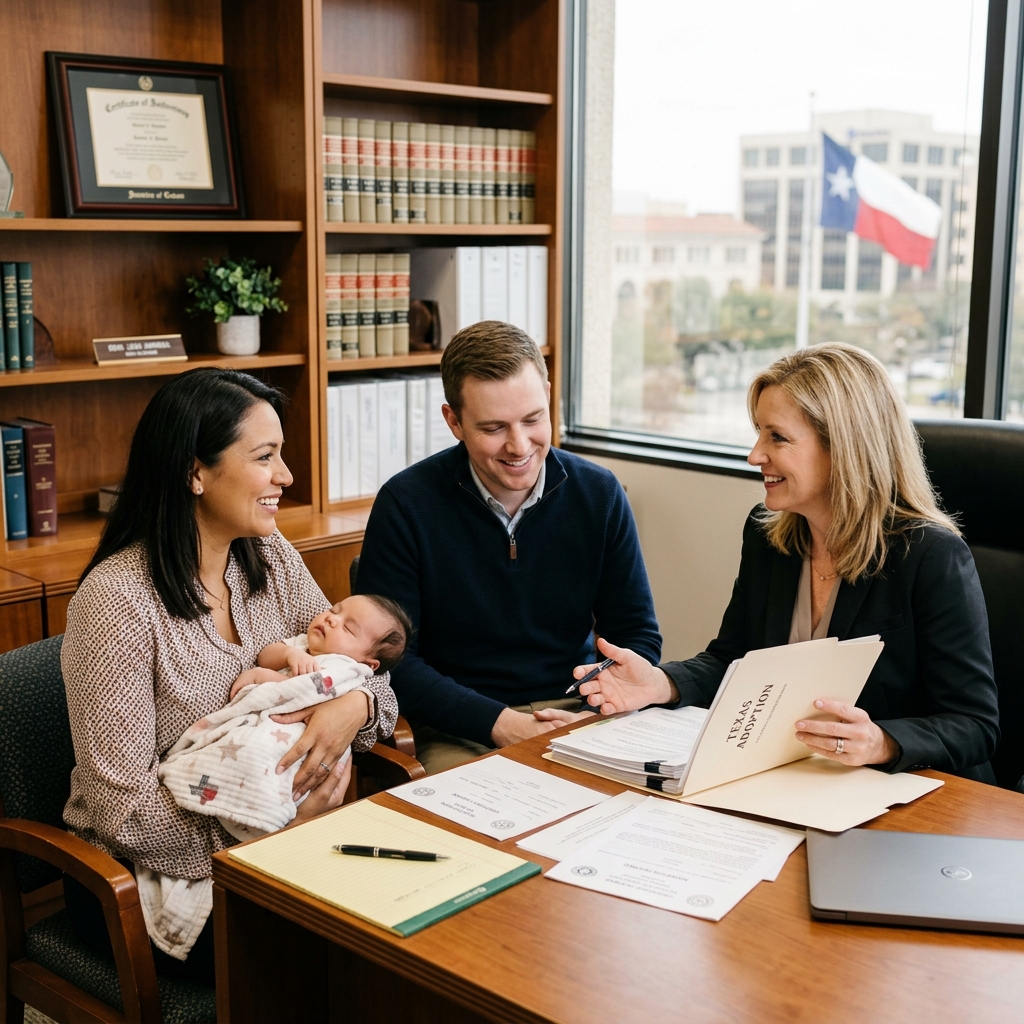
Texas adoption law is designed to create permanent, stable families while protecting the rights of children and their biological parents. Adoption in Texas is a formal legal process through which adults who are not a child’s biological parents become that child’s legal parents, with all the rights and responsibilities that status entails. This guide explains who can adopt, what legal steps are required, and how courts evaluate the best interests of the child in Texas adoptions, based on Texas statutes and official state guidance.
Who Can Adopt a Child in Texas?
Texas law is relatively flexible about who may adopt, but practical requirements imposed by the state child welfare agency and courts are stricter than the bare statutory minimum. At the statutory level, any adult may adopt, and there is no explicit minimum age to be an adoptive parent. However, the Texas Department of Family and Protective Services (DFPS) requires prospective foster or adoptive parents working with the state to meet specific criteria.
Core Eligibility Requirements
According to DFPS, people seeking to foster or adopt children in Texas through the state system generally must:
- Be at least 21 years old
- Be financially stable and capable of supporting a child
- Be responsible, mature adults
- Complete an application to foster or adopt
- Share information about their background and lifestyle
- Provide references from relatives and non-relatives
- Show proof of marriage or divorce, if applicable
- Agree to a home study, including visits with household members
- Allow criminal history and abuse/neglect background checks for all adults in the home
- Attend training about the needs of abused and neglected children
Private adoption agencies often impose their own age and experience requirements, such as minimum ages of 22 to 25 years for adoptive parents, even though Texas statutes do not set those specific thresholds.
Marital Status, Residency, and Orientation
Texas adoption law and DFPS policy allow both single and married adults to adopt, provided they meet all other requirements. Marriage, residency within Texas, and sexual orientation are not categorical barriers to adoption under Texas law; instead, the focus is on the ability to provide a safe, stable home consistent with the child’s best interests.
One important structural rule is that Texas recognizes only one set of legal parents for a child. When an adoption is finalized, the adoptive parents replace any prior legal parents for purposes of parental rights and duties.
Types of Adoption Commonly Seen in Texas
Prospective parents encounter different adoption pathways, each with particular legal features but all governed by the same core Texas Family Code provisions.
- Agency adoptions: Involving licensed child-placing agencies that match children with approved families and coordinate legal steps.
- Private (independent) adoptions: Arranged directly between birth parents and adoptive parents, typically with the help of attorneys.
- Stepparent adoptions: Where a stepparent adopts a spouse’s child, often requiring termination of the other biological parent’s rights.
- Relative (kinship) adoptions: When grandparents or other relatives adopt a child, frequently after child protection or custody proceedings.
- Adoption from foster care: Children under DFPS care are placed with foster families who may later seek to adopt permanently.
| Adoption Type | Typical Involvement | Key Legal Considerations |
|---|---|---|
| Agency Adoption | Licensed child-placing agency | Home study, matching, agency oversight, court finalization |
| Private Adoption | Birth parents, adoptive parents, attorneys | Termination of parental rights, consent rules, court approval |
| Stepparent Adoption | Child’s stepparent and spouse | Termination of other parent’s rights, child’s consent at 12+ |
| Foster Care Adoption | DFPS and foster family | DFPS requirements, prior removal and termination proceedings, post-placement visits |
Termination of Parental Rights: The Legal Starting Point
In Texas, an adoption cannot proceed to finalization unless the biological parents’ rights are terminated, except in limited stepparent scenarios where one parent’s rights remain. Termination may be voluntary (with written consent) or involuntary (by court order based on statutory grounds such as abuse, neglect, or abandonment).
Voluntary Surrender of Rights
For newborn adoptions, Texas law establishes strict timing and formality requirements for parental consent:
- The birth mother generally may sign consent to adoption no earlier than 48 hours after the child’s birth.
- The birth father may consent to the adoption before or after the child’s birth, in accordance with the applicable statute and procedures.
- Consent must be in writing and meet specific statutory content and execution requirements to be valid.
Both biological parents typically have a defined period under Texas law in which they may seek to revoke consent, after which the consent becomes very difficult to undo. The precise rights and deadlines can vary depending on the form of termination and the applicable Family Code sections, so legal advice is critical.
Involuntary Termination Through the Courts
If parents do not consent, the court may still terminate parental rights under Texas Family Code provisions when evidence shows statutory grounds such as abandonment, chronic abuse, or severe endangerment. These cases often arise in child protection proceedings, and termination is considered a last resort because it permanently ends the legal parent–child relationship.
Once termination has occurred, a child becomes legally free for adoption, and the focus shifts to identifying and approving a suitable adoptive family.
Consent Requirements in Texas Adoptions
Besides biological parents, other individuals sometimes must agree to the adoption before a court will approve it. Consent rules are detailed in Texas Family Code Chapter 162.
Child’s Consent
Texas law requires that a child 12 years of age or older must consent to the adoption either in writing or in court. The court has discretion to waive this requirement if obtaining the child’s consent would not serve the child’s best interests. This recognizes both the child’s growing autonomy and the need to protect them from pressure or conflict.
Spouses and Conservators
Consent is also required in the following common scenarios:
- If a married person petitions to adopt, that person’s spouse usually must join the petition; Texas courts generally do not allow one spouse to adopt alone without special circumstances.
- If the child has a managing conservator (an individual or entity with court-ordered responsibility for the child), the conservator’s written consent to adoption is normally required unless the conservator is the one seeking adoption or the court waives consent because it has been withheld without good cause.
These rules help ensure that everyone with major legal responsibility for the child supports the adoption plan, or that the judge explains why an adoption is still in the child’s best interest despite a refusal.
The Home Study and Background Checks
Every Texas adoption involves scrutiny of the prospective parents and their household to protect children and ensure stability. This is done through a formal home study and background checks.
Home Study Process
Under Texas law and DFPS guidance, all prospective adoptive parents must complete a home study conducted by a licensed child-placing agency or qualified professional. A typical home study includes:
- In-depth interviews with the prospective parents
- Visits to the home to evaluate safety and suitability
- Review of finances and employment
- Assessment of parenting style, values, and expectations
- Collection of references from friends and relatives
- Education and training on adoption and child welfare issues
The home study culminates in a written report that courts use to decide whether the adoption serves the child’s best interests. For adoptions involving DFPS, additional post-placement visits and reports are often required before the judge will finalize the adoption.
Criminal and Abuse History Checks
All adults in the prospective adoptive home must undergo criminal history and abuse/neglect background checks. DFPS policy requires checks for both state and sometimes national records to identify any history that could endanger a child. Certain serious offenses or substantiated abuse findings can block approval, while other issues may be evaluated in context.
Living With the Prospective Family and Pre-Finalization Requirements
Texas law generally requires a child to live with the adoptive petitioners for a minimum period before an adoption can be finalized. For many cases, this period is at least six months, though courts may waive it if doing so is in the child’s best interests.
During this pre-finalization period, the following typically occur:
- Ongoing supervision by the agency or social worker
- Post-placement visits to assess the child’s adjustment
- Completion and submission of post-placement reports to the court
- Resolution of remaining legal issues, such as name changes or birth certificate matters
Filing the Adoption Petition and Court Hearings
The legal heart of a Texas adoption is the court case. Once eligibility, termination of parental rights, home study, and pre-placement requirements are satisfied, the adoptive parents (or their attorney) file a petition for adoption with the appropriate Texas court.
Contents of the Petition
A typical adoption petition includes:
- Identification of the petitioners and the child
- Statement of grounds for adoption under Texas Family Code Chapter 162
- Information on prior court orders affecting the child
- Confirmation that parental rights have been terminated or appropriately addressed
- Attachment of the home study and relevant reports
- Any requested name change for the child
After filing, the court schedules a hearing to review the case. The petitioners and child are usually required to appear at the final hearing.
Final Decree of Adoption
At the hearing, the judge considers all evidence, including the home study, consent documents, termination orders, and testimony from the parties. If the judge finds that legal requirements are met and the adoption is in the child’s best interests, the court issues a decree of adoption. This order:
- Creates a permanent legal parent–child relationship between the adoptive parents and child
- Extinguishes remaining legal parental rights of former parents, except as allowed by specific orders
- Authorizes issuance of a new birth certificate listing the adoptive parents
From that point forward, the adoptive parents have the same rights and obligations as any other legal parents under Texas law.
Financial Considerations and Prohibited Payments
Texas adoption law distinguishes between legitimate support for a pregnant parent and illegal payments that could constitute baby-selling. While Texas statutes allow certain medical and reasonable living expenses to be covered by adoptive families, direct payment in exchange for placing a child is prohibited.
Adoptive families are often responsible for:
- Prenatal care and medical costs for the birth mother and child
- Necessary expenses related to the pregnancy and birth
- Legal and court filing fees
Any arrangement must comply with Texas and federal law, and courts may scrutinize financial flows to ensure they do not amount to improper inducements.
Frequently Asked Questions About Texas Adoption Laws
Do I have to be married to adopt in Texas?
No. Both single and married adults may adopt in Texas if they meet all other requirements, including age, financial stability, and successfully completing a home study. However, a married person generally must have their spouse join the adoption petition.
How old do I have to be to adopt?
Texas statutes allow any adult to adopt, without a specific age minimum written into the Family Code. In practice, DFPS and most agencies require adoptive parents to be at least 21 years old to be licensed or approved.
Does the child have to consent to the adoption?
Yes, if the child is 12 or older. Texas Family Code Chapter 162 requires written or in-court consent from a child aged 12 or above, unless the court waives the requirement because waiver better serves the child’s interests.
How long must the child live with me before the adoption is finalized?
In many cases, Texas law and practice require that the child live with the adoptive parents for at least six months before finalization, though courts can waive this period if doing so is in the child’s best interest.
Is adoption really permanent in Texas?
Yes. Adoption creates a lifelong legal relationship between the adoptive parents and child. Once a decree of adoption is entered, the adoptive parents have the same legal status as biological parents, and the child’s prior legal parent–child relationships are typically ended.
References
- Texas Adoption Laws — FindLaw. 2023-05-01. https://www.findlaw.com/state/texas-law/texas-adoption-laws.html
- Requirements for Foster/Adopt Families (TARE) — Texas Department of Family and Protective Services. 2024-01-01. https://www.dfps.texas.gov/adoption_and_foster_care/get_started/requirements.asp
- DFPS – Adoption — Texas Department of Family and Protective Services. 2023-09-15. https://www.dfps.texas.gov/Child_Protection/Adoption/default.asp
- Adopting a Child in Texas — TexasLawHelp.org. 2022-11-10. https://texaslawhelp.org/article/adopting-a-child-in-texas
- Texas Family Code, Chapter 162 (Adoption) — Texas Legislature. 2022-01-01. https://statutes.capitol.texas.gov/GetStatute.aspx?Code=FA&Value=162
- Requirements to Adopt in Texas — Adoption Answers Inc. 2021-06-01. https://www.adoptionanswersinc.com/adoption-information/texas-adoption-laws
- Understanding the Legal Process of Adoption in Texas — The Stuart Firm. 2025-04-10. https://www.thestuartfirm.com/blog/2025/april/understanding-the-legal-process-of-adoption-in-t/
Similar Articles








Read full bio of medha deb


