
Understanding Suspended Sentences in Criminal Law
Learn how suspended sentences work, when courts use them, and what happens if a defendant breaks the rules imposed by the judge.
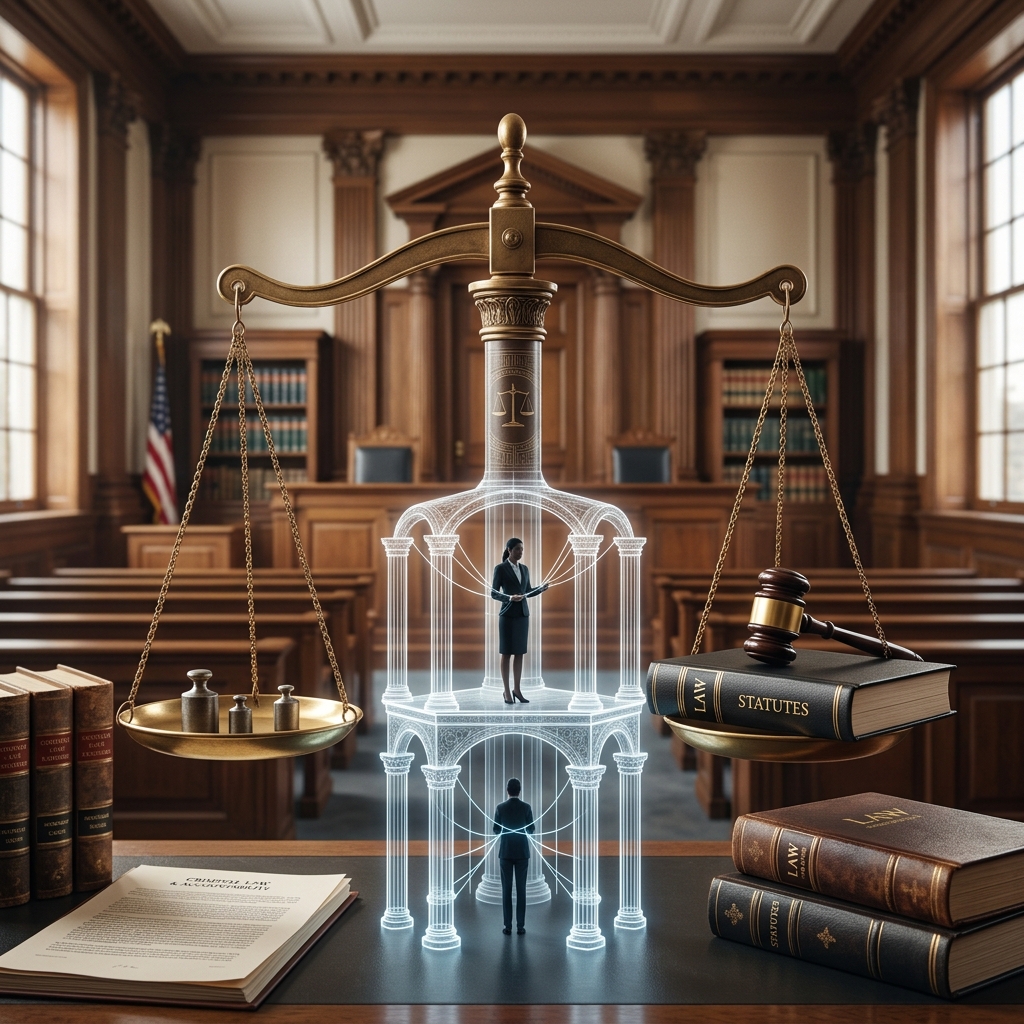
A suspended sentence is a criminal punishment that a court decides not to enforce immediately, usually on the condition that the defendant follows specific rules such as probation, treatment, or restitution. It is both an opportunity to avoid jail and a serious obligation: if those rules are broken, the court can activate the original sentence.
Core Concept: What Is a Suspended Sentence?
In criminal law, a suspended sentence generally involves three key elements:
- The defendant is convicted and a jail or prison term is formally imposed.
- The court decides to delay or suspend the actual incarceration.
- The defendant must comply with conditions, often through supervised or unsupervised probation, for a set period.
If the defendant successfully completes the conditions, the underlying sentence may never be served, or in some jurisdictions the case can be closed without further punishment beyond what was already ordered. If the defendant violates those conditions, the judge can revoke the suspension and require all or part of the original sentence to be served.
Suspended Sentence vs. Probation vs. Deferred Sentencing
Suspended sentences are closely related to probation and other alternative sentencing tools, but they are not identical.
| Feature | Suspended Sentence | Probation | Deferred or Delayed Sentence |
|---|---|---|---|
| Conviction status | Defendant is convicted; sentence is imposed but held back. | Defendant is usually convicted; court orders supervision instead of or in addition to jail. | Conviction or sentencing may be postponed; outcome can change based on compliance. |
| Jail time at the outset | Sentence includes jail/prison, but enforcement is delayed fully or partially. | Usually avoids jail at first, except in split sentences where some time is served. | Emphasis is on postponing sentencing; jail may never be imposed if conditions are met. |
| Conditions | Compliance with specific conditions (often probation-like) is required. | Formal probation rules, supervision, and reporting requirements apply. | Conditions may resemble probation but focus on eligibility for dismissal or reduced penalty. |
| Risk of incarceration | Failing conditions can trigger the original jail or prison term. | Probation violations can lead to new penalties or activation of suspended time. | Violations can lead to normal sentencing or loss of leniency. |
In practice, many courts use suspended sentences alongside probation: the sentence is suspended, and probation is the vehicle through which the defendant is monitored and required to comply with conditions.
Two Main Types: Full and Partial Suspension
Judges can suspend all or only part of a custodial sentence.
- Fully suspended sentence – The entire jail or prison term is suspended. The defendant does not enter custody at the outset, but must meet conditions for a defined period. If all conditions are satisfied, the original sentence may never be served.
- Partially suspended sentence – Only a portion of the sentence is suspended. The defendant serves some time in jail or prison, then completes the remainder of the sentence under conditions in the community. Violations can lead to enforcement of the remaining suspended time.
This flexibility allows courts to tailor punishment based on the seriousness of the offense, the defendant’s prior record, and rehabilitation prospects.
Why Courts Use Suspended Sentences
Suspended sentences are part of a broader policy trend toward using community-based sanctions instead of automatic incarceration for every offense.
Common goals include:
- Rehabilitation – Giving defendants a chance to address underlying issues such as addiction, mental health, or unstable housing, rather than simply serving time.
- Accountability – Requiring compliance with strict conditions (e.g., treatment, employment, restitution) keeps defendants responsible for their conduct.
- Reducing jail and prison populations – Community-based supervision can relieve overcrowded facilities and reduce costs.
- Proportionality – For many non-violent or lower-level offenses, immediate incarceration may be excessive; suspended sentences can provide a measured response.
Official commentary on criminal law often describes suspension of a custodial sentence as a substitute for immediate execution of the prison term, especially where the law encourages alternatives for short sentences or first-time offenders.
Typical Conditions Attached to a Suspended Sentence
The specific requirements imposed with a suspended sentence vary widely by jurisdiction, but they often resemble standard probation conditions.
Common conditions include:
- Regular meetings with a probation officer or supervising authority.
- Remaining crime-free and avoiding arrests or new charges.
- Paying fines, court costs, and restitution to victims where ordered.
- Completing community service hours.
- Participating in counseling or treatment (e.g., substance abuse, anger management).
- Maintaining employment or active participation in education or training.
- Staying within a specified geographic area and reporting travel as required.
In some legal systems, conditions may also include technology-based supervision (like electronic monitoring) or compliance with special restrictions related to the offense, such as staying away from particular individuals or locations.
Eligibility: Who Can Receive a Suspended Sentence?
Eligibility depends on each jurisdiction’s statutes and sentencing guidelines, but several recurring criteria can be identified in official legal sources and practice.
- Nature of the offense – Suspended sentences are more common for non-violent offenses and lower-level crimes. Serious violent or repeat offenses may be excluded.
- Criminal history – First-time or low-risk offenders are more likely to be considered. Laws may restrict suspension for people with multiple recent convictions.
- Length of the sentence – Many systems limit suspension to custodial terms below a specific duration (for example, under two years), though there can be special provisions for longer terms in cases involving treatment for dependency.
- Risk of reoffending – Courts often assess the defendant’s risk level using standardized tools or professional evaluations.
- Compliance prospects – Judges consider whether the defendant is realistically able and willing to follow conditions, including treatment and payment obligations.
Ultimately, suspension is a discretionary power: even if an offender meets statutory criteria, the judge or court must be persuaded that a suspended sentence is appropriate given the facts of the case.
Legal Consequences: Criminal Record and Future Impact
A suspended sentence does not erase the underlying conviction in most jurisdictions. The individual has been found guilty, and that result typically appears on their criminal record, even if they never serve the custodial term as long as they comply with conditions.
Key implications include:
- The conviction can show up on background checks for employment, housing, licensing, and immigration matters.
- Future courts may treat the suspended sentence as a prior conviction when considering repeat-offender enhancements.
- Certain civil consequences (such as restrictions on firearm possession or voting rights, depending on the jurisdiction) may still apply.
In some legal systems, completing a suspended sentence successfully can later support applications for expungement, sealing, or other record relief, but this depends on local law and is not automatic.
What Happens If Conditions Are Violated?
When a defendant fails to meet the obligations attached to a suspended sentence, the court can initiate violation proceedings. The process typically includes:
- Allegation of violation – Probation officers or prosecutors notify the court that the defendant may have violated a condition.
- Hearing – The court holds a hearing, where evidence is presented and the defendant may respond or present mitigating information.
- Judicial decision – If the violation is proven under the applicable standard, the judge can:
- Continue the suspended sentence and modify conditions.
- Impose additional restrictions or a short period in custody.
- Revoke the suspension and order the original sentence (or a portion of it) to be served.
Because the custodial term has already been imposed but held back, revocation can result in swift incarceration compared with a new prosecution.
Advantages and Risks for Defendants
From a defendant’s perspective, a suspended sentence can be both a relief and a challenge.
Potential Benefits
- Avoiding immediate jail or prison time, allowing preservation of employment, family responsibilities, and community ties.
- Opportunity to participate in treatment or rehabilitation in the community rather than in a custodial setting.
- Possibility of completing conditions and moving on without serving the original sentence.
Key Risks
- Strict compliance requirements that can be difficult to meet, especially for defendants with unstable housing or income.
- Exposure to swift incarceration if conditions are violated, sometimes with limited room for negotiation.
- Ongoing presence of the conviction on the criminal record, even with successful completion.
Given these trade-offs, legal advice is important before agreeing to a suspended sentence, particularly where other options such as diversion or deferred prosecution may exist.
Practical Examples of How Suspended Sentences Work
The mechanics of suspended sentences can be illustrated through simplified scenarios based on common patterns described in legal practice.
- Example 1: Fully Suspended Term with Community Service
A defendant is sentenced to 30 days in jail for a minor offense. The judge suspends all 30 days on the condition that the defendant completes community service and pays court costs. If these tasks are completed within the prescribed time and no new offenses occur, the defendant never serves the 30 days. - Example 2: Partial Suspension Following Short Incarceration
A defendant receives a 12-month sentence for a more serious offense. The court orders three months to be served in custody and suspends the remaining nine months on conditions of probation, treatment, and restitution. If the defendant violates probation, the judge may enforce part or all of the nine suspended months. - Example 3: Suspension Linked to Addiction Treatment
In some criminal codes, courts may suspend longer sentences when the offense is closely tied to the defendant’s substance dependency and the defendant commits to treatment. The period of suspension can be longer, and strict compliance with treatment programs is required.
Frequently Asked Questions About Suspended Sentences
Does a suspended sentence mean I was not really convicted?
No. In most systems, a suspended sentence follows a conviction or guilty plea. The difference is in how the custodial sentence is enforced, not whether the person has a criminal conviction.
Is a suspended sentence the same as probation?
Not exactly. A suspended sentence refers to the court’s decision to hold back a jail or prison term; probation is a form of supervision and set of conditions that may accompany that suspension. Many defendants on suspended sentences are also on probation, but these are distinct legal concepts.
Can any crime receive a suspended sentence?
No. Statutes often limit when suspension is allowed, focusing on non-violent or lower-level offenses, first-time offenders, and sentences below certain maximum lengths. Serious violent offenses or repeat offenders may be excluded.
Will the suspended sentence appear on my record check?
Yes, generally the conviction and sentence appear on criminal records, even if the custodial term is never served, unless later removed through expungement or similar legal relief.
What happens if I successfully complete all conditions?
If you meet all conditions during the suspension period, the court usually considers the sentence satisfied without ordering the suspended jail or prison time. In some jurisdictions, the case can be dismissed or closed in a way that may help future record-relief efforts, but this depends on local law.
Should I accept a plea that includes a suspended sentence?
That decision should be made with advice from a qualified defense lawyer. A suspended sentence can avoid immediate custody but also creates long-term obligations and risks if conditions are violated. Comparing it to alternatives such as diversion, deferred prosecution, or shorter unsuspended terms is essential.
References
- What Does Suspended Sentence Mean — Alcock & Associates, P.C. 2023-05-01. https://www.alcocklaw.com/es/suspended-sentence-explanation-what-it-means-and-how-it-works/
- “Sentencia suspendida” en Derecho Penal – ¿Qué significa? — Shouse Law Group. 2022-11-10. https://www.shouselaw.com/es/ca/blog/sentencia-suspendida/
- ¿Qué es una sentencia suspendida? — AbogadoRay.com. 2023-02-15. https://abogadoray.com/es/derecho-penal/que-es-una-sentencia-suspendida/
- Sentencia Suspendida en Nevada: Qué es y qué significa obtener una — The Defenders. 2023-06-20. https://thedefenders.net/es/blogs/suspended-sentence/
- The Suspended Sentence on Probation in Spanish Criminal Law — YouTube / Universidad Carlos III de Madrid (lecture video). 2019-10-01. https://www.youtube.com/watch?v=ME6KEEGEiZM
- Suspensión de la ejecución — Diccionario Panhispánico del Español Jurídico (Real Academia Española). 2016-01-01. https://dpej.rae.es/lema/suspension-de-la-ejecucion
- ¿Sabías que la suspensión de la pena depende de varios criterios? — Corte Suprema (public information post). 2017-09-01. https://www.facebook.com/CorteSuprema/posts/1310415391119048/
Similar Articles








Read full bio of Sneha Tete




