Marijuana, often called cannabis, is now legal in some parts of the United States and strictly prohibited in others, creating a complex legal landscape for residents, visitors, employers, and patients. State marijuana laws govern whether cannabis can be used for recreational purposes, for medical treatment, or not at all, and they define the penalties when those rules are violated.
This article explains how marijuana is regulated at the state level, how recent changes in federal policy affect those state regimes, and what practical consequences follow from possession, cultivation, and sale of cannabis in different jurisdictions.
Big Picture: How Marijuana Laws Differ by State
Although marijuana remains illegal under federal law for most purposes, nearly every state has adopted its own approach to cannabis policy. These approaches can be grouped into broad categories that help clarify what is allowed and what remains criminal conduct.
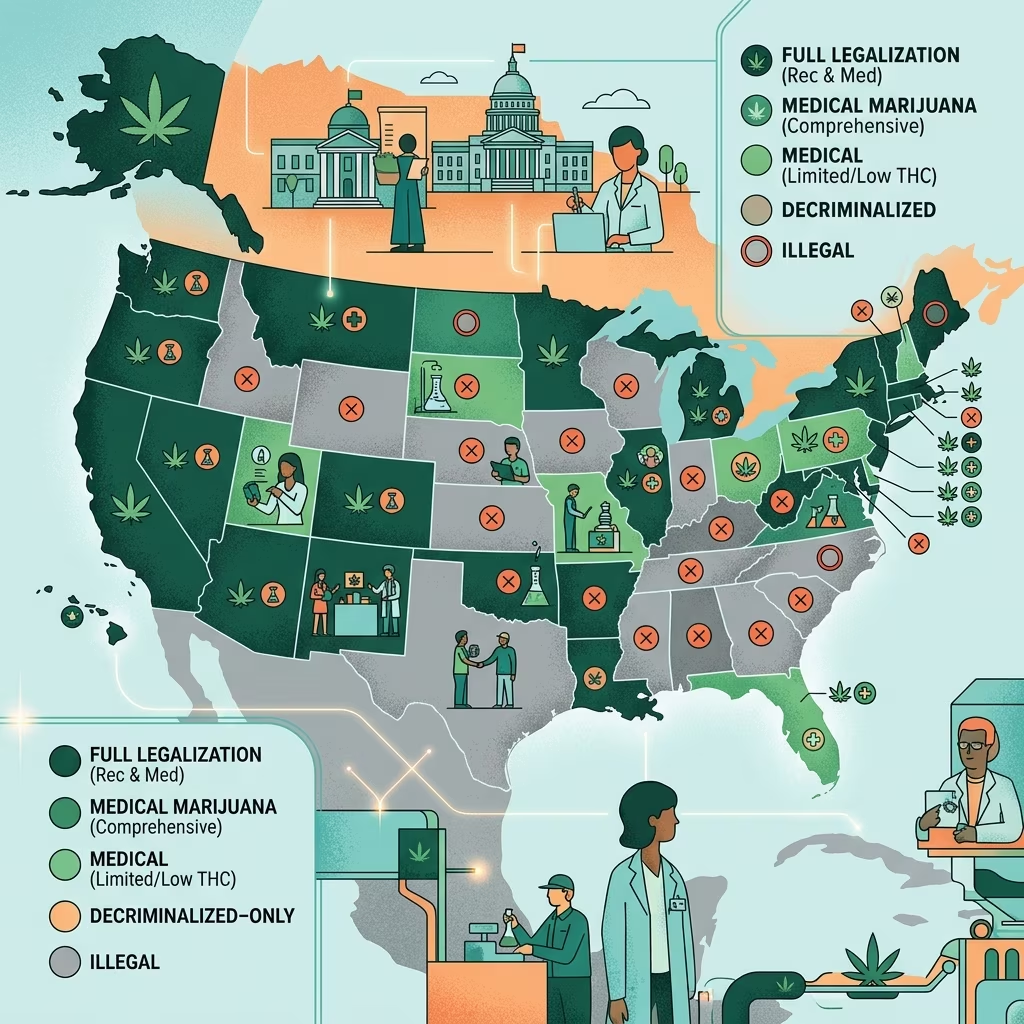
Major Categories of State Marijuana Laws
States and the District of Columbia generally fall into one of the following broad categories:
- Recreational and medical legalization – full legal use for adults and regulated medical use.
- Medical use only – cannabis allowed for qualifying patients but not for general adult use.
- Medical plus partial decriminalization – medical programs with reduced penalties for small amounts.
- Limited CBD-only programs – narrow authorization for low-THC cannabidiol products.
- Complete prohibition – marijuana remains criminal in almost all forms.
Examples of States by Legal Status
Current summaries show a significant expansion of both medical and recreational legalization:
- Recreational and medical use: States such as Alaska, California, Colorado, Illinois, New York, Oregon, Washington, and many others permit both adult-use and medical cannabis subject to regulation.
- Medical use only: States including Alabama, Arkansas, Florida, Oklahoma, Pennsylvania, South Dakota, Texas, Utah, and West Virginia allow medical marijuana but not recreational use.
- Medical plus partial decriminalization: Hawaii, Louisiana, Mississippi, Nebraska, New Hampshire, and North Dakota have medical programs and have reduced or partially decriminalized penalties for certain minor offenses.
- CBD-focused laws: Georgia, Indiana, Iowa, Tennessee, Wisconsin, and Wyoming permit low-THC CBD oil for specific medical conditions, generally with THC content below 0.3% by weight.
- Full illegality: A small number of states, such as Idaho, Indiana, and Kansas, continue to criminalize marijuana possession without comprehensive medical or recreational programs.
Recreational Marijuana: Adult-Use Legalization
Recreational marijuana, sometimes called adult-use cannabis, is now legal in the District of Columbia and in a growing number of states. These policies allow adults to possess and consume marijuana, often with licensing systems for commercial sale.
Who May Use Recreational Cannabis?
Recreational cannabis laws typically apply to adults aged 21 and over, mirroring alcohol regulations. States that permit recreational marijuana generally:
- Set a minimum age requirement (usually 21).
- Limit possession amounts (for example, one ounce of usable cannabis, or a fixed quantity of concentrates).
- Define where cannabis may be consumed (often private property only).
- Prohibit driving under the influence of marijuana.
Even in states with legalization, violations of these limits—such as underage use or public consumption—can lead to fines or criminal charges.
Home Cultivation and Personal Growing
Home cultivation is treated differently from simple possession. Some jurisdictions permit residents to grow a small number of plants for personal use, while others ban home grows entirely:
- States that allow cultivation often set plant limits (for example, four to six plants per household).
- Plants may need to be grown in locked, non-public areas.
- Exceeding plant limits or distributing home-grown cannabis can trigger more serious charges.
Medical Marijuana Programs
Medical marijuana laws allow patients with certain health conditions to use cannabis under medical supervision. Researchers and policymakers have recognized potential therapeutic benefits for conditions such as chronic pain, epilepsy, and multiple sclerosis, leading almost all states to adopt some form of medical cannabis policy.
Common Features of Medical Marijuana Laws
Although medical programs differ by state, many share core elements:
- Qualifying conditions list – statutes identify the illnesses eligible for medical cannabis (e.g., cancer, HIV/AIDS, severe epilepsy).
- Patient registration – patients typically must enroll in a state registry and receive an identification card.
- Physician certification – licensed health care professionals must confirm that the patient may benefit from cannabis treatment.
- Licensed dispensaries – medical products are dispensed through regulated entities subject to inspections and state rules.
- Product limits and forms – laws may specify permitted forms (such as oils, pills, or vaporizable products) and potency limits.
Low-THC and CBD-Only States
Some states have taken a more limited approach by allowing only low-THC or CBD products. For example, Indiana and Iowa laws restrict THC content to levels at or below about 0.3%, and certain statutes set percentage caps to ensure that products do not cause intoxication.
These programs generally aim to provide therapeutic benefits, particularly for seizure disorders, while avoiding broader legalization of psychoactive cannabis.
Decriminalization and Partial Penalty Reductions
Decriminalization refers to policies that reduce criminal penalties for possession of small amounts of marijuana, often treating these offenses as civil infractions rather than crimes. Many states combine decriminalization with either medical programs or broader reforms.
What Decriminalization Usually Means
When a state decriminalizes marijuana, it often adopts rules such as:
- Possession of small quantities results in a fine, not jail time.
- Offenses may be treated similarly to traffic violations.
- Criminal records might be avoided or limited for minor possession.
However, selling marijuana, possessing larger amounts, or repeated violations can still lead to criminal charges, including potential incarceration.
States Where Marijuana Remains Illegal
Despite extensive legalization trends, a handful of states have not authorized medical or recreational marijuana and continue to enforce criminal prohibitions. In these states, possession, cultivation, and distribution of cannabis remain crimes subject to arrest, prosecution, and sentencing.
Key Features of Prohibition States
In states without legalization or decriminalization:
- Any quantity of marijuana may trigger criminal charges.
- Penalties can increase sharply for intent to distribute or trafficking.
- Drug paraphernalia laws may separately penalize possession of pipes, vaporizers, or other equipment.
- Court records can affect employment, housing, and professional licensing.
Federal Law and the Rescheduling of Marijuana
State legalization exists alongside federal law, which traditionally classified marijuana as a Schedule I controlled substance, indicating high abuse potential and no accepted medical use. That classification is changing.
Rescheduling from Schedule I to Schedule III
Recent federal actions have directed agencies to move certain marijuana products from Schedule I to Schedule III under the federal Controlled Substances Act. An executive directive and subsequent Department of Justice and Drug Enforcement Administration actions have reclassified state-licensed medical cannabis and Food and Drug Administration-approved marijuana products to Schedule III.
Schedule III substances are recognized as having valid medical uses but are still subject to controls, including prescription requirements and research regulations.
Impact of Federal Rescheduling
Rescheduling has several practical implications:
- Research access – scientists can conduct medical studies subject to strict federal protocols.
- Medical legitimacy – federal recognition of medical use supports state programs and physician guidance.
- Criminal enforcement – rescheduling does not automatically legalize recreational cannabis at the federal level; non-medical possession and distribution may still violate federal law.
- Regulatory complexity – businesses and patients must navigate differences between state legalization and continued federal restrictions.
Typical Penalties for Marijuana Offenses
Penalties for marijuana-related conduct depend heavily on the jurisdiction and the circumstances of the offense. Even in states with legalization, violating regulatory limits can lead to sanctions.
Factors That Affect Penalties
When courts and prosecutors assess cannabis offenses, they often consider:
- Amount possessed – larger quantities may suggest intent to distribute.
- Location – possession near schools or public facilities can trigger enhanced penalties.
- Prior record – repeat offenses often result in harsher sentencing.
- Commercial activity – unlicensed sale or trafficking is treated more severely than personal use.
Common Types of Marijuana Charges
| Type of Conduct | Typical Legal Treatment |
|---|---|
| Simple possession (small amount) | Legal, civil fine, or misdemeanor depending on state and quantity. |
| Possession with intent to distribute | Often charged as a felony, with potential prison terms. |
| Unlicensed sale or delivery | Criminal offense; penalties rise with amount and prior record. |
| Cultivation beyond legal limits | Misdemeanor or felony depending on plant counts and state law. |
| Driving under the influence of cannabis | Handled under impaired driving statutes; can involve license suspension and fines. |
Practical Considerations for Residents and Travelers
Because marijuana laws vary widely, it is essential to understand the rules of each state you live in or visit. Conduct that is lawful in one jurisdiction may be a crime in another, and federal law still applies in certain contexts, such as federal property.
Key Points to Keep in Mind
- Check local law before possession or use – state statutes and regulations change frequently, and new reforms may alter penalties or permitted activities.
- Avoid interstate transport – carrying cannabis across state borders can implicate federal law and may lead to serious charges.
- Know employer policies – workplace drug rules can be stricter than state law, and some employers prohibit marijuana use even where it is legal.
- Understand medical protections – medical marijuana laws sometimes provide limited protections for patients, but they do not always override other regulations (such as firearm restrictions or professional licensing rules).
Frequently Asked Questions About State Marijuana Laws
Is marijuana completely legal in the United States?
No. While many states have legalized recreational and medical marijuana, cannabis that contains more than 0.3% THC remains illegal under federal law for non-medical, non-authorized purposes. Federal rescheduling affects certain medical products but does not create nationwide recreational legalization.
Can I travel with marijuana from one legal state to another?
Transporting marijuana across state lines can trigger federal jurisdiction, regardless of whether both states permit cannabis. Interstate movement of controlled substances is generally prohibited under federal law, and individuals risk enforcement actions if they carry cannabis between states.
Are all medical marijuana products now Schedule III under federal law?
No. Rescheduling applies specifically to state-regulated medical cannabis and FDA-approved marijuana products recognized by federal agencies. Other non-approved marijuana products may still be treated differently under federal law.
If my state has decriminalized marijuana, can I ignore possession laws?
Decriminalization usually reduces penalties but does not fully legalize marijuana. Individuals may still receive fines, citations, or other sanctions, and repeated violations or larger amounts can lead to criminal charges.
Do CBD products follow the same rules as marijuana?
CBD products are regulated separately, particularly when they contain less than 0.3% THC by weight. Many states permit low-THC CBD oils for specific medical purposes, but rules on sale, labeling, and possession vary, and some CBD products may still be treated as controlled substances if THC content is higher.
When to Seek Legal Advice
Because marijuana law combines state criminal codes, regulatory systems, and shifting federal policies, legal questions can be complex. Individuals facing charges, compliance concerns, or business licensing issues may benefit from consulting an attorney experienced in cannabis law in the relevant state.
A lawyer can help interpret current statutes, explain how recent federal rescheduling affects your situation, and advise on potential defenses or mitigation strategies in criminal proceedings.
References
- State Marijuana Laws — FindLaw. 2026-05-30. https://www.findlaw.com/state/criminal-laws/marijuana.html
- State Medical Cannabis Laws — National Conference of State Legislatures (NCSL). 2026-04-26. https://www.ncsl.org/health/state-medical-cannabis-laws
- Map of U.S. Marijuana Legalization by State — MJBizDaily. 2025-11-15. https://mjbizdaily.com/map-of-us-marijuana-legalization-by-state/
- US State Marijuana Laws — NORML. 2025-09-10. https://norml.org/laws/
- States Have Legalized Cannabis for Adults — Marijuana Policy Project. 2025-08-01. https://www.mpp.org/policy/
- Where Is Marijuana Legal? A Guide to Marijuana Legalization — U.S. News & World Report. 2025-06-20. https://www.usnews.com/news/best-states/articles/where-is-marijuana-legal-a-guide-to-marijuana-legalization
- In the Weeds: Legalized Marijuana in the States — Rockefeller Institute of Government. 2020-01-15. https://rockinst.org/intheweeds/