
Understanding State Labor Agencies for Small Businesses
Learn how state labor agencies protect workers, guide employers, and support fair workplaces across the United States.
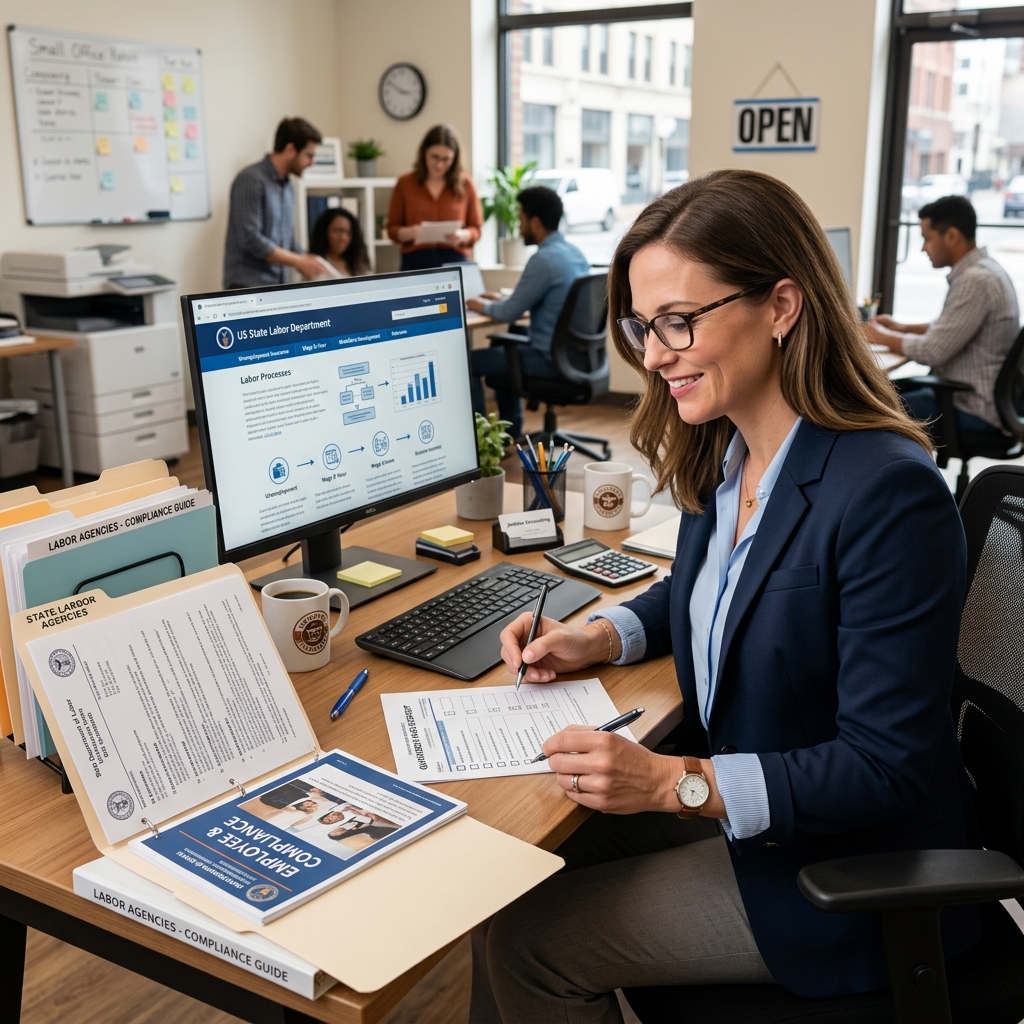
Every state in the United States maintains government offices dedicated to labor and employment issues. These state labor agencies are critical partners for both workers and employers, particularly small businesses that may not have large HR or legal teams. They enforce labor standards, administer benefits, collect workforce data, and provide guidance that keeps workplaces fair, safe, and compliant.
This article explains what state labor agencies do, how they relate to federal labor institutions, and practical ways small business owners can use these agencies as resources rather than viewing them only as regulators.
The Bigger Picture: Federal vs. State Labor Oversight
Labor regulation in the United States is a shared responsibility between the federal government and each state. The U.S. Department of Labor (DOL), a federal executive department, administers and enforces more than 180 federal laws covering workplace safety, wages and hours, unemployment benefits, reemployment services, and labor-related statistics. It oversees national minimum standards, such as federal minimum wage, overtime rules, and occupational safety regulations.
State labor agencies operate alongside this federal framework. While the DOL enforces federal law, states can adopt additional protections, administer benefit programs, and run employment services tailored to local economic conditions. In practice, most employers must comply with both federal and state rules, and state agencies often serve as the primary point of contact for day-to-day questions and enforcement actions.
| Aspect | Federal (U.S. DOL) | State Labor Agencies |
|---|---|---|
| Primary role | Nationwide labor standards and enforcement | Local administration of labor laws and workforce programs |
| Scope of laws | Federal wage, hour, safety, and union laws | State wage laws, unemployment systems, workers’ compensation, and additional protections |
| Key programs | OSHA, Wage and Hour Division, nationwide unemployment framework | State unemployment insurance, local job centers, state-specific labor enforcement |
| Employer interaction | Guidance on federal compliance, national resources | Licensing, state audits, claims handling, region-specific advice |
What State Labor Agencies Typically Do
Although every state is different, most state labor agencies share a core set of responsibilities. These can be divided into several broad functions that directly affect small businesses.
1. Enforcing State Labor and Employment Laws
State labor agencies are charged with enforcing state-specific wage, hour, and workplace laws. These may include state minimum wage requirements, rules on meal and rest breaks, pay frequency regulations, and state-level protections against retaliation and certain forms of discrimination.
Agencies often investigate complaints from workers who allege nonpayment of wages, misclassification as independent contractors, or violations of overtime rules. They can audit employer records, interview witnesses, and issue orders for back pay or penalties when violations are found. For many small businesses, state agencies are the first enforcement body they encounter.
- Reviewing payroll records to ensure proper payment of wages
- Investigating complaints about unpaid overtime or denied breaks
- Ensuring compliance with state child labor restrictions
- Overseeing certain state-specific workplace postings and notices
2. Administering Unemployment Insurance
Unemployment insurance is a joint federal–state program, but states bear primary responsibility for day-to-day administration. State workforce or employment agencies manage claims, determine eligibility, and pay benefits to workers who lose their jobs through no fault of their own.
Employers interact with these agencies when they report wages, pay unemployment insurance taxes, respond to claims, and contest benefits if they believe a separation was due to misconduct or voluntary resignation.
- Processing and adjudicating claims filed by former employees
- Maintaining employer experience ratings that influence tax rates
- Communicating decisions on eligibility and benefit amounts
- Operating appeals processes for contested unemployment determinations
3. Providing Workforce Information and Job Services
Many states designate a state workforce agency to manage employment services funded by federal programs such as the Wagner-Peyser Act. These agencies operate job centers that connect job seekers with openings, offer résumé and interview assistance, and maintain labor market information to help policy makers and employers understand workforce trends.
For employers, these services can be a cost-effective recruiting tool, especially for entry-level roles or positions that require rapid hiring. Some agencies also help employers design training or apprenticeship programs and may coordinate subsidized employment initiatives.
- Running public job boards and employment centers
- Collecting and publishing labor market data and unemployment statistics
- Assisting with recruitment of domestic workers, including in programs involving foreign labor certification
- Offering workshops on interviewing, hiring, and workforce planning
4. Supporting Workplace Safety and Health
Workplace safety is largely governed by the federal Occupational Safety and Health Administration (OSHA), but many states have their own OSHA-approved plans or complementary safety agencies. These bodies help implement standards aimed at ensuring safe and healthful working conditions, often through inspections, training, and consultation programs.
Small businesses can request voluntary safety consultations, receive educational materials on hazards, and learn how to reduce risks that may lead to injuries or workers’ compensation claims. Although safety enforcement may feel intimidating, the goal is generally to prevent harm rather than simply penalize employers.
How State Labor Agencies Interact with Small Businesses
State labor agencies are both regulators and resources. Understanding the typical touchpoints helps employers anticipate obligations and take advantage of available support.
Key Points of Contact for Employers
- Registration and reporting: New businesses often must register with state workforce or labor departments to pay unemployment taxes and sometimes to report new hires.
- Claims and complaints: Agencies contact employers when workers file wage claims, discrimination complaints within state jurisdiction, or unemployment benefits claims.
- Audits and inspections: State officials may review payroll practices, safety procedures, or compliance with specific state statutes.
- Guidance and training: Agencies frequently provide written guidance, webinars, and one-on-one support for employers seeking to understand complex rules.
Common Employer Obligations Managed by State Agencies
While precise obligations differ by state, small businesses can expect to handle at least the following responsibilities through state agencies:
- Paying unemployment insurance contributions based on payroll and experience ratings
- Responding promptly and accurately to unemployment and wage-claim inquiries
- Maintaining required employment records for a specified period
- Posting mandated workplace notices in accessible locations
- Keeping up with state-specific changes to minimum wage or leave laws
Practical Benefits of Engaging with State Labor Agencies
Many small business owners primarily associate state labor agencies with enforcement. However, actively engaging with these agencies provides several strategic advantages.
Reducing Compliance Risk
Labor violations can be costly, leading to back wages, penalties, and reputational damage. Federal law requires fair, safe, and healthy working conditions, including minimum wage and overtime protections and safeguards against employment discrimination. State agencies complement this framework and often offer clear guidance materials that translate legal requirements into practical steps.
Regularly reviewing agency publications and attending training sessions helps small businesses identify gaps before they become violations. Many agencies also publish FAQs and compliance checklists tailored to common employer mistakes.
Accessing Talent and Workforce Programs
State workforce agencies manage job placement services and can be particularly helpful in industries with recurring seasonal or entry-level hiring needs. They may assist with recruitment for special visa programs, like the H-2A agricultural visa, by ensuring compliance with domestic worker recruitment and housing inspections.
Even outside agriculture, employers can benefit from:
- Posting jobs through state-run platforms at low or no cost
- Connecting with candidates who have received state-sponsored training
- Participating in targeted hiring initiatives for veterans, youth, or workers reentering the workforce
Improving Workplace Culture and Retention
Access to accurate information on labor rights and employer obligations can strengthen trust between management and staff. When workers see that their employer respects wage and hour rules, safety standards, and benefit entitlements, morale and retention tend to improve.
State agencies often publish plain-language guides for employees describing their rights. Employers who share these materials and encourage questions demonstrate a commitment to compliance and fairness, which can be a competitive advantage in tight labor markets.
Using State Labor Agencies as an HR Partner
For small businesses with limited HR capacity, state agencies effectively serve as free consultants on core compliance issues. While they cannot provide individualized legal advice, they do offer structured information and tools that help employers design compliant policies and procedures.
Steps to Build a Proactive Relationship
- Identify your primary agencies: Find the official websites for your state labor department, workforce agency, and unemployment insurance office, and bookmark employer resource pages.
- Subscribe to updates: Many agencies provide email alerts on changes to wage laws, benefits programs, or reporting requirements.
- Attend trainings: Take advantage of webinars or in-person sessions on topics such as wage and hour compliance, safety standards, and unemployment claims handling.
- Use official forms and templates: Rely on agency-provided forms for new hire reporting, claim responses, and mandatory notices where available.
- Document interactions: Keep written records of guidance received, especially where it informs company policies.
Example Checklist: Preparing for a State Labor Audit
Although practices vary by jurisdiction, the following checklist illustrates how state guidance can help employers prepare for potential audits or investigations:
- Verify that all timekeeping systems accurately record hours worked
- Confirm that pay stubs include legally required information
- Ensure that employee classifications (exempt vs. non-exempt, employee vs. contractor) align with state and federal definitions
- Review workplace posters to confirm they are current and visible
- Update safety procedures to reflect the latest OSHA or state-plan standards
- Train supervisors on responding to wage complaints and safety concerns
Frequently Asked Questions (FAQs)
Do I have to follow both federal and state labor laws?
Yes. Most employers must comply with federal requirements enforced by the U.S. Department of Labor and any additional protections adopted by their state. When laws differ, the rule that provides greater protection to the employee usually applies.
Are state labor agencies only about enforcement?
No. While enforcement is a core function, state agencies also administer unemployment benefits, operate job services, collect workforce statistics, and offer educational resources for employers and workers.
How can a small business get help from a state labor agency?
Most agencies maintain employer-focused webpages, hotlines, and local offices. Small businesses can call or email with general questions, attend training events, and use online guides to design compliant policies.
What is a state workforce agency?
A state workforce agency is a government office designated by the governor to administer employment and workforce information services funded by federal laws like the Wagner-Peyser Act. It manages public labor exchange activities and usually contributes to unemployment compensation administration.
Do these agencies help with workplace discrimination issues?
Yes, but mostly within employment. At the federal level, agencies such as the Equal Employment Opportunity Commission focus specifically on employment discrimination, investigating charges and enforcing federal anti-discrimination laws. Many states have similar agencies or divisions that handle complaints under state civil rights statutes.
References
- What does the Department of Labor (DOL) do? — USAFacts. 2024-05-01. https://usafacts.org/explainers/what-does-the-us-government-do/agency/us-department-of-labor/
- United States Department of Labor — U.S. Department of Labor overview (via Wikipedia summary, citing dol.gov). Last updated 2024-03-01. https://en.wikipedia.org/wiki/United_States_Department_of_Labor
- U.S. Department of Labor (DOL) — USAGov. 2024-02-15. https://www.usa.gov/agencies/u-s-department-of-labor
- Agencies and Programs — U.S. Department of Labor. 2023-11-10. https://www.dol.gov/general/dol-agencies
- What State Workforce Agency means to ag employers — Harvust. 2022-09-20. https://www.harvust.com/farm-labor-dictionary/state-workforce-agency
- Intro to U.S. Federal Labor and Employment Agencies Webinar — U.S. Department of Labor-hosted webinar (YouTube). 2016-10-03. https://www.youtube.com/watch?v=rjOJGgzrZ2o
- State Employment Agencies: What HR Needs to Know — Eddy HR Encyclopedia. 2021-08-15. https://eddy.com/hr-encyclopedia/state-employment-agency/
Similar Articles








Read full bio of medha deb




