
Stalking Law: What To Know About Federal And State Rules 2025
A clear guide to stalking laws, legal standards, penalties, and victim safety.
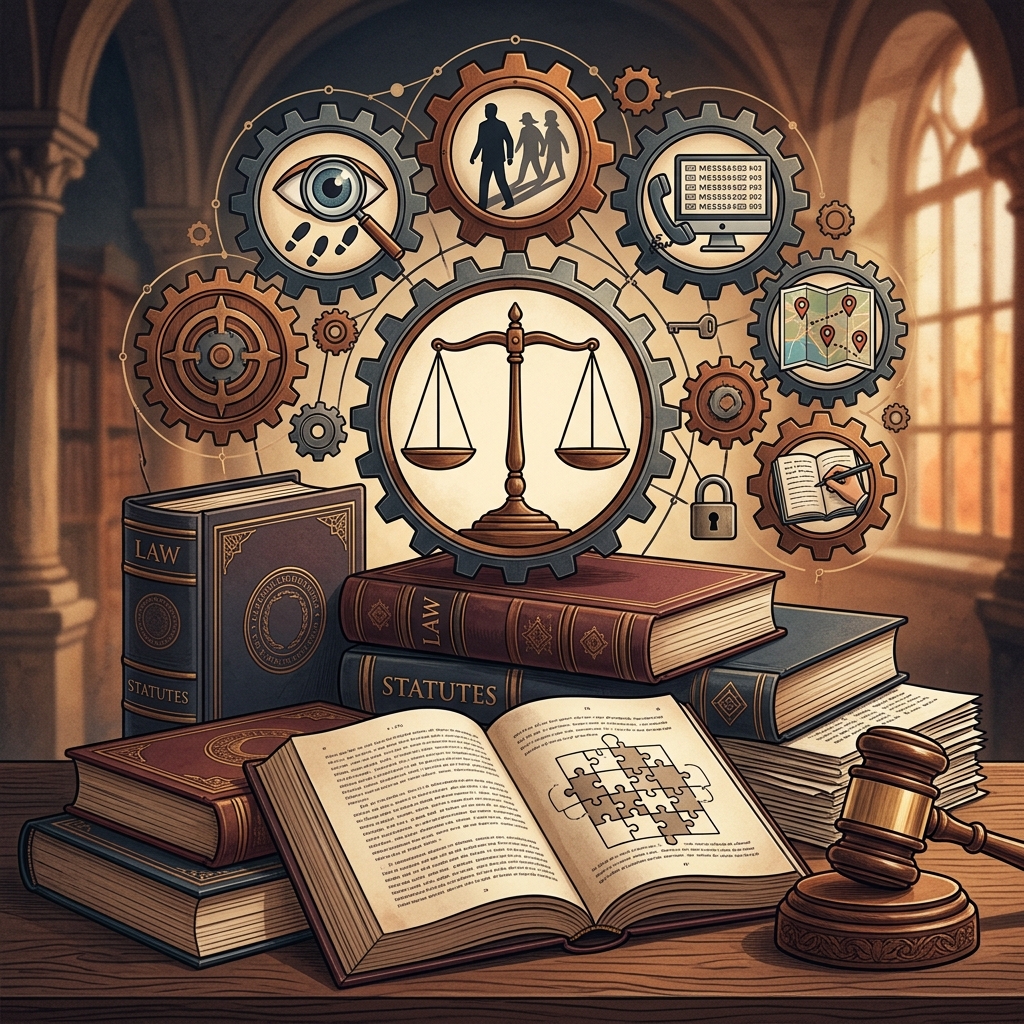
Stalking is more than unwanted attention. In criminal law, it usually means a repeated pattern of conduct that makes another person fear harm or suffer serious emotional distress. Every state treats stalking as a crime, and federal law also covers certain cross-border and electronic conduct.
The law is designed to address behavior that escalates over time, especially when a person follows, monitors, contacts, threatens, or otherwise harasses someone without permission. Because stalking often involves repeated acts rather than one isolated event, courts and prosecutors look closely at the pattern, the intent behind it, and the effect on the person targeted.
What Counts as Stalking?
Stalking laws generally focus on conduct that is repeated and unwanted. Common examples include following someone, showing up repeatedly at their home or workplace, sending persistent messages, making threats, using electronic tools to monitor activity, or contacting family members to pressure the target.
Although state definitions vary, the core idea is usually the same: a person engages in a course of conduct intended to frighten, harass, intimidate, or control another person. That conduct may be physical, verbal, written, or digital.
- Repeated in-person surveillance or following
- Unwanted calls, texts, emails, or direct messages
- Threatening or intimidating statements
- Monitoring through electronic services or social media
- Conduct that causes fear of injury or substantial distress
The Role of Intent and Pattern
One of the most important legal points in stalking cases is that the behavior usually must form a pattern. A single rude message or one bad encounter may not be enough by itself, but repeated acts can become criminal when they create fear or distress.
Intent also matters. Federal stalking law, for example, requires the government to prove that the person acted with intent to kill, injure, harass, intimidate, or place someone under surveillance for those purposes. In many cases, prosecutors must show that the accused knew, or should have known under the governing legal standard, that the conduct was alarming or threatening.
Recent legal developments have also affected how some stalking cases are prosecuted. After a Supreme Court decision discussed in legal commentary, some prosecutions must now account more carefully for the speaker’s mental state and the relationship between speech and criminal conduct.
How Federal Stalking Law Works
Federal law can apply when stalking crosses state lines, involves U.S. territories or maritime jurisdiction, or uses certain interstate communication tools. The main federal statute is 18 U.S.C. § 2261A, which covers both travel-based stalking and stalking done through mail or electronic communication.
Under that statute, prosecutors may bring charges when a person travels in interstate or foreign commerce, or uses electronic communication services, with the required intent and then engages in conduct that places the target in reasonable fear of death or serious bodily injury, or causes substantial emotional distress.
| Feature | Typical Federal Focus |
|---|---|
| Jurisdiction | Crossing state lines, tribal territory, maritime areas, or using interstate communication |
| Conduct | A course of conduct, not just one isolated act |
| Intent | To harass, intimidate, injure, kill, or place under surveillance |
| Harm | Fear of death or serious injury, or substantial emotional distress |
Federal stalking is treated seriously. A conviction may lead to imprisonment and a substantial fine, depending on the facts and the applicable subsection of the law.
Why Cyberstalking Is Included
Modern stalking laws include electronic behavior because harassment now often happens through phones, messaging apps, email, and social media. Federal law expressly reaches conduct carried out through mail, interactive computer services, electronic communication systems, and other interstate communication facilities.
Cyberstalking can involve repeated messages, impersonation, sharing private information, location tracking, or coordinated online harassment. Even without physical contact, digital conduct can still support a stalking charge if it is part of a course of conduct that causes fear or serious emotional harm.
- Repeated threatening messages
- Unauthorized monitoring of online accounts
- Posting personal information to intimidate a target
- Using electronic tools to track movements
- Coordinated harassment across platforms
Penalties and Legal Consequences
Penalties for stalking vary by jurisdiction, the seriousness of the conduct, prior convictions, and whether aggravating factors such as threats, restraining-order violations, or weapons are present. Federal stalking can be charged as a felony and may carry years in prison and a fine if the elements are proven.
State penalties may include jail time, probation, counseling, mandatory treatment, fines, and no-contact conditions. In more serious cases, stalking may be charged alongside threats, harassment, trespass, assault, or violation of a protective order.
Beyond criminal punishment, a stalking conviction can affect employment, housing, firearm rights, immigration status, and future custody disputes. Even an arrest can have long-term consequences, especially if the allegations involve a former partner, coworker, or neighbor.
Protective Orders and Other Civil Remedies
Victims do not need to wait for a criminal conviction before seeking help. Civil protective orders are often available when a person fears continuing harassment or physical danger.
A protective order can require the accused person to stay away, stop contacting the victim, avoid certain places, or surrender firearms where the law allows. In some criminal cases, courts may also issue a no-contact order as part of pretrial release or sentencing.
These orders are not a substitute for criminal enforcement, but they can create an important legal barrier and document the seriousness of the situation.
What Victims Should Document
Evidence is critical in stalking cases because the law often depends on showing a repeated pattern. Victims should preserve messages, voicemail, screenshots, letters, photos, and call logs. They should also write down dates, times, locations, witnesses, and details of each incident.
Government guidance emphasizes that records help law enforcement and prosecutors establish the timeline and severity of the conduct. Even small details can matter, especially when the stalking unfolds over weeks or months.
- Save texts, emails, voicemails, and letters
- Screenshot social media posts or messages
- Record dates, times, and places of each incident
- List witnesses and any security camera locations
- Report threats promptly to police or campus security
Safety Steps That Can Help
Safety planning is often just as important as legal action. Victim assistance resources recommend contacting emergency services if there is immediate danger and reaching out to victim advocates or local support organizations for a plan tailored to the situation.
Practical safety measures may include changing routines, varying travel routes, telling trusted friends or neighbors, alerting workplace security, and keeping a record of suspicious activity. If a person has reason to believe the stalking could escalate, early reporting can improve the chances of intervention.
Common Questions About Stalking Law
Is stalking always a felony?
No. Stalking can be charged as a misdemeanor or a felony depending on the state law, the facts, and whether aggravating circumstances are present. Federal stalking, however, is generally treated as a serious felony offense.
Does one message count as stalking?
Usually not by itself. Stalking laws generally require a course of conduct, which means repeated behavior. A single act may still matter if it is part of a broader pattern or is combined with other evidence of harassment.
Can online behavior be stalking?
Yes. Repeated digital contact, monitoring, or threatening online behavior can qualify as stalking if it is part of a prohibited course of conduct and creates the required fear or distress.
What should someone do first if they are being stalked?
If there is immediate danger, call emergency services. After that, document the incidents, contact law enforcement, and consider seeking a protective order or victim advocate support.
How Courts Look at These Cases
Courts usually examine the whole relationship between the parties, not just one isolated event. They may consider the frequency of contact, the wording of messages, past warnings, prior disputes, and whether the accused continued after being told to stop.
Because stalking often overlaps with speech, technology, and privacy issues, judges must balance public safety and constitutional protections. That is one reason stalking cases can be fact-intensive and highly dependent on local law and the evidence collected.
When to Get Legal Help
Anyone accused of stalking should get legal advice quickly because the case may involve criminal charges, emergency no-contact orders, digital evidence, and possible federal exposure. A defense attorney can evaluate whether the conduct meets the legal definition, whether jurisdiction is proper, and whether the prosecution can prove intent and a course of conduct.
Victims may also benefit from speaking with an attorney or victim advocate about protective orders, evidence preservation, and safety planning. Early action can make a major difference in both legal protection and personal security.
References
- Federal Stalking Laws | Title 18 U.S. Code § 2261A — The Federal Criminal Attorneys. 2026-07-10. https://www.thefederalcriminalattorneys.com/federal-stalking
- U.S. Supreme Court Changes Stalking Law — Delaware Coalition Against Domestic Violence. 2024-06-28. https://dcadv.org/blog/us-supreme-court-changes-stalking-law.html
- 18 U.S. Code § 2261A – Stalking — Cornell Law School, Legal Information Institute. 2026-07-10. https://www.law.cornell.edu/uscode/text/18/2261A
- Stalking — Office for Victims of Crime, U.S. Department of Justice. 2026-07-10. https://ovc.ojp.gov/topics/stalking
- Federal and State Stalking Laws — U.S. Department of Justice. 2026-07-10. https://www.justice.gov/usao-me/page/file/1411076/dl
- Stalking — Office for Victims of Crime, U.S. Department of Justice. 2026-07-10. https://ovc.ojp.gov/topics/stalking
Similar Articles








Read full bio of medha deb




