
Understanding Smuggling and U.S. Customs Crimes
A practical guide to smuggling laws, customs violations, penalties, and legal defenses under U.S. federal law.
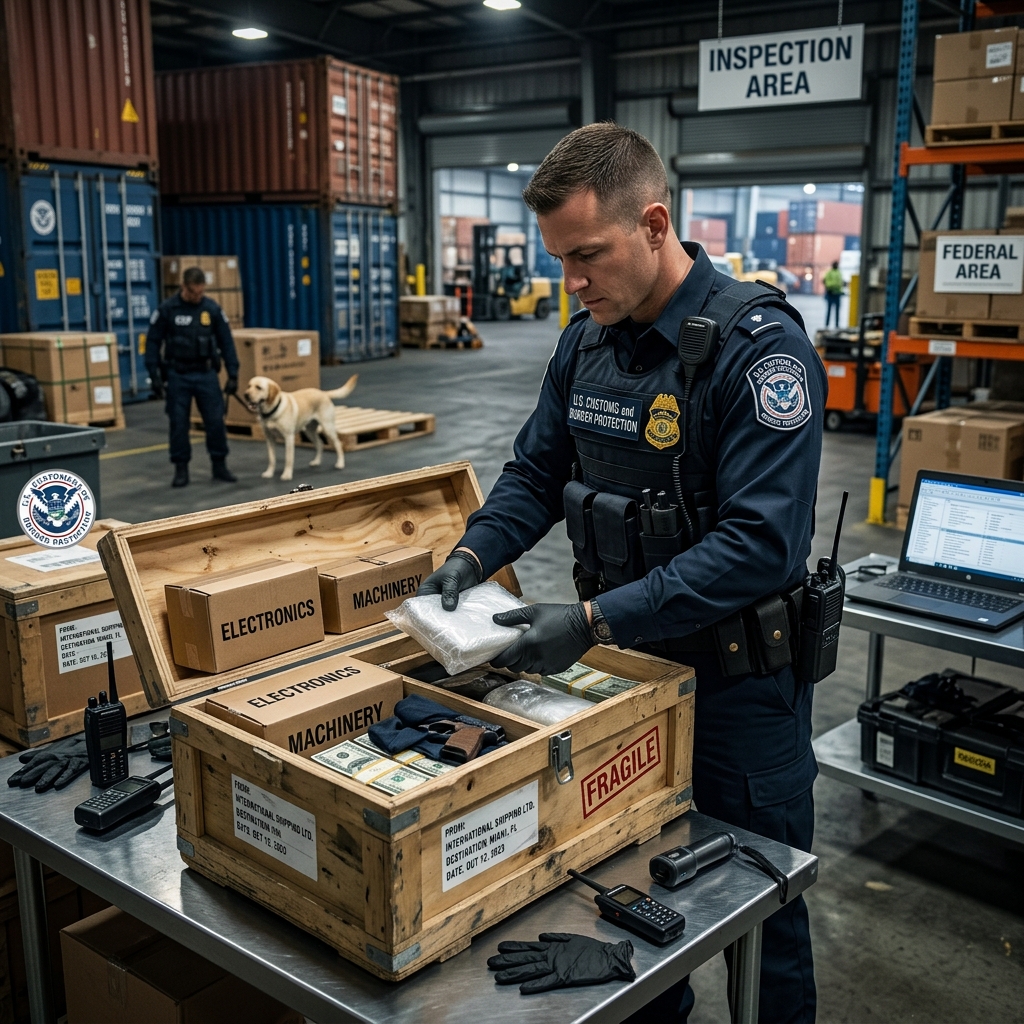
Smuggling and customs violations sit at the intersection of criminal law, international trade, and border security. These offenses range from concealing high-value goods to evade import duties to trafficking banned items such as narcotics or counterfeit products across U.S. borders. Federal law treats these activities as serious crimes that can lead to lengthy prison sentences, substantial fines, and forfeiture of the merchandise involved.
This article explains how U.S. law defines smuggling and customs-related crimes, outlines the most important federal statutes, explores common violation scenarios, and discusses penalties, enforcement practices, and defense considerations.
Core Concept: What Counts as Smuggling?
In the context of U.S. federal law, smuggling generally means bringing goods into, or sending goods out of, the United States in violation of law or regulation. While popular culture often associates smuggling with hidden drugs or weapons, the legal definition is broader and includes conduct designed to avoid proper customs processing or payment of duties.
Basic legal definition
Under federal law, smuggling typically involves one or more of the following elements:
- Importing or exporting merchandise contrary to law or regulation.
- Bringing goods across borders without declaring them properly to customs officials.
- Using false, forged, or fraudulent documents to pass goods through customs.
- Receiving, concealing, buying, or selling goods knowing they were smuggled or otherwise imported unlawfully.
Smuggling can involve goods that are completely prohibited, such as illegal drugs, or goods that are otherwise lawful but moved in a way that avoids required duties, taxes, or controls.
Smuggling versus customs violations
Smuggling is one category of customs-related crime, but U.S. law also recognizes a broader array of customs offenses. These include making false statements about imports and exports, tampering with customs seals, and unlawful removal of bonded merchandise from customs custody.
| Type of conduct | Typical legal classification |
|---|---|
| Hidden merchandise to avoid declaration or duties | Smuggling (import or export) |
| Falsified invoices or misdescribed goods | False statements / fraud involving customs |
| Removing items from bonded warehouses without permission | Bonded merchandise offenses |
| Altering or breaking customs seals | Customs seal tampering |
Key Federal Statutes Governing Customs Crimes
Criminal customs laws are primarily codified in Title 18, Chapter 27 of the United States Code, which includes several sections addressing different aspects of smuggling and customs-related misconduct. Among these, 18 U.S.C. § 545 is the central smuggling statute.
18 U.S.C. § 545 – Smuggling goods into the United States
Section 545 makes it a crime to fraudulently or knowingly import merchandise contrary to law, or to smuggle or clandestinely introduce goods that should have been invoiced. The statute reaches both direct smugglers and those who help to handle the goods after they cross the border.
Conduct covered by this section includes:
- Smuggling or secretly bringing merchandise into the United States that should have been properly invoiced.
- Passing, or attempting to pass, false or fraudulent invoices or documents through the customhouse.
- Importing or bringing merchandise into the country contrary to law.
- Receiving, concealing, buying, selling, or facilitating transportation or sale of such merchandise after importation, knowing it was imported unlawfully.
Section 545 authorizes penalties of up to 20 years in federal prison, fines, and forfeiture of the merchandise or its value.
Other customs-related statutes in Chapter 27
Title 18, Chapter 27 includes a number of other criminal provisions that address specific customs-related conduct. Examples include:
- Smuggling goods into foreign countries: Criminalizing conduct related to moving goods from the United States to other countries contrary to law.
- Depositing goods on boundaries or altering warehouse goods: Addressing manipulations of goods near borders or within customs-controlled storage.
- Bonded warehouse and seal offenses: Prohibiting unauthorized removal of merchandise from bonded warehouses and tampering with customs seals or markings on vehicles, vessels, or packages.
- Fraudulent exportation: Penalizing knowingly exporting or attempting to export items contrary to law.
Together, these statutes form a comprehensive legal framework to combat criminal activity involving the import, export, storage, and transport of goods under customs authority.
Elements Required for a Smuggling Conviction
For a person to be found guilty of smuggling under federal law, prosecutors must typically establish specific elements beyond a reasonable doubt. Although the precise formulation depends on the charge, smuggling under Section 545 generally requires proof of knowledge, wilfulness, and intent to defraud in addition to the underlying act.
Mental state and intent
The law distinguishes between an honest mistake and deliberate smuggling. To convict under Section 545, prosecutors usually must show that:
- The defendant knowingly imported or handled merchandise in violation of customs laws.
- The defendant understood that the merchandise was of a type that should have been declared or processed.
- The defendant acted willfully, with an intent to defraud the United States.
This focus on mental state means that inadvertent paperwork errors, if truly unintentional and promptly corrected, are legally distinct from purposeful efforts to evade inspection or taxation.
Proof and evidentiary rules
Federal law includes evidentiary provisions that can aid the prosecution in smuggling cases. Under Section 545, proof of a defendant’s possession of unlawfully imported goods, unless satisfactorily explained, may be treated as sufficient evidence to authorize conviction.
In practice, prosecutors may rely on:
- Invoices, shipping records, and customs declarations.
- Communications showing knowledge of unlawful import or export.
- Financial records demonstrating profits tied to smuggled goods.
- Testimony from co-conspirators or cooperating witnesses.
Typical Forms of Smuggling and Customs Violations
Smuggling and customs crimes can occur in many ways, ranging from small-scale misconduct by individual travelers to organized schemes involving commercial shipments. Common scenarios include both import and export violations.
Import-side misconduct
Import violations often focus on how goods enter the United States and how they are described to customs authorities.
- Hidden or undeclared goods: Travelers or traders conceal high-value items or multiple units of merchandise to avoid declaration requirements or raise less suspicion.
- Under-valuing or misclassifying goods: Declaring goods at artificially low values or using incorrect tariff categories to reduce duty obligations.
- False origin or quality claims: Misrepresenting the country of origin or quality of goods to bypass trade restrictions or exploit favorable duty treatment.
- Counterfeit products: Introducing counterfeit brand-name goods that infringe intellectual property rights.
- Prohibited items: Importing contraband such as illegal drugs or banned weapons, which raise both customs and broader criminal issues.
Export-side misconduct
While smuggling is often thought of as an import problem, U.S. law also criminalizes unlawful export activity. Federal statutes make it an offense to fraudulently or knowingly export, or attempt to export, items contrary to law or regulation.
- Unauthorized export of controlled items: Sending sensitive technologies or defense-related merchandise overseas without required licenses.
- Unreported currency exports: Transporting large amounts of cash or monetary instruments out of the country without required reporting.
- Outbound smuggling of contraband: Moving narcotics or other illegal products from the United States into foreign markets.
Penalties for Smuggling and Customs Crimes
Smuggling violations can result in criminal penalties, civil sanctions, or both. The severity depends on factors such as the statute violated, the value and type of goods, and the defendant’s role in the scheme.
Criminal penalties under federal law
Section 545 provides for penalties of up to 20 years of imprisonment, fines, or both for smuggling goods into the United States. Other customs-related statutes typically authorize prison terms of up to 10 years for offenses such as tampering with customs seals or unlawfully removing bonded merchandise.
Factors that can drive higher sentences include:
- The involvement of dangerous contraband, such as controlled substances or weapons.
- Large-scale or repeated schemes causing significant financial loss to the government.
- Participation in organized criminal activity or international trafficking networks.
Civil forfeiture and customs sanctions
Customs law allows the government to seize and forfeit merchandise introduced into the United States in violation of smuggling statutes, or to recover the value of such merchandise. Civil penalties may also include:
- Assessment of unpaid duties, taxes, and fees.
- Additional monetary penalties calculated as a multiple of the duty loss or value of the goods.
- Exclusion of traders or companies from future customs programs.
Enforcement: Role of U.S. Customs and Border Protection
U.S. Customs and Border Protection (CBP) CBP works closely with other agencies to detect smuggling activity and bring criminal cases when appropriate.
Inspection and screening activities
CBP uses a mix of technology and human inspection at ports of entry and border zones, including:
- Risk-based screening systems that flag high-risk shipments.
- X-ray and imaging technologies to inspect containers, luggage, and vehicles.
- Canine units to detect drugs, currency, and other contraband.
- Review of manifests and electronic data to identify mismatches or suspicious patterns.
Coordination with other agencies
Smuggling cases often involve multi-agency efforts. CBP may coordinate with:
- Homeland security investigators handling complex import and export schemes.
- Drug enforcement agencies focused on narcotics trafficking.
- Local and state law enforcement agencies when smuggling relates to broader criminal activity.
Defenses and Legal Considerations
Because smuggling and customs violations involve specific legal elements and intent requirements, several defenses may be available depending on the facts of a case. Anyone facing investigation or charges should consult qualified legal counsel to assess potential strategies.
Potential defense themes
- Lack of knowledge: Arguing that the defendant did not know the goods were imported or exported contrary to law, or did not know they needed to be declared.
- No intent to defraud: Challenging the claim that the defendant acted with willful, fraudulent intent as required under Section 545.
- Legitimate documentation: Showing that invoices and customs documents were accurate and prepared in good faith.
- Procedural violations: Examining how evidence was obtained and contesting unlawful searches or seizures where appropriate.
Compliance and risk reduction
Businesses engaged in international trade can reduce exposure to smuggling and customs allegations by investing in compliance programs that ensure accurate classification, valuation, and documentation of goods. Common compliance practices include:
- Training staff on customs rules and declaration obligations.
- Using internal audits to review import and export documentation.
- Maintaining clear records of product origin, pricing, and licenses.
- Working with customs brokers and legal advisers when transactions are complex.
Frequently Asked Questions
Is every mistake on a customs form considered smuggling?
Not every error amounts to smuggling. Federal smuggling statutes generally require proof that the person acted knowingly and wilfully with intent to defraud the government. Genuine mistakes that are promptly corrected and not part of a scheme to evade duties or conceal goods are typically treated differently from deliberate fraudulent conduct.
Can someone be charged with smuggling if they never personally crossed the border?
Yes. Under Section 545, the law reaches not only the person who physically brings goods into the United States but also those who receive, conceal, buy, sell, or facilitate the transportation or sale of merchandise knowing it was imported unlawfully. Participation in handling smuggled goods after import can still expose a person to criminal liability.
What types of goods most commonly lead to smuggling charges?
Smuggling charges can arise from a wide array of goods, but common categories include illegal drugs, counterfeit or pirated merchandise, high-value luxury items brought in without proper declaration, controlled technologies and defense articles exported without a license, and large quantities of undeclared currency.
Does the value of the goods affect the punishment?
The applicable statute sets maximum penalties, but the value of the goods, the amount of duty loss, and the scale of the scheme often influence sentencing within those ranges. Larger frauds or schemes involving dangerous contraband typically result in more severe sentences and higher fines.
Is forfeiture automatic when smuggling is proven?
Federal law authorizes the forfeiture of merchandise introduced into the United States in violation of smuggling statutes, or the recovery of its value from persons involved. Whether forfeiture is imposed in a particular case depends on the facts, applicable procedures, and court decisions, but it is a frequent component of enforcement actions.
References
- Smuggling and Customs Violations — FindLaw. 2023-05-01. https://www.findlaw.com/criminal/criminal-charges/smuggling-and-customs-violations.html
- 18 U.S. Code § 545 – Smuggling goods into the United States — U.S. House of Representatives, Office of the Law Revision Counsel. 2024-01-01. https://www.law.cornell.edu/uscode/text/18/545
- 18 USC Ch. 27: Customs — U.S. House of Representatives, Office of the Law Revision Counsel. 2024-01-01. https://uscode.house.gov/view.xhtml?path=/prelim@title18/part1/chapter27&edition=prelim
- Smuggling Goods Into the United States | 18 U.S.C. § 545 — The Federal Criminal Attorneys. 2022-06-10. https://www.thefederalcriminalattorneys.com/federal-smuggling-goods
- Smuggling Goods into the United States – Title 18 USC 545 — Esfandi Law Group. 2021-09-15. https://www.egattorneys.com/smuggling-goods-into-united-states
- What is Smuggling? Simple Definition & Meaning — LSD.Law. 2023-08-20. https://lsd.law/define/smuggling
- Definition of Customs Offences in International Law — SSRN / International Law Study. 2015-10-01. https://papers.ssrn.com/sol3/papers.cfm?abstract_id=2663053
Similar Articles








Read full bio of Sneha Tete




