
Understanding Sexual Assault Medical Forensic Exams
A clear guide to what a sexual assault medical forensic exam is and how it supports care.
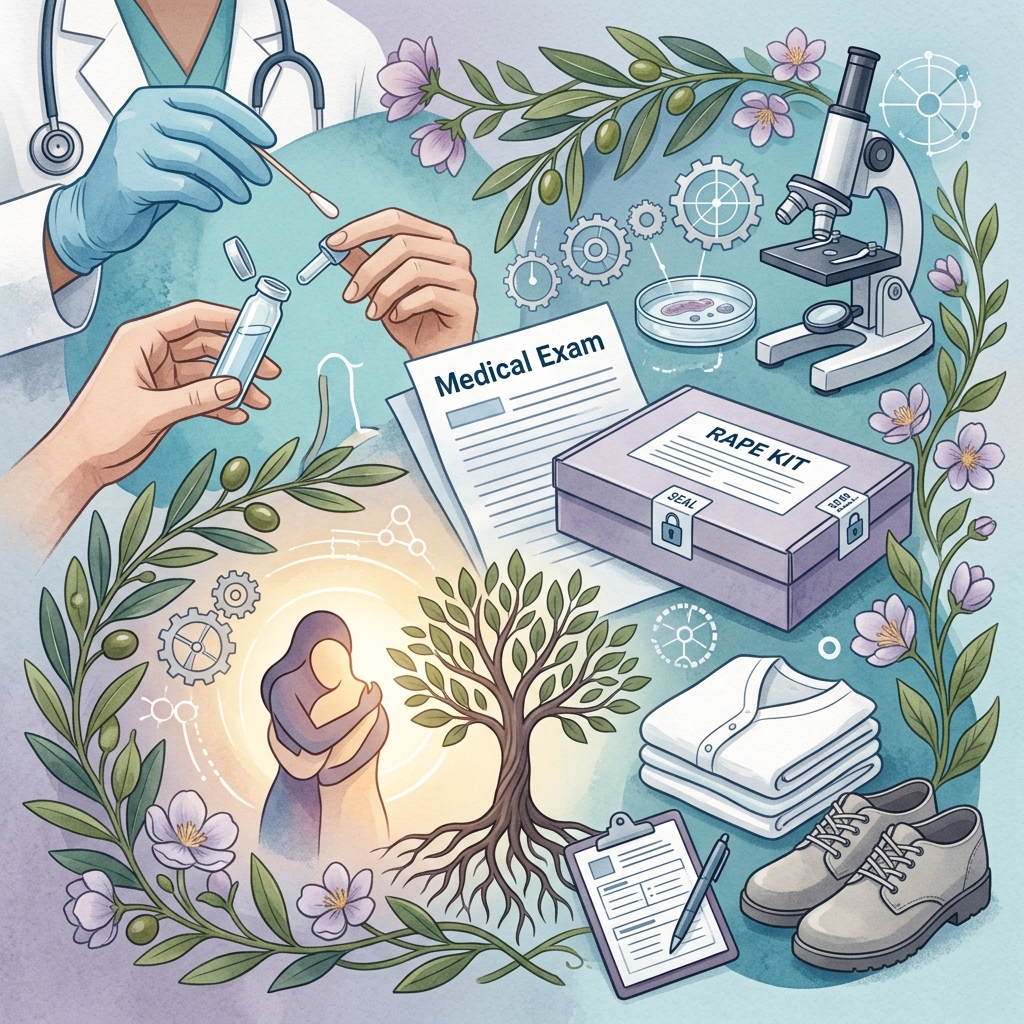
A sexual assault medical forensic exam is a specialized health care service that helps address both immediate medical needs and potential legal evidence after sexual assault. It is designed to be patient-centered, trauma-informed, and guided by consent at every stage.
This kind of exam is not only about collecting evidence. It also supports injury assessment, emotional safety, testing and preventive treatment, referrals, and careful documentation that can be useful later if a survivor chooses to report the assault.
What the exam is meant to do
The main purpose of a sexual assault medical forensic exam is to respond to the patient’s health needs while preserving any evidence that may exist after an assault. The U.S. Department of Justice explains that a clinician conducts the exam for a patient who has experienced sexual assault, and the process can include history taking, a comprehensive physical examination, injury treatment, documentation, and collection of evidence samples.
Because survivors may arrive with different concerns, the exam is flexible. One patient may need urgent treatment for pain or injury, another may want evidence collected, and another may mainly need reassurance, testing, or referrals. The exam can serve all of those purposes at once or in different combinations depending on what the patient chooses.
What usually happens during the visit
A medical forensic exam often includes several coordinated parts. The clinician may start by explaining the process and asking permission before each step. A history is taken to understand what happened and what the patient remembers, followed by a head-to-toe assessment and a more focused exam when needed.
During the visit, the clinician may also document injuries, provide treatment for visible or suspected trauma, discuss pregnancy prevention and sexually transmitted infection care, and address safety concerns. In many settings, advocates and other support professionals may also be available to help the patient through the process.
- Review of the events relevant to the exam
- Assessment of injuries and medical concerns
- Collection and preservation of evidence, if the patient agrees
- Testing or preventive treatment for infections or pregnancy
- Referrals for emotional, medical, or community-based support
Consent is central at every step
Consent is one of the most important features of a proper sexual assault medical forensic exam. According to the National Protocol, patients should be asked for verbal consent throughout the examination, even after written consent is provided, so it remains clear that they may withdraw consent at any time.
This means the patient is never expected to agree to everything. A survivor may choose to have the exam but decline evidence collection, or agree to some parts and not others. That choice does not make the exam less valid, and it does not reduce the patient’s right to receive respectful medical care.
Clear explanations matter because many survivors are dealing with shock, fear, confusion, or pain. Consent-based care helps reduce pressure and gives the patient more control over what happens next.[10]
Evidence collection and why timing matters
One reason survivors may seek an exam is to preserve possible evidence. The exam can include collection of samples for a sexual assault evidence kit, and clinicians may also collect other items such as clothing or trace evidence when appropriate.
Evidence collection is often most effective when done as soon as possible, but it may still be useful after some time has passed. Guidance from Safe Helpline notes that exams are most effective within three days of unwanted sexual contact, while also recognizing that evidence can still be collected later.
What can be collected depends on the facts of the case, the patient’s body and clothing, and the time since the assault. The goal is to gather and preserve potential evidence carefully so it remains usable if the patient later decides to report.
| Common exam component | Why it matters |
|---|---|
| Injury assessment | Identifies health concerns that may need treatment |
| Evidence collection | Preserves physical material that may be relevant later |
| Documentation | Creates a medical record of findings and care provided |
| Preventive treatment | Addresses pregnancy and infection risks |
Medical care goes beyond evidence
A sexual assault exam is also a health care encounter. The clinician may treat cuts, bruises, pain, or other injuries and may look for concerns that are not immediately visible. The National Protocol specifically includes evaluation and treatment of injuries and other acute health needs as part of the exam.
Patients may also receive information or treatment related to sexually transmitted infections, pregnancy prevention, suicidal ideation, alcohol or substance use, and other medical concerns that arise during the visit. This broad approach recognizes that the impact of sexual assault is not limited to physical evidence alone.
Follow-up is also part of care. The exam may lead to later testing, counseling, medical re-evaluation, or referrals to other services depending on the patient’s needs and preferences.
Documentation must be careful and objective
Accurate documentation is a major part of the process. Clinicians are expected to record examination findings, evidence collected, and treatment provided in a complete and precise way. Clinical resources used in forensic nursing stress the importance of body diagrams, injury descriptions, and photography when the patient consents.
Good documentation helps support both medical care and any later legal review. It should remain factual, avoid opinions, and use language that reflects what the patient said or what the clinician observed. Records may also include instructions given at discharge and follow-up plans.
In practice, that means the examination record is not a guess about what happened. It is a detailed medical record of findings, observed injuries, collected samples, and the care delivered at the visit.
Support for communication and accessibility
The exam should be accessible to patients with different communication needs. The National Protocol highlights the importance of language assistance for people who are limited English proficient, Deaf or hard of hearing, or living with sensory or communication disabilities.
Accessibility is important because survivors need to understand options clearly in order to make informed choices. Interpreters, assistive communication tools, and patient-centered explanations can all help make the experience safer and more understandable.
What patients may want to prepare for
Patients often want to know what to expect before arriving. While every situation is different, it may help to understand that the visit can take time, especially if evidence collection and documentation are involved. Safe Helpline notes that the process may last several hours because evidence must be carefully gathered and labeled.
Survivors sometimes worry that they must “clean up” before an exam. In reality, people can still receive care even if they have showered, changed clothes, eaten, drunk water, brushed their teeth, or used the bathroom. The key point is that coming in sooner may preserve more options, but delay does not eliminate the value of the exam.
- Bring any clothing or items that may be relevant, if available
- Ask questions about each part of the exam before agreeing
- Request an advocate or support person if available
- Tell the clinician about injuries, medications, or medical conditions
- Say no to any step you do not want
How the exam fits into longer-term recovery
A sexual assault medical forensic exam is one step in a longer healing process. It can help address urgent needs, but many survivors also need ongoing medical care, emotional support, advocacy, or legal information after the visit. The National Protocol includes follow-up care for both medical and emotional needs as an expected part of the overall response.
Some survivors may never use the collected evidence, and that is still a valid outcome. Others may choose to report later when they feel ready. The value of the exam is that it preserves options while also providing immediate care in a respectful setting.
The exam does not replace counseling, crisis support, or safety planning, but it can connect patients to those services. A strong response recognizes that survivors deserve both compassionate treatment and practical information about next steps.
Frequently asked questions
Is a sexual assault medical forensic exam the same as a police interview?
No. The exam is a medical service, not a criminal interrogation. It focuses on health, documentation, and evidence collection if the patient wants that part of the process.
Do I have to let evidence be collected?
No. The patient decides which parts of the exam to accept. Consent can be given or withdrawn at any time.
What if a long time has passed since the assault?
An exam may still be worthwhile even when some time has passed. Although evidence collection is often most effective early, care, documentation, and support may still be helpful later.
Will I receive treatment during the exam?
Yes, if treatment is needed and the patient agrees. The exam can include care for injuries, information about infection prevention, pregnancy prevention, and referrals for other concerns.
Can I have support during the process?
In many settings, yes. The National Protocol recognizes the role of advocacy and supportive services, and many programs connect survivors with advocates during or after the exam.
Why this process matters
Sexual assault is a serious public health and safety issue, and its effects can be immediate and long-lasting. A well-run forensic medical exam gives survivors a chance to receive treatment, document injuries, preserve evidence, and make decisions on their own terms.[10]
That combination of care and choice is what makes the exam important. It is not only about what happened in the past; it is also about protecting the patient’s current health and preserving future options.
References
- A National Protocol for Sexual Assault Medical Forensic Examinations — U.S. Department of Justice, Office on Violence Against Women. 2023-09-01. https://www.justice.gov/ovw/media/1367191/dl?inline
- Sexual Assault Medical Forensic Assessment — Texas A&M Engineering Extension Service, Forensic Nursing Program. 2024-01-01. https://tecp.forensic-nursing.tamu.edu/protocol/protocol/medical-forensic-assessment-documentation/sexual-assault-medical-forensic-assessment/
- Sexual Assault Medical Forensic Examination (SAFE) Information — U.S. Department of Justice, Office on Violence Against Women. 2026-01-01. https://www.justice.gov/ovw/sexual-assault-medical-forensic-examination-safe-information
- What is a Sexual Assault Forensic Exam? — Safe Helpline. 2025-01-01. https://safehelpline.org/SAFE
- Guidelines for the Medical Forensic Examination in Sexual Assault Cases — Government/forensic guidance document. 2021-01-01. https://jurist.ccj.org/wp-content/uploads/2021/01/Guidelines-for-the-Medical-Forensic-Examination-Booklet-ilovepdf-compressed.pdf
- Medical Forensic Exam Brochure — Illinois Attorney General. 2024-01-01. https://illinoisattorneygeneral.gov/Page-Attachments/YourRightsAndChoicesForAMedicalForensicExam.pdf
- National Sexual Assault Hotline — RAINN. 2026-01-01. https://rainn.org/help-and-healing/hotline/
- Understanding and experience of the medical forensic examination after sexual assault — BMJ Open. 2025-02-01. https://bmjopen.bmj.com/content/15/2/e089478
Similar Articles








Read full bio of Sneha Tete




