
Senate Filibuster Explained: How It Works And Why It Matters
Explore the origins, mechanics, and ongoing debates surrounding the U.S. Senate's filibuster tactic.
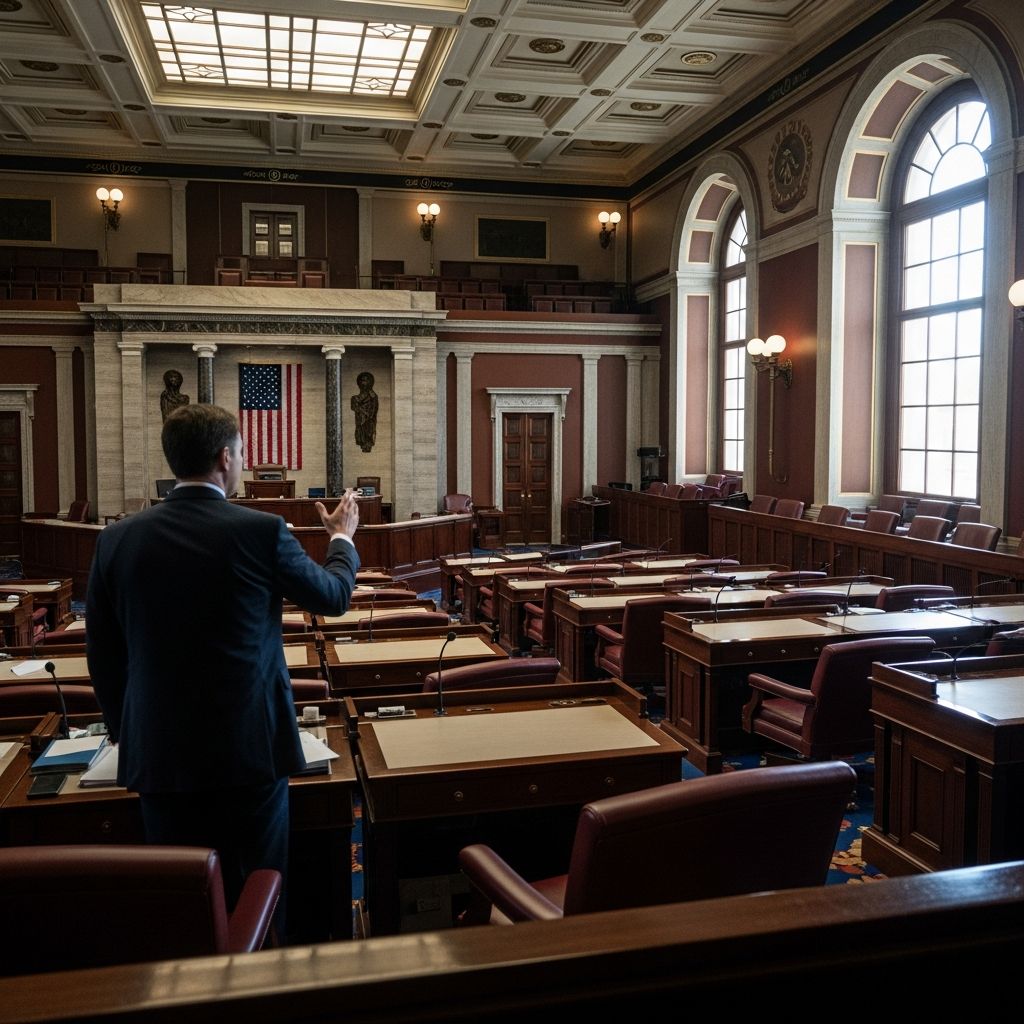
The filibuster represents a distinctive procedural tool in the United States Senate, enabling individual senators or small groups to prolong debate and potentially obstruct votes on legislation or nominations. This mechanism, rooted in the Senate’s tradition of extended discussion, requires a supermajority to overcome, typically 60 votes for cloture, making it a powerful instrument for the minority party.
Origins in Senate Traditions
The filibuster emerged not as a deliberate design but from an oversight in early Senate rules. The U.S. Constitution outlines only specific supermajority requirements, such as for treaties or veto overrides, leaving most decisions to simple majorities. Initially, Senate rules from 1789 included a ‘previous question’ motion to end debate, but this was itself debatable, limiting its utility.
In 1806, Vice President Aaron Burr suggested removing what he viewed as a superfluous rule, inadvertently eliminating the mechanism to curtail debate. This change granted senators the ability to speak indefinitely, laying the groundwork for filibusters. Early instances appeared sporadically; for example, in 1789, Senator William Maclay noted opponents ‘talking away the time’ to block a bill.
By the 1830s, the practice gained traction. A prominent early case in 1837 involved Whig senators delaying action to prevent Democrats from expunging a censure against President Andrew Jackson. In 1841, debate over a national bank charter saw Whig leader Henry Clay propose rule changes, only to retreat amid threats of prolonged obstruction.
Development of Cloture Rules
Pressure to limit filibusters mounted over decades. Senators repeatedly sought to reinstate debate-ending procedures, but minorities often blocked reforms using the tactic itself. Unanimous consent agreements became a workaround to manage proceedings.
The breakthrough came in 1917 amid World War I concerns over arming merchant ships. President Woodrow Wilson urged action, leading to Senate Rule XXII, or the cloture rule, allowing a two-thirds majority of senators present to end debate. First invoked in 1919 against the Treaty of Versailles, it set a precedent.
| Year | Threshold | Key Context |
|---|---|---|
| 1917 | Two-thirds of senators present | Response to WWI filibusters |
| 1949 | Two-thirds of duly chosen and sworn | Expanded to more matters |
| 1959 | Two-thirds of present and voting | Civil rights anticipation |
| 1975 | Three-fifths of duly chosen and sworn | 60-vote threshold established |
Further refinements occurred in 1949 and 1959, adjusting thresholds amid civil rights battles. The pivotal 1975 change lowered the bar to 60 votes, the current standard for most legislation, though rules changes still require two-thirds.
How Filibusters Operate Today
Modern filibusters rarely involve marathon speeches, thanks to procedural evolutions. Senators now signal intent via a ‘hold’ or by objecting to unanimous consent, forcing cloture motions without holding the floor. This ‘silent filibuster’ ties up the agenda efficiently.
To break one, 60 senators must vote for cloture, limiting post-cloture debate to 30 hours. Nominations faced changes in the 2010s: a 2013 ‘nuclear option’ set a simple majority for most executive and judicial picks, extended to Supreme Court nominees in 2017.
- Traditional Filibuster: Continuous speaking, reading phone books or recipes to exhaust opponents.
- Modern Variant: Procedural objection forcing supermajority vote.
- Two-Track System: Introduced in 1972, allows other business during filibusters.
Iconic Filibusters in American History
Filibusters have shaped landmark moments. Strom Thurmond’s 1957 24-hour, 18-minute speech against the Civil Rights Act remains the longest, reading state election laws and menus.
In the 1960s, Southern Democrats filibustered voting rights bills, delaying the 1964 Civil Rights Act and 1965 Voting Rights Act. Huey Long once recited Shakespeare and recipes.
Recent examples include Rand Paul’s 2013 drone policy filibuster and Bernie Sanders’ 8.5-hour gun control speech. These highlight the tactic’s endurance, from obstructing civil rights to modern policy disputes.
Arguments For and Against the Filibuster
Defenses: Protecting Minority Rights
Proponents argue the filibuster fosters deliberation, preventing hasty majoritarian overreach. It encourages bipartisanship, as supermajorities compel compromise. Senate leaders like Mitch McConnell have called it essential for the chamber’s ‘cooling saucer’ role.
Without it, the Senate might mirror the House’s majoritarianism, eroding federalism and state interests.
Criticisms: Obstruction and Inequality
Critics contend it distorts democracy, allowing 41 senators (21% of U.S. population) to block majority will. Filibuster frequency surged post-1975, from 35 in the 1960s to over 300 annually recently.
Its racist history—used to block anti-lynching laws and civil rights—undermines legitimacy. Today, it stalls voting rights, climate action, and infrastructure.
| Pros | Cons |
|---|---|
| Promotes compromise | Enables gridlock |
| Protects minorities | Undermines majority rule |
| Encourages deliberation | Increases inequality (small states overrule large) |
Reform Proposals and the Nuclear Option
Debate over reform intensifies. The ‘nuclear option’—majority vote to alter precedents—eliminated filibusters for nominations. Talks persist for legislation, like ‘carve-outs’ for voting rights or budgets.
Elimination requires changing Rule XXII, historically filibuster-proof. Biden’s 2022 commission explored options without consensus. Momentum builds when majorities unify, but fears of retaliation deter action.
Impact on Contemporary Legislation
The filibuster profoundly affects policy. It blocked comprehensive immigration reform, gun background checks post-Sandy Hook, and minimum wage hikes. During COVID-19, it delayed relief bills.
Reconciliation bypasses it for budgets, enabling ACA expansions and tax cuts. Yet, overuse risks institutional erosion.
Frequently Asked Questions
What is the current vote threshold to end a filibuster?
60 votes for cloture on most legislation and nominations (except Supreme Court, now simple majority).
Can one senator alone filibuster?
Yes, though practically, coordination sustains them; modern ones are procedural.
Has the filibuster ever been eliminated?
Not fully; reformed for nominations via nuclear option in 2013 and 2017.
Why is it called a ‘filibuster’?
From Dutch/Spanish ‘freebooter,’ evoking pirates, applied to legislative delay in the 1850s.
Does the House have filibusters?
No, House rules limit debate strictly.
Looking Ahead: The Filibuster’s Future
As polarization grows, the filibuster’s viability hangs in balance. Reforms could streamline governance but risk majoritarian excess. Its preservation maintains Senate distinctiveness amid calls for democracy enhancement. Ongoing debates will define legislative functionality.
References
- The Filibuster Explained — Brennan Center for Justice. 2023-06-15. https://www.brennancenter.org/our-work/research-reports/filibuster-explained
- Filibuster in the United States Senate — Wikipedia (sourced from primary docs). 2026-01-10. https://en.wikipedia.org/wiki/Filibuster_in_the_United_States_Senate
- About Filibusters and Cloture | Historical Overview — U.S. Senate. 2024-05-20. https://www.senate.gov/about/powers-procedures/filibusters-cloture/overview.htm
- The History of the Filibuster — Brookings Institution. 2021-03-22. https://www.brookings.edu/articles/the-history-of-the-filibuster/
- Filibuster 101: How One Senator Can Stop Everything — YouTube (Brennan Center). 2019-11-13. https://www.youtube.com/watch?v=yrSflkh9T-Q
Similar Articles








Read full bio of medha deb


