
Understanding Securities Fraud: Laws, Risks, and Investor Protection
A practical legal guide to how securities fraud works, what laws apply, and how investors and professionals can reduce their risk.
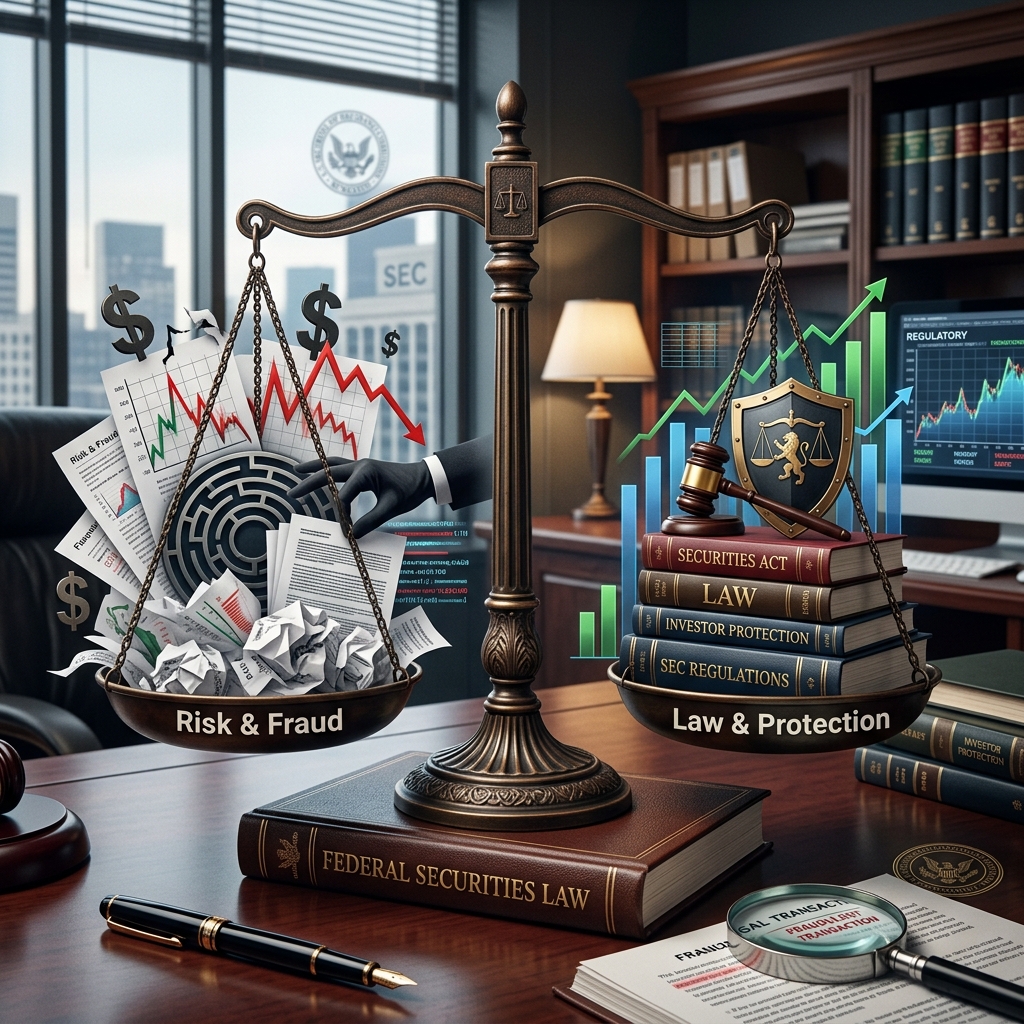
Securities fraud sits at the intersection of criminal law, financial regulation, and investor protection. It covers a wide range of deceptive practices used in the offer, purchase, or sale of securities, and is treated as a serious white-collar crime under U.S. law. This guide explains what securities fraud is, how key federal statutes address it, common fraudulent schemes, potential penalties, and practical strategies to reduce risk.
What Is Securities Fraud?
At its core, securities fraud involves using misleading or concealed information to influence investment decisions in connection with securities such as stocks, bonds, options, mutual fund shares, and other financial instruments. It typically includes one or more of the following elements:
- A misrepresentation (false statement of material fact) or omission (failure to disclose material information) about an investment.
- A connection to the offer, purchase, or sale of a security.
- Intentional or knowing conduct designed to deceive, manipulate, or defraud investors.
- Reliance by investors on the misleading information, resulting in financial loss or other harm.
Because securities markets depend on accurate and timely information, U.S. securities laws broadly prohibit fraudulent activities of any kind in connection with securities transactions.
Why Securities Fraud Matters
Securities fraud is not only an individual investor problem; it can undermine broader market confidence. When false information drives trading decisions, capital can be misallocated, legitimate businesses harmed, and systemic risks increased. As a result, Congress and regulators have built a layered framework of statutes and rules to discourage and punish deceptive practices.
- Individual impact: Investors may lose savings, retirement funds, or college funds because of fraudulent schemes.
- Market impact: Widespread fraud can erode trust in the integrity and fairness of securities markets.
- Regulatory impact: Authorities must expend substantial resources on investigations, enforcement actions, and investor education.
Key Federal Laws Governing Securities Fraud
Securities fraud is addressed through multiple federal statutes. Some impose disclosure and anti-fraud duties, while others create specific criminal offenses. Several of the most important provisions are summarized in the table below.
| Law / Rule | Main Focus | Type of Liability |
|---|---|---|
| Securities Act of 1933 | Initial offerings of securities; mandatory disclosures and ban on deceit in public sales. | Civil and criminal; focuses on registration and truthful disclosure. |
| Securities Exchange Act of 1934 | Trading in secondary markets; ongoing reporting and anti-fraud provisions. | Civil and criminal; governs exchanges, broker-dealers, and fraud in trading. |
| Rule 10b-5 (under §10(b) of 1934 Act) | Broad prohibition on manipulative and deceptive practices in connection with securities transactions. | Civil and, in serious cases, criminal enforcement; widely used in private and government actions. |
| 18 U.S.C. § 1348 | Criminal offense of securities and commodities fraud, focusing on deceptive schemes. | Criminal statute; up to 25 years in prison plus fines. |
The Securities Act of 1933: “Truth in Securities”
The Securities Act of 1933 is often described as a “truth in securities” law because it emphasizes accurate information in public offerings. It pursues two main objectives:
- Requiring that investors receive financial and other significant information about securities offered for public sale.
- Prohibiting deceit, misrepresentations, and other fraud in the sale of securities.
To achieve these goals, the Act generally requires registration of public offerings with the U.S. Securities and Exchange Commission (SEC), along with detailed disclosure documents. Failure to make required disclosures or providing false information can lead to civil liability and, in serious cases, criminal prosecution.
The Securities Exchange Act of 1934 and Rule 10b-5
The Securities Exchange Act of 1934 governs trading in securities markets and created the SEC as the primary federal regulator. Section 10(b) of the Act authorizes the SEC to address manipulative and deceptive devices in connection with securities trading, and Rule 10b-5 is the principal regulation issued under that authority.
Rule 10b-5 broadly makes it unlawful to:
- Employ any device, scheme, or artifice to defraud in connection with a securities transaction.
- Make any untrue statement of a material fact or omit a material fact needed to make statements not misleading.
- Engage in any act or practice that operates as a fraud or deceit upon any person in connection with the purchase or sale of a security.
Because of its broad wording, Rule 10b-5 covers a wide range of conduct, including insider trading, falsified corporate filings, and broker misconduct such as unauthorized trading or “churning” accounts to generate commissions.
Criminal Securities Fraud Under 18 U.S.C. § 1348
While the securities acts provide anti-fraud rules and disclosure obligations, 18 U.S.C. § 1348 specifically defines a federal crime of securities and commodities fraud. The statute makes it a crime to knowingly execute, or attempt to execute, a scheme to:
- Defraud any person in connection with certain commodity or securities transactions.
- Obtain money or property by false or fraudulent pretenses, representations, or promises related to such transactions.
A conviction under § 1348 can result in up to 25 years of imprisonment, fines, or both. The statute is conceptually similar to mail and wire fraud provisions and is frequently used in federal prosecutions involving investment schemes and market manipulation.
Common Types of Securities Fraud Schemes
Securities fraud can occur at multiple points in the investment process—from initial offerings to ongoing trading and portfolio management. Some recurring patterns include:
Offering Fraud and Misleading Prospectuses
- False financial disclosures: Companies may exaggerate earnings, hide liabilities, or misstate business prospects in offering documents.
- Omissions of risk factors: Failure to disclose major litigation, regulatory investigations, or significant operational risks can mislead investors.
- Unregistered offerings marketed as safe investments: Sales pitches may misrepresent speculative or illiquid securities as low-risk products.
Such conduct often implicates the Securities Act of 1933 and the Exchange Act of 1934, especially when registration and disclosure rules are ignored or manipulated.
Broker and Advisor Misconduct
Brokers, investment advisers, and other intermediaries can commit securities fraud when they violate duties owed to clients. Examples include:
- Unauthorized trading: Executing transactions without the client’s consent or beyond granted authority.
- Unsuitable recommendations: Advising investments that do not align with the client’s goals, risk tolerance, or financial situation, while concealing relevant risks.
- Churning: Excessive trading solely to generate commissions, with little or no legitimate investment purpose.
These practices can violate both securities regulations and industry rules, and may form the basis of civil suits or enforcement actions based on Rule 10b-5.
Microcap and “Pump-and-Dump” Schemes
Fraudsters often target low-priced, thinly traded securities sometimes referred to as microcap or “penny” stocks. A typical pump-and-dump scheme involves:
- Acquiring a large position in a low-value stock.
- Spreading misleading positive information through calls, emails, social media, or newsletters to “pump” demand.
- Selling shares at artificially inflated prices once investor interest surges, then abandoning the stock as its price collapses.
Investors who buy during the “pump” phase may suffer substantial losses when the market corrects, while the perpetrators profit from the temporary price spike.
Insider Trading and Corporate Disclosure Fraud
- Insider trading: Corporate insiders or tippees trade a company’s securities based on material, non-public information, violating duties of trust and confidence.
- Falsified filings: Companies submit inaccurate reports to regulators or investors, masking financial problems or operational failures.
- Manipulation of share prices: Coordinated trades or deceptive statements designed to move prices for personal gain.
These forms of misconduct are frequently pursued under Rule 10b-5 and related provisions, and can result in both civil and criminal penalties.
Civil and Criminal Consequences
Securities fraud can lead to both civil liability and criminal prosecution. The specific penalties depend on the statute invoked, the scope of the fraud, and the amount of loss involved.
Civil Liability
- Damages: Investors may seek compensation for losses caused by misleading statements or omissions.
- Rescission or restitution: Courts can order unwinding of transactions or repayment of funds obtained through fraud.
- Injunctions and bars: Regulators may pursue orders preventing individuals from serving as officers, directors, or securities professionals.
Private actions under Rule 10b-5 generally require proof of intentional misrepresentation or omission of material information, reliance, causation, and damages.
Criminal Penalties
When securities fraud rises to the level of criminal conduct, federal penalties can be severe. Under various securities statutes and general fraud laws:
- Violations of federal securities law can carry up to 20 years in prison and fines up to several million dollars, depending on the offense and amount of money involved.
- Under 18 U.S.C. § 1348, securities and commodities fraud is punishable by up to 25 years imprisonment, fines, or both.
- Attempts or conspiracies to commit securities fraud may be punished similarly to completed offenses under related provisions such as 18 U.S.C. § 1349.
Courts often consider the magnitude of investor losses, the level of intent, and the defendant’s role in the scheme when determining sentences.
Time Limits and Enforcement
Securities fraud cases must be brought within specific timeframes, known as statutes of limitations. For example, civil actions under Rule 10b-5 generally require filing within a limited period after discovery of the violation and within a maximum period from when the violation occurred. These limits aim to balance fairness to defendants with protection for investors who uncover fraud.
Enforcement can involve multiple actors:
- Regulators: The SEC and other agencies investigate potential violations and bring administrative or civil actions.
- Prosecutors: The U.S. Department of Justice pursues criminal cases under statutes such as 18 U.S.C. § 1348 and related provisions.
- Private plaintiffs: Investors may file suits for damages or other relief when they have been harmed by fraud.
Practical Steps to Reduce Securities Fraud Risk
While no strategy can eliminate risk entirely, investors and professionals can reduce their exposure to securities fraud by focusing on information quality, due diligence, and regulatory oversight.
For Individual Investors
- Verify registration and filings: Check whether securities and offering documents are properly registered with the SEC and review key filings for inconsistencies.
- Be skeptical of unsolicited pitches: Treat unsolicited emails, calls, or messages promoting “guaranteed” or “can’t-miss” investments with caution, particularly in microcap stocks.
- Understand your risk tolerance: Evaluate whether recommendations align with your financial goals and ability to absorb losses.
- Monitor account activity: Regularly review statements to detect unauthorized trades or excessive turnover that may signal churning.
For Companies and Market Professionals
- Maintain robust disclosure controls: Implement compliance procedures to ensure accurate and timely filings.
- Train staff on anti-fraud rules: Educate employees on Rule 10b-5, insider trading restrictions, and obligations to provide truthful information.
- Monitor for conflicts of interest: Address undisclosed conflicts that may skew recommendations or corporate decisions.
- Respond promptly to red flags: Investigate complaints, irregular trading patterns, or internal reports of potential misstatements.
Frequently Asked Questions About Securities Fraud
Is every investment loss a form of securities fraud?
No. Market risk and normal price fluctuations are inherent in investing. Securities fraud involves intentional or knowing deception or omission of material information in connection with securities transactions. Losses caused by honest mistakes, economic downturns, or market volatility do not, by themselves, constitute fraud.
Who can be held liable for securities fraud?
Liability can extend to a wide range of actors, including issuers, corporate officers, brokers, advisers, and others who participate in deceptive schemes. Under Rule 10b-5 and related provisions, anyone who intentionally misrepresents or conceals material facts in connection with securities trading may face civil or criminal consequences.
Can investors sue for securities fraud even if regulators do not act?
Yes. Private investors may bring civil actions under federal securities laws, including Rule 10b-5, if they can show material misrepresentation or omission, reliance, causation, and damages. Regulatory enforcement and private litigation often proceed in parallel but are not mutually dependent.
How do criminal and civil securities fraud cases differ?
Civil cases focus on compensating harmed investors and deterring misconduct through damages, injunctions, and other remedies. Criminal cases, brought by prosecutors, seek to punish serious wrongdoing with imprisonment and fines, and require proof beyond a reasonable doubt. The same conduct can trigger both types of proceedings.
Are there special rules for professional investment advisers and funds?
Yes. In addition to general anti-fraud provisions, investment advisers and fund managers are subject to specific obligations under statutes such as the Investment Advisers Act and Investment Company Act of 1940, which reinforce prohibitions on providing misleading information to investors. Violations can lead to regulatory sanctions and civil liability.
References
- Securities Fraud — Legal Information Institute, Cornell Law School. 2023-01-01. https://www.law.cornell.edu/wex/securities_fraud
- The Laws That Govern the Securities Industry — U.S. Securities and Exchange Commission (Investor.gov). 2023-05-15. https://www.investor.gov/introduction-investing/investing-basics/role-sec/laws-govern-securities-industry
- Securities Fraud Laws — Justia Consumer Protection Law Center. 2022-09-10. https://www.justia.com/consumer/deceptive-practices-and-fraud/broker-securities-fraud/
- The Guide to Securities Fraud Elements and SEC Rule 10b-5 — BNSK Law. 2022-11-01. https://bnsklaw.com/the-guide-to-securities-fraud-elements-and-sec-rule-10b-5/
- 18 U.S. Code § 1348 – Securities and Commodities Fraud — U.S. Government Publishing Office. 2021-12-01. https://www.law.cornell.edu/uscode/text/18/1348
- Penalties for Securities Fraud — Federal Lawyer. 2023-03-20. https://federal-lawyer.com/penalties-for-securities-fraud/
- Securities Fraud Laws & Regulations — Zamansky LLC. 2023-02-10. https://www.zamansky.com/financial-fraud-finra-violations/securities-fraud-laws-and-regulations/
Similar Articles








Read full bio of medha deb


