
Understanding School Police Authority and Student Rights
A clear guide to how school police operate, what powers they have, and what students, parents, and staff need to know.
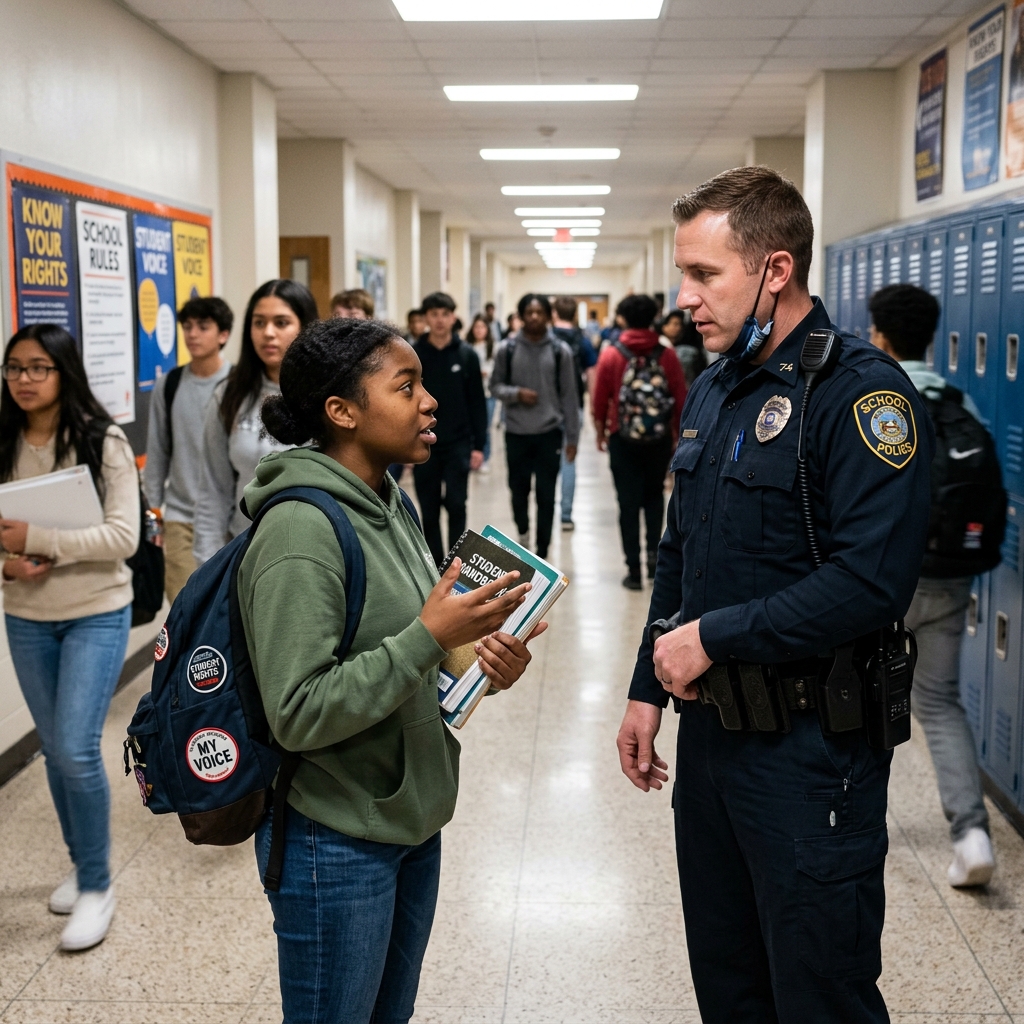
School police and school resource officers are more visible on campuses than ever, yet many students and parents are unsure whether these officers are real police or something different. This guide explains how school police are authorized, what powers they have, where their authority is limited, and how those powers affect the rights of students and visitors.
Who Are School Police and School Resource Officers?
Across the United States, schools use several different models for campus policing. The exact titles and powers vary by state and district, but most fall into three broad categories.
- School resource officers (SROs) – Typically sworn police officers from a city, county, or state law enforcement agency who are assigned to work on one or more school campuses.
- School district police officers – Officers employed directly by a school district within an officially recognized police department or security division.
- School safety or security officers – Personnel who may not be sworn police. They often focus on security and rule enforcement rather than criminal law, and their powers are usually more limited.
In many jurisdictions, SROs and district police officers are peace officers under state law, meaning they are fully certified law enforcement officials with arrest powers and other police authority. However, their role, training, and jurisdiction are designed around the school environment, which can create confusion about what they can and cannot do.
Are School Police “Real” Police Officers?
In several states, school district police officers are explicitly treated as public police officers under state statute. For example, Kentucky law states that police officers appointed by a local board of education are peace officers with general police powers and that district police departments are deemed public police departments. Similarly, Texas law recognizes school district police as peace officers commissioned under statewide criminal procedure rules.
Key points about their status include:
- Commissioned and certified – Many school police are certified through the same state training and licensing systems as municipal or county police.
- Full arrest authority – In some states, district officers have authority to arrest adults and take juveniles into custody when they witness or investigate crimes.
- Police powers, not just discipline – Statutes often give school police all common-law and statutory powers of sheriffs or police, including investigation and enforcement, not just enforcing school rules.
Because of these legal frameworks, in many districts school police are not simply security guards; they are legally recognized law enforcement officers. The distinction that matters most is where and how those powers may be used.
How State Law Defines School Police Powers
State statutes and regulations are the primary source for understanding school police authority. While details differ, some recurring themes appear across states.
Police Power and Jurisdiction
Jurisdiction often focuses on school property and activities, but it can be broad. For example, Kentucky law grants school police the power to preserve peace and maintain order on all property owned or used by the school district, including extracurricular activities. It also allows them to conduct investigations anywhere in the state, as long as the offense occurred on district property.
Maryland law illustrates a narrower approach. In Baltimore City, school police officers may act in an official capacity only on school premises and other property used for educational purposes, with limited exceptions. Debates in Maryland have focused on whether police presence on campuses improves safety or contributes to unnecessary student arrests and trauma.
Training and Certification Requirements
Many states require school police to complete both general law enforcement training and school-specific training. In Pennsylvania, for example, Act 67 of 2019 requires school police officers to complete annual in-service training approved by the state’s Municipal Police Officers’ Education and Training Commission. That training is designed to address issues like student behavior, de-escalation, and school safety planning.
Training requirements matter because they shape how officers respond to common school situations, such as fights, vaping, or disruptive behavior. Well-trained campus officers are expected to differentiate between disciplinary issues best handled by educators and serious crimes requiring law enforcement intervention.
Where School Police Can Act: Scope of Authority
School police authority is not unlimited. It is structured around both geographic boundaries and policy constraints adopted by districts and legislatures.
| Aspect | Typical School Police Authority |
|---|---|
| Location | Mainly on school grounds, school buses, and at school-sponsored events; some states allow investigations beyond campus if the offense is school-related. |
| Criminal law enforcement | Authority to detain, arrest, and investigate crimes, similar to other police, if they are sworn peace officers. |
| School rule enforcement | May assist in enforcing school policies, but many jurisdictions limit their role in routine discipline. |
| Use of force and restraints | Subject to general police use-of-force standards; some proposed policies seek to restrict handcuff and pepper spray use on campus. |
| Traffic enforcement | Where they are fully sworn officers, they can enforce traffic laws in their jurisdiction, though focus usually remains on school safety. |
School Discipline vs. Criminal Enforcement
An essential distinction is between school rules and criminal law. Students can break school rules without committing a crime, and vice versa. Best practices and advocacy guidelines often emphasize that school police should not be used for routine discipline.
For example, policy proposals in California have called for comprehensive school safety plans that include prohibitions on using police officers for ordinary disciplinary actions, except when requested by school staff and in specific circumstances. Civil liberties organizations in New York explain that students cannot legally be arrested for breaking school rules alone, such as dress code violations or classroom misbehavior.
To understand this difference, consider the following:
- Pure discipline issues – Tardiness, minor classroom disruption, and dress code violations are typically handled by teachers and administrators, not police.
- Criminal offenses – Assault, serious threats, weapons possession, and certain drug offenses may trigger police involvement even if they occur on school grounds.
- Mixed situations – Fights, bullying, or vandalism may start as discipline issues but become criminal matters if they escalate or cause significant harm.
District policies and state guidance often encourage schools to use restorative practices or counseling instead of law enforcement whenever possible, especially for younger students and first-time incidents.
Student Rights When Dealing With School Police
Students have constitutional and statutory rights in school, even when interacting with police. The school environment does allow some additional regulation of behavior, but it does not remove core civil liberties.
Right to Remain Silent and to Legal Counsel
Students generally have the right not to answer questions from police about potential criminal conduct. Civil liberties guidance for New York City schools advises students to say, “I want to remain silent,” if they do not wish to answer questions. If a student is arrested, they have the right to speak with an attorney, and one will be provided if they cannot afford representation.
In many jurisdictions, when police want to question a student about a crime that took place at school, the school must first obtain permission from a parent or guardian, unless an emergency or specific legal exception applies. Parents should ask about district policies and state law to confirm how this works in their area.
Searches and Physical Interactions
Students also have rights when it comes to searches and physical contact. Guidance for interacting with police on campus often recommends:
- Keeping hands visible and not running away from officers, even in stressful situations.
- Clearly stating, “I do not consent to this search,” if they do not agree to a search, while still not physically resisting.
- Avoiding interference with an officer’s actions, even if they believe the officer is mistaken, to reduce the risk of additional charges or harm.
These recommendations aim to protect both legal rights and personal safety. If a student believes an officer acted improperly, complaints can usually be filed with both the school and relevant oversight bodies.
How Parents and Educators Can Navigate School Policing
Parents and school staff play a critical role in shaping how school police operate and in protecting students. Understanding local laws and policies is the first step.
Questions to Ask Your School or District
- Are campus officers sworn police? – Ask whether school safety personnel are certified peace officers with arrest powers or security staff without full police authority.
- What training do they receive? – Inquire about school-specific training related to youth development, de-escalation, and implicit bias.
- What is their role in discipline? – Request written policies describing when officers may be involved in discipline and when matters are reserved for educators.
- How can complaints be filed? – Find out how to report concerns about officer behavior and what oversight mechanisms exist.
Balancing Safety and Civil Rights
Policy debates around school policing focus on whether the presence of officers improves safety or increases the risk of student criminalization. Some advocates argue that policing contributes to higher rates of student arrests and referrals into the juvenile justice system, especially for students of color, without clear evidence of improved safety. Others emphasize the role officers can play in emergency response and threat prevention.
Districts and legislatures are increasingly considering measures such as:
- Limiting the use of handcuffs and chemical agents on campus, except in narrowly defined circumstances.
- Clarifying that officers may not be used for routine discipline or to enforce non-criminal school rules.
- Strengthening training requirements and accountability mechanisms for campus officers.
Parents and educators who understand these evolving standards will be better equipped to participate in local discussions and advocate for policies that support both safety and student rights.
Frequently Asked Questions About School Police
Are school district police officers the same as city police?
In many states, school district police officers are sworn peace officers under state law and have many of the same powers as city or county police, including arrest authority and investigative powers. However, their jurisdiction and main responsibilities are focused on school-related property and activities, and district policy may limit how they engage in student discipline.
Can school police arrest students for breaking school rules?
School police can arrest students for crimes, but they typically cannot arrest students solely for breaking school rules that do not amount to criminal offenses. Guidance in New York, for instance, explains that students cannot be arrested purely for rule violations like dress code breaches or misbehavior in class. Many proposed policies explicitly restrict the use of police for routine discipline.
Do school police have to tell parents before questioning a student?
In some jurisdictions, schools must seek parent or guardian permission before police question a student about a crime that took place at school, with limited exceptions for emergencies or specific legal situations. Because rules vary by state, parents should review local law and district policy or consult a legal professional for guidance in a particular case.
Can school police act off campus?
School police authority off campus depends on state law and local policy. Kentucky statutes, for example, allow school police to conduct investigations anywhere in the state when offenses relate to property owned or controlled by the district. Other jurisdictions, such as Baltimore City, confine school police authority primarily to educational property, with limited exceptions. Many SROs are regular city or county officers whose authority extends beyond school grounds.
What should a student do if they feel mistreated by a school officer?
Students are generally advised to stay calm, avoid physical resistance, and clearly state their wish to remain silent or not consent to a search, while complying with basic safety directions. Afterward, they or their parents can note the officer’s name or badge number, document the incident, seek medical care if needed, and file a complaint through school channels or relevant oversight bodies. Legal aid organizations may assist if an arrest or serious harm has occurred.
References
- School Police — Commonwealth of Pennsylvania, Municipal Police Officers’ Education and Training Commission. 2023-08-01. https://www.pa.gov/agencies/mpoetc/programs/training/school-police
- 158.473 Police officers appointed by local board of education — Kentucky Legislature. 2022-07-14. https://apps.legislature.ky.gov/law/statutes/statute.aspx?id=53037
- School Police Officer Statutory Framework — Pennsylvania General Assembly, Unconsolidated Statutes, Article XIII-C. 2019-09-02. https://www.palegis.us/statutes/unconsolidated/law-information/view-statute?txtType=HTM&yr=1949&sessInd=0&smthLwInd=0&act=014&chpt=13C
- Statute Text: Education Article 4-318 — Maryland General Assembly. 2021-06-01. https://mgaleg.maryland.gov/mgawebsite/Laws/StatuteText?article=ged§ion=4-318&enactments=false
- AB 1299: School safety: school resource officers: school police officers — California Legislature. 2024-02-01. https://calmatters.digitaldemocracy.org/bills/ca_202320240ab1299
- Frequently Asked Questions — Huffman Independent School District Police Department. 2023-05-15. https://www.huffmanisd.net/departments/police-department/frequently-asked-questions
- How to Interact with Police in New York City Public Schools — New York Civil Liberties Union. 2022-09-01. https://www.nyclu.org/resources/know-your-rights/how-interact-police-new-york-city-public-schools
Similar Articles








Read full bio of medha deb


