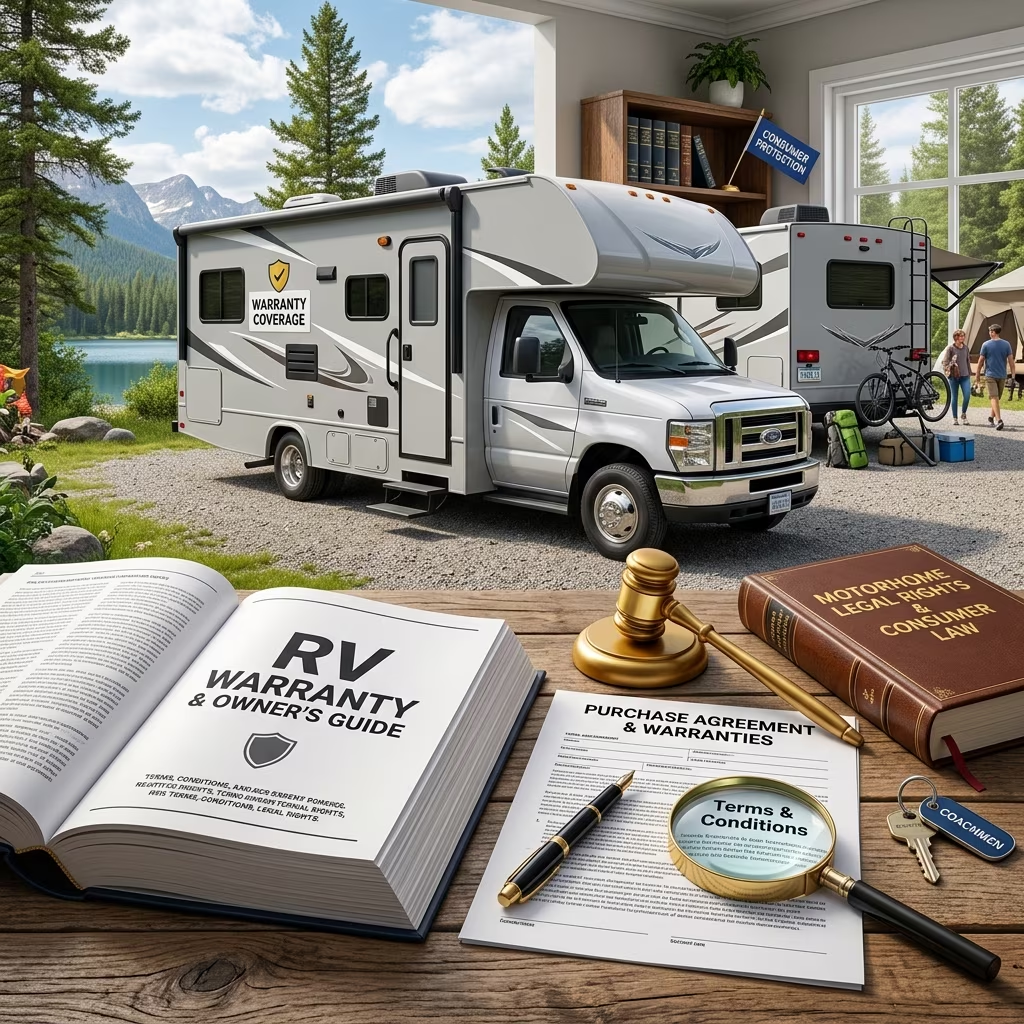
Buying a recreational vehicle (RV) is a major purchase that combines elements of a home, a vehicle, and sometimes a luxury item. Along with the freedom to travel comes a patchwork of warranties, legal protections, and potential disputes that are different from those involving ordinary passenger cars. This guide explains how RV warranties work, how lemon laws and the Magnuson-Moss Warranty Act protect you, and what to do when your motorhome or travel trailer has persistent problems.
Why RVs Raise Unique Legal and Warranty Questions
An RV is often part vehicle and part living space, and it can be built from components supplied by several different manufacturers. That complexity means your legal rights and warranty coverage may be more fragmented than with a typical car purchase.
Key reasons RVs are legally different include:
- Multiple warranties for chassis, engine, appliances, and coach components.
- Mixed state and federal rules that may treat RVs differently from passenger vehicles.
- Higher cost and longer use, often similar to a second home, raising the stakes when defects occur.
- Specialized sales channels, such as RV dealers, that sometimes use complex contracts and add-ons like extended service plans.
Core Types of RV Warranties
To understand your rights, start by identifying the different warranties that may apply to your RV. Consumer warranty law generally distinguishes between express and implied warranties.
Express Warranties
An express warranty is a specific promise from the manufacturer or seller, usually in writing, about the condition of the RV or how defects will be handled.
Common express warranties on RVs include:
- Manufacturer “bumper-to-bumper” warranty that covers major mechanical and structural components for a stated time or mileage.
- Component warranties for appliances, generators, slide-outs, and electronics provided by their own manufacturers.
- Dealer warranties or promises, sometimes offered as a selling point, separate from the manufacturer’s coverage.
Under federal law, written warranties must be clearly labeled as “full” or “limited”, use plain language, and disclose what is covered, for how long, and how claims must be made.
Implied Warranties
Implied warranties are automatic legal protections that arise from the sale itself, rather than from a written document. One key protection is the implied warranty of merchantability, which means a product must be fit for ordinary use and perform as a typical buyer would reasonably expect.
For RVs, the implied warranty of merchantability generally means:
- The RV should be able to drive safely and reliably under normal conditions.
- The living components (plumbing, electrical, heating) should function as a reasonable owner would expect.
- Major defects that substantially impair use or safety may violate this implied warranty.[10]
Implied warranties often last up to four years under federal guidance, although state law can affect the exact duration and scope.
Extended Warranties and Service Contracts
Many RV purchasers are offered extended warranties or service contracts at the time of sale. These agreements can extend coverage but may have strict exclusions or claim requirements.
Before buying an extended plan, consider:
- Coverage limitations: Are major systems excluded or subject to high deductibles?
- Provider reputation: Check reviews and complaints with consumer protection agencies.
- Interaction with implied warranties: Under federal law, sellers may be restricted from disclaiming implied warranties when they sell certain service contracts, especially early in the ownership period.
How Lemon Laws Apply to RVs
Every U.S. state has some form of lemon law that simplifies claims for seriously defective vehicles. These laws typically offer a right to a refund or replacement if a manufacturer cannot fix substantial problems within a reasonable number of repair attempts.
Basic Lemon Law Concepts
Although details vary by state, an RV is often considered a “lemon” when:
- It has been subject to repeated repairs for the same defect.
- The defect significantly impairs use, safety, or market value.
- Repair attempts occur within a certain time or mileage window, such as the first 18 months or 18,000 miles.
If the defect cannot be repaired after the legally defined number of attempts, many state laws provide a right to a buyback, replacement, or refund, sometimes with additional civil penalties for manufacturers that willfully fail to comply.
Do State Lemon Laws Cover RVs?
Coverage of RVs under state lemon laws is not uniform. Some states fully include motorhomes and travel trailers, others offer only partial coverage, and some exclude certain types of RVs based on weight, usage, or classification.
Common variations include:
- Weight limits that exclude very large motor coaches from ordinary passenger vehicle statutes.
- Separate treatment of chassis and coach, where only the driving portion is covered.
- Special rules for commercial or full-time use, which may limit protection if the RV is treated as business equipment.
Because of these differences, RV owners often need to look beyond lemon laws to other sources of protection, including federal warranty law and state commercial codes.
Federal Protection: Magnuson-Moss Warranty Act
When state lemon laws do not fully cover RVs, many owners turn to the Magnuson-Moss Warranty Act, a federal statute enacted in 1975 to regulate consumer product warranties.
Key Features of Magnuson-Moss
| Feature | What It Means for RV Owners |
|---|---|
| Clear warranty terms | Manufacturers must provide readable, detailed warranty information, including coverage, duration, and limitations. |
| Full vs. limited warranty | Written warranties must indicate whether coverage is full or limited, affecting repair/replacement obligations. |
| Remedies for breach | If a manufacturer fails to honor its written warranty, consumers can seek legal remedies, including damages and attorney’s fees. |
| Interaction with state law | The federal act works alongside state lemon laws and commercial codes, often filling gaps when RVs are excluded. |
Under Magnuson-Moss, the manufacturer must be given a reasonable opportunity to repair the defect. If repairs are untimely, repetitive, or unreasonably numerous, the consumer may have a claim for breach of warranty.
Sales, Lease, and Fraud Issues in RV Transactions
Warranty problems are only one category of RV legal issues. Owners may also face concerns about misrepresentations, unfair contract terms, or deceptive sales practices.
Common RV Sales Problems
- Undisclosed damage or prior use, such as selling a repaired RV as “new.”
- Omitting important limitations on warranty or service contract coverage.
- Pressure to buy add-ons like extended warranties or gap coverage without adequate explanation.
- Complex financing terms that hide total cost or interest rate.
Depending on the facts and the state, these issues may support claims under consumer fraud statutes, contract law, or unfair and deceptive practices acts.
Revoking Acceptance of a Defective RV
In serious cases, state commercial codes may allow an owner to revoke acceptance of a defective RV and seek to unwind the purchase.
Revocation may be possible when:
- There is a defect that substantially impairs the RV’s value.
- The buyer reasonably believed the defect would be corrected but it has not been cured in a timely manner.
- The revocation occurs within a reasonable time after discovering the problem.
This remedy usually requires careful documentation and legal guidance, because it interacts with both warranty law and contract rules.
Practical Steps When Your RV Has Defects
If your RV begins to show recurring issues, your actions in the early stages can strongly influence the outcome of any future claim.
Document Everything
Thorough records make it easier to show unreasonable repair history or breach of warranty. Best practices include:
- Keeping copies of all repair orders and invoices.
- Recording mileage, dates, and descriptions of each defect.
- Saving emails and letters sent to dealers and manufacturers.
Follow the Warranty Claims Process
Most RV warranties require you to return the vehicle to an authorized dealer or service center and follow specified steps.
To preserve your rights:
- Review the warranty booklet to identify authorized repair locations.
- Report problems as soon as they arise, within the coverage period.
- Ask for written confirmation of what repairs were performed or refused.
Escalate the Dispute if Repairs Fail
If the seller or manufacturer does not resolve the problem, you can escalate through:
- Written complaints sent by certified mail to the manufacturer’s address listed in the warranty.
- State-run mediation or arbitration programs, when available in your jurisdiction.
- Reporting the company to federal and state enforcement agencies if deceptive practices are suspected.
Consider Legal Counsel
Because RVs sit at the intersection of motor vehicle law, consumer protection, and contract law, it can be helpful to consult an attorney experienced in warranty and lemon law disputes, especially when:
- Substantial safety risks or major downtime make the RV unusable.
- You are seeking a buyback, refund, or revocation of acceptance.
- Fraud or misrepresentation may have occurred at the time of sale.
Frequently Asked Questions About RV Warranties and Legal Issues
Does every RV come with a warranty?
Most new RVs come with at least one written manufacturer warranty covering major components for a specified period, often around one year for comprehensive coverage. There may also be separate warranties on appliances and systems.
Can a dealer disclaim implied warranties on an RV?
Under federal law and many state statutes, disclaimers of implied warranties are restricted, especially when certain types of service contracts or extended warranties are sold within a short period after purchase. Specific rules are set by the Magnuson-Moss Warranty Act and state codes, so the legality of disclaiming implied warranties depends on the circumstances and jurisdiction.
If my state’s lemon law excludes RVs, do I have any protection?
Yes. Even if RVs are partly or fully excluded from a state lemon law, you may still have claims under the Magnuson-Moss Warranty Act, state commercial codes, and implied warranty principles. These can provide remedies such as damages or, in serious cases, revocation of acceptance.
How many repair attempts qualify my RV as a “lemon”?
The number of repair attempts is defined by each state’s statute, and can vary. Many laws focus on repeated, unsuccessful efforts to fix a defect that substantially impairs use, safety, or value, or on excessive days out of service. Checking your state’s lemon law is essential to know the precise thresholds.
What should I look for in an RV extended warranty?
Evaluate extended plans by reviewing coverage limits, exclusions, deductibles, claim procedures, and the provider’s track record. The Federal Trade Commission recommends checking the company’s reputation, reading the terms carefully, and understanding what is and is not covered before you commit.
Can I get a refund or replacement if my RV cannot be repaired?
In many cases, yes. If repeated repairs fail to correct serious defects, state lemon laws or the Magnuson-Moss Warranty Act may entitle you to a refund, replacement, or other compensation, particularly when the vehicle no longer performs as reasonably expected.
References
- RV and Motorhome Laws: My Rights — My Colorado Lemon Law Rights. 2024-01-10. https://coloradolemonlaw.co/rv-motor-home-lemon-law/
- What You Need to Know About RV Warranty Laws — Laws101. 2023-06-15. https://laws101.org/rv-warranty-laws/
- RV Buyback Demands and Warranty Disputes — Brennan Law Firm. 2022-11-20. https://www.brennanlaw.com/rv-lemon-law-buyback-claims/
- Consumer Warranty Law Basics — FindLaw. 2023-04-05. https://www.findlaw.com/consumer/consumer-transactions/consumer-warranty-basics.html
- Warranties — Federal Trade Commission (FTC) Consumer Advice. 2022-09-30. https://consumer.ftc.gov/articles/warranties
- Warranty Law: General Information — Texas State Law Library. 2023-02-01. https://guides.sll.texas.gov/warranty-law