
Understanding Rural and Underserved Mortgage Areas
Learn how regulators identify rural and underserved areas and why it matters for mortgage lending access and community investment.
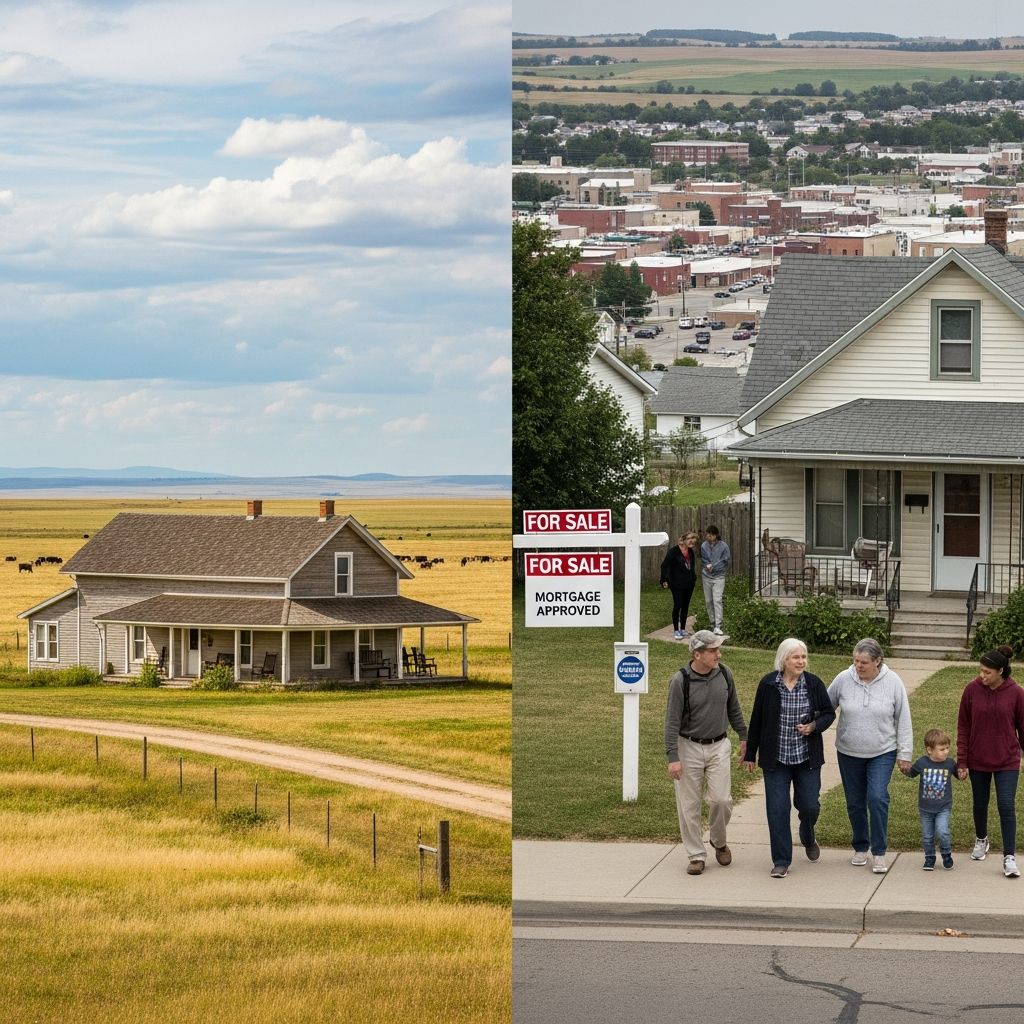
Access to safe and affordable mortgage credit is not evenly distributed across the United States. Many small towns, farming communities, tribal lands, and remote regions face persistent barriers to basic financial services, including home loans. Federal law and regulations therefore single out certain rural and underserved areas for special treatment in mortgage rules to encourage lending and protect consumers.
This article explains what those terms mean in the context of federal mortgage regulation, how areas are identified, and what the designation means for lenders and borrowers. It draws on official research and data about rural financial challenges, but presents the information in accessible language for non-specialists.
Why Rural and Underserved Designations Exist
Rural communities and areas with limited banking services often face a double disadvantage: local incomes and economic activity may be lower, and at the same time families and small businesses have fewer safe credit options. In response, several federal laws and rules use geographic designations to:
- Relax certain compliance burdens for small creditors that serve these areas, encouraging them to keep lending locally.
- Support access to mortgage credit where large banks may be absent or withdrawing.
- Reduce reliance on high-cost or non-bank lenders by making it easier for community-focused lenders to offer sustainable products.
- Inform policy and oversight by mapping financial access at the county or census-tract level.
Research from federal agencies shows that rural residents generally have lower incomes, higher poverty rates, and fewer local financial institutions than residents of metro areas. These structural gaps justify targeted rules and incentives.
Key Concepts: Rural, Underserved, and Small Creditors
While everyday usage of terms like “rural” is broad, in mortgage regulation they are tied to specific data sources and formulas. Understanding the basic categories helps clarify how geographic tools and lists are built.
What counts as a rural area?
For regulatory purposes, a rural area is usually defined at the county or census-tract level using federal data. Rules may rely on:
- Urban–rural classifications from federal statistical agencies that consider population density and commuting patterns.
- Indicators such as distance from metropolitan areas and the share of residents living in open countryside.
These designations matter because many small banks and credit unions that focus on agricultural or small-town lending are clustered in such counties, and they play a disproportionate role in financing farms and local housing.
What is an underserved area?
An underserved area is typically a place with limited access to mainstream mortgage or banking services, regardless of whether it is technically rural. Regulators may look at indicators such as:
- Low levels of mortgage lending compared with the housing stock.
- High reliance on non-bank or high-cost lenders.
- Persistent poverty or low-income status.
- Loss of local bank branches and the emergence of “banking deserts.”
Some underserved areas are rural, while others may be small towns or inner suburbs that experience similar gaps in credit availability.
Who are small creditors and community lenders?
Many regulatory benefits tied to rural and underserved status apply only to small creditors such as community banks and credit unions. Although definitions vary by rule, they typically emphasize:
- Modest total assets (below a regulatory threshold).
- Limited total volume of mortgage originations.
- Predominant lending in the lender’s local assessment area or nearby counties.
These institutions play a central role in rural lending: for example, small community banks account for the majority of agricultural bank lending in the United States.
How Regulators Identify Rural and Underserved Areas
Behind each public map or list of rural and underserved locations is a multi-step process that blends geographic data, lending records, and regulatory definitions. Although technical in the details, the logic follows a clear pattern.
Step 1: Defining the geographic building blocks
Most tools start by choosing the unit of geography to evaluate. Common options include:
- Counties: widely used in federal statistics and easy for the public to recognize.
- Census tracts: smaller areas within counties, useful when conditions vary strongly within a single county.
Official rural classifications often blend county-level and tract-level information so that isolated rural pockets within larger metro counties are not overlooked.
Step 2: Applying a rural classification
Next, data from federal sources are used to mark which counties or tracts count as rural. Methods can include:
- Classifying areas outside core metropolitan regions as rural or nonmetropolitan.
- Using thresholds for population density and commuting ties to cities.
The result is a list of counties or tracts that meet the regulatory definition of rural for a given year or multi-year period.
Step 3: Measuring whether areas are underserved
To identify underserved locations, regulators draw on large public datasets about mortgage lending and demographics, notably:
- Home Mortgage Disclosure Act (HMDA) data, which capture detailed information on mortgage applications and originations by geography.
- Census and American Community Survey data on population, income, poverty, and housing.
By comparing lending volumes with factors like housing units, home values, and local incomes, analysts can flag areas where mainstream mortgage activity appears unusually low. These locations may then be marked as underserved for regulatory purposes.
Step 4: Refreshing maps and lists on a schedule
Economic and demographic conditions change over time, so official lists are typically updated on a regular cycle (for example, annually). This allows:
- Areas that improve to move out of underserved status.
- Communities with new bank branch closures or declining lending to be added.
- Lenders to plan compliance based on up-to-date information.
Practical Uses for Lenders and the Public
Public tools and datasets that highlight rural and underserved areas are valuable to multiple audiences, from compliance teams at banks to local housing advocates.
Compliance planning and product design
Mortgage lenders can use geographic information to:
- Determine whether they qualify as small creditors serving predominantly rural or underserved areas, which can ease certain regulatory requirements.
- Design loan products suitable for rural borrowers, such as mortgages tailored for manufactured housing or properties with mixed residential and agricultural use.
- Assess where branch consolidations or openings might affect access to credit and community obligations.
Community development and advocacy
Local governments, nonprofits, and researchers rely on these designations to:
- Target homebuyer education, counseling, and financial coaching in high-need communities.
- Support grant applications and community development projects aimed at closing financial access gaps.
- Track changes in banking deserts and branch closures over time.
Consumers and homebuyers
Individual consumers may benefit indirectly from these tools, because they encourage lenders to maintain or expand mortgage offerings in places that might otherwise be overlooked. In some cases, borrowers in designated rural or underserved areas may also find:
- More flexible underwriting from local community lenders.
- Access to specialized loan programs or down-payment assistance.
- Better protection from high-cost non-bank lenders, as safer alternatives become available.
Comparing Rural, Underserved, and Banking Deserts
The terms used in public debates about financial access can be confusing. The following table highlights how several commonly used concepts differ:
| Term | Main Focus | How It Is Identified | Typical Policy Use |
|---|---|---|---|
| Rural area | Population size and distance from cities | Official urban–rural classifications using census data | Targeted rules for small creditors and farm-related lending |
| Underserved area | Low levels of mainstream mortgage or banking activity | Analysis of lending data (e.g., HMDA) and demographics | Encouraging lending, monitoring access to credit |
| Banking desert | Physical absence of bank branches | Mapping branch locations and distance to nearest institution | Highlighting areas with few or no in-person banking options |
Current Challenges Facing Rural and Underserved Communities
Even with targeted designations and regulatory relief, many rural and underserved communities continue to struggle with fundamental barriers to financial health.
Loss of local banks and credit unions
Research shows that rural areas have seen a long-term decline in the number of local bank branches, contributing to the growth of banking deserts. Consequences include:
- Longer travel times to reach full-service branches.
- Reduced availability of relationship-based lending, which historically helped farmers and small businesses weather volatile incomes.
- Increased use of non-bank or high-cost alternatives such as payday lenders and pawn shops.
Higher poverty and limited credit histories
Rural households experience higher poverty rates on average than urban households, and these gaps are especially large for communities of color. As a result:
- Many residents have thin or nonexistent credit files, making it harder to qualify for conventional mortgages.
- Families are more exposed to economic shocks, leading to missed payments and damaged credit scores.
- Young adults may lack exposure to mainstream banking products and financial education.
Infrastructure and digital access barriers
In some areas, basic infrastructure compounds financial challenges. Examples include:
- Long distances and limited public transportation, making in-person visits to branches or housing counselors costly and time consuming.
- Gaps in high-speed internet access, which limit the ability to use online banking and digital mortgage applications.
These issues mean that even if a lender is willing to serve a community, practical obstacles can still restrict access.
Strategies to Improve Mortgage Access in High-Need Areas
Policymakers, lenders, and community organizations have several levers to strengthen mortgage access and financial well-being in rural and underserved areas.
Strengthening community-based lending
- Support for small lenders: Regulatory frameworks can preserve the viability of responsible small creditors that focus on relationship lending in rural markets.
- Partnerships and loan participations: Community lenders can share risk with larger institutions while retaining local decision-making.
- Specialized mortgage products: Tailoring products for self-employed borrowers, seasonal workers, and farmers with volatile incomes.
Leveraging technology responsibly
- Remote applications and e-closing: Digital tools can reduce the need for repeated in-person visits if broadband access is sufficient.
- Data-driven underwriting: Alternative data may help some borrowers with thin credit files, provided strong consumer protections are in place.
- Mobile branches and hybrid models: Combining limited physical presence with digital services can maintain coverage in sparsely populated areas.
Investing in financial capability and housing support
- Homebuyer education: Counseling on budgeting, credit building, and mortgage shopping can reduce the risk of delinquency and foreclosure.
- Outreach on safe products: Helping residents distinguish between regulated mortgage lenders and high-cost alternatives.
- Coordination with housing programs: Aligning mortgage access with federal and state housing subsidies, including rural housing initiatives.
Frequently Asked Questions (FAQs)
Q1: Does every small town qualify as a rural or underserved area for mortgage rules?
No. Regulatory designations are based on specific data and formulas, not general impressions. Some small towns may be considered part of a metropolitan area and therefore not count as rural, while others may be rural but not flagged as underserved if lending volumes are relatively robust.
Q2: How often are rural and underserved designations updated?
Lists and maps are typically refreshed on a recurring schedule, such as annually, using the latest available lending and demographic data. This allows the designations to reflect new patterns of bank branch openings or closures and shifts in local economic conditions.
Q3: Do these designations give borrowers special interest rates or subsidies?
The designations themselves usually do not guarantee specific rates or subsidies for individual borrowers. Instead, they modify certain regulatory requirements for lenders, with the goal of making it more attractive and practical to offer responsible mortgage products in affected areas.
Q4: Can urban neighborhoods also be considered underserved?
Yes. While the term “rural” refers to nonmetropolitan areas, “underserved” focuses on limited access to mainstream financial services. Some urban or suburban neighborhoods with very low lending volumes or long-standing disinvestment may be classified as underserved based on the data.
Q5: Where can communities find data about local mortgage activity and banking access?
Communities can consult public datasets and reports from federal agencies that publish information on mortgage lending, bank branch locations, and local economic indicators. These sources allow local leaders to compare their area with similar places and to track changes over time.
References
- Data Spotlight: Challenges in Rural Banking Access — Consumer Financial Protection Bureau. 2022-04-01. https://files.consumerfinance.gov/f/documents/cfpb_data-spotlight_challenges-in-rural-banking_2022-04.pdf
- Promoting Rural Financial Well-Being and Inclusion — Urban Institute. 2024-05-01. https://www.urban.org/sites/default/files/2024-05/Promoting_Rural_Financial_Well-Being_Inclusion.pdf
- Rural Poverty & Well-Being — U.S. Department of Agriculture, Economic Research Service. 2023-10-05. https://www.ers.usda.gov/topics/rural-economy-population/rural-poverty-well-being
- The Challenge of Rural Poverty — Foundation for Research on Equal Opportunity. 2023-03-15. https://freopp.org/whitepapers/the-challenge-of-rural-poverty/
- Challenges and Solutions to Financial Services in Rural Areas — PVcase. 2023-06-20. https://pvcase.com/blog/challenges-and-solutions-to-financial-services-in-rural-areas
Similar Articles








Read full bio of medha deb




