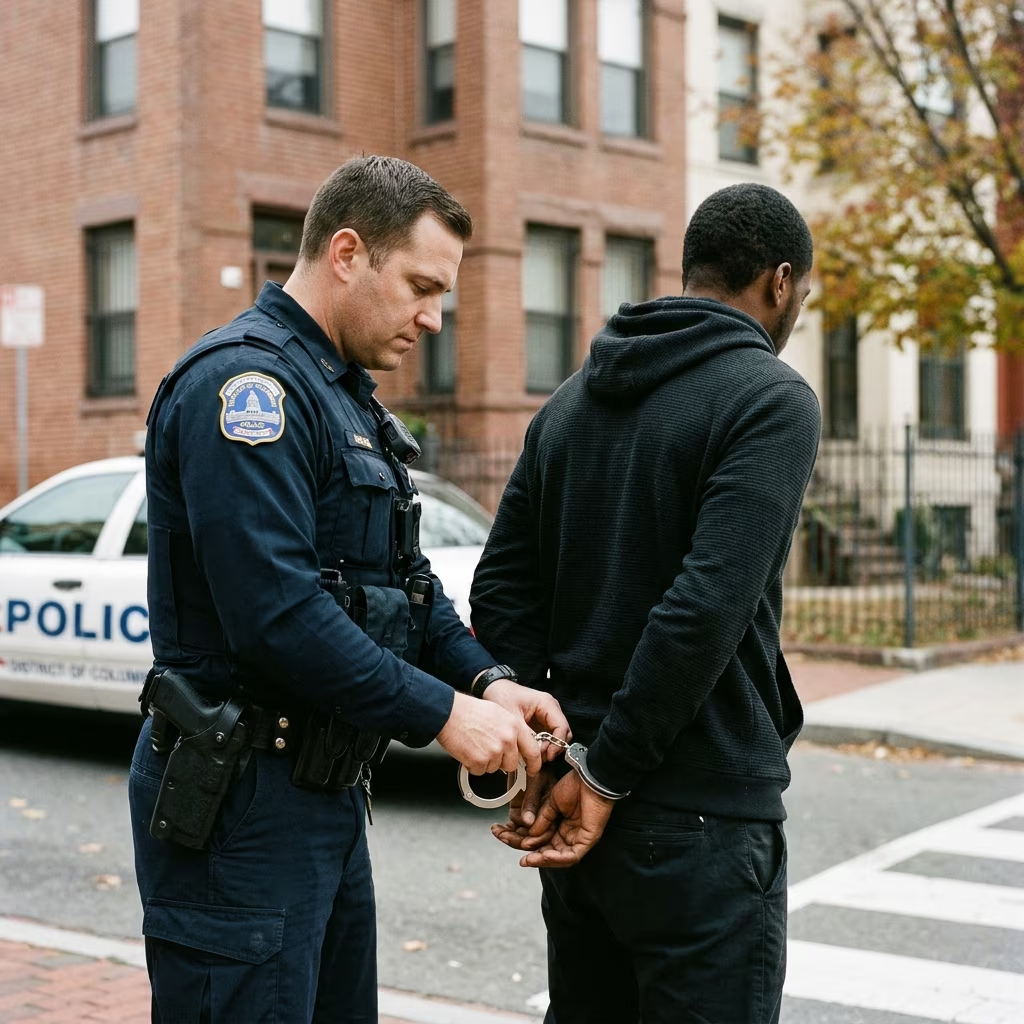
Resisting arrest charges in Washington, DC can arise quickly during tense encounters with law enforcement, and many people are surprised to learn how broad the law is and how serious the consequences can be. This guide explains what counts as resisting arrest, how DC law treats preventing the arrest of someone else, the potential penalties, and practical considerations if you are facing this type of misdemeanor charge.
Overview of Resisting Arrest in the District of Columbia
In the District of Columbia, resisting arrest is not limited to physically fighting with an officer. The statute covers a range of conduct where someone intentionally interferes with their own arrest or the arrest or detention of another person. The offense is governed by D.C. Code § 22-405.01, which sets out both the elements of the crime and the maximum penalties.
Two key ideas define resisting arrest in DC:
- Resisting your own arrest by intentionally taking action to oppose, obstruct, or interfere with an officer.
- Preventing the arrest or detention of another person when you intentionally interfere with an officer’s attempt to arrest or detain that person.
Both types of conduct are treated as misdemeanor offenses, but they can still lead to jail time, fines, and a criminal record that may affect employment, housing, and professional opportunities.
Legal Definition: What the DC Statute Actually Says
The District’s resisting arrest law states that a person who, without justifiable or excusable cause, intentionally resists an arrest by someone they have reason to believe is a law enforcement officer, or prevents that officer from arresting or detaining another person, is guilty of a misdemeanor.
Several important concepts are built into this definition:
- Intentional conduct: The person’s actions must be deliberate, not accidental.
- Knowledge of the officer’s status: The person must have reason to believe that the individual is a law enforcement officer.
- Lack of justification or excuse: The conduct cannot be legally justified (for example, limited self-defense against excessive force may be considered separately).
The statute also makes clear that using force to resist an arrest is not justified simply because the person believes the arrest is unlawful. In other words, challenging the legality of the arrest must be done through the courts, not by physically resisting at the scene.
Elements of Resisting Your Own Arrest
To secure a conviction for resisting one’s own arrest in DC, prosecutors must prove specific elements beyond a reasonable doubt. While exact phrasing comes from jury instructions, the core elements can be summarized in practical terms.
| Element | What It Means |
|---|---|
| Intentional conduct | The defendant deliberately acted in a way that opposed or obstructed the officer, rather than merely being confused or passive. |
| Active resistance | The conduct involved confronting, obstructing, or taking action against the officer, such as pulling away, pushing, or physically interfering. |
| Purpose to resist arrest | The defendant’s actions were taken with the specific intention of resisting their own arrest, not for some unrelated reason. |
| Knowledge of officer status | The defendant knew or had reason to believe the person was a law enforcement officer, based on uniform, badge, verbal identification, or circumstances. |
| No justification or excuse | The conduct was not legally justified or excusable under the circumstances. |
These elements illustrate why even seemingly minor physical resistance, such as repeatedly pulling an arm away during handcuffing, can potentially support a resisting arrest charge if the government can show intentional obstruction.
Elements of Preventing the Arrest of Another Person
DC law also criminalizes interfering with an officer’s attempt to arrest or detain someone else. This often arises in situations where friends, family members, or bystanders step in during an arrest and physically or actively obstruct police activity.
To prove that someone prevented the arrest of another person, the government generally must show:
- The officer was attempting to arrest, detain, or attempt to detain another person.
- The defendant’s actions effectively prevented or interfered with that arrest or detention.
- The defendant acted with the intent to stop or hinder the other person’s arrest or detention.
- The defendant knew or had reason to believe the individual was a law enforcement officer.
- The conduct was without justifiable or excusable cause.
This portion of the law is particularly important in crowd situations, protests, or group arrests, where people may feel compelled to intervene but may inadvertently expose themselves to additional criminal charges.
Penalties and Classification of the Offense
Resisting arrest, whether involving one’s own arrest or the arrest of another person, is classified as a misdemeanor under DC law. While it is not a felony, the penalties can still be significant.
Potential consequences include:
- Up to six months of incarceration in jail.
- Criminal fines that may reach up to $1,000.
- A permanent criminal record that may appear in background checks.
- Collateral impacts on employment, licensing, immigration status, and housing opportunities, depending on the person’s circumstances.
Some DC reform efforts have discussed revising or clarifying resisting arrest provisions and how they interact with other offenses, but the core penalty range for this misdemeanor has remained at a maximum of six months in jail and a criminal fine.
Use of Force, Justification, and Excessive Force Concerns
A recurring question is whether a person may lawfully use force to defend themselves against an officer during an arrest. DC’s statute explicitly states that it is neither justifiable nor excusable to use force to resist an arrest, as long as the person has reason to believe the individual is a law enforcement officer, whether or not the arrest itself is lawful.
However, broader principles of self-defense and use of force may still apply in extreme situations where an officer uses clearly excessive force. Courts generally distinguish between:
- Force used solely to avoid arrest, which is not legally justified.
- Force used to defend against excessive or unreasonable force, which may be evaluated under separate self-defense or justification doctrines.
Because these issues are highly fact-specific and legally complex, they are often addressed in court with the help of legal counsel rather than at the scene of an arrest.
How Resisting Arrest Differs From Other Offenses
Resisting arrest can overlap with, but is distinct from, other charges such as assault on a police officer, obstruction of justice, or disorderly conduct. The key distinction usually lies in the level of force and the nature of the conduct.
Common comparisons include:
- Assault on a law enforcement officer: Typically involves striking, injuring, or attempting to injure an officer; in some jurisdictions this may carry felony penalties.
- Obstruction or interference: May involve hindering an investigation or official duties without the specific focus on arrest or detention.
- Resisting arrest: Focused on conduct that interferes with the process of arresting or detaining a person, including lower-level physical resistance that may not amount to a separate assault.
Because these offenses can be charged together, a single incident may result in multiple counts, depending on the officer’s allegations and the prosecutor’s charging decisions.
Practical Examples of Conduct That May Lead to Charges
Every case depends on its facts, but the following kinds of behavior often lead to resisting arrest accusations in DC:
- Physically pulling or jerking away from an officer who is trying to handcuff you.
- Locking your arms, legs, or body to avoid being placed into a patrol car.
- Pushing, shoving, or blocking an officer’s path as they attempt to arrest another person.
- Intertwining arms or forming a human barrier to prevent officers from reaching someone they intend to arrest.
- Clutching or grabbing someone the police are trying to detain and refusing to let them go.
By contrast, mere verbal objections, questioning officers, or passive non-compliance may be less likely to qualify as resisting arrest, though they can still escalate situations and potentially contribute to other charges depending on the circumstances.
What to Expect If You Are Charged With Resisting Arrest
Being charged with resisting arrest usually occurs at or shortly after the incident, when officers decide to include the charge in an arrest report. After that, the case proceeds through the criminal justice process.
Typical steps include:
- Arrest and booking: The person is taken into custody, processed, and may be held pending an initial appearance.
- Initial court appearance: The charges are formally presented, and detention or release conditions are considered.
- Pretrial phase: Evidence such as officer reports, body-worn camera footage, and witness statements is reviewed.
- Plea discussions or trial: The defendant may negotiate a plea or proceed to trial where the government must prove every element beyond a reasonable doubt.
Throughout this process, the availability and quality of video or audio recordings, including body camera footage, can significantly influence how resisting arrest cases are resolved.
Key Considerations for Defending a Resisting Arrest Charge
Defenses to resisting arrest focus on challenging one or more of the required elements or establishing legal justification for the conduct. Common strategies include:
- Disputing intent: Arguing that the defendant’s actions were reflexive, confused, or the result of fear rather than a deliberate effort to resist.
- Questioning knowledge of officer status: Showing that the person did not reasonably know the individual was a law enforcement officer, especially in plain-clothes operations.
- Arguing lack of active resistance: Demonstrating that the person did not confront or obstruct the officer but only engaged in minimal or passive behavior.
- Raising justification or self-defense issues: In limited circumstances, asserting that the person’s actions were defensive against excessive force rather than resistance to arrest.
Legal counsel may also review whether officers followed departmental policies, correctly identified themselves, and documented the encounter appropriately, including the use of body-worn cameras.
Practical Tips for Police Encounters in DC
While each situation is unique, certain practical steps can reduce the likelihood of a resisting arrest allegation during police encounters:
- Remain as calm as possible and avoid sudden physical movements.
- If you wish to assert your rights, do so verbally and clearly without physical interference.
- Do not push, grab, or block officers, even if you disagree with their actions—legal challenges can be made later in court.
- Ask if you are free to leave; if told you are under arrest, understand that physical resistance can become a separate criminal charge.
- After the incident, write down your recollection and contact legal counsel promptly.
These guidelines are general and do not replace individualized legal advice, but they reflect common themes in how resisting arrest charges arise and are evaluated.
Frequently Asked Questions (FAQ)
1. Can I be charged with resisting arrest if I think the arrest is illegal?
Yes. DC law specifically states that it is not a justifiable or excusable reason to use force to resist an arrest, even if the arrest is unlawful. Challenges to the legality of an arrest are generally made in court through motions and legal arguments, not through physical resistance at the scene.
2. Does refusing to talk to the police count as resisting arrest?
Generally, remaining silent does not, by itself, constitute resisting arrest. People retain constitutional rights, including the right to remain silent in many situations. Resisting arrest charges focus more on physical or active interference with the arrest process, although each case depends on its specific facts.
3. What if I did not realize the person was an officer?
One element of DC’s resisting arrest statute is that the person must have reason to believe the individual is a law enforcement officer. If officers were in plain clothes, did not properly identify themselves, or circumstances made their status unclear, that may be significant to the defense of the case.
4. Is helping a friend pull away from officers always illegal?
Physically assisting someone to avoid being handcuffed or removed by officers can fall within the definition of preventing the arrest or detention of another person and may support a resisting arrest charge. Whether it is prosecuted and whether the elements can be proved depends on how the events unfolded and the available evidence.
5. How serious is a misdemeanor resisting arrest conviction?
Even though resisting arrest is a misdemeanor, it carries potential jail time, fines, and a criminal record that may appear in background checks. For some individuals, such as non-citizens or people in regulated professions, the collateral consequences can be especially significant.
References
- § 22–405.01. Resisting arrest. — D.C. Law Library. 2019-04-11. https://code.dccouncil.gov/us/dc/council/code/sections/22-405.01
- Resisting/Preventing Arrest in D.C. — Koehler Law. 2021-08-10. https://koehlerlaw.net/criminal-defense-dc/resisting-preventing-arrest-dc/
- District of Columbia Resisting Arrest Laws — FindLaw. 2022-06-15. https://www.findlaw.com/state/dc-law/district-of-columbia-resisting-arrest-laws.html
- Report #75 – Resisting Arrest (Revised Criminal Code Act) — D.C. Criminal Code Reform Commission. 2021-09-30. https://ccrc.dc.gov/sites/default/files/dc/sites/ccrc/publication/attachments/Report75-Resisting_Arrest_Final_Draft.pdf
- DC Misdemeanor Resisting Arrest — Scrofano Law PC / Washington DC Criminal Lawyer. 2020-03-05. https://washingtondccriminallawyer.net/dc-resisting-arrest-lawyer/misdemeanor/
- Assault on an Officer Lawyer | Resisting Arrest — Strom Law Firm (South Carolina context). 2021-05-20. https://stromlaw.com/resisting-arrest/
- DC passes new law on federal arrests and body cams — WUSA9 / YouTube. 2020-12-15. https://www.youtube.com/watch?v=ZeJXw-SIBHE