
Understanding and Resolving Property Line and Boundary Disputes
Learn how property lines are set, why boundary disputes arise, and practical steps to protect your land and keep neighbor conflicts under control.
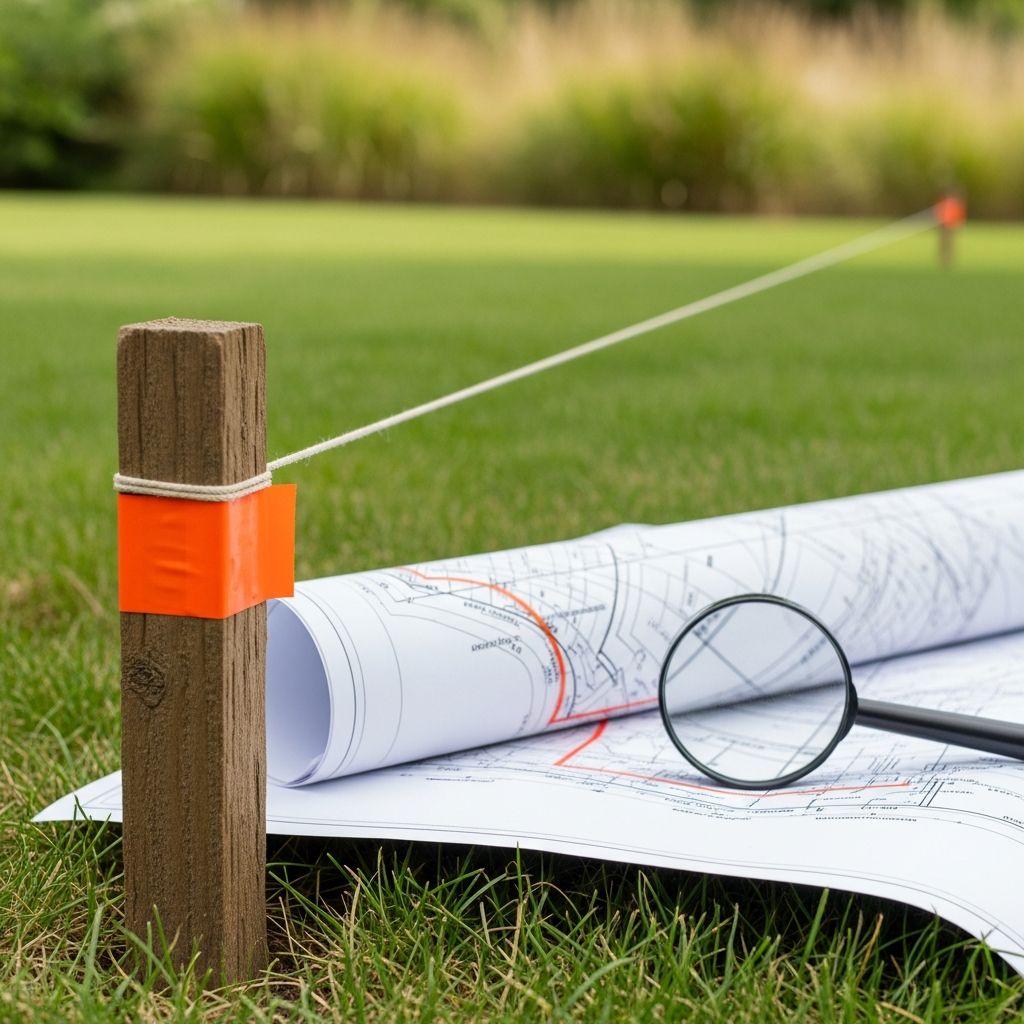
Owning real estate gives you wide control over your land, but those rights end where your neighbor’s property begins. Understanding how property boundaries are created, recorded, and enforced is essential to preventing and resolving disputes over fences, driveways, trees, and buildings that sit near — or over — the line.
This guide explains the basics of property lines, why boundary conflicts arise, how to confirm where your land actually begins and ends, and what options you have if informal talks fail.
1. What Is a Property Boundary?
A property boundary is the legal line that separates one parcel of land from another. In law, the boundary is more than a physical feature like a fence or hedge — it is a location described in legal documents and mapped in public records.
Because modern real estate relies on certainty of ownership, most U.S. jurisdictions require land transfers to be recorded in a county or municipal land records office that includes a legal description of the parcel and its boundaries.
1.1 Common ways boundaries are legally described
- Platted lots: In subdivisions and planned communities, lots are shown on a recorded plat map with numbered parcels tied to a survey.
- Metes and bounds: Older or rural properties may use measurements (metes) and reference points (bounds) like trees, roads, or monuments to describe the perimeter.
- Government survey systems: In many western states, parcels are described using township, range, and section designations from a rectangular survey system.
Even when the written description exists, translating it onto the land often requires a professional survey.
1.2 Why visible markers can be misleading
Owners frequently assume that the existing fence, tree line, or edge of a driveway is the true property line. In reality, these features may be:
- Placed for convenience rather than accuracy
- Built before a modern survey was done
- Shifted over time due to weather, erosion, or maintenance
- Intentionally set inside the true boundary to avoid conflicts
Because of these uncertainties, legal disputes are decided on evidence such as deeds, surveys, and historical records, not simply on where a fence appears today.
2. How Property Lines Are Established and Recorded
The starting point for any boundary question is the public land records in the county or municipality where the property sits. These records typically include deeds, plats, and other instruments that define the size and shape of each parcel.
2.1 Role of deeds and land records
- Deeds transfer title and usually include a legal description of the property boundaries.
- Recorded plats show how larger tracts were subdivided into smaller lots with precise measurements.
- Easements and rights-of-way may be recorded documents that grant use of part of someone else’s land for a specific purpose (such as utilities or access).
Local recording statutes generally require documents affecting land ownership to be recorded to give public notice and protect later purchasers in good faith.
2.2 Professional land surveys
Even with clear records, a licensed land surveyor is often needed to locate the boundary on the ground. A modern survey usually includes:
- Review of deeds, plats, and prior surveys
- Field measurements using GPS and other instruments
- Placement or confirmation of survey markers (pins, stakes, or monuments)
- A drawing or map certified by the surveyor
Mortgage lenders and title insurers often require a current survey, especially when a property is close to neighboring buildings or improvements, because undisclosed encroachments can affect value and marketability.
| Source | What It Provides | Typical Use |
|---|---|---|
| Deed | Legal description of the parcel | Defines size and shape of land being conveyed |
| Plat map | Layout of lots in a subdivision | Shows lot dimensions and relative location |
| Survey | Measured boundary lines on the ground | Used for construction, closings, and resolving disputes |
| Tax map | Approximate parcel outlines for assessment | Helpful for reference but rarely precise enough for disputes |
3. Typical Property Boundary Problems Between Neighbors
Boundary disputes arise when neighboring owners disagree about who owns or may use a particular strip of land. Common scenarios include:
3.1 Encroachments by structures or improvements
An encroachment occurs when a physical improvement extends over the boundary line onto a neighbor’s land. Examples include:
- Fences or walls built partly on the wrong side of the line
- Driveways, patios, or walkways that cross over the boundary
- Sheds, garages, decks, or additions that project onto adjacent land
- Overhanging eaves, balconies, or stairways
Encroachments can limit how a neighbor uses their property and may reduce resale value or complicate financing.
3.2 Disputes over fences and landscaping
Fences are one of the most frequent sources of conflict because they visibly separate yards. Disputes often involve:
- Who owns and must maintain a fence on or near the boundary
- Whether a new fence violates height or setback rules in local codes
- Hedges or trees planted so close to the line that they block access or damage neighboring structures
Many local governments have fence ordinances or “good neighbor fence” rules that regulate height, placement, and shared maintenance responsibilities.
3.3 Access, driveways, and shared use issues
Conflicts related to access often involve:
- Driveways partly located on a neighbor’s lot
- Shared private roads or alleys with unclear maintenance responsibilities
- Footpaths that cross someone else’s land to reach a street, park, or beach
These situations may rely on written easements, long-standing oral agreements, or informal arrangements that become contentious when ownership changes.
4. Adverse Possession and Prescriptive Rights
Over time, long-term use of land across a boundary can give rise to legal rights, even without a written agreement, under doctrines such as adverse possession and prescriptive easements.
4.1 Adverse possession basics
Adverse possession allows someone who has occupied and used another’s land for a legally defined period to obtain title to that strip of land, if strict conditions are met. Although the exact requirements vary by state, courts often look for use that is:
- Actual – the occupier physically uses the land, such as building or maintaining improvements
- Open and notorious – the use is visible, not hidden, so the true owner could notice it
- Hostile – without the true owner’s permission
- Exclusive – not shared with the true owner or the public
- Continuous – for the full statutory period, which many states set between 7 and 20 years
Some states require the possessor to pay property taxes or hold color of title (a defective deed) to claim adverse possession.
4.2 Prescriptive easements
A prescriptive easement arises when someone repeatedly uses part of another’s land (for example, a path or driveway) for the statutory period in a manner similar to adverse possession, but instead of gaining ownership of the land, they acquire a right to continue that specific use.
Key distinctions include:
- Adverse possession can transfer ownership of the land itself.
- Prescriptive easements create an ongoing right of use but not full title.
Because these doctrines can significantly alter property rights, courts apply them carefully and require strong factual proof.
5. Easements and Other Legal Rights Affecting Boundaries
Even when you own the land up to a certain line, others may have limited rights to use parts of your property through easements and similar interests.
5.1 Common types of easements
- Utility easements: Allow utility providers to install and maintain lines, pipes, or equipment.
- Access or right-of-way easements: Permit neighbors or the public to travel across the land to reach a road, waterway, or another property.
- Drainage easements: Allow water to flow across property in a designated channel or area.
- Easements by necessity: May be recognized by courts when a landlocked parcel needs access and no reasonable alternative exists.
Easements may be created by written grant, by long-term use (prescription), or by implication from the way land was divided and used in the past.
5.2 How easements interact with boundary disputes
Boundary conflicts sometimes arise because owners confuse ownership with use rights. For example:
- You may own the soil under a shared driveway but grant your neighbor an easement to drive over it.
- A city may maintain a sidewalk or utilities within a strip of your front yard without owning that land outright.
Understanding the existence and scope of any easements is crucial before moving fences, blocking access, or building new structures.
6. Practical Steps to Identify and Resolve Boundary Problems
Once you suspect a boundary issue, a calm and methodical approach usually works better than rushing into litigation. The following steps help clarify the facts and explore solutions.
6.1 Confirm where the line is
- Review your deed and any plat or survey you received at purchase.
- Visit the local land records office or website to obtain copies of recorded documents for both properties.
- Hire a licensed surveyor if measurements are unclear, markers are missing, or there is any significant construction near the boundary.
Having objective information from public records and a survey can prevent misunderstandings and provide a foundation for talks with your neighbor.
6.2 Communicate with your neighbor early
Many disputes escalate because owners act unilaterally. Instead, consider:
- Scheduling a time to review the survey together on-site
- Bringing copies of relevant deeds, maps, or city code provisions
- Discussing mutual concerns such as privacy, maintenance, and future plans
Often, neighbors can agree to adjust a fence, sign a simple boundary line agreement, or grant a limited easement that preserves both parties’ needs.
6.3 Involving local officials or mediators
Before resorting to court, it may help to:
- Consult the local building or zoning department about fence or setback rules
- Use community mediation services to facilitate a neutral conversation
- Check homeowners’ association (HOA) rules if the property is in a governed community
Mediation can be faster and less expensive than litigation and often helps neighbors preserve a workable relationship.
6.4 When to consult a real estate attorney
You should consider speaking with a qualified real estate or property law attorney if:
- Your neighbor refuses to cooperate or continues building after being informed of a possible encroachment
- There is a substantial structure (such as a garage, addition, or retaining wall) that crosses the line
- The dispute threatens a pending sale, refinance, or development project
- Questions of adverse possession, prescriptive easements, or complex easement rights are involved
An attorney can evaluate your rights, explain likely outcomes, and suggest legal options tailored to your state’s laws and the facts of your case.
7. Legal Tools to Fix Boundary and Title Problems
When informal solutions fail, the law provides mechanisms to establish or correct property lines and resolve ownership issues.
7.1 Quiet title and declaratory actions
- Quiet title actions ask a court to determine who owns disputed land and to issue an order clarifying title.
- Declaratory judgment actions may be used to interpret the meaning of deeds, easements, or boundary agreements.
These cases often rely on surveys, expert testimony, historical documents, and evidence of how the land has been used over time.
7.2 Injunctions and removal of encroachments
If a neighbor’s construction or use is clearly on your land and causing harm, a court may grant an injunction ordering them to stop work or remove the encroaching structure. Courts weigh factors such as:
- The extent and permanence of the encroachment
- Whether the encroachment was intentional or a good-faith mistake
- The cost of removal compared to the harm to the property owner
In some cases, courts may allow a minor encroachment to remain but order payment of damages or impose an easement.
7.3 Boundary line agreements and lot line adjustments
Even after a dispute arises, owners can often resolve the issue by:
- Signing a boundary line agreement confirming where the line will be recognized going forward
- Executing a small lot line adjustment or deed transfer so the legal records match how the land is actually used
- Granting a written easement that legalizes an existing driveway, path, or utility line
These tools can provide long-term clarity and make future sales easier by avoiding surprise claims.
8. Frequently Asked Questions About Property Boundaries
Q1: How can I find out exactly where my property line is?
The most reliable way is to obtain a current survey from a licensed surveyor, using your deed and local land records as a starting point. Tax maps and online parcel viewers are useful for reference, but they are usually not accurate enough to resolve a dispute.
Q2: My neighbor’s fence is over the line. Do they now own that strip of land?
Not automatically. Ownership generally follows the legal boundary described in deeds and confirmed by a survey. However, if the encroachment has existed for the full statutory period under conditions that meet the requirements of adverse possession in your state, your neighbor may claim rights to that area. A local attorney can explain how your state’s law applies.
Q3: Can I trim my neighbor’s tree branches that hang over my yard?
Many jurisdictions allow owners to trim branches and roots that cross onto their side of the boundary, as long as they remain on their property and do not unreasonably harm the health of the tree. Local rules vary, and disputes over damage or safety may still require legal advice.
Q4: What should I do before building a fence near the property line?
Check local zoning or fence ordinances, review your deed and any existing survey, and talk with your neighbor. If the location is close to the boundary or previous surveys are old, consider a new survey to avoid accidental encroachment and future disputes.
Q5: When is it necessary to go to court over a boundary dispute?
Court action is usually a last resort when significant structures are involved, when one party refuses to negotiate or move an encroachment, or when unclear title blocks a sale or financing. Because litigation can be expensive and time-consuming, it is wise to explore surveys, mediation, and negotiated agreements first.
References
- Defining the Lines: Boundary and Easement Disputes in New York Real Estate — Figeroux & Associates. 2023-04-10. https://askthelawyer.us/defining-the-lines-boundary-and-easement-disputes-in-new-york-real-estate/
- Real Estate Titles — U.S. Department of the Treasury, Office of the Comptroller of the Currency. 2011-09-01. https://www.occ.gov/publications-and-resources/publications/comptrollers-handbook/files/real-estate-settlement-activities/pub-ch-real-estate-settlement.pdf
- Where’s Your Property Line? — Law Offices of Albert Rizzo, P.C. 2022-06-15. https://rizzolawoffices.com/wheres-your-property-line.html
- How to Resolve Boundary Disputes in New York — Cole, Sorrentino, Hurley, Hewner & Gambino, P.C. 2023-02-20. https://www.colesorrentino.com/how-to-resolve-boundary-disputes-in-new-york/
- Adverse Possession and Quiet Title — Legal Information Institute, Cornell Law School. 2020-11-01. https://www.law.cornell.edu/wex/adverse_possession
Similar Articles








Read full bio of Sneha Tete


