
Understanding Preliminary Hearings in Criminal Cases
A detailed, plain‑language guide to how preliminary hearings work, why they matter, and what defendants and victims can expect in felony prosecutions.
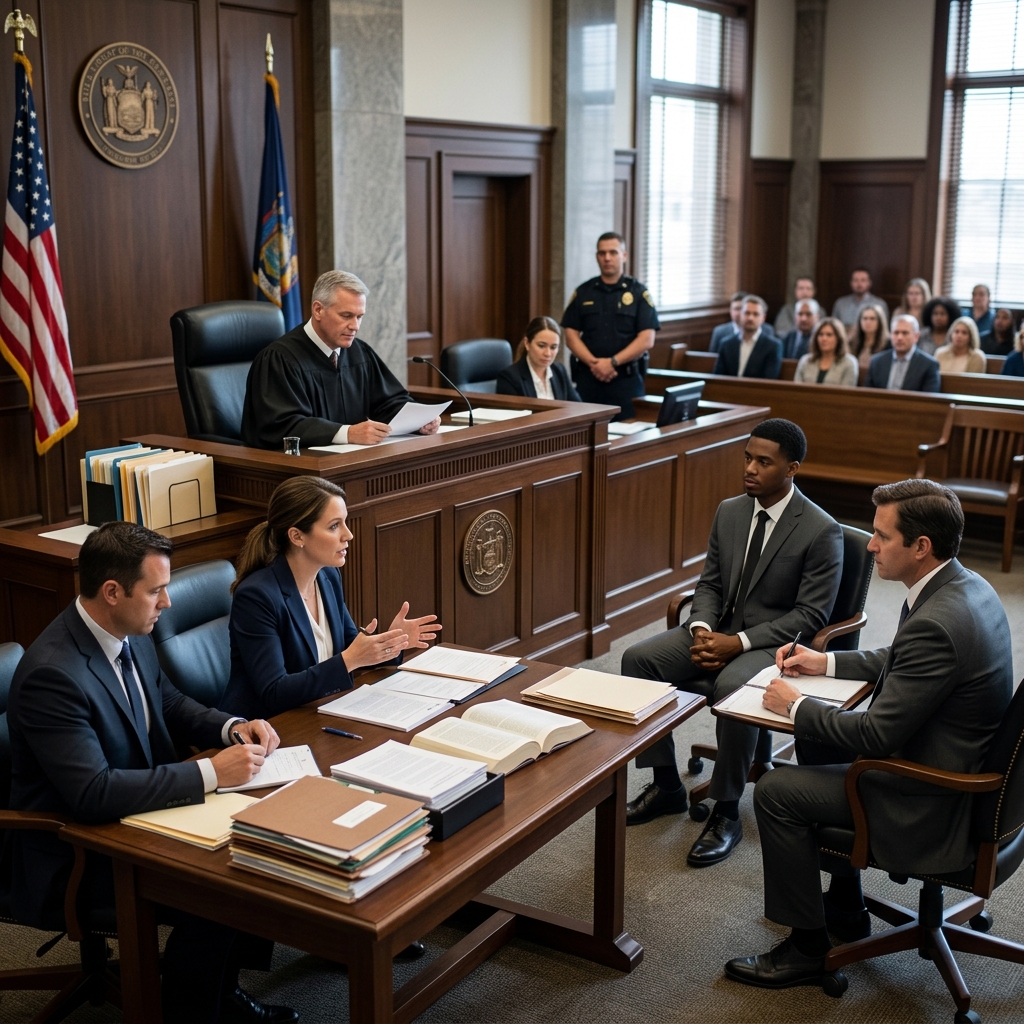
A preliminary hearing is a key step in many criminal cases, especially felonies. It is sometimes called a probable cause hearing, an evidentiary hearing, or a preliminary examination, and its core purpose is simple: to decide whether there is enough evidence for the case to move forward toward trial. Unlike a trial, the preliminary hearing does not decide whether the accused is guilty or innocent; instead, the judge asks whether the prosecution has shown a reasonable basis to believe a crime was committed and that the defendant was the person who committed it.
What Is a Preliminary Hearing?
In common law systems such as the United States, a preliminary hearing is held after formal charges are filed to test the strength of the government’s case at an early stage. The hearing typically takes place in front of a judge or magistrate, without a jury. The prosecution presents evidence—often through witness testimony and documents—and the defense has an opportunity to cross‑examine those witnesses and sometimes present its own evidence.
The legal standard applied at this stage is probable cause. This means the judge must decide whether the facts presented would lead a reasonable person to believe that:
- A crime was committed; and
- The defendant is the person who committed that crime.
This standard is significantly lower than the “beyond a reasonable doubt” standard required to convict someone at trial.
Where the Preliminary Hearing Fits in the Criminal Process
A preliminary hearing is part of the broader criminal procedure, usually occurring after the defendant’s initial appearance in court and before any full trial. In federal court, Rule 5.1 of the Federal Rules of Criminal Procedure governs preliminary hearings and sets deadlines based on whether the defendant is in custody.
| Defendant Status | Time Limit from Initial Appearance |
|---|---|
| In custody (jailed) | No later than 14 days |
| Not in custody (on bail or released) | No later than 21 days |
State systems follow similar principles but may have different specific timelines and rules. In many jurisdictions, preliminary hearings are most common in felony cases, and more minor misdemeanor matters may proceed by a different process or go directly to trial.
Goals and Functions of a Preliminary Hearing
Although preliminary hearings can look like miniature trials, they serve a distinct set of functions in the criminal justice system.
Screening Weak Cases
The primary function is to screen out cases that lack sufficient evidence. The court acts as a safeguard against unfounded or overly speculative charges by requiring the prosecution to present enough credible material to justify continued prosecution.
- If the judge finds no probable cause, the complaint is dismissed and the defendant is discharged from that case.
- If the judge finds probable cause, the case is sent forward for further proceedings such as arraignment on an indictment or information and, potentially, trial.
Clarifying the Issues in Dispute
Preliminary hearings can help clarify which facts are contested and which are not. By hearing early testimony and reviewing documents, both sides gain insight into the strengths and weaknesses of the evidence. This can shape plea negotiations and trial strategy.
Protecting the Defendant’s Rights
Requiring a probable cause determination protects the defendant from being forced to face a full trial or continued detention based on thin or unexamined allegations. The defendant’s right to counsel and the opportunity to cross‑examine adverse witnesses at this stage serve as additional safeguards.
How Preliminary Hearings Differ from Trials
Despite superficial similarities, preliminary hearings and trials operate differently in several important ways.
| Feature | Preliminary Hearing | Trial |
|---|---|---|
| Decision‑maker | Judge or magistrate only | Judge and usually a jury |
| Purpose | Determine probable cause to proceed | Decide guilt or innocence |
| Standard of proof | Probable cause (lower standard) | Beyond a reasonable doubt (high standard) |
| Evidence rules | Often more relaxed; some evidence that would be excluded at trial may be allowed | Full rules of evidence apply |
| Outcome | Case dismissed or bound over/held to answer for further proceedings | Conviction, acquittal, or mistrial |
Who Must Attend and Participate?
In most jurisdictions, several participants play important roles at a preliminary hearing.
- Judge or magistrate: Presides over the hearing, assesses probable cause, and issues any rulings or orders.
- Prosecutor: Presents the government’s evidence, calls witnesses, and argues that probable cause exists.
- Defense attorney: Represents the defendant, cross‑examines witnesses, and may present limited evidence or legal arguments in support of dismissal or reduced charges.
- Defendant: Typically must be present in many courts, especially in serious felony cases, although some systems permit absence under certain conditions.
- Witnesses: May include police officers, alleged victims, or other individuals with relevant information. They testify and may be questioned by both sides.
In federal practice, Rule 5.1 specifically recognizes the defendant’s right to cross‑examine adverse witnesses and to introduce evidence, subject to certain limits.
Step‑By‑Step: What Happens at a Preliminary Hearing?
Although procedures vary, many preliminary hearings follow a predictable sequence that allows both sides to present and test the evidence.
- Case is called and appearances are noted
The judge calls the case, confirms the presence of the defendant and counsel, and notes that the matter is set for a preliminary hearing. - Explanation of purpose
The court may briefly explain that the hearing is limited to determining probable cause and is not a trial on guilt or innocence. - Prosecution’s presentation
Prosecutors call witnesses and may offer physical or documentary evidence. They focus on establishing the elements of the charged offences and linking the defendant to those offences. - Defense cross‑examination
The defense attorney questions the prosecution’s witnesses, probing weaknesses, inconsistencies, or gaps in their accounts. - Defense evidence (optional)
Depending on strategy, the defense may call its own witnesses or present limited evidence. In many cases, defense lawyers choose to reserve most evidence for trial for tactical reasons. - Legal argument
Both sides may argue about whether the evidence meets the probable cause threshold, often referring to statutory definitions and prior decisions. - Judge’s ruling
The judge announces whether probable cause exists. If so, the case advances toward trial or other proceedings; if not, the complaint is dismissed.
Federal rules require these hearings to be recorded, either by a court reporter or an approved recording device, and parties can request copies of the recording or transcript.
Key Rights and Limitations at the Preliminary Hearing
Defendants enjoy important rights at preliminary hearings, but those rights are more limited than at trial, and evidence rules are often more flexible.
- Right to counsel: Defendants have the right to be represented by an attorney, and courts appoint counsel for indigent defendants in serious cases.
- Right to cross‑examine witnesses: In federal practice and many states, the defense may cross‑examine the prosecution’s witnesses at the preliminary hearing.
- Right to present evidence: Defendants can introduce evidence in support of their position, although they may choose not to reveal too much strategy at this stage.
At the same time, there are important limitations:
- Suppression issues are usually deferred: Federal rules, for example, do not allow objections based on claims that the evidence was unlawfully obtained at the preliminary hearing stage.
- Relaxed evidentiary rules: Some jurisdictions permit hearsay or other forms of evidence at preliminary hearings that might not be admissible at trial.
- No determination of guilt: The judge is not deciding whether the defendant committed the offence beyond a reasonable doubt, only whether the prosecution’s case is strong enough to proceed.
Options: Waiving or Holding the Preliminary Hearing
Preliminary hearings are not always held. In federal court, Rule 5.1 allows several scenarios in which no preliminary hearing is required, including when the defendant waives the hearing or has already been indicted by a grand jury.
Situations where a preliminary hearing may be skipped include:
- The defendant waives the hearing after consulting with counsel.
- A grand jury has already returned an indictment, which itself is a probable cause finding.
- The prosecution files an information charging a felony under specific rules, or charges a misdemeanor in a manner that bypasses the hearing.
Whether to waive the hearing is a strategic decision. Defense counsel might advise waiver if the prosecution’s evidence is obviously sufficient, if the hearing could expose defense strategy, or if waiver may facilitate favorable negotiations. Conversely, the defense may insist on the hearing to test witnesses, create a discovery record, or seek dismissal where the case is weak.
Possible Outcomes and Their Consequences
At the end of the preliminary hearing, the judge must reach a decision about probable cause. That decision shapes what happens next in the case.
If Probable Cause Is Found
When the judge finds probable cause that an offence was committed and the defendant committed it:
- The case is “bound over” or “held to answer” in many courts, meaning it is transferred to the appropriate trial court.
- Further proceedings are scheduled, which may include arraignment on an indictment or information, pre‑trial motions, and trial dates.
- Plea discussions often intensify, as both sides now have a clearer view of the evidence.
If Probable Cause Is Not Found
If the judge concludes that there is not enough evidence to support probable cause:
- The complaint is dismissed.
- The defendant is discharged from that case and typically released from any bail obligations related to those charges.
- The government is not necessarily barred from bringing charges later if new evidence emerges; dismissal at the preliminary stage does not always function as a final acquittal.
Practical Tips for Defendants
For individuals facing a preliminary hearing, understanding the process and working closely with counsel are critical. While every case is different, several practical steps can help defendants prepare.
- Meet with your attorney early: Discuss the charges, potential penalties, and whether the preliminary hearing should be held or waived.
- Review discovery materials: Go through police reports and other evidence with your attorney to identify inconsistencies or weaknesses that may be explored at the hearing.
- Understand possible outcomes: Be aware that the hearing can result in dismissal, modification of charges, or the case moving forward in its current form.
- Follow courtroom instructions: Dress appropriately, arrive on time, and avoid speaking out of turn; let your attorney handle communications with the court.
Defendants are typically advised not to testify at preliminary hearings unless there is a specific strategic reason, because any testimony can potentially be used against them later.
Frequently Asked Questions About Preliminary Hearings
Is a preliminary hearing required in every criminal case?
No. Preliminary hearings are most common in felony prosecutions and are often not used for minor misdemeanors. In federal practice, a preliminary hearing is required for non‑petty offences unless the defendant waives it, has already been indicted, or certain other conditions apply.
Can the defendant be released if the case is dismissed at the preliminary hearing?
Yes. If the judge finds no probable cause and dismisses the complaint, the defendant is discharged from that case. However, the government may be able to bring charges again later if new evidence justifies it.
Is the victim required to testify at the preliminary hearing?
Not always. The prosecution decides which witnesses to call. In some cases, police officers or other witnesses may provide the necessary testimony, and the victim might not be required to appear at this stage.
Does the judge decide bail or detention at the preliminary hearing?
In many courts, decisions about bail or continued detention are made at or before the preliminary hearing. The hearing can influence those decisions because the judge now has a clearer sense of the strength of the evidence.
Can evidence be challenged as illegal at the preliminary hearing?
Generally, challenges to the legality of evidence—such as claims of unlawful search or seizure—are raised through pre‑trial motions rather than at the preliminary hearing. Federal Rule 5.1 specifically states that defendants may not object to evidence at the preliminary hearing on the ground that it was unlawfully acquired.
References
- Rule 5.1, Preliminary Hearing — Federal Rules of Criminal Procedure, Legal Information Institute (Cornell Law School). 2023-01-01. https://www.law.cornell.edu/rules/frcrmp/rule_5.1
- Preliminary Hearing — U.S. Department of Justice, U.S. Attorneys “Justice 101”. 2021-06-01. https://www.justice.gov/usao/justice-101/preliminary-hearing
- How Courts Work: Pretrial Appearances — American Bar Association Public Education. 2020-05-01. https://www.americanbar.org/groups/public_education/resources/law_related_education_network/how_courts_work/pretrial_appearances/
- Preliminary Hearing — Arora Law Firm, Criminal Law Blog. 2022-08-15. https://thearoralawfirm.com/everything-you-need-to-know-about-preliminary-hearings-in-criminal-cases/
- Preliminary Hearings in California Felony Cases — Eisner Gorin LLP. 2022-04-20. https://www.egattorneys.com/preliminary-hearings
Similar Articles








Read full bio of medha deb




