
Understanding Plea Bargaining: Key Negotiation Points
A practical guide to how plea deals are negotiated, what can be bargained, and how these agreements shape criminal cases.
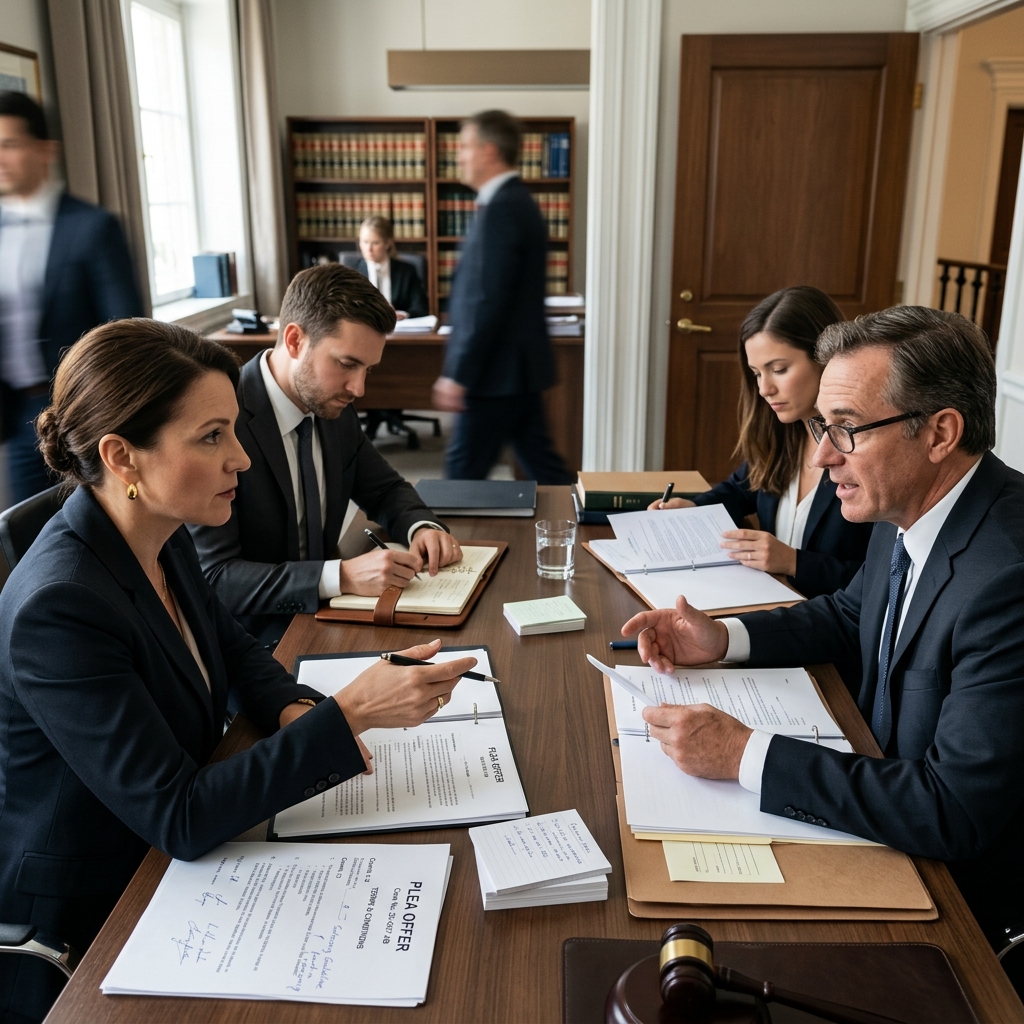
Plea bargaining is one of the most influential features of modern criminal justice. In many jurisdictions, the vast majority of criminal cases are resolved through negotiated pleas rather than jury trials, with estimates in the United States often ranging between 90–98% of cases ending in plea agreements. These negotiations determine not only whether a defendant will be convicted, but also which charges will stand, what sentence will be imposed, and what collateral consequences might follow.
This article explains what plea bargaining is, identifies the major areas of negotiation, and highlights strategic considerations for defendants and their lawyers. It is intended for general information only and does not replace legal advice from a qualified attorney.
What Is Plea Bargaining?
At its core, a plea bargain is an agreement between a prosecutor and a defendant in which the defendant agrees to plead guilty (or no contest) to some or all charges in exchange for concessions. These concessions may include reducing the severity of charges, dismissing some counts, recommending a lighter sentence, or agreeing not to seek certain enhancements.
When a plea is entered in court, the defendant typically must admit to the conduct underlying the charges and formally waive the right to a trial, alongside other procedural rights such as the right to confront witnesses and the right to remain silent. Once the judge accepts the plea, the case moves from the guilt phase to sentencing.
Why Plea Bargains Are So Common
Plea bargaining has become structural to the criminal system because it offers practical benefits to all parties:
- Courts and prosecutors save time and resources by avoiding lengthy trials.
- Defendants often receive reduced charges or a lower sentencing exposure.
- Victims and witnesses may avoid testifying and the uncertainty of trial.
However, research also shows that plea bargaining can produce disparities and that defendants who reject plea offers may receive significantly harsher sentences if convicted at trial, sometimes called the “trial penalty.” This imbalance can create pressure to accept deals, even in borderline or complex cases.
Major Areas of Negotiation in Plea Deals
Plea bargaining is not a single, uniform process. Instead, negotiations typically focus on several distinct but related elements of a criminal case. Understanding these areas of negotiation helps defendants evaluate offers more clearly.
1. Negotiating the Charges (Charge Bargaining)
Charge bargaining concerns which offenses the defendant will plead guilty to. This is often the most visible part of a plea agreement, as it directly affects the legal label attached to the conduct and the maximum penalties permitted by law.
Common charge-related negotiations include:
- Reducing a felony to a lesser felony or misdemeanor, which can drastically change sentencing ranges and long-term consequences.
- Dismissing certain counts in multi-charge cases in exchange for a plea to core counts.
- Adjusting enhancement allegations (such as repeat-offender or weapon enhancements) that can otherwise significantly increase potential punishment.
Because statutory maximum penalties and mandatory minimums are tied to specific charges, what a defendant pleads to sets the legal framework within which the judge must sentence. Strategic charge bargaining can therefore be as important as negotiating the actual length of a sentence.
2. Negotiating the Sentence (Sentence Bargaining)
Sentence bargaining focuses on what punishment will be imposed if the defendant pleads guilty. In many systems, the judge retains ultimate authority over sentencing, but prosecutors can influence outcomes through recommendations and agreements.
Key sentence-related terms often negotiated include:
- Length of incarceration (e.g., number of months or years).
- Type of sentence (prison vs. jail, or community-based sanctions such as probation).
- Conditions of supervision, such as treatment programs, electronic monitoring, or restitution payments.
- Recommendations under sentencing guidelines, particularly in federal cases where guideline calculations shape the expected range.
In some jurisdictions, specific plea mechanisms allow the parties to agree on a precise sentence or range that the court must either accept or reject, rather than merely considering recommendations. If the court rejects such an agreement, the defendant may be permitted to withdraw the plea.
3. Negotiating Case Facts and Factual Basis
Every valid guilty plea normally requires a factual basis: a description of what happened that supports each element of the offense. While the facts cannot be invented, the way they are framed in legal documents can be negotiated.
Fact-related negotiations might involve:
- Narrowing the admitted conduct to the minimum necessary to support the charge.
- Clarifying mitigating details (e.g., level of involvement, intent, or harm) that can influence sentencing.
- Avoiding disputed or inflammatory allegations that are not essential to the plea.
In guideline-based systems, how facts are written can affect offense levels, enhancements, and ultimately the recommended sentence. Careful drafting of the factual basis can therefore be a critical part of effective plea advocacy.
4. Cooperating with the Government
Plea bargains may include cooperation terms, where a defendant agrees to provide information, testify, or assist in other investigations in exchange for more favorable treatment.
Cooperation provisions often address:
- The scope of assistance (e.g., debriefings, witness testimony, or proactive cooperation).
- Protective measures to safeguard the defendant and their family where safety is a concern.
- How cooperation will be credited, such as a motion for downward departure or a sentencing recommendation.
Defendants should carefully weigh the risks and benefits of cooperation, including potential danger, reputational impact, and the possibility that promised benefits depend on the prosecutor’s later assessment of how useful the cooperation proves to be.
5. Collateral Consequences and Non-Sentencing Terms
Plea deals also influence collateral consequences—effects of a conviction beyond formal punishment, such as immigration consequences, employment limitations, firearm restrictions, and loss of professional licenses. While many of these are governed by statutory or regulatory rules rather than negotiated terms, some aspects may be addressed in plea discussions.
Common non-sentencing topics include:
- Immigration impacts for non-citizens, which may be affected by the specific offense of conviction.
- Future sealing or expungement eligibility, influenced by the nature and degree of the offense.
- Restitution agreements to compensate victims, sometimes as a condition of probation.
- Waiver of appeal rights or post-conviction challenges, which is frequently requested by prosecutors in exchange for concessions.
Because collateral consequences can be long-lasting, defendants should discuss them in detail with counsel before agreeing to any plea.
Comparing Types of Plea Bargaining
Different plea bargaining approaches focus on different dimensions of the case. The table below summarizes common forms and what they typically involve.
| Type of Bargaining | Main Focus | Typical Concessions |
|---|---|---|
| Charge bargaining | Which offenses the defendant pleads guilty to. | Reduced charges, dropped counts, limited enhancements. |
| Sentence bargaining | Expected punishment for the plea. | Lower prison term, probation, recommended guideline range. |
| Count bargaining | Number of charges resolved by plea. | Plea to subset of charges; dismissal of remaining counts. |
| Cooperation-based bargaining | Defendant’s assistance to authorities. | Reduced sentence, charging leniency, or special motions. |
Risks and Critiques of Plea Bargaining
Although plea bargaining offers efficiency and potential benefits, it has been the subject of significant criticism in legal scholarship and policy debates.
Key concerns include:
- Coercive pressure: The gap between plea offers and possible trial sentences can push defendants—especially those detained pretrial—to accept deals primarily out of fear of harsher punishment.
- Risk of innocent pleas: In rare but serious instances, defendants may plead guilty to avoid the risk of a much longer sentence if they lose at trial.
- Sentencing disparities: Prosecutorial discretion in plea negotiations can produce inconsistent outcomes among defendants with similar conduct.
- Reduced transparency: Many plea discussions occur outside open court, limiting public scrutiny of how cases are resolved.
Because of these concerns, some courts and policymakers have encouraged clearer records of plea negotiations, judicial oversight of agreements, and better information for defendants about their rights and options.
Practical Tips for Defendants Considering a Plea
Anyone facing criminal charges should consult a qualified defense lawyer. The following general points can help guide initial conversations about plea offers, but they are not a substitute for individualized legal advice.
Questions Defendants Should Ask
- What are the exact charges I would plead to, and what are their maximum and minimum penalties?
- What sentence does the prosecutor plan to recommend, and how much discretion will the judge have?
- How does this offer compare to the likely outcome if I go to trial and lose?
- What collateral consequences (immigration, employment, housing, licensing) will follow from the proposed conviction?
- Which rights will I be waiving by entering this plea, including appeals and post-conviction options?
Elements of a Thoughtful Plea Strategy
Effective plea bargaining typically involves:
- Early case assessment: Reviewing evidence, likely trial outcomes, and sentencing ranges at the outset.
- Understanding the prosecutor’s priorities: Such as victim interests, office policies, and concerns about deterrence or public safety.
- Preparing mitigation: Documenting work history, education, family responsibilities, treatment efforts, or other factors that might support a more lenient resolution.
- Considering alternatives: Where available, exploring diversion, deferred prosecution, or other programs that may result in dismissal or reduced charges upon completion.
Frequently Asked Questions About Plea Bargaining
Is the judge bound by the plea agreement?
In many cases, the judge is not strictly bound by recommendations in a plea agreement and retains discretion over the sentence. However, certain types of negotiated pleas may be presented to the court as a package: if the judge accepts the agreement, they follow its terms; if they reject it, the defendant may be allowed to withdraw the plea. The specifics depend on the jurisdiction and procedural rules.
Can I change my mind after pleading guilty?
Withdrawing a guilty plea is often difficult once the court has formally accepted it. Some systems allow withdrawal before sentencing under limited circumstances, such as if the plea was not voluntary or if there was a misunderstanding about key terms. After sentencing, options are usually more limited and may require post-conviction proceedings. Defendants should clarify these rules with counsel before entering a plea.
Do I have to admit I committed the crime?
Ordinarily, a defendant must admit to conduct that establishes the elements of the offense during the plea colloquy—the in-court conversation with the judge. The judge must be satisfied that there is a factual basis for the plea and that the defendant understands the rights being waived. In some jurisdictions, different structures (such as certain “no contest” pleas) may exist, but they still carry the legal effect of a conviction.
Why do prosecutors offer plea deals in strong cases?
Even when the government has substantial evidence, it may offer a plea deal to avoid the time and uncertainty associated with trial and free resources for other cases. In exchange, the defendant typically receives a reduced sentencing exposure or more favorable terms than they might face if convicted after trial.
What happens if I refuse the plea offer?
If a defendant rejects a plea offer, the case usually proceeds toward trial, pretrial motions, or continued negotiations. If the defendant is later convicted at trial, they may face a harsher sentence than what was offered during plea bargaining—a dynamic often described as the trial penalty. The decision to accept or reject a plea should be made only after careful discussion with counsel about likely outcomes.
References
- Plea Bargaining — United States Department of Justice. 2020-03-11. https://www.justice.gov/usao/justice-101/pleabargaining
- plea bargain | Wex — Legal Information Institute, Cornell Law School. 2020-07-06. https://www.law.cornell.edu/wex/plea_bargain
- Plea and Charge Bargaining Research Summary — Bureau of Justice Assistance, U.S. Department of Justice. 2011-01-01. https://bja.ojp.gov/sites/g/files/xyckuh186/files/media/document/PleaBargainingResearchSummary.pdf
- How Courts Work – Plea Bargaining — American Bar Association. 2016-01-01. https://www.americanbar.org/groups/public_education/resources/law_related_education_network/how_courts_work/pleabargaining/
- Demystifying The Plea Bargaining Process — San Mateo County Superior Court. 2014-01-01. https://sanmateo.courts.ca.gov/system/files/plea_bargaining.pdf
- Strategies for Conducting More Effective Plea Negotiations — Riley Safer Holmes & Cancila LLP. 2019-01-01. https://www.rshc-law.com/docs/default-source/articles/strategies-for-conducting-more-effective-plea-negotiations.pdf
- Hard Bargaining in Plea Bargaining: When do Prosecutors Cross the Line? — Texas A&M University School of Law Scholarship. 2018-01-01. https://scholarship.law.tamu.edu/facscholar/862/
Similar Articles








Read full bio of medha deb




