
Understanding Pennsylvania Marriage Laws
A practical, plain-language guide to who can marry, how to get a license, and what makes a marriage legally valid in Pennsylvania.
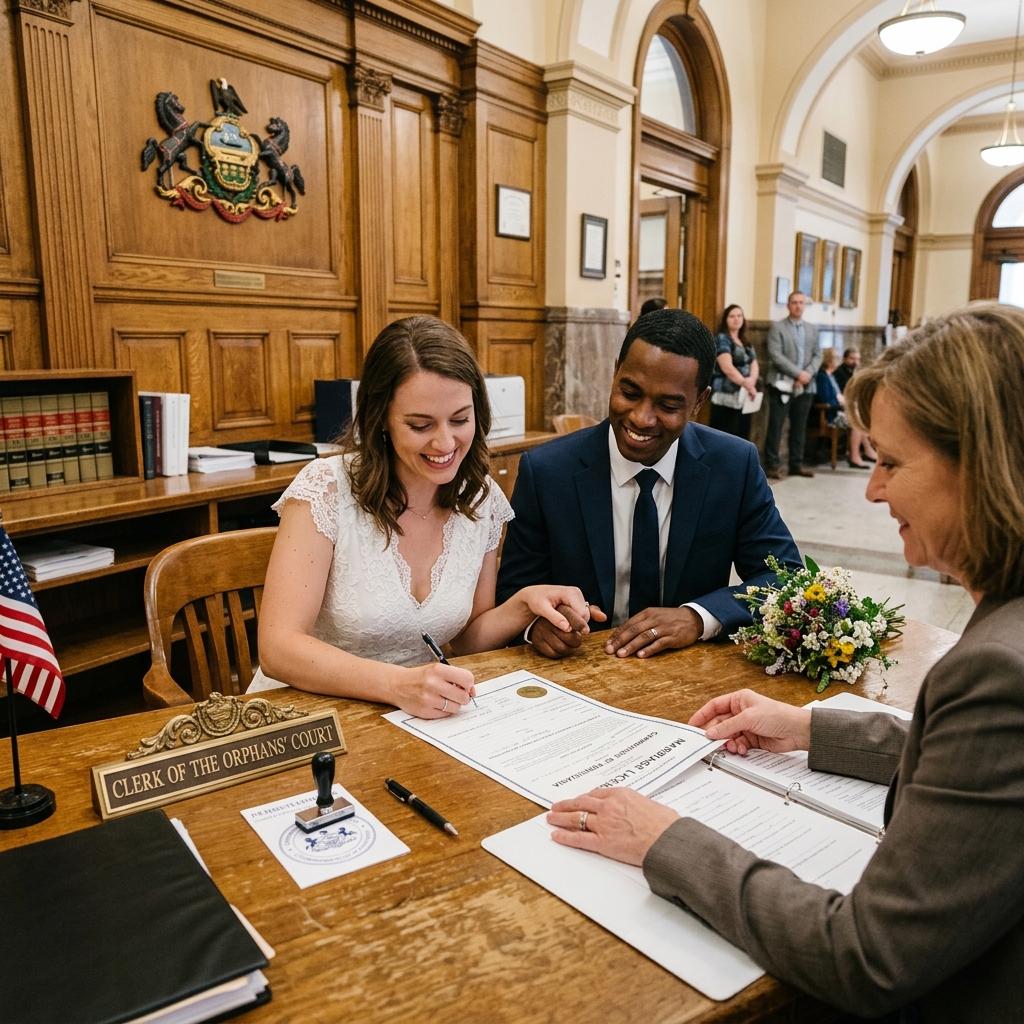
Pennsylvania has detailed rules governing how couples may enter into a legally valid marriage. These rules address who may marry, how to obtain a marriage license, what must happen at the ceremony, and how more unusual arrangements—such as common law and self-uniting marriages—are treated under state law.
This guide explains the essentials in clear, practical language so you can plan a wedding or evaluate a relationship with confidence. It is informational only and does not replace advice from a licensed Pennsylvania attorney.
1. Basic Legal Requirements to Marry in Pennsylvania
To form a valid marriage in Pennsylvania, the law focuses on three fundamental elements: consent, legal capacity, and a properly issued marriage license.
1.1 Who May Marry
Pennsylvania limits marriage to two people who meet age and capacity requirements. Same-sex and opposite-sex couples are treated equally under federal and state law.
- Two persons only: A marriage in Pennsylvania is always between two individuals; plural marriages are not recognized.
- Relationship by blood: Close blood relatives cannot marry. The state prohibits marriage between individuals more closely related than second cousins.
- Residency: You do not need to live in Pennsylvania to marry there. Non-residents may obtain a Pennsylvania marriage license and marry in the state.
1.2 Age and Consent Rules
Age and consent rules are designed to ensure that each party has the maturity and freedom necessary to enter a lifelong commitment.
| Age | Can Marry? | Conditions |
|---|---|---|
| 18 or older | Yes | May marry without parental or guardian consent. |
| 16–17 | Limited | May marry only with required parental or guardian consent under Pennsylvania law. |
| Under 16 | No | Marriage is not permitted; Act 18 of 2020 eliminated exceptions for those under 16. |
In addition to age, Pennsylvania requires genuine, voluntary consent:
- No coercion: Each person must voluntarily choose marriage; threats or force invalidate consent.
- Understanding the nature of marriage: Both parties must comprehend that they are entering a legally recognized marital relationship, with rights and obligations.
- Mental capacity: The law disqualifies individuals of “unsound mind” from marrying, but having a mental illness or physical inability to consummate the marriage does not automatically bar marriage.
2. The Marriage License: How to Apply and Key Deadlines
A marriage license is the legal authorization to marry. In Pennsylvania, no marriage is valid without a license obtained in advance.
2.1 Where and How to Apply
Licenses are issued at the county level by the Register of Wills or the Marriage License Bureau.
- In-person appearance: Both applicants must appear together in person to file a written, verified application.
- Identification: A valid photo ID is required, and the issuing official must be satisfied as to both identities before issuing a license.
- Additional details: Counties commonly request information such as Social Security numbers, parents’ names, birthplaces, and occupations, as well as divorce decrees if either party was previously married.
- Fees: License fees vary by county, typically ranging from about $40 to $100.
2.2 Waiting Period, Validity, and Timing
Marriage planning must account for specific timeframes that govern when the ceremony may occur and how long the license remains usable.
- Mandatory waiting period: After completing the license application, there is a three-day waiting period before the license may be issued and the ceremony can lawfully occur.
- License validity: Once issued, a Pennsylvania marriage license is typically valid for 60 days.
- Risk of an early ceremony: A wedding held before the lawful waiting period has run may be voidable, requiring the couple to repeat the ceremony after the license is effective.
Because of these time limits, couples should apply far enough in advance to avoid last-minute legal problems, especially when planning a large event or destination wedding.
3. The Marriage Ceremony: What the Law Requires
Not every celebration counts as a legally binding wedding. Pennsylvania law sets minimum requirements for the ceremony itself, including the presence of the parties, their declaration of intent, and a lawful officiant (except in self-uniting ceremonies).
3.1 Core Elements of a Valid Ceremony
For a ceremonial marriage to be recognized in Pennsylvania, several key steps must occur during the event.
- Exchange of vows or promises: The couple must clearly express their intent to marry—commonly through spoken vows or promises.
- Presence of the couple and officiant: In a typical ceremony, both parties and the officiant must be physically present together.
- Pronouncement of marriage: The officiant formally pronounces the couple married, signaling that the legal union has taken place.
- Valid license at the ceremony: The marriage license must still be within its 60-day validity period, and the ceremony cannot occur before the waiting period expires.
3.2 Who May Officiate
Pennsylvania authorizes a range of civil and religious officials to officiate weddings, provided the parties have obtained a valid license.
| Type of Officiant | Examples Recognized | Conditions |
|---|---|---|
| Civil authorities | Justices, judges, magisterial district judges, mayors. | Must act within their official authority and only when a valid license has been issued. |
| Religious officiants | Ministers, priests, rabbis, and other recognized religious leaders. | Must be properly authorized under their faith tradition and cannot officiate without a license. |
| Self-uniting (no officiant) | Quaker-style self-uniting marriages. | Allowed by Pennsylvania law; details vary by county, and a special license form is typically used. |
Regardless of the officiant type, Pennsylvania law forbids anyone from officiating when the parties have not obtained a marriage license.
3.3 After the Ceremony: Completing and Returning the License
The legal record of the marriage is created after the ceremony through accurate completion of the license and its return to the issuing office.
- Signatures: In a typical ceremonial marriage, the license or certificate is signed by the officiant, each spouse, and—depending on the form used—witnesses.
- Return deadline: The officiant must return the completed certificate to the county office, commonly within 10 days after the ceremony.
- Official recording: Once filed, the marriage is recorded in county records. Certified copies may then be requested for legal purposes such as name changes or benefits enrollment.
4. Special Types of Marriage Recognition
Beyond standard ceremonial marriages, Pennsylvania has specific rules for common law marriages and self-uniting marriages. Understanding these categories is important for couples in long-term relationships or with non-traditional ceremonies.
4.1 Common Law Marriage: Still Possible?
Common law marriage is a form of marriage created without a formal license or ceremony, based on the parties’ agreement and conduct. Pennsylvania no longer allows couples to create new common law marriages within the state.
- No new common law marriages after January 1, 2005: State law abolished the formation of common law marriages in Pennsylvania as of that date.
- Recognition of older unions: A couple may still be considered married if they established a valid common law marriage in Pennsylvania before January 2, 2005.
- Out-of-state common law marriages: Pennsylvania may recognize common law marriages created in other states that permit them, consistent with conflict-of-laws principles.
Proving an older common law marriage can be difficult. Courts generally require clear and convincing evidence that the parties exchanged present-tense words of marital intent and lived publicly as spouses.
Evidence that may be relevant includes:
- Joint leases or mortgages showing a shared household.
- Testimony from friends, neighbors, or relatives that the couple presented themselves as married.
- Tax returns filed as married or head-of-household based on a marriage relationship.
- Beneficiary designations on insurance or retirement accounts naming the other person as “spouse.”
- Joint credit applications or other documents where the couple identified themselves as married.
Because common law marriage claims often arise in disputes over inheritance, workers’ compensation, or divorce, legal advice is especially important.
4.2 Self-Uniting (Quaker) Marriages
Pennsylvania has a unique tradition of permitting self-uniting marriages, sometimes associated with Quaker practices.
- No officiant required: In a self-uniting marriage, the couple marries one another without a third-party officiant.
- Special license form: Couples must obtain a self-uniting marriage license, which differs slightly from a standard license. Availability and procedures can vary by county.
- Ceremony obligations: The couple still needs to clearly declare their intent to marry and properly complete and return the license after the ceremony.
5. Practical Planning Tips for Couples
While the legal rules are formal, applying them to real-world wedding plans is largely practical. The following points can help couples avoid common pitfalls.
- Start early: Apply for the license at least a week or two before the wedding to account for the three-day waiting period and any unexpected administrative delays.
- Check county-specific procedures: Each county may have its own office hours, online pre-application options, or special requirements, especially for self-uniting licenses.
- Bring required documents: Have photo ID, Social Security numbers, and prior divorce decrees or death certificates if either party was previously married.
- Confirm officiant authority: For ministers or other religious officiants, verify that they are authorized and comfortable with Pennsylvania’s legal requirements.
- Understand the deadlines: Make sure the ceremony date falls after the waiting period and before the 60-day expiration of the license.
- Plan for filing: Agree with your officiant about who will mail or deliver the completed certificate and by what date, so the marriage is properly recorded.
6. Frequently Asked Questions (FAQs)
6.1 Do we have to live in Pennsylvania to get married there?
No. Residency in Pennsylvania is not required. Non-residents may obtain a marriage license and have their ceremony within the state.
6.2 How far in advance should we apply for a marriage license?
Because of the three-day waiting period and the 60-day license validity, many couples apply one to four weeks before the wedding. This allows time to resolve issues with documents or scheduling before the ceremony date.
6.3 Can close relatives marry in Pennsylvania?
No. People more closely related than second cousins cannot marry in Pennsylvania. This rule is intended to protect public health and family stability.
6.4 Is a religious ceremony required?
No. Couples may choose a civil ceremony before a judge or mayor, a religious ceremony, or a self-uniting ceremony where permitted. The key legal requirements are the license, valid consent, and proper completion and filing of the certificate.
6.5 Does Pennsylvania still recognize common law marriage?
Pennsylvania no longer allows new common law marriages to be formed within the state. However, it may recognize common law marriages established in Pennsylvania before January 2005 or in other states that permit them, provided the parties can prove the relationship met the legal standards.
6.6 What happens if our officiant forgets to return the marriage certificate?
If the certificate is not filed, the marriage may not appear in official records, which can cause difficulties with name changes and benefits. Couples should contact the county office promptly and, if necessary, seek legal advice to determine whether corrective steps or a new ceremony are required.
6.7 Can we get married the same day we apply for the license?
Generally, no. Pennsylvania requires a three-day waiting period after the license application process is completed before the license is issued and the ceremony can legally occur. Emergency waivers are rare and subject to county rules and judicial discretion.
References
- Pennsylvania Marriage Laws – FindLaw — FindLaw. 2024-01-01. https://www.findlaw.com/state/pennsylvania-law/pennsylvania-marriage-laws.html
- Chapter 13, Title 23 – Domestic Relations (Marriage License Provisions) — Pennsylvania General Assembly. 2024-01-01. https://www.palegis.us/statutes/consolidated/view-statute?txtType=HTM&ttl=23&div=0&chpt=13
- How to Get Married in Pennsylvania (2026) — DocDraft Legal Guides. 2026-01-01. https://www.docdraft.ai/legal-guides/getting-married/pennsylvania
- Pennsylvania Marriage Laws, 23 Pa.C.S. (Officiants) — Bucks County Register of Wills. 2023-01-01. https://www.buckscounty.gov/DocumentCenter/View/1947/PA-Marriage-Law-Officiants-PDF
- Is There Common Law Marriage in Pennsylvania? — DivorceNet / Nolo. 2024-01-01. https://www.divorcenet.com/states/pennsylvania/pa_art08
- Marriage in Pennsylvania (Public Legal Guide) — Northern Pennsylvania Legal Services. 2022-01-01. https://www.nplspa.org/file_download/inline/889896e6-45ab-4c38-aec6-82b36b2d0e64
- Pennsylvania Wedding Laws — Universal Life Church. 2023-01-01. https://www.ulc.org/wedding-laws/pennsylvania
Similar Articles








Read full bio of Sneha Tete


